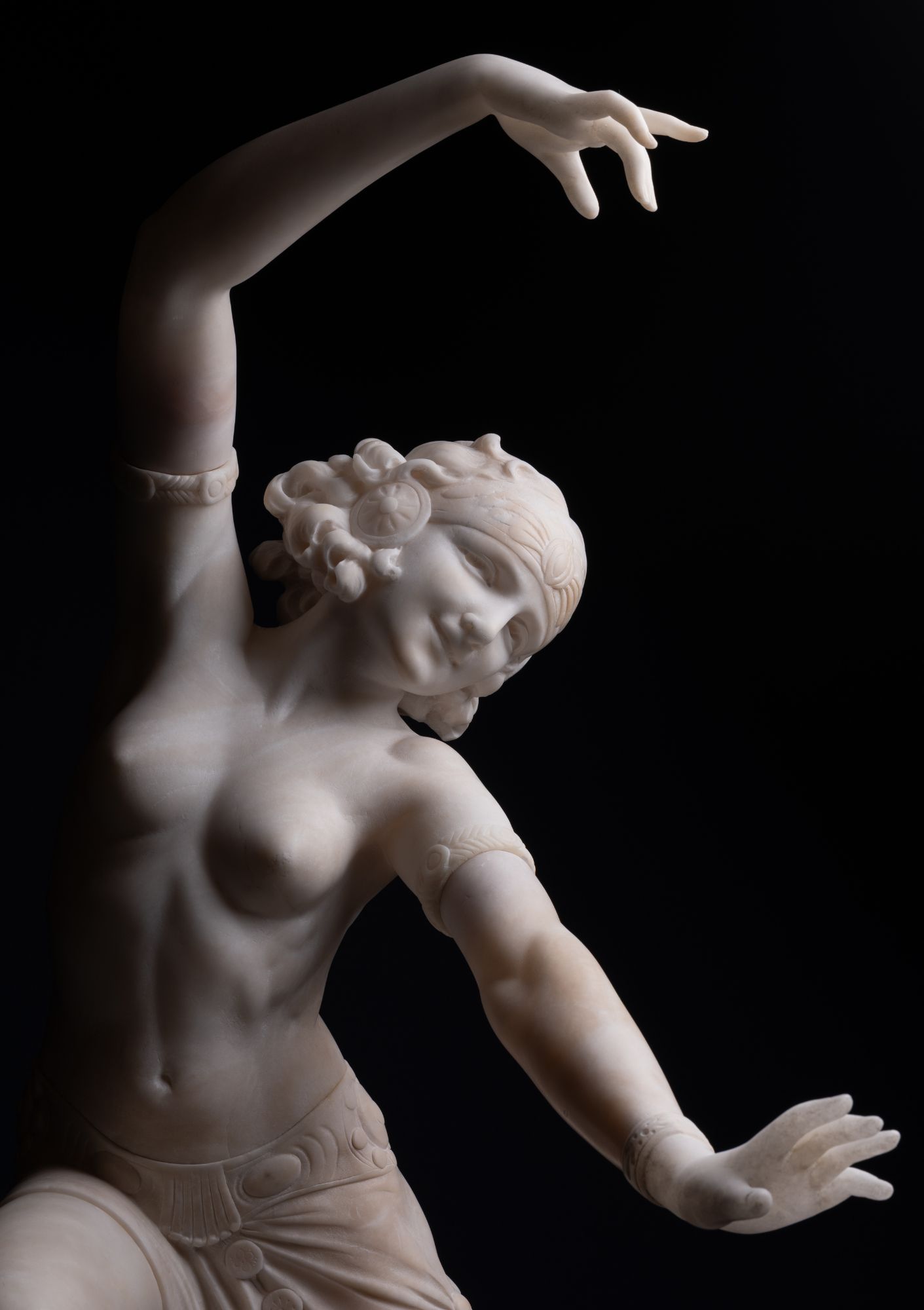
POZZI · (19th–20th century)
Oriental Dancer / Lamp
technical sheet
| ARTIST | Pozzi |
| DATE | ca. 1920 |
| MATERIAL | Sculpture: alabaster | Globe: onyx |
| DIMENSIONS | Height : 84 cm |
| SIGNATURE | “Pozzi” |
| PROVENANCE | Francis Meyer Collection, Switzerland |
about the work
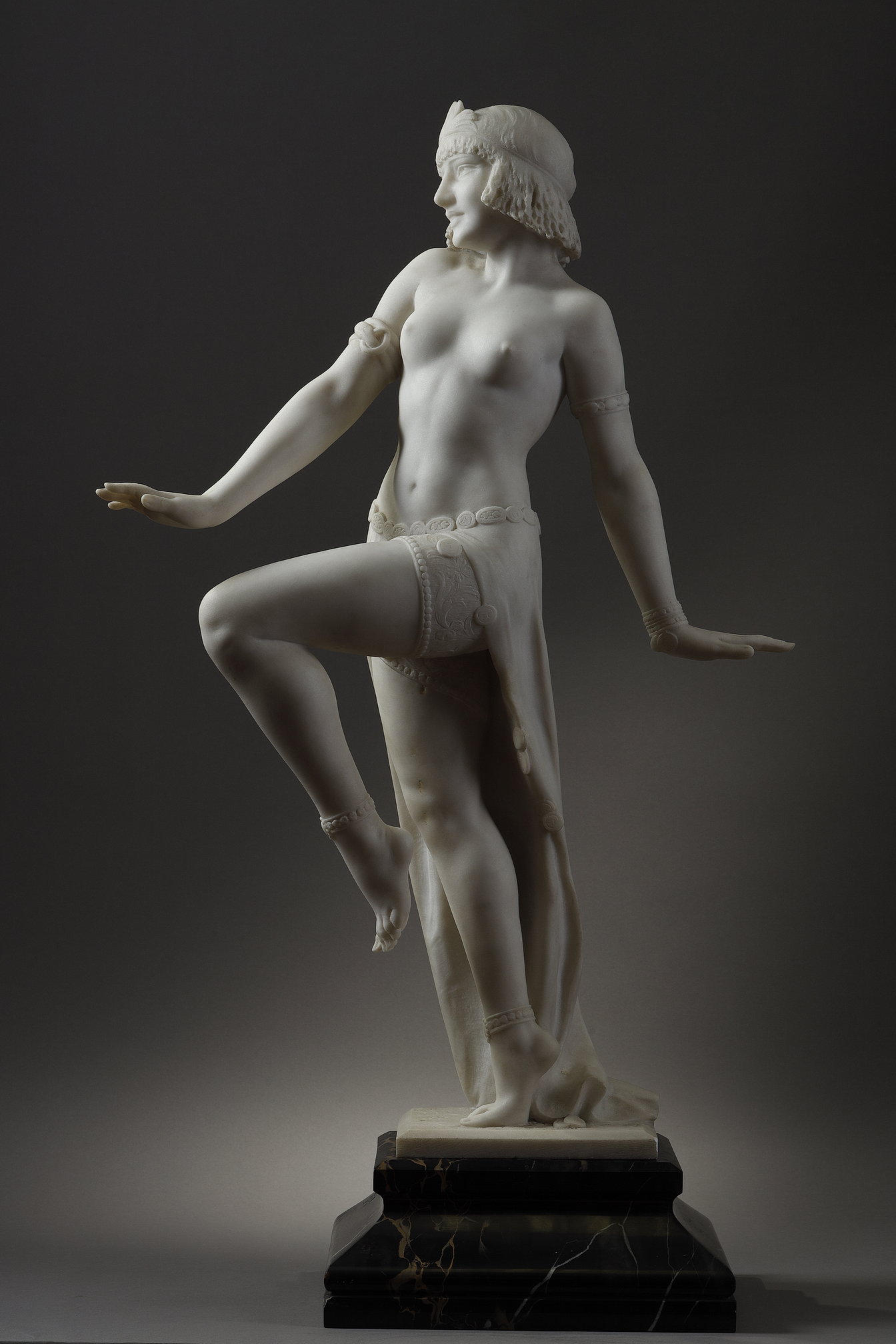
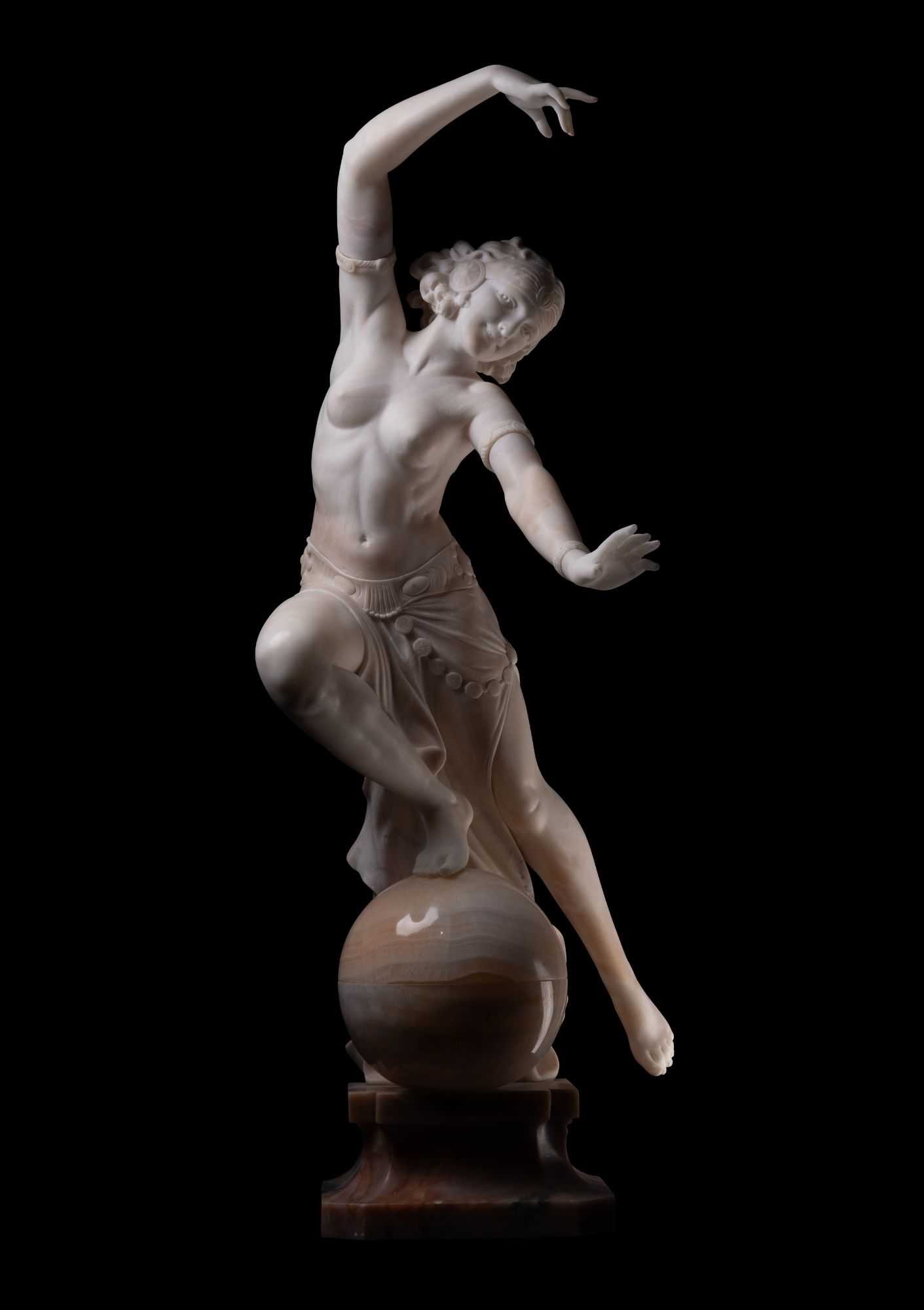
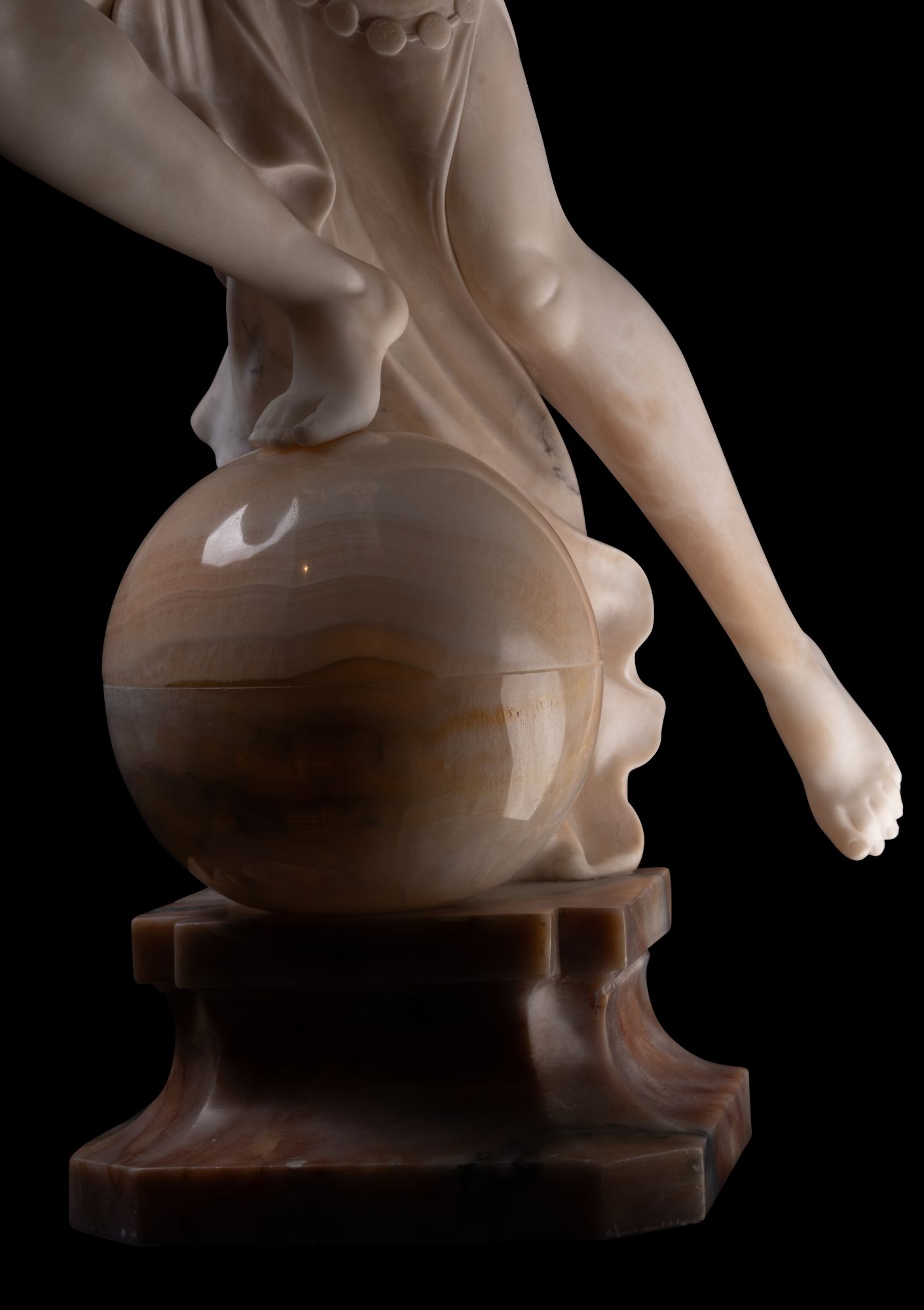
Sculpted in clear, luminous alabaster, this female figure stands balanced on a polished onyx globe that conceals a light source. The globe is not merely a base: it becomes the visual heart of the composition, diffusing a soft light that passes through the alabaster and animates the silhouette from within. The sculpture is conceived to live with the light, not without it.
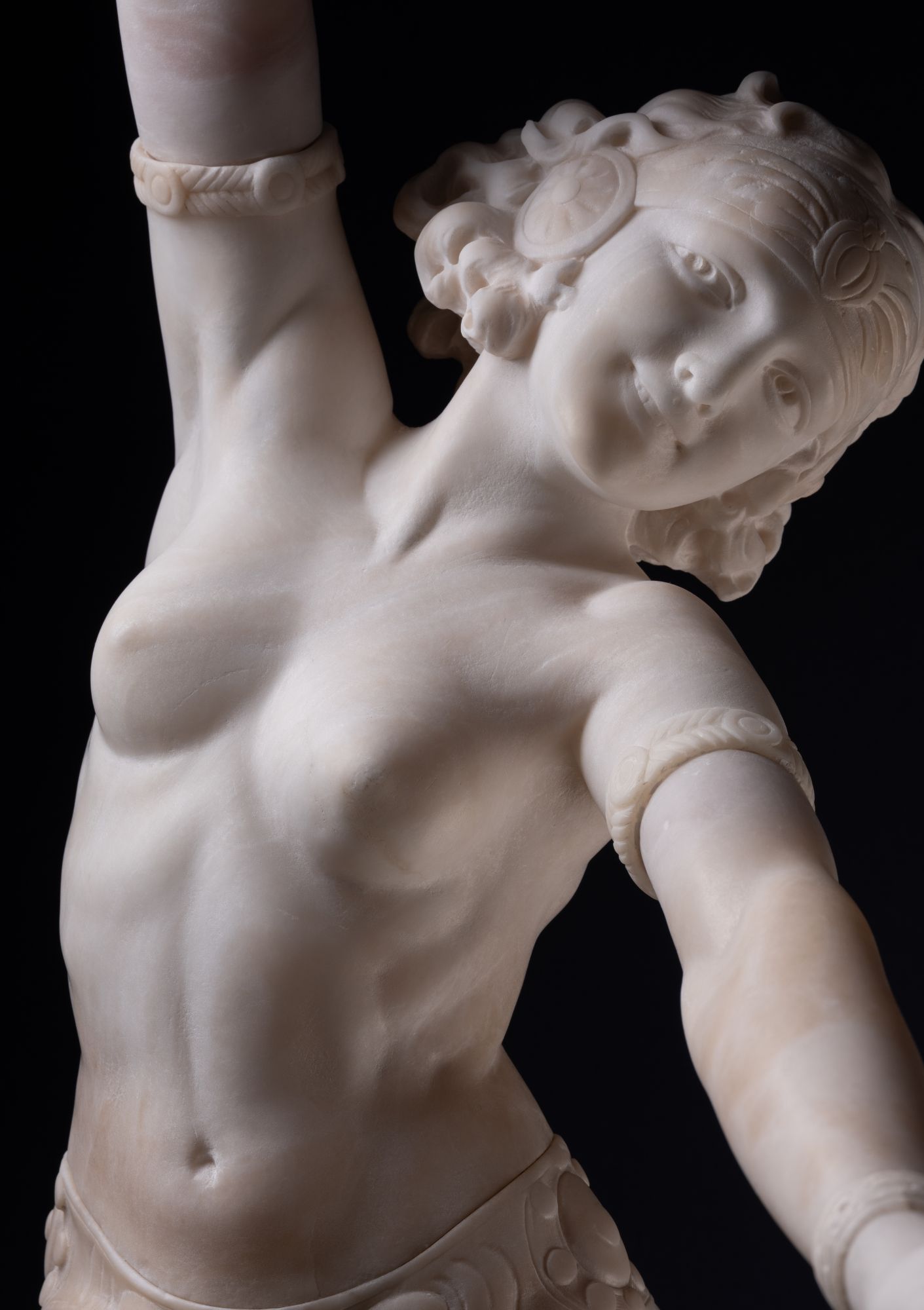
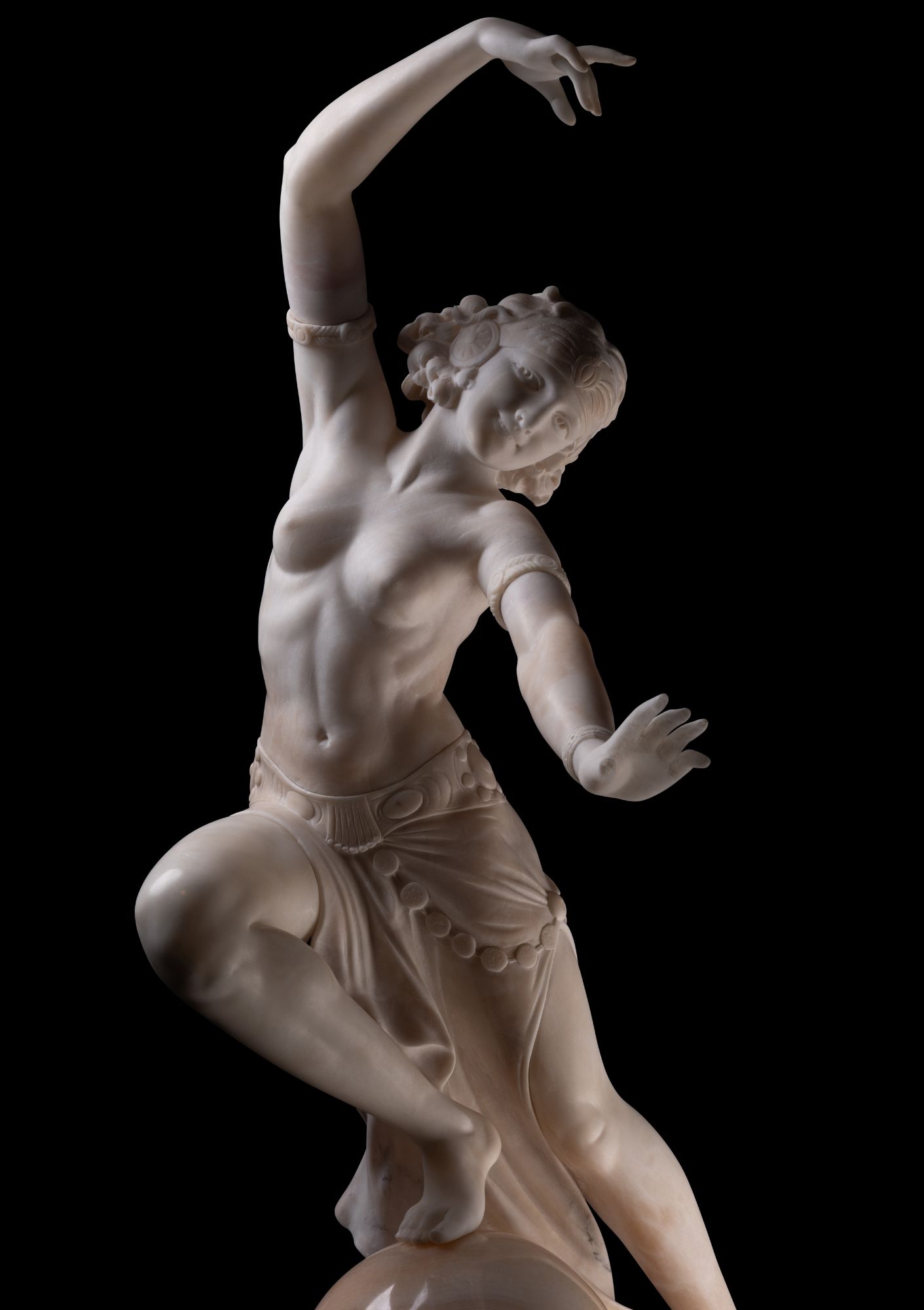
The slender figure adopts a dancing pose. The body arches slightly, one leg bent and the other extended, while the arms trace an aerial arc above the head. The movement is continuous, fluid, almost circular, as if the dancer were revolving around her own axis. Nothing is static: each line leads into the next, from the hips to the tapered fingers. The drapery, thin and close to the body, emphasizes the volumes without weighing them down. It accompanies the gesture rather than constraining it.
The alabaster, chosen for its translucency, reinforces this impression of lightness. The material captures the light from the globe and redistributes it through the legs, torso and arms, giving the figure an almost living presence, as if lit from within. The onyx, darker and veined, creates a deliberate contrast: the dense, earthbound base supports a figure that seems poised to detach itself from it.
This figure belongs to the decorative tradition inherited from the Belle Époque and the early twentieth century: a taste for dance, a fascination with the imagined Orient, the importance of flowing lines and movement, and the alliance between sculpture and function. Here, art does not content itself with being looked at: it illuminates, literally. And it recalls that certain sculptures are not made for the silence of vitrines, but to live within space, light, and the everyday gaze.
Literature
- PANZETTA, Antonio. Nuovo Dizionario degli Scultori Italiani dell’Ottocento e del primo Novecento. Turin : Adarte, 2003.
the ARTIST
Famiglia Pozzi
Lombardy, 19th–20th century
A lineage of Lombard sculptors specialised in decorative figures in noble materials, between late academicism and Art Deco elegance. The signature “Pozzi” refers to a family of Italian sculptors active between the late 19th and early 20th century, originating from Lombardy and recognised on the international market for their decorative figures executed in exceptional materials: white Carrara marble, alabaster, Portor, onyx.
similar works