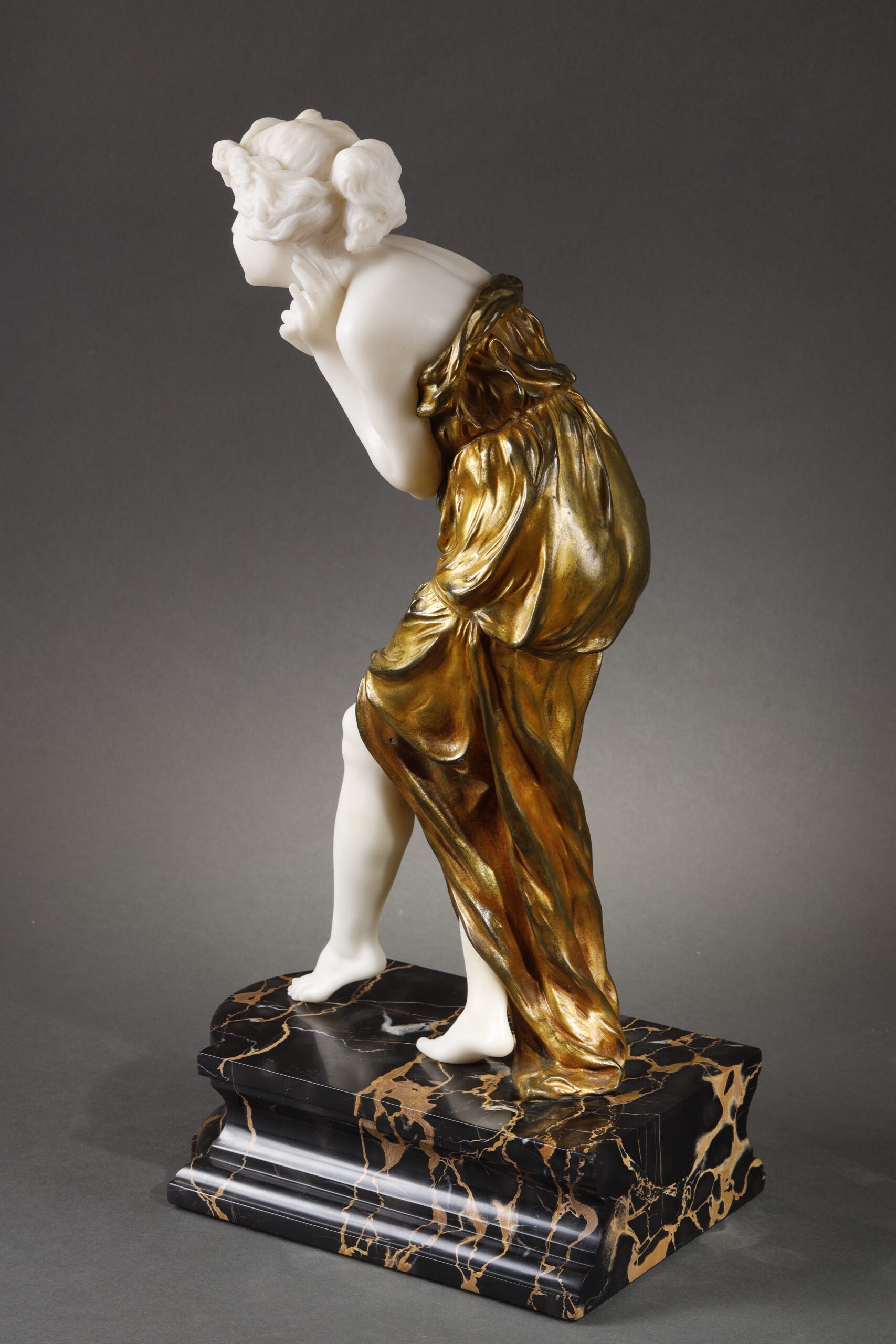
AFFORTUNATO GORY · (act. 1895–1925)
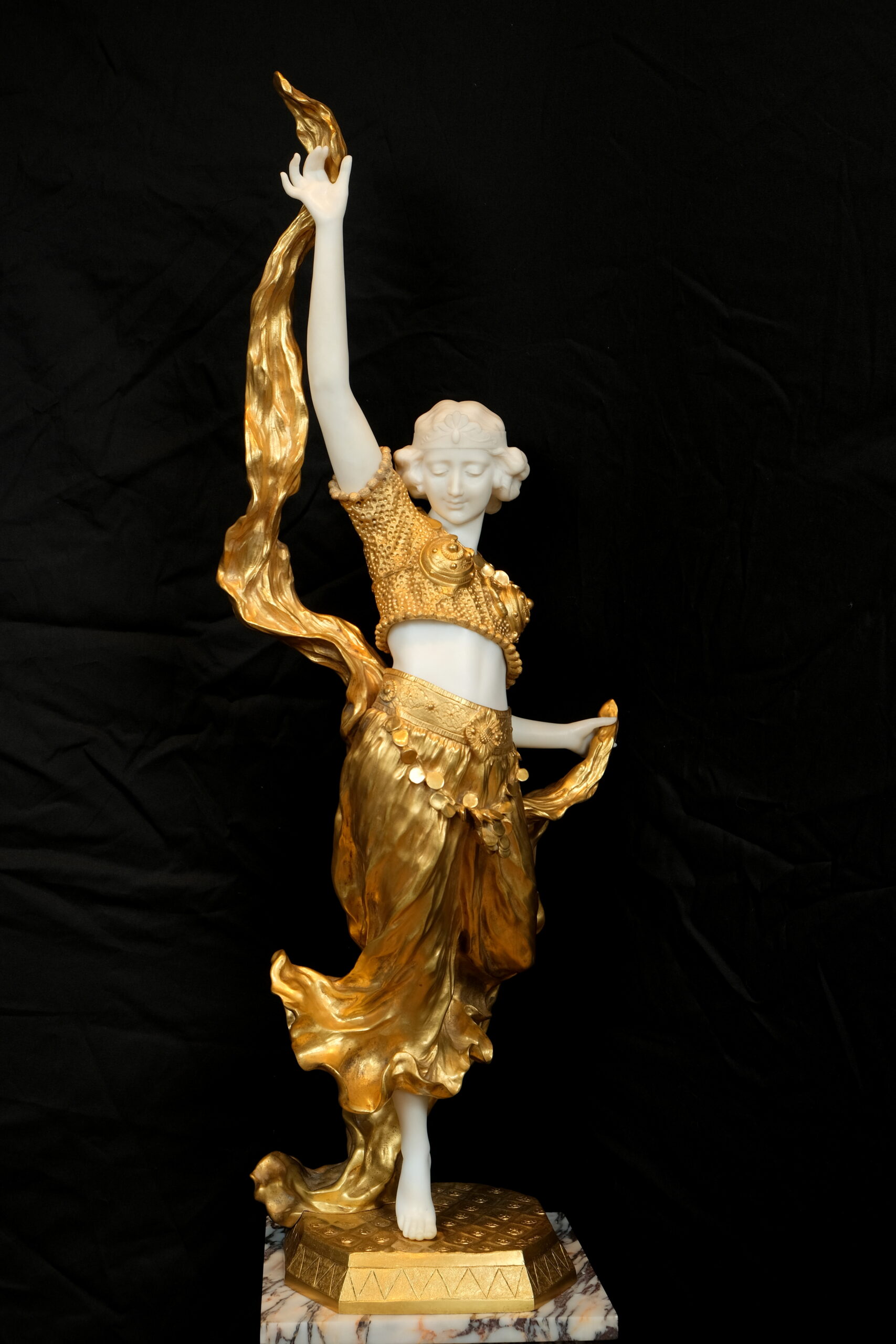
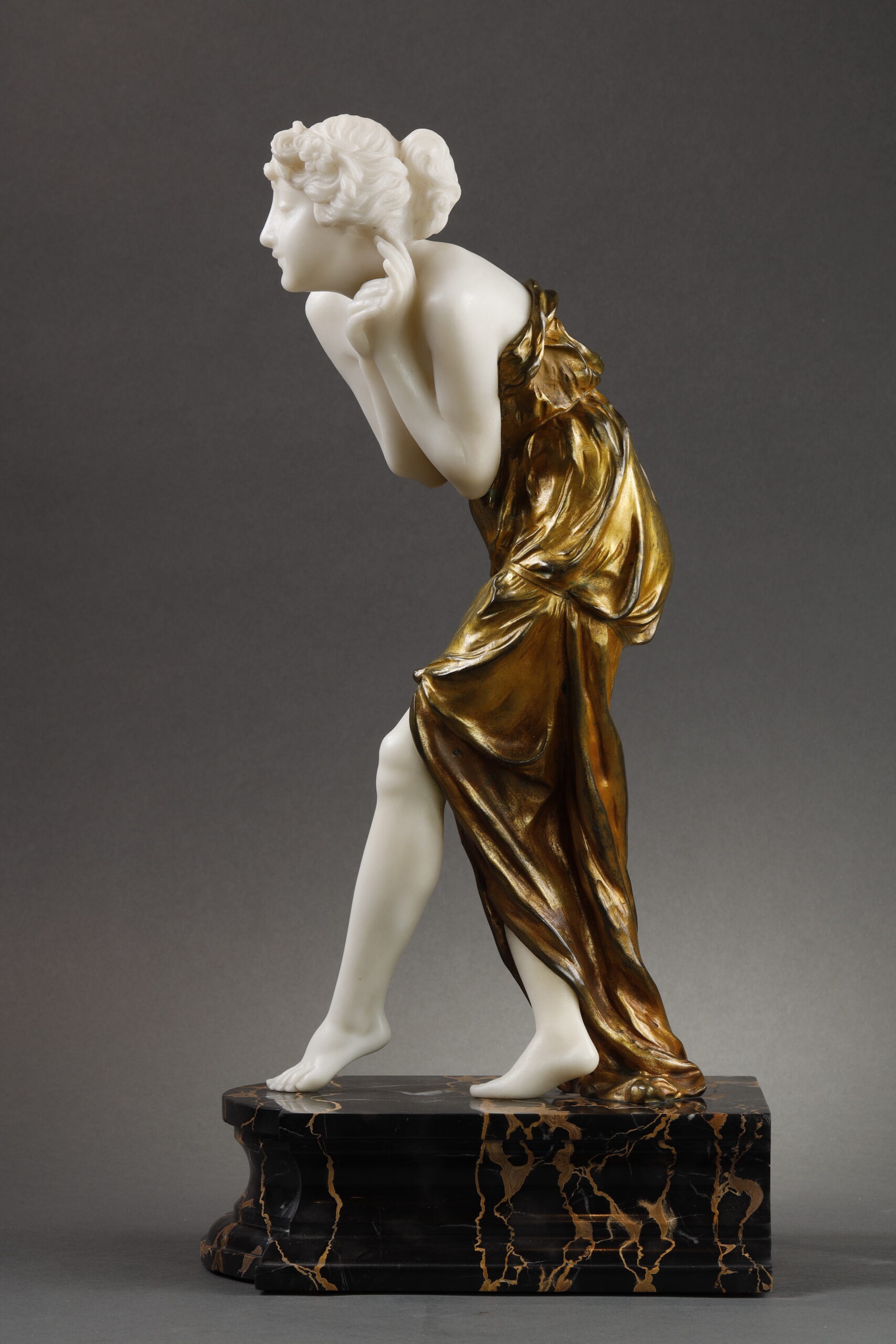
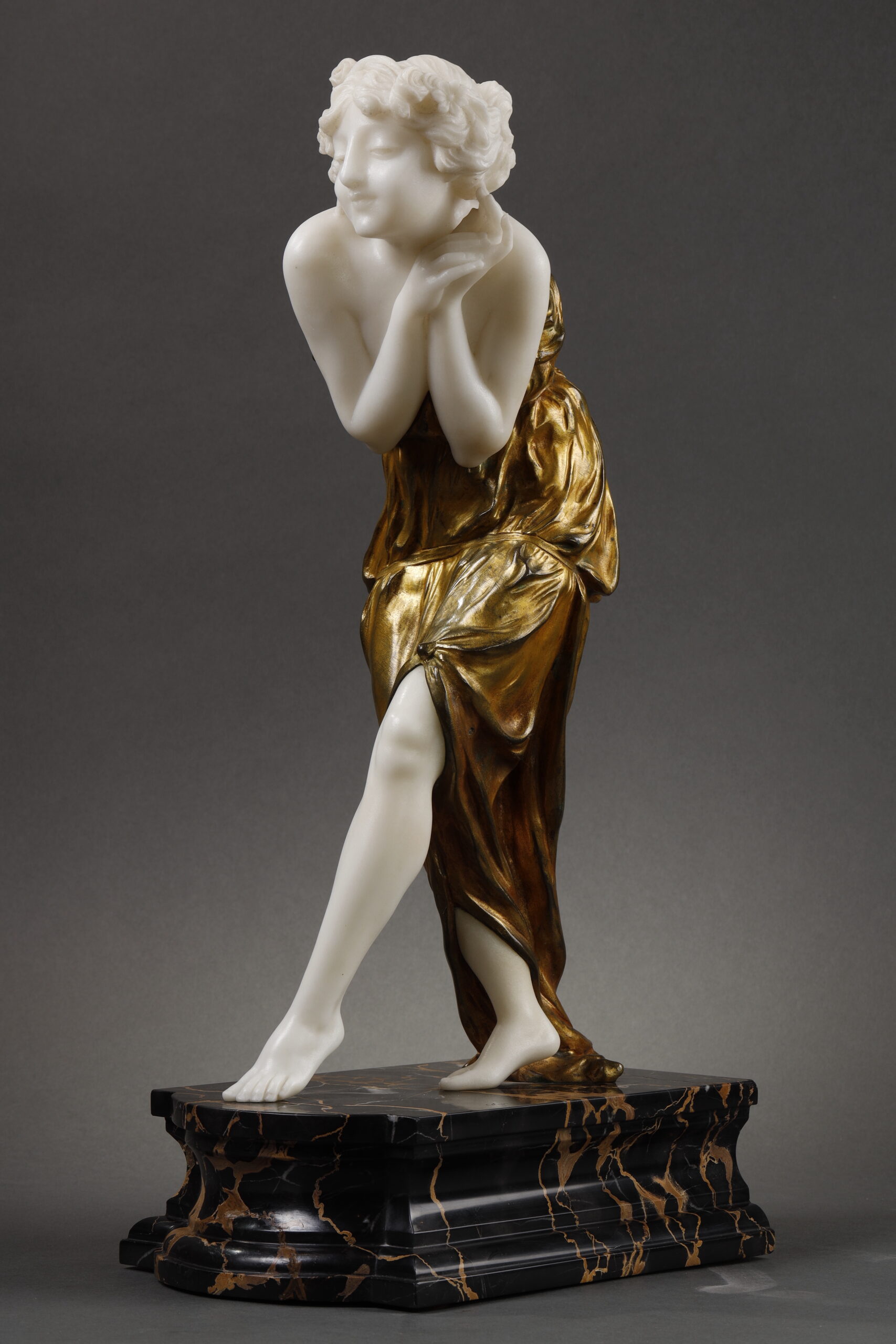
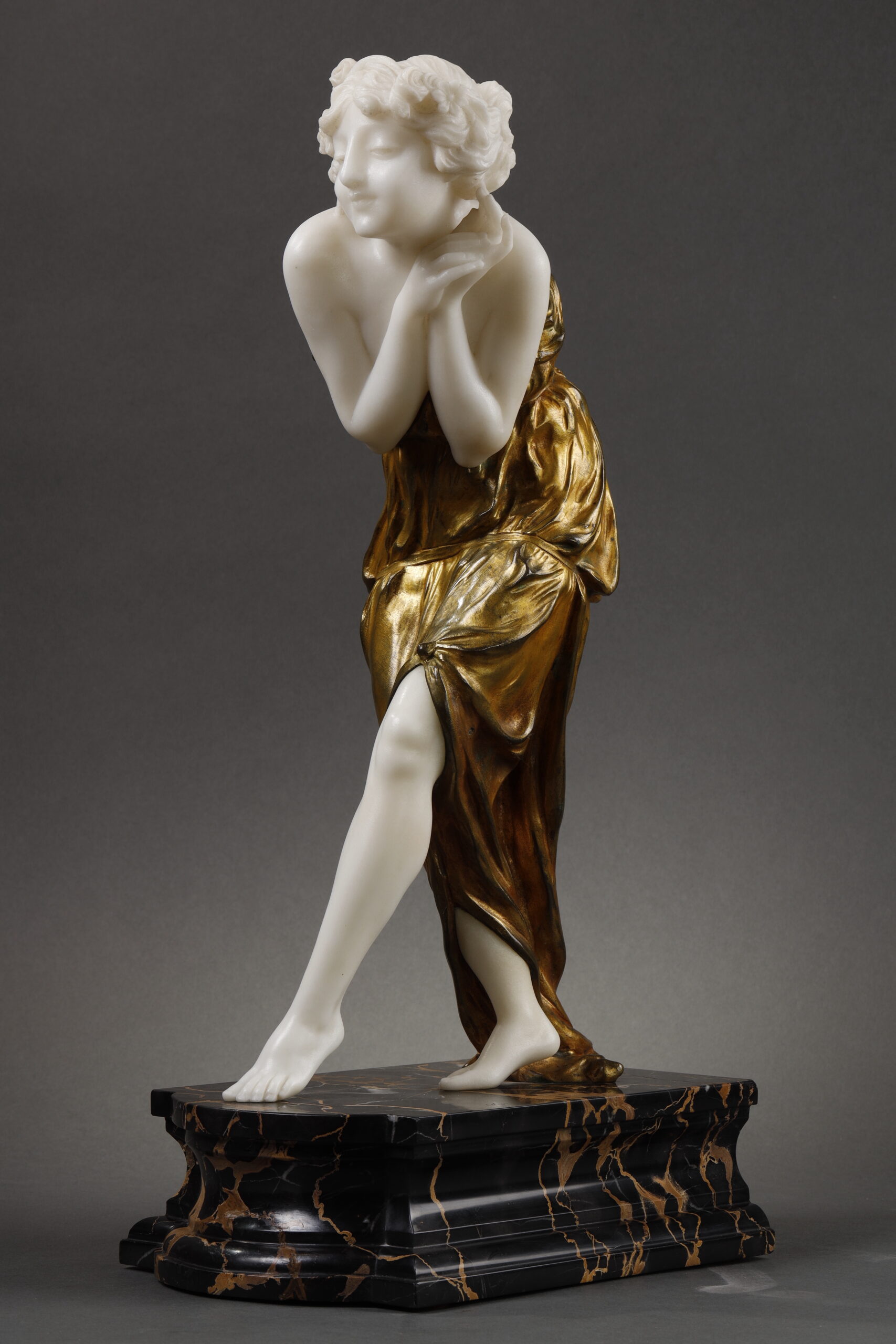
The Dancer
technical sheet
| ARTIST | Affortunato Gory |
| DATE | ca. 1920 |
| DIMENSIONS | 52 x 16,5 x 24,5 cm |
| MATERIAL | White Carrara marble and gilded bronze |
| SIGNED | “A. Gory” |
about the work
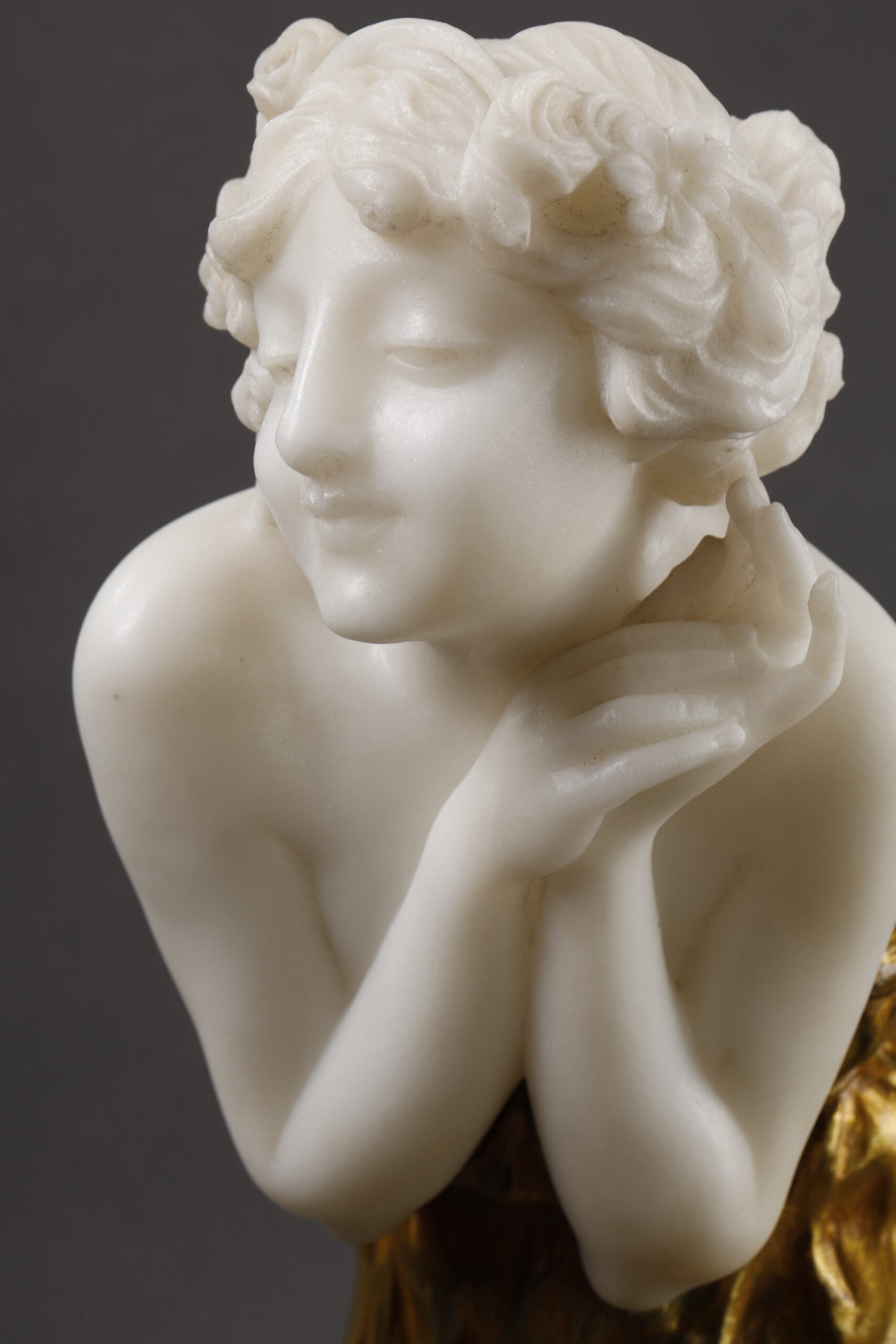
“The Dancer”, an enchanting piece in the Art Deco style by the artist Affortunato Gory, is a striking sculpture fashioned from white Carrara marble and accented with gilded bronze. At a height of 52 cm, this sculpture exhibits remarkable finesse, perfectly encapsulating the essence of the dance form it represents. The dancer, poised in a moment of fluid grace, is adorned with a dress and short hair decorated with small flowers, elements typical of the Art Deco period, reminiscent of the iconic style of Josephine Baker. The use of Carrara marble, universally esteemed as one of the most prestigious materials for sculpture, enhances the subtlety and intricacy of this stunning piece, making it a true testament to Gory’s talent and the Art Deco period.
The sculpture rests on a base of “Portor” marble, a precious and extremely rare black marble quarried in Italy since antiquity. It was a favored material for decorating imperial villas in Roman times and later adorned prestigious chateaus in Belgium, France, and Switzerland during the 18th and 19th centuries. In the 20th century, Portoro marble continued its tradition of luxury by embellishing elegant Art Deco style furniture and fireplaces.
Literature
- KJELLBERG, P. Bronzes of the 19th Century. Atglen: Schiffer Publishing, 1994, p. 364.
- PANZETTA, A. Nuovo Dizionario degli Scultori Italiani dell’Ottocento e del primo Novecento, 3rd ed. Italy: Umberto Allemandi & C., 2003, Vol. 1, pp. 441 and 488.
the ARTIST
Affortunato Gory
Italian-French, act. 1895 – 1925
Italian Belle Époque sculptor, master of refined marble. Affortunato Gory was a refined Italian sculptor active between 1895 and 1925. Born in Florence, he trained at the Accademia di Belle Arti under the renowned sculptor Augusto Rivalta. Gory quickly developed a distinctive style that married strong classical foundations with the elegant sensitivity of modern decorative art. Like many of his contemporaries, he moved to Paris at the turn of the 20th century to further his career and broaden his reputation.
similar works