Albéric collin · (1886–1962)
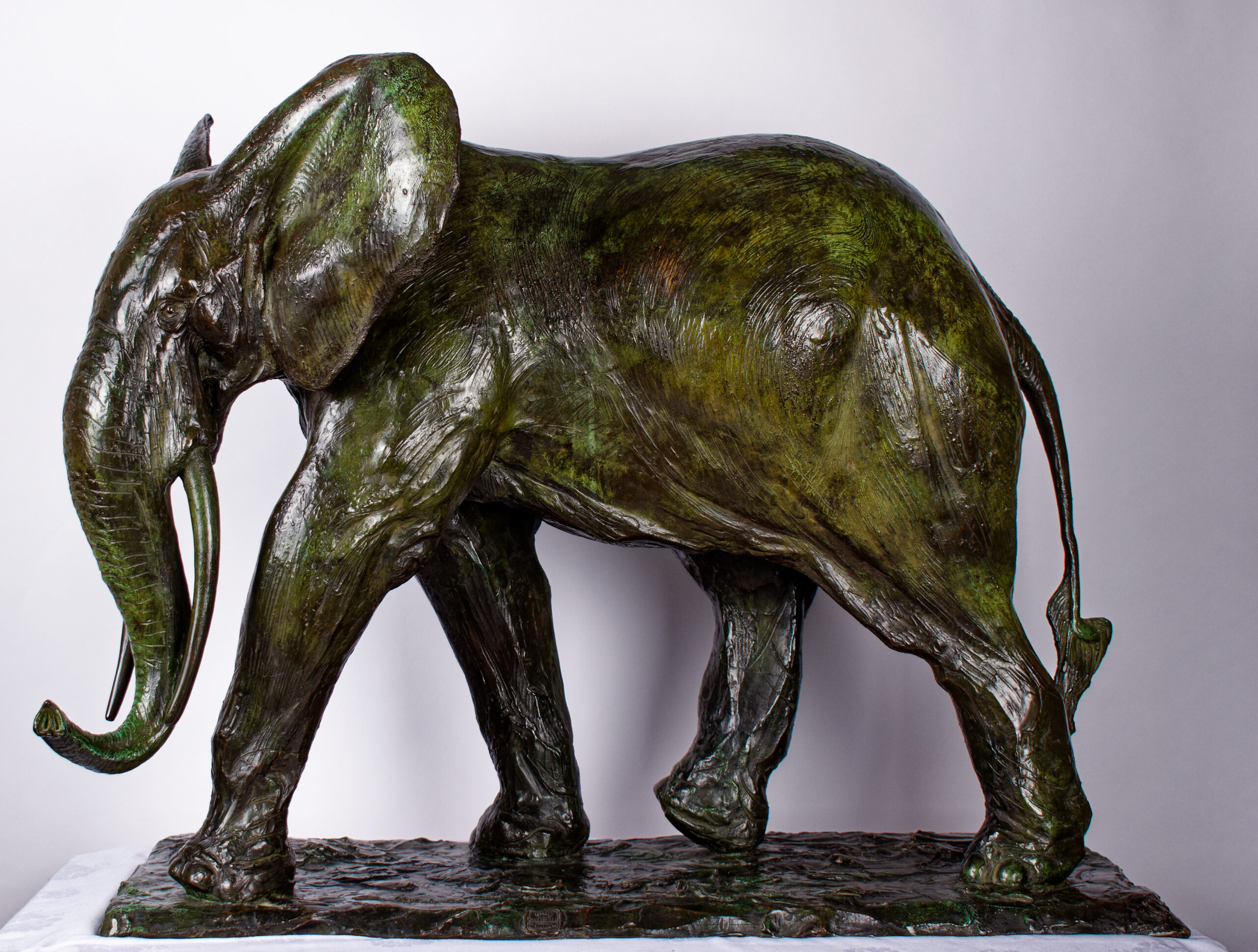
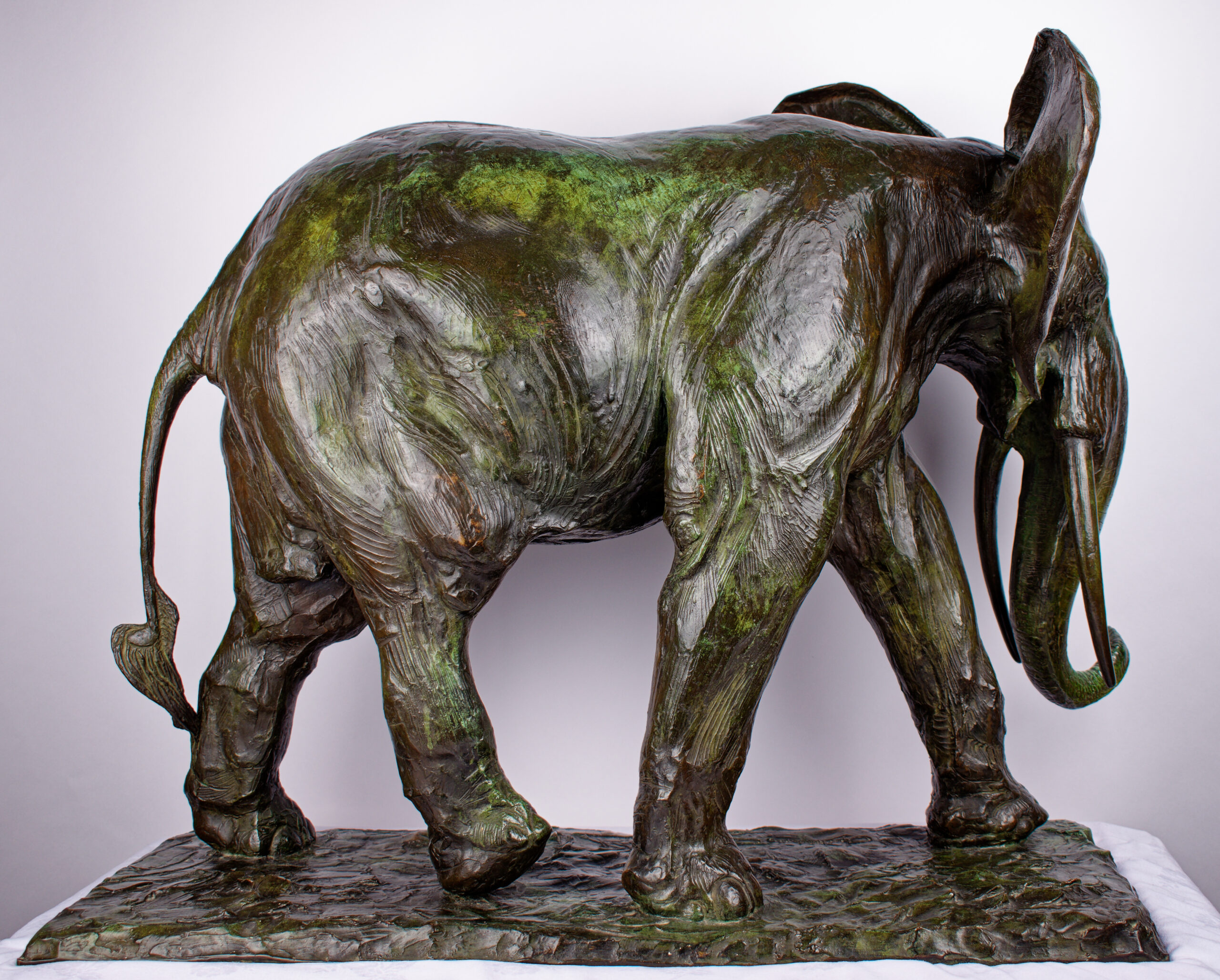
Walking African Elephant
Technical sheet
| ARTIST | Albéric Collin |
| DATE | ca. 1918-1921 |
| MATerial | Bronze • Lost-wax cast by the Valsuani foundry |
| DIMENSIONS | 66,5 x 84 x 40 cm |
| Signature | Albéric Collin • Foundry stamp : C. Valsuani Cire perdue |
| PROVENANCE | Acquired directly from the artist and kept within the same family for four generations |
| CONSERVATION | Private Collection • Europe |
about the work
This rare early twentieth-century bronze of a walking elephant ranks, without question, among the most important pieces in Albéric Collin’s oeuvre. Its imposing dimensions — 66.5 cm high, 84 cm long, 40 cm wide — make it, by the standard of his output, a particularly sought-after work on the market.
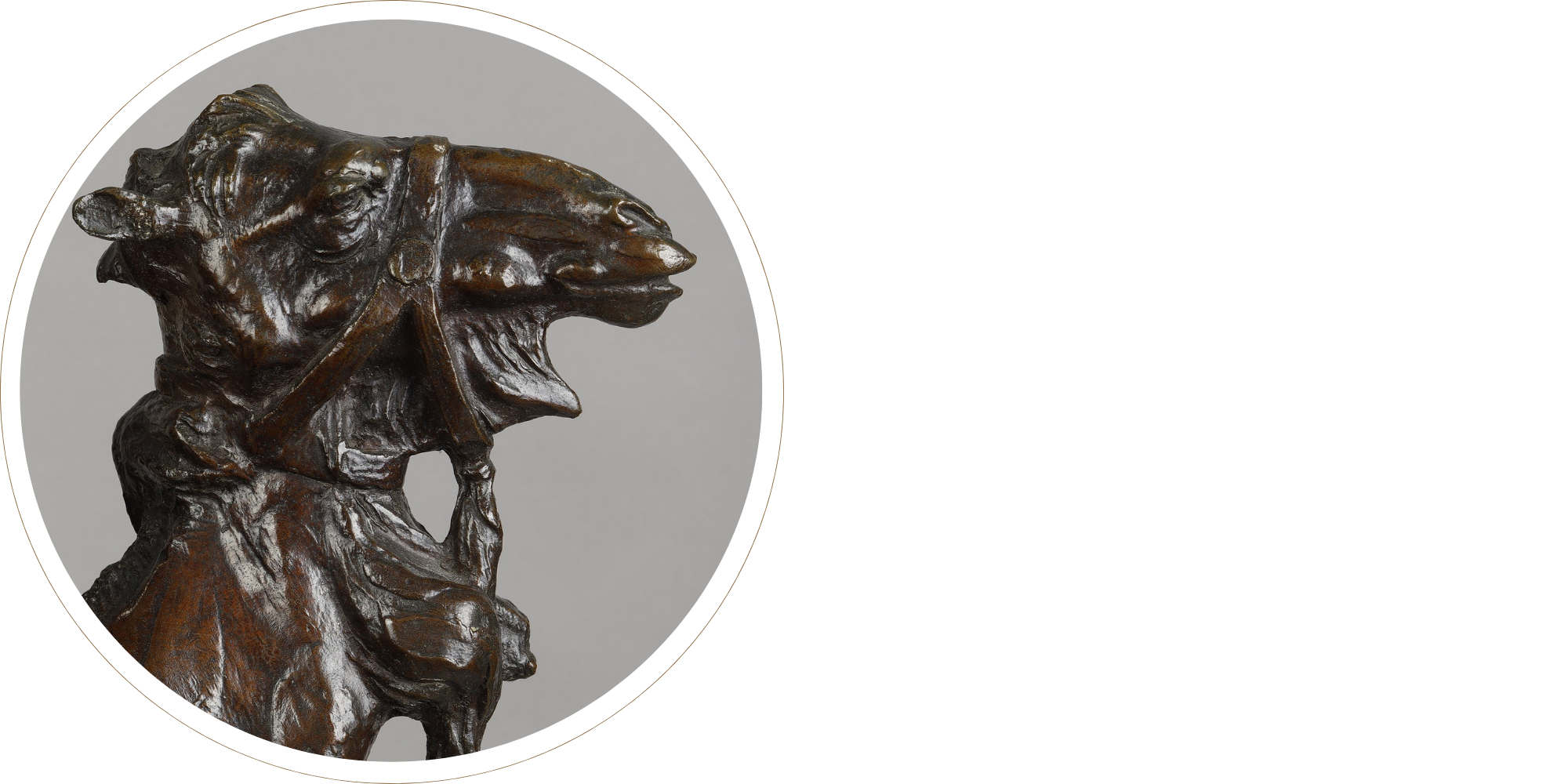
The lost-wax cast by the Valsuani foundry is of the highest quality, and the patina, subtly blending green with light and dark brown, enhances the sculpture beautifully. Its state of preservation is impeccable, and the piece is documented from its production through to its present presentation.
According to the artist’s archives, the work was to have been issued in an edition of seven; only two were ultimately produced, between 1918 and 1921. Neither the plaster nor the second cast has reappeared on the market since their sale. Having remained in the same family for four generations.