ALBÉRIC COLLIN · (1886–1962)
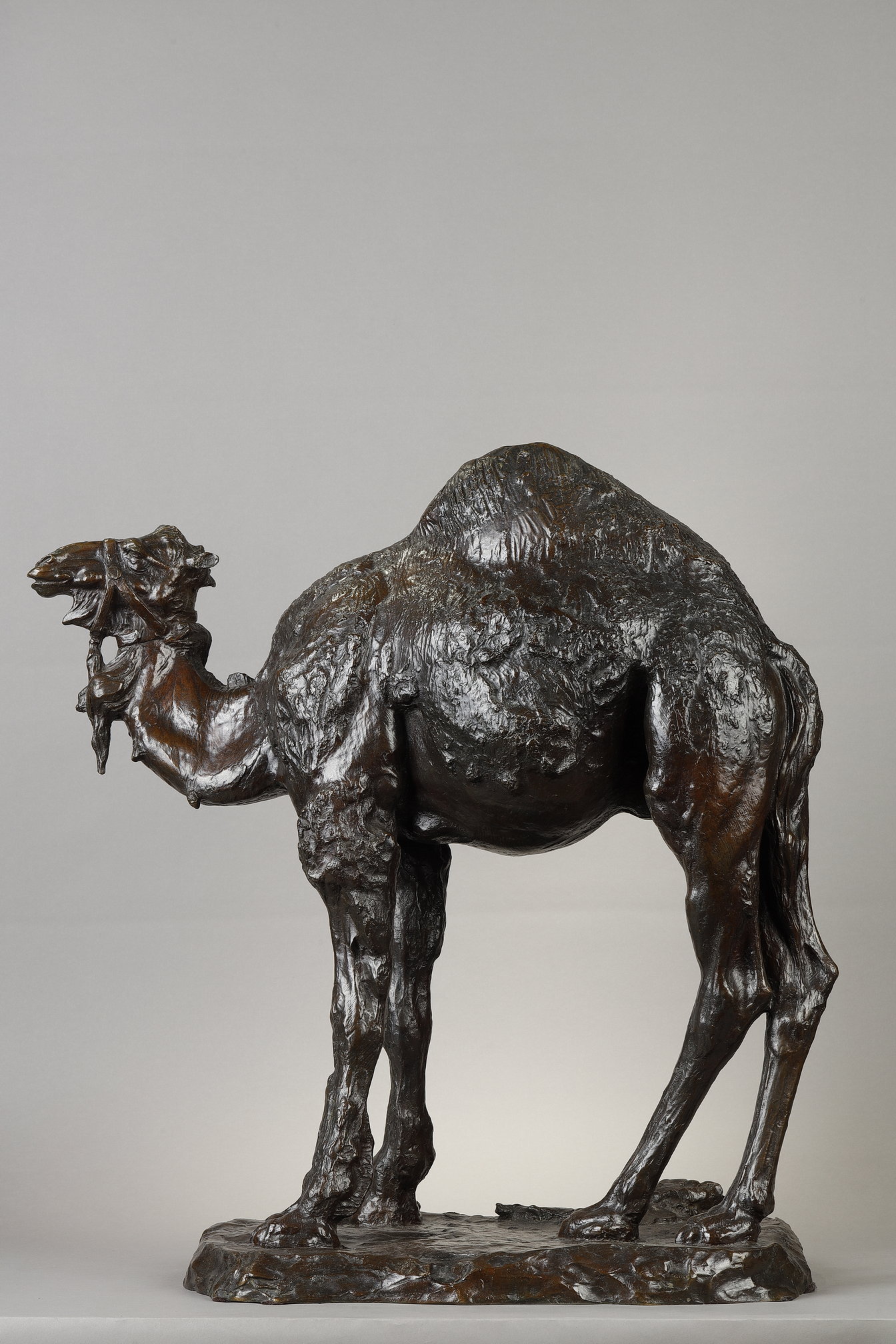
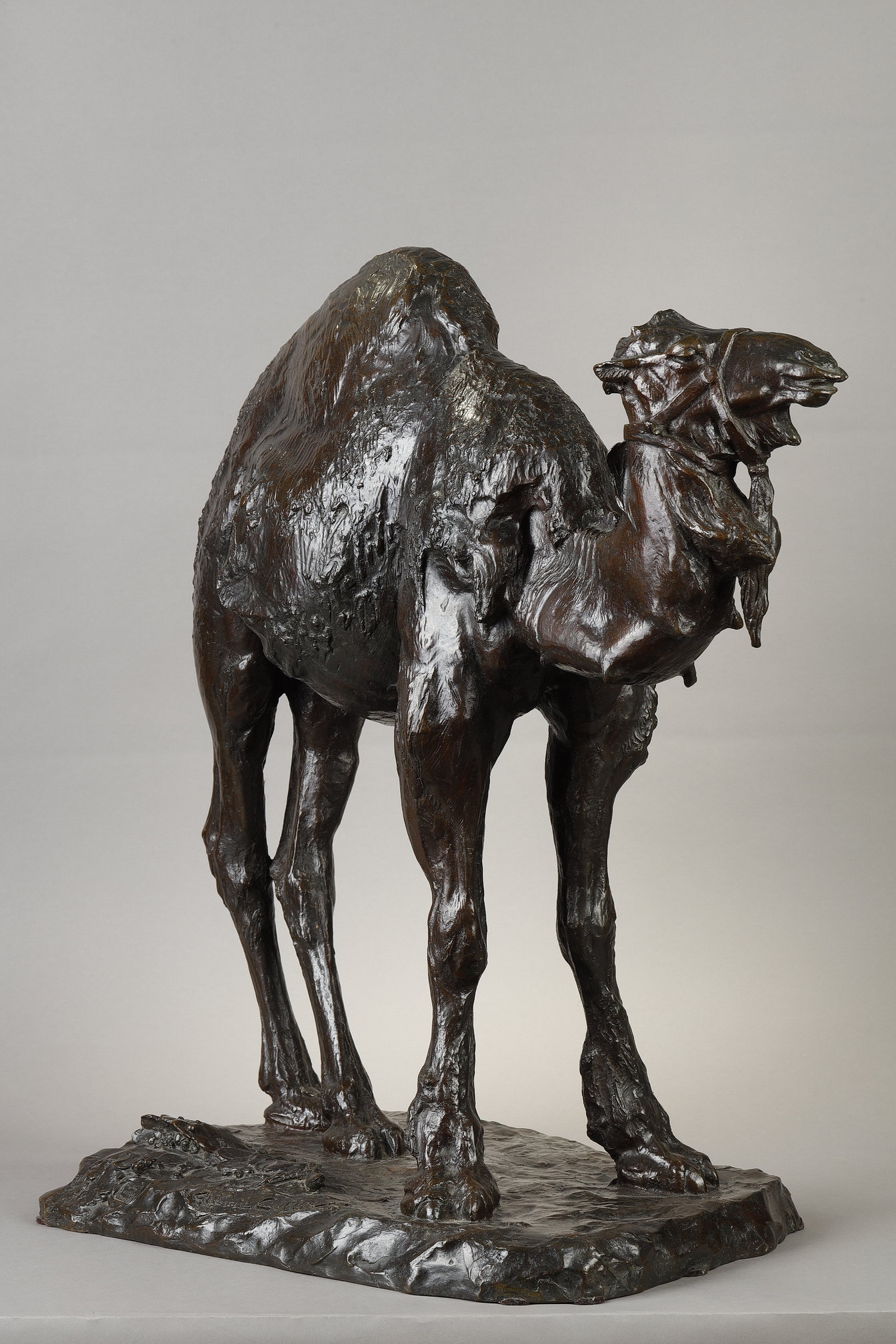
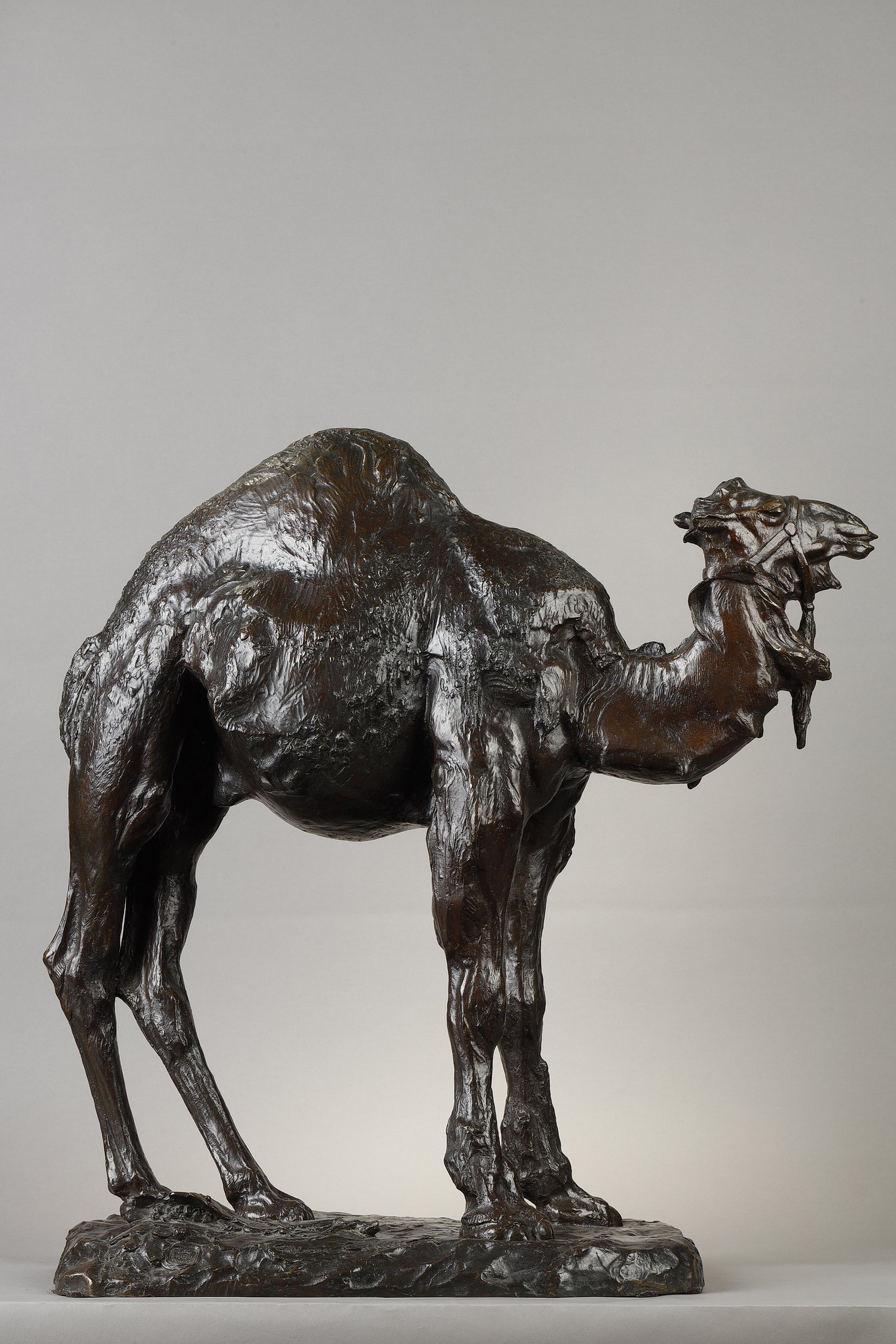
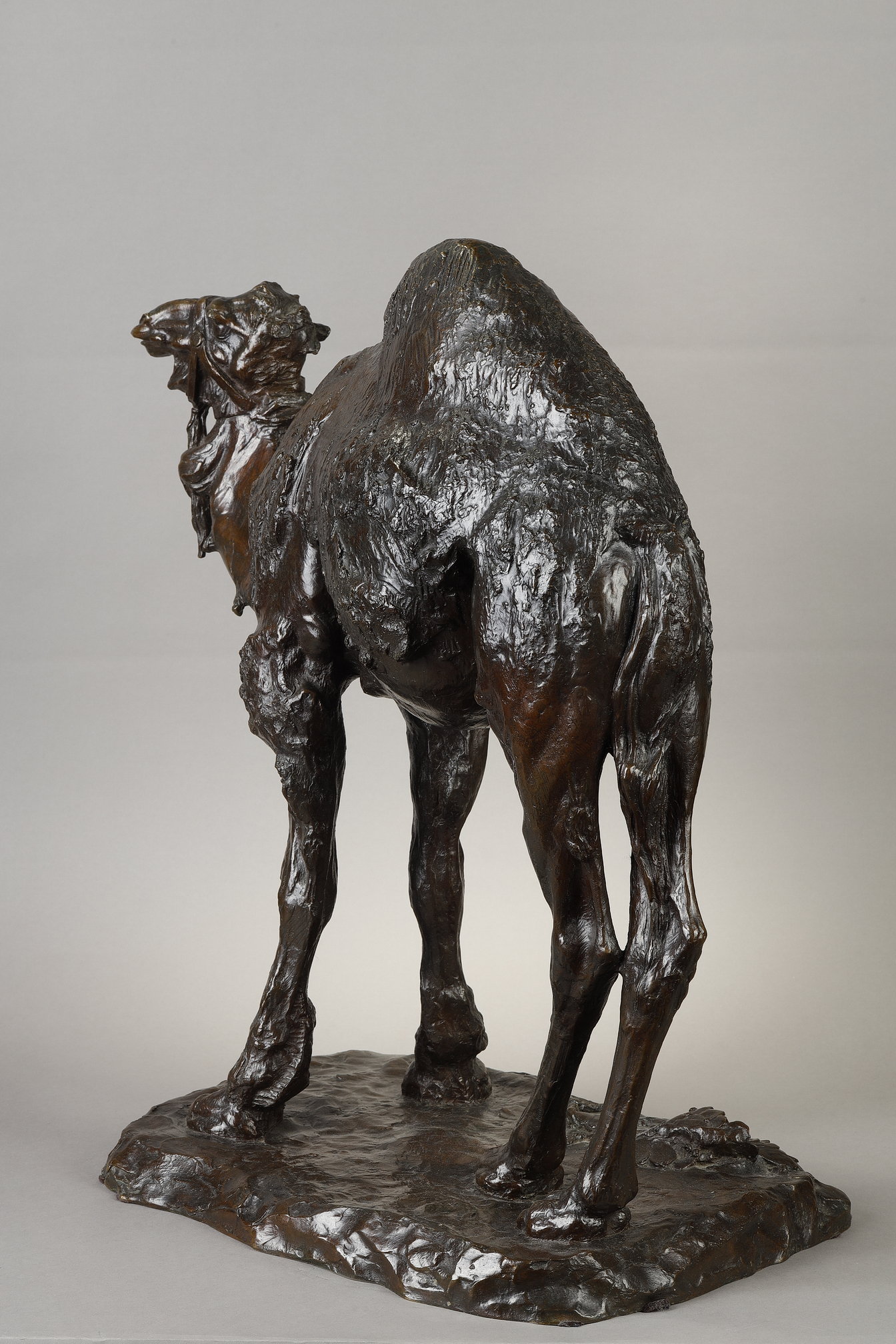
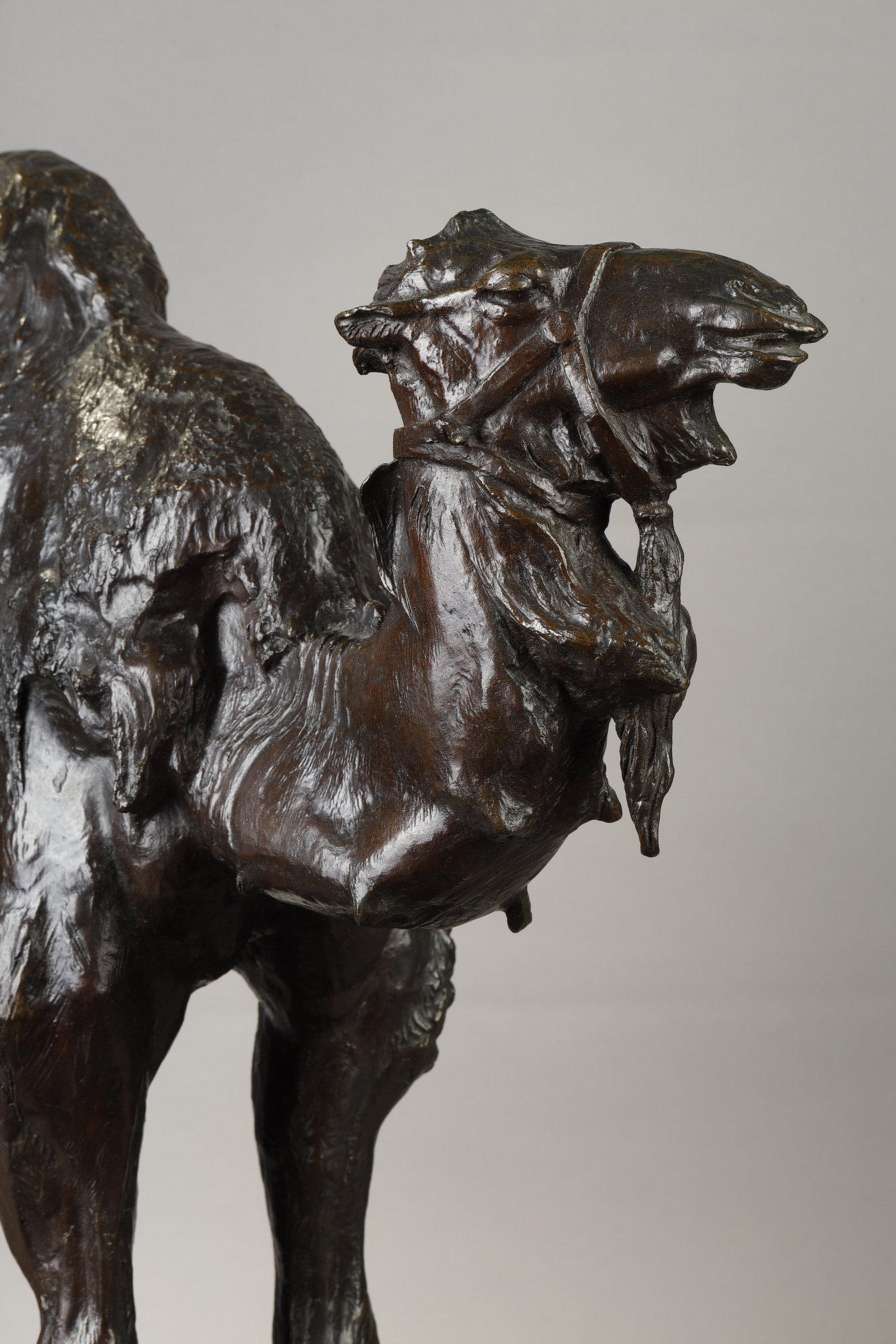
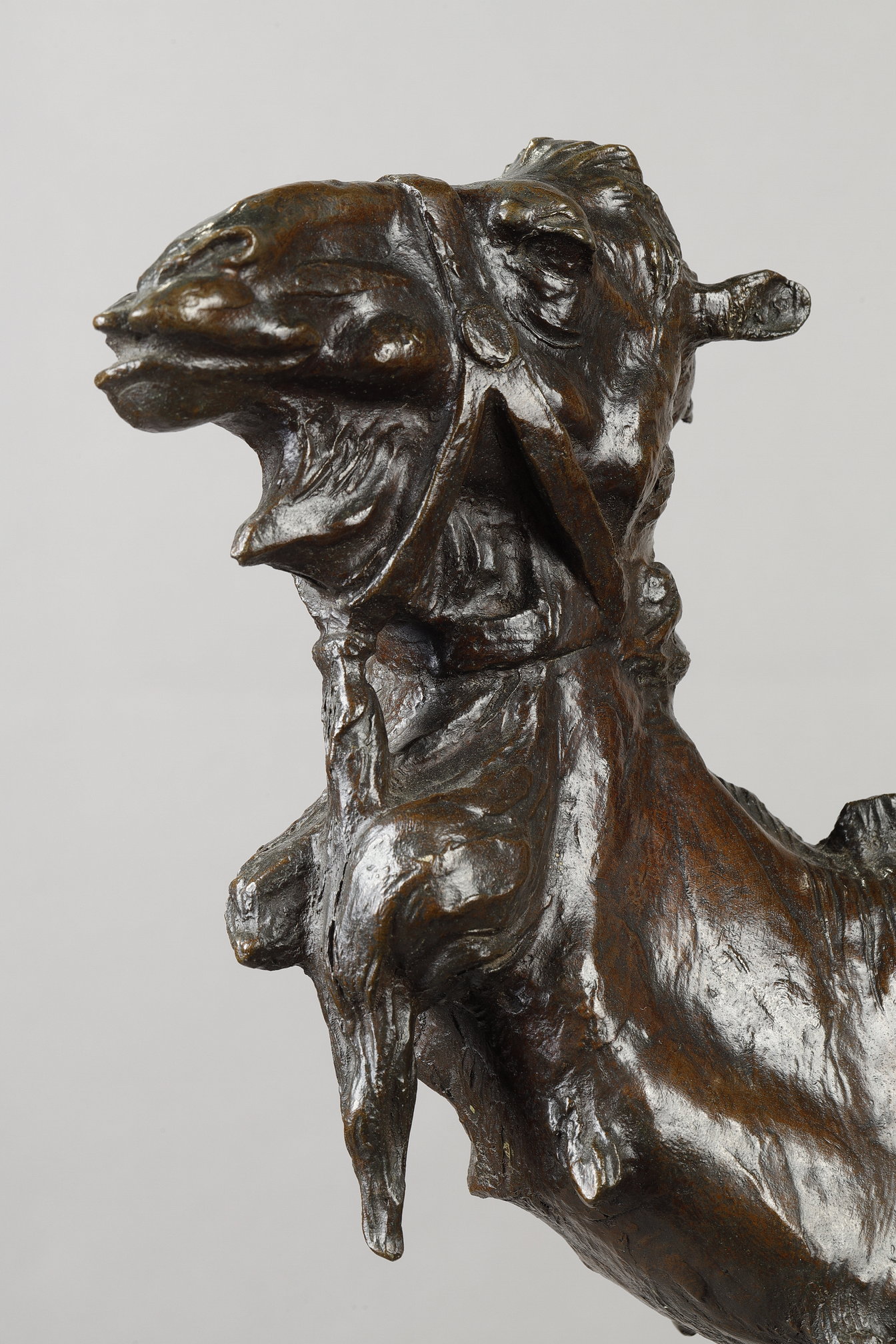
Dromedary
technical sheet
| ARTIST | Albéric Collin |
| DATE | 1921 |
| DIMENSIONS | 57 × 56.5 × 29.5 cm |
| MATERIAL | Bronze with dark patina |
| TECHNIQUE | Lost-wax |
| FOUNDRY | C. Valsuani |
| SIGNED | “Albéric Collin” | “C. VALSUANI – CIRE PERDUE” |
about the work
Dromedary, created in 1921 by Belgian sculptor Albéric Collin (1886–1962), is a remarkable example of animalier bronze sculpture. Influenced by Rembrandt Bugatti, Collin developed a distinctive naturalistic and expressive approach to animal forms, capturing not only anatomical precision but also the essence and vitality of the living creature.
This particular sculpture, cast using the lost-wax technique by the renowned founder C. Valsuani, was awarded a gold medal at the 1922 Salon de Paris. The piece stands out for its vibrant modelling, in which every texture and muscle of the dromedary is rendered with striking realism. The use of a dark patina enhances the interplay of shadow and light across the surface, creating a dramatic sense of volume and movement.
Unlike more static representations, Collin’s Dromedary preserves the spontaneity and dynamism of clay modelling. The tactile surface treatment, with its subtle variations and roughness, evokes the living presence of the animal while maintaining a sense of classical monumentality.
Records from a post-Salon exhibition held between December 29, 1922, and January 21, 1923, indicate that all four known casts of Dromedary were sold during this event — underscoring both public enthusiasm and the artist’s growing renown.
Today, Albéric Collin is regarded as one of Belgium’s foremost animal sculptors. His works are held in several major museums and private collections — a testament to his enduring legacy and to the power of his sensitive vision of the animal world.
the ARTIST
Albéric Collin
1886 – 1962
Born in Antwerp in 1886, Albéric Collin was a renowned Belgian animal sculptor of the 20th century, trained at the Royal Academy of Fine Arts. His friendship with Rembrandt Bugatti was decisive in shaping his artistic direction.
similar works