GUGLIELMO PUGI · (1850-1915)
Prowling Tiger
technical sheet
| ARTIST | GUGLIELMO PUGI |
| DATE | ca. 1910 |
| DIMENSIONS | 31,5 x 60 x 27,5 cm |
| MATERIAL | White Carrara marble |
| SIGNED | “G. Pugi” |
about the work
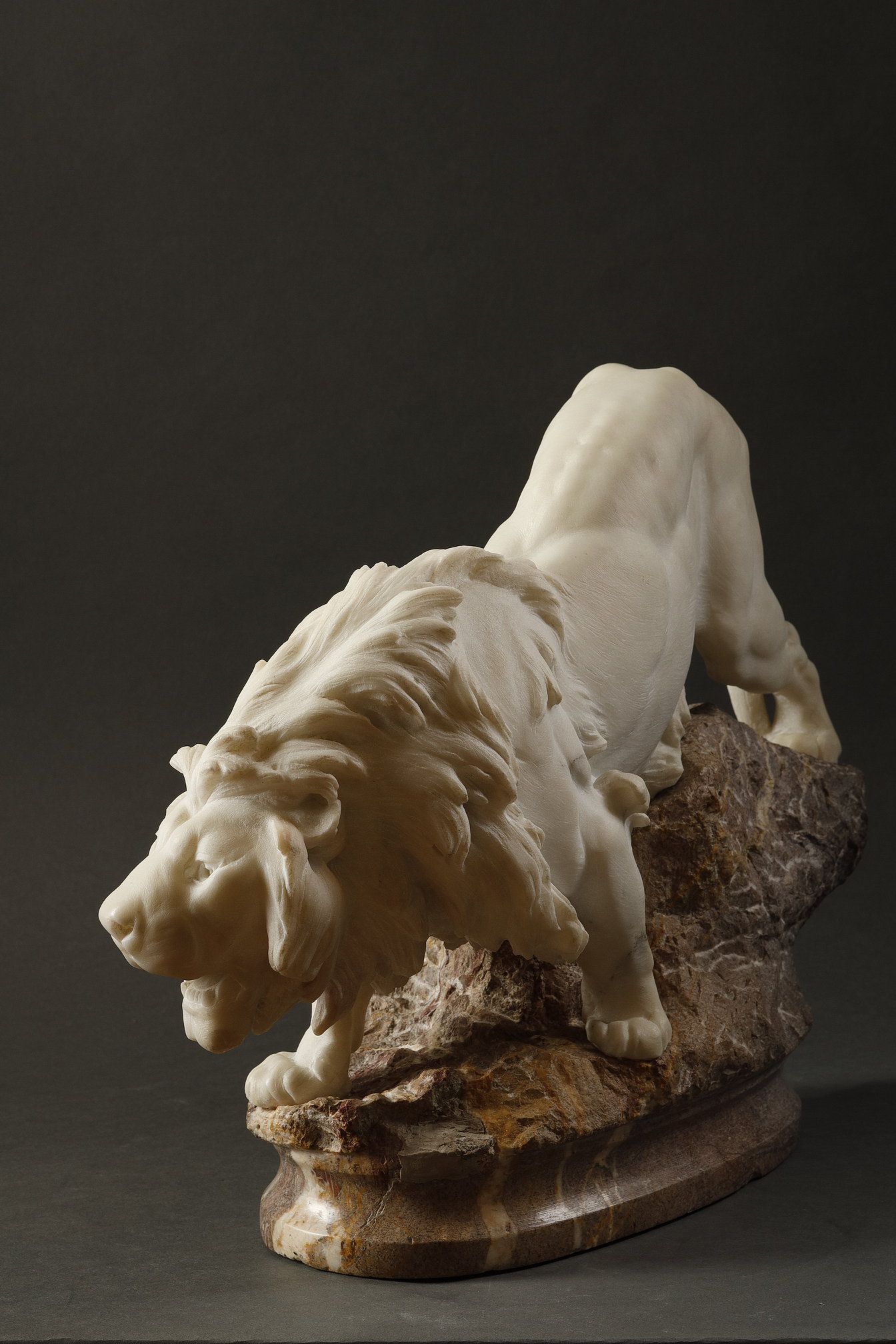
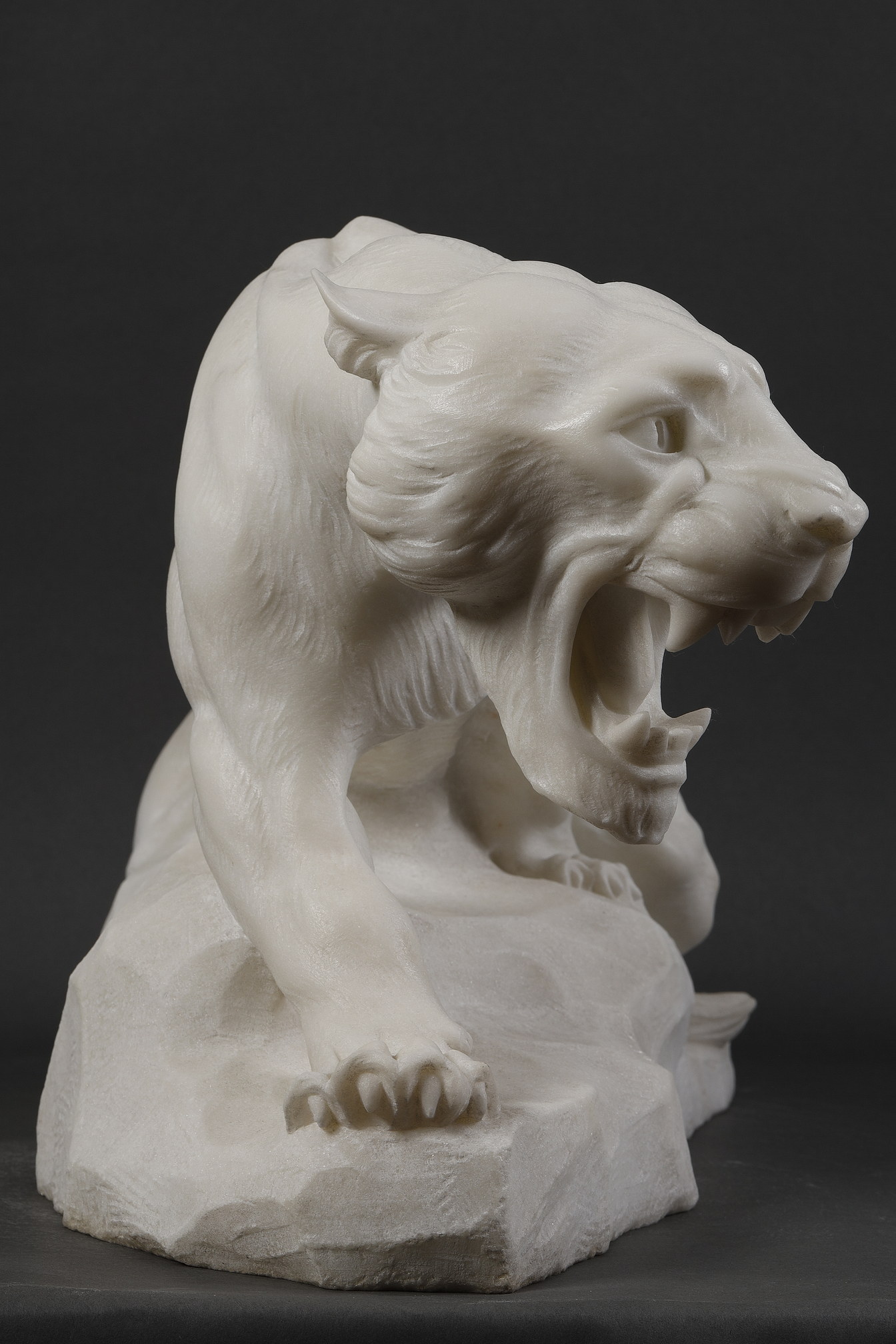
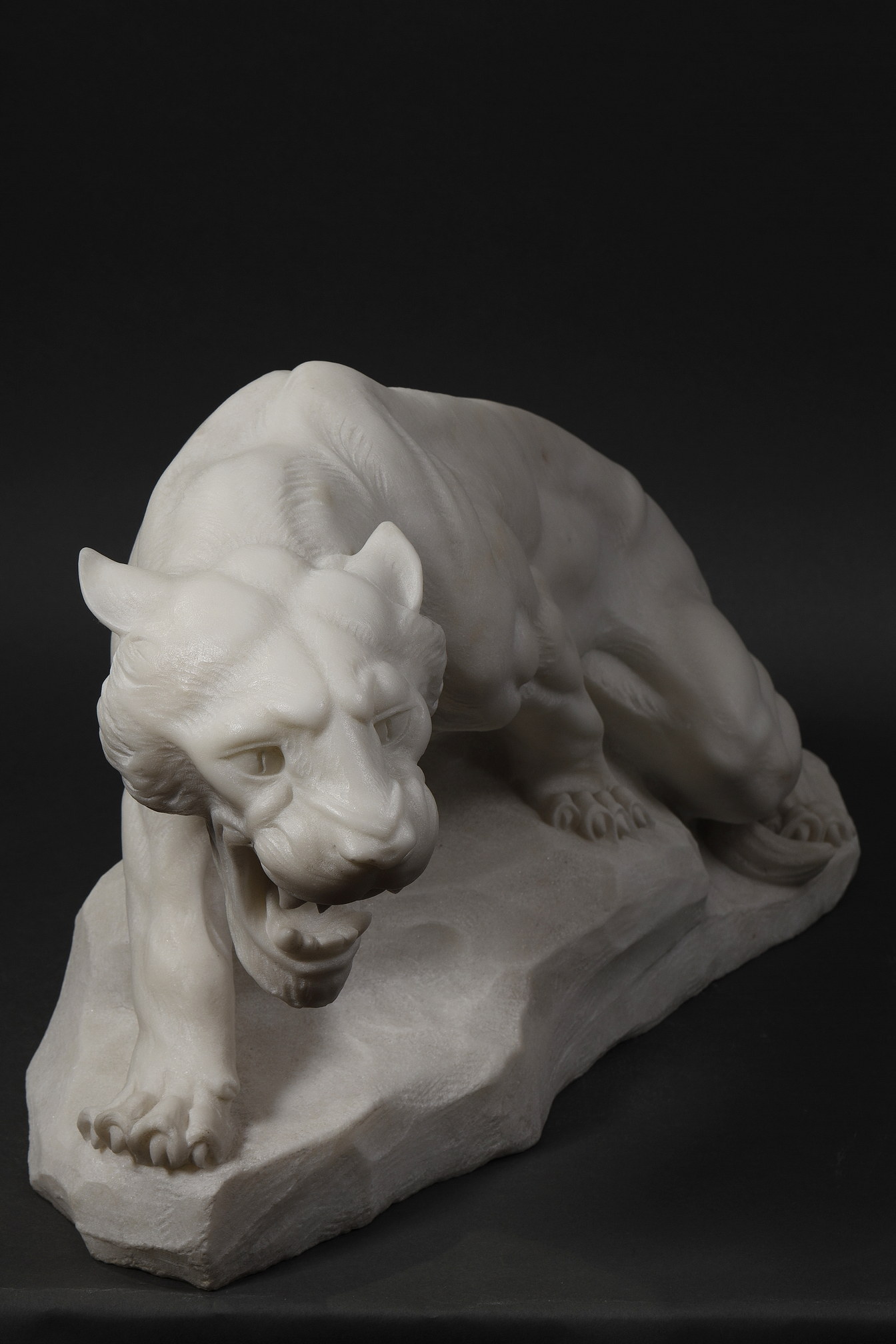
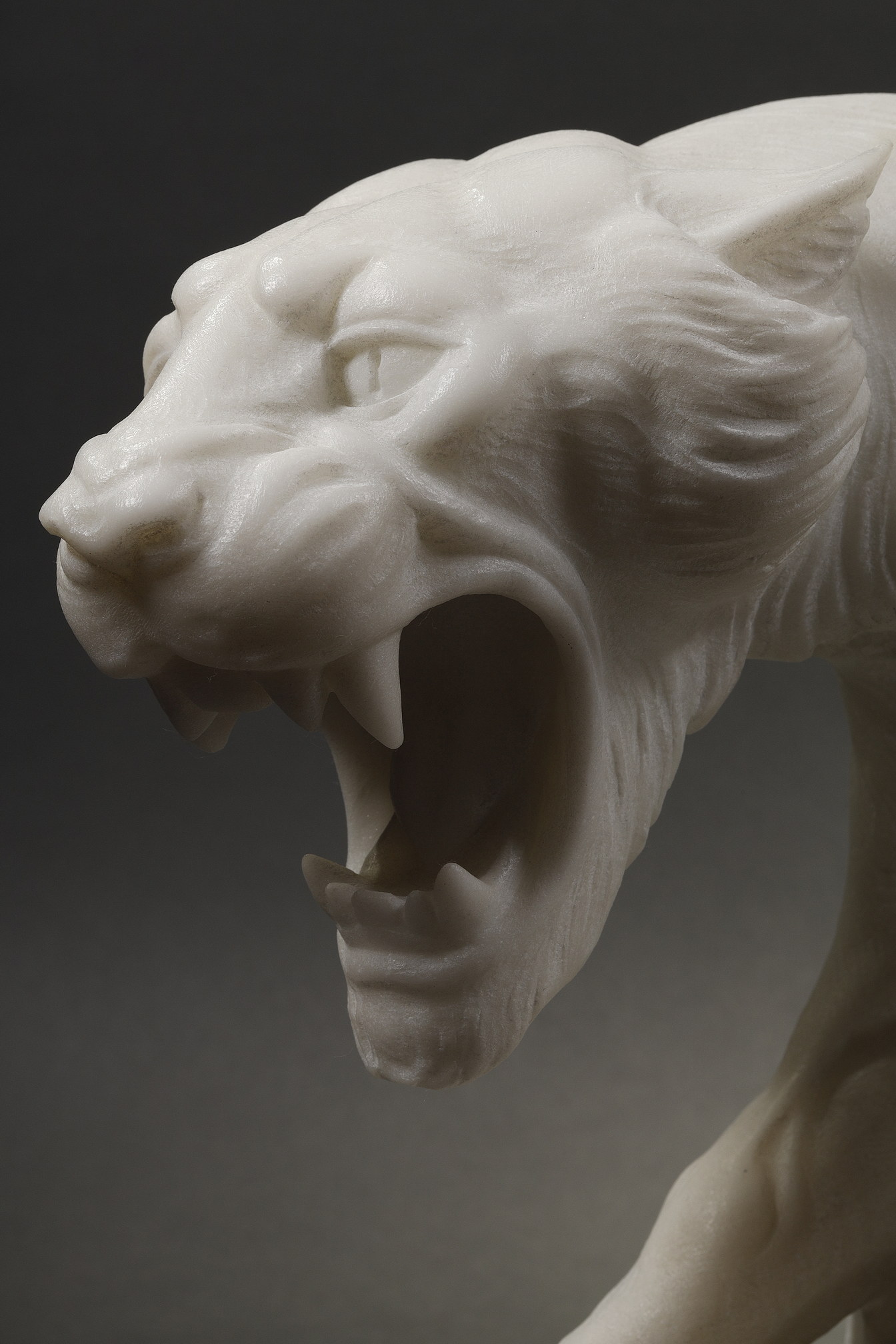
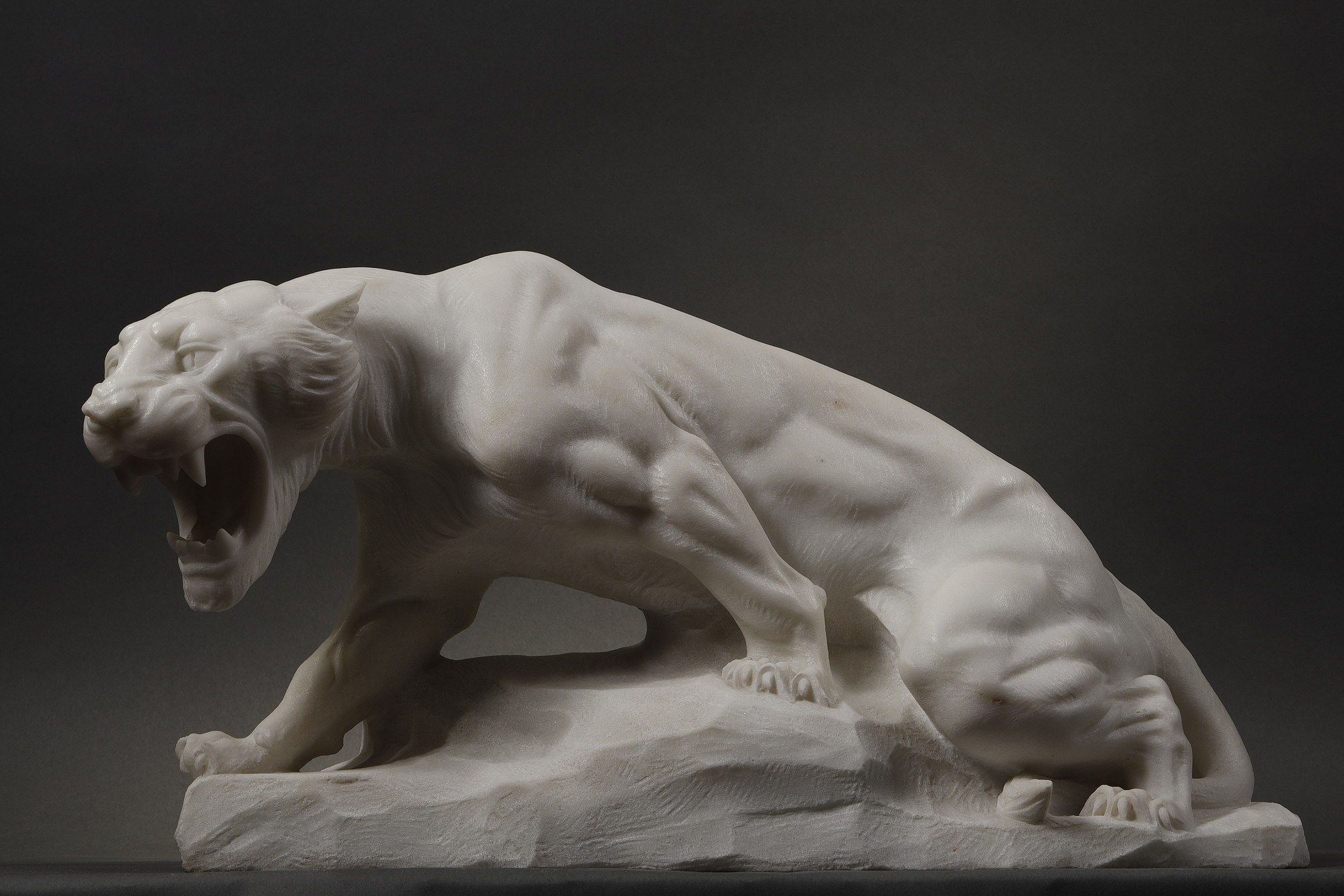
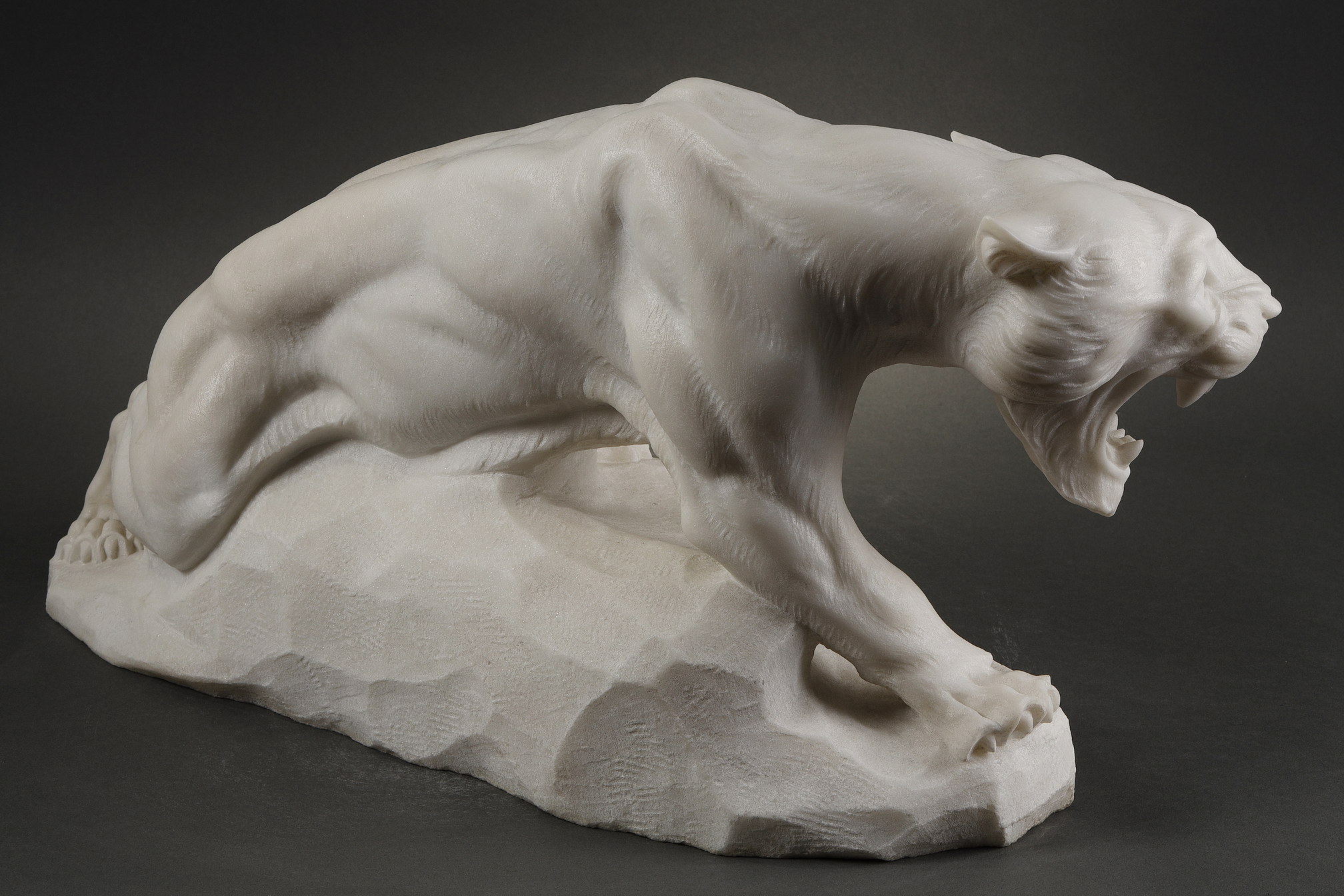
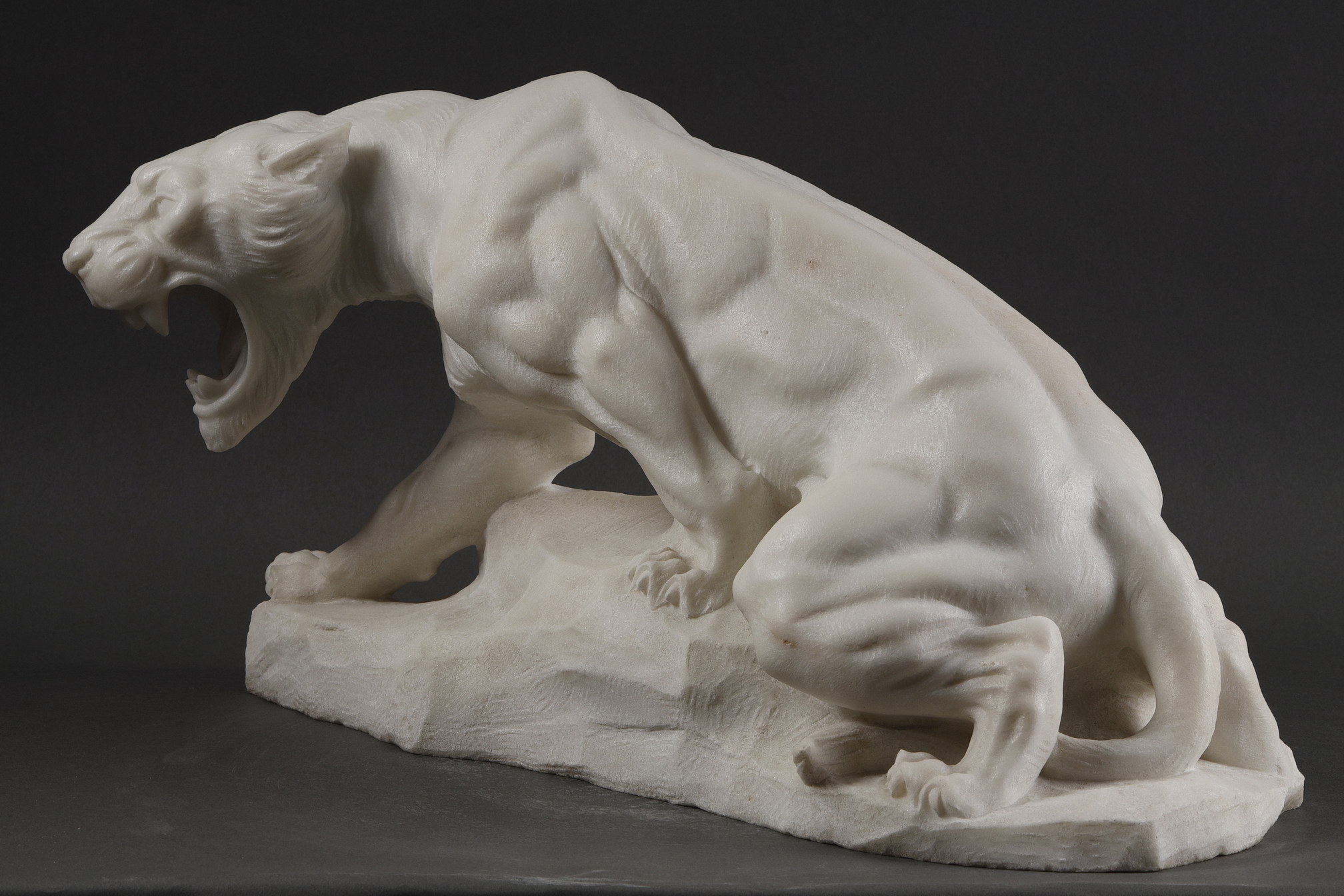
This dynamic marble sculpture, created circa 1910 by Italian sculptor Guglielmo Pugi, captures a tiger in mid-prowl with compelling realism and stylized elegance. The animal’s tense posture—teeth bared and body low to the ground—suggests a moment of predatory awareness, as though caught stalking unseen prey. The composition conveys both raw energy and lithe fluidity, instilling the figure with lifelike presence.
Pugi embraces a refined aesthetic reminiscent of early Art Deco: the tiger’s sleek form and clean lines emphasize elegance over naturalistic softness. This architectural rendering of feline power reveals a bold artistic vision—one that balances formality and dynamism.
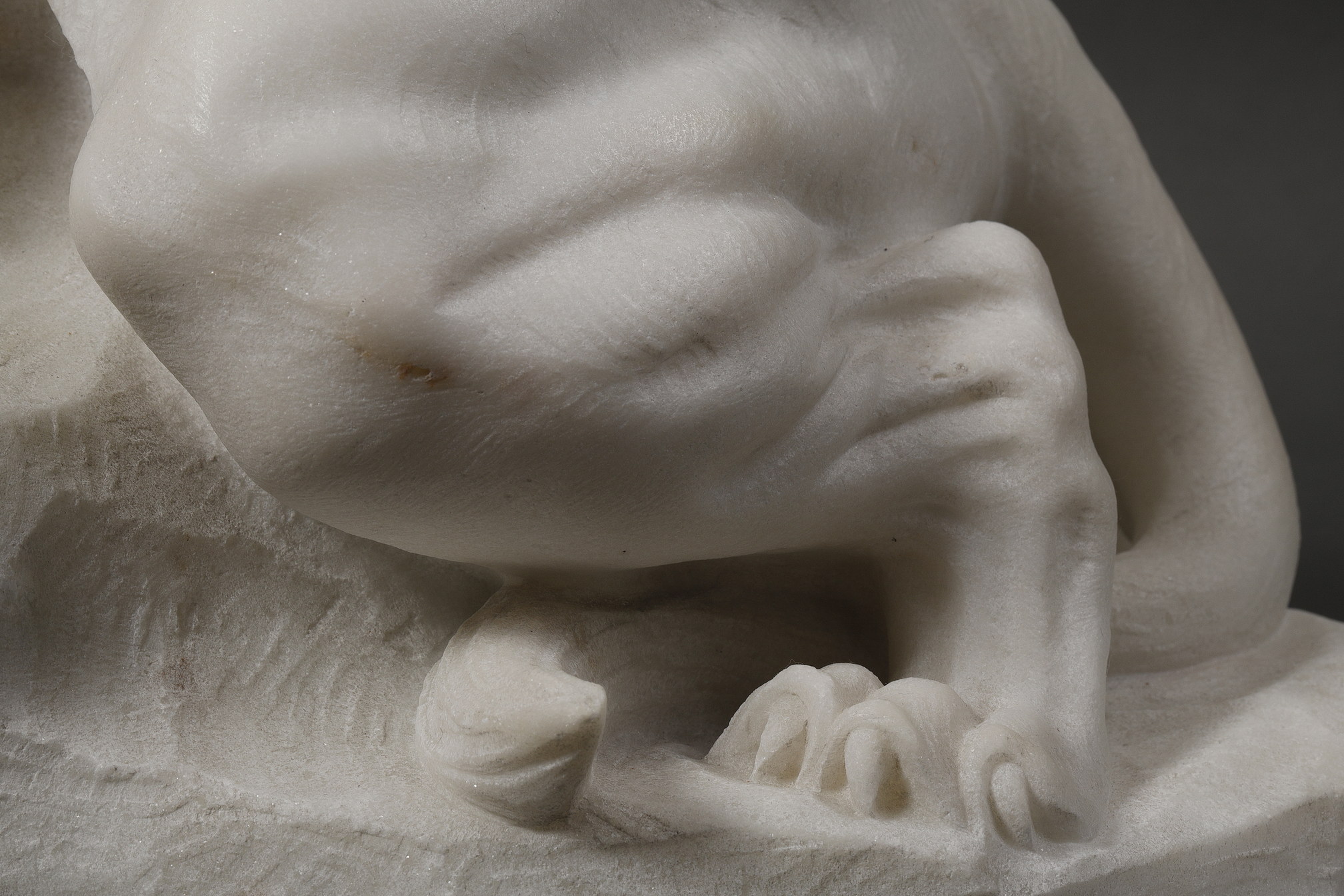
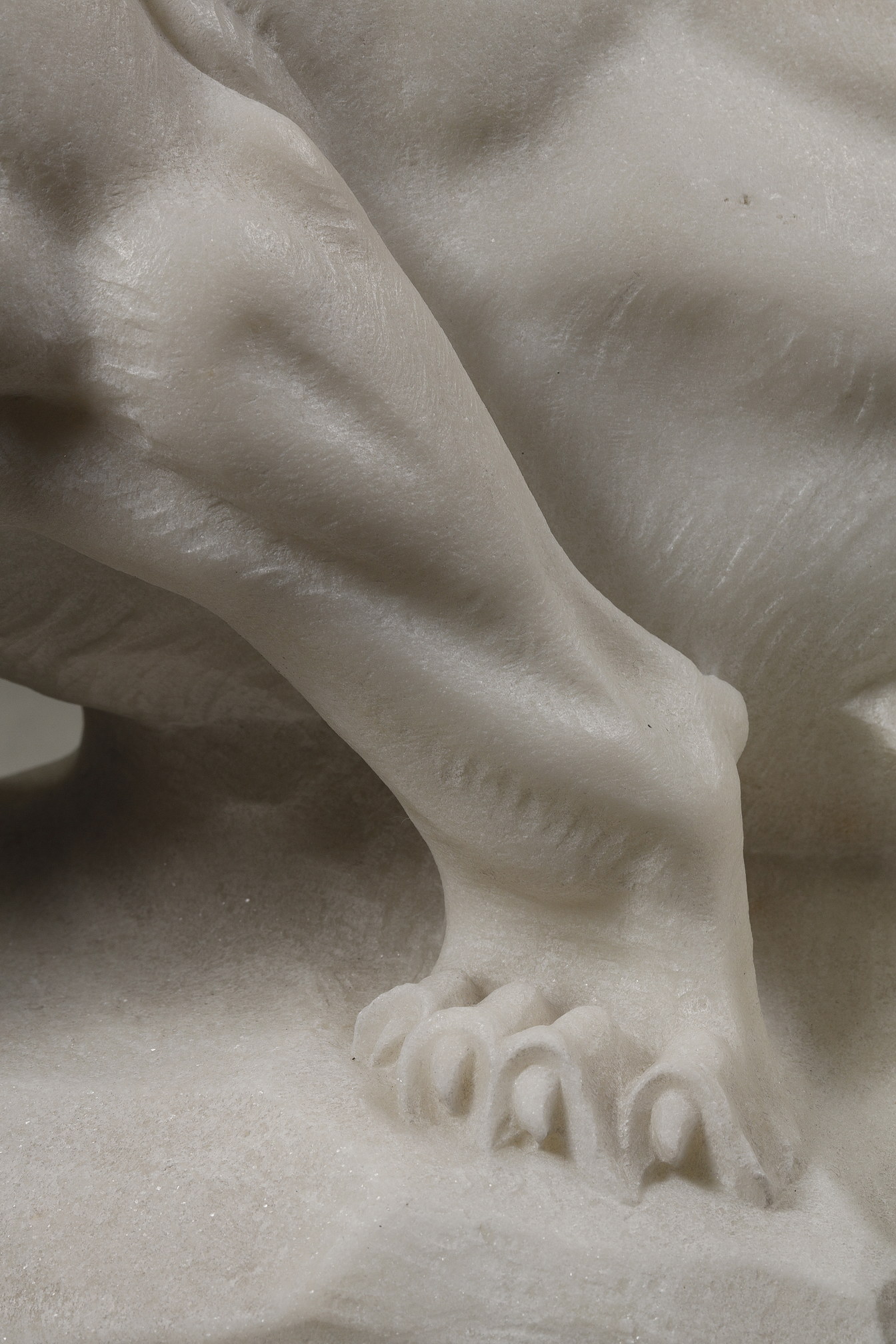
Carved in luminous white Carrara marble, the sculpture demonstrates remarkable technical skill. Marble renditions of animal subjects are uncommon, particularly when executed with such attention to anatomical detail. Musculature, paws, and facial features are finely modelled, while the marble’s natural veining enhances the sense of sinewy strength and tension beneath the surface.
Importantly, the rugged rock–shaped base is integral to the composition. It anchors the tiger’s crouched pose and amplifies the visual tension, evoking a landscape of suspense and anticipation. The inscription “G. Pugi” affirms the work’s attribution to the artist.
This sculpture exemplifies animalier art at the intersection of tradition and modernity. Rooted in realism yet lean in style, it showcases Pugi’s ability to infuse classic stone with bold, contemporary energy—making it a striking testament to early 20th-century mastery in animal sculpture.
Literature
- PANZETTA, A. Nuovo Dizionario degli Scultori Italiani dell’Ottocento e del primo Novecento, 3e éd. Italy : Umberto Allemandi & C., 2003. Vol.2. p. 703 & p.761.
the ARTIST
GUGLIELMO PUGI
1850 – 1915
Born in 1850 in Fiesole, near Florence, Guglielmo Pugi was a leading figure of Italian Art Nouveau sculpture at the turn of the 20th century. In his Florentine workshop, named “Guglielmo Pugi e i figli,” he collaborated with his sons Gino (b. 1877) and Fiorenzo (b. 1880), crafting refined works in Volterra alabaster and Carrara marble, particularly the prized veined white variety.
similar works