ADOLFO CIPRIANI · (1857–1941)
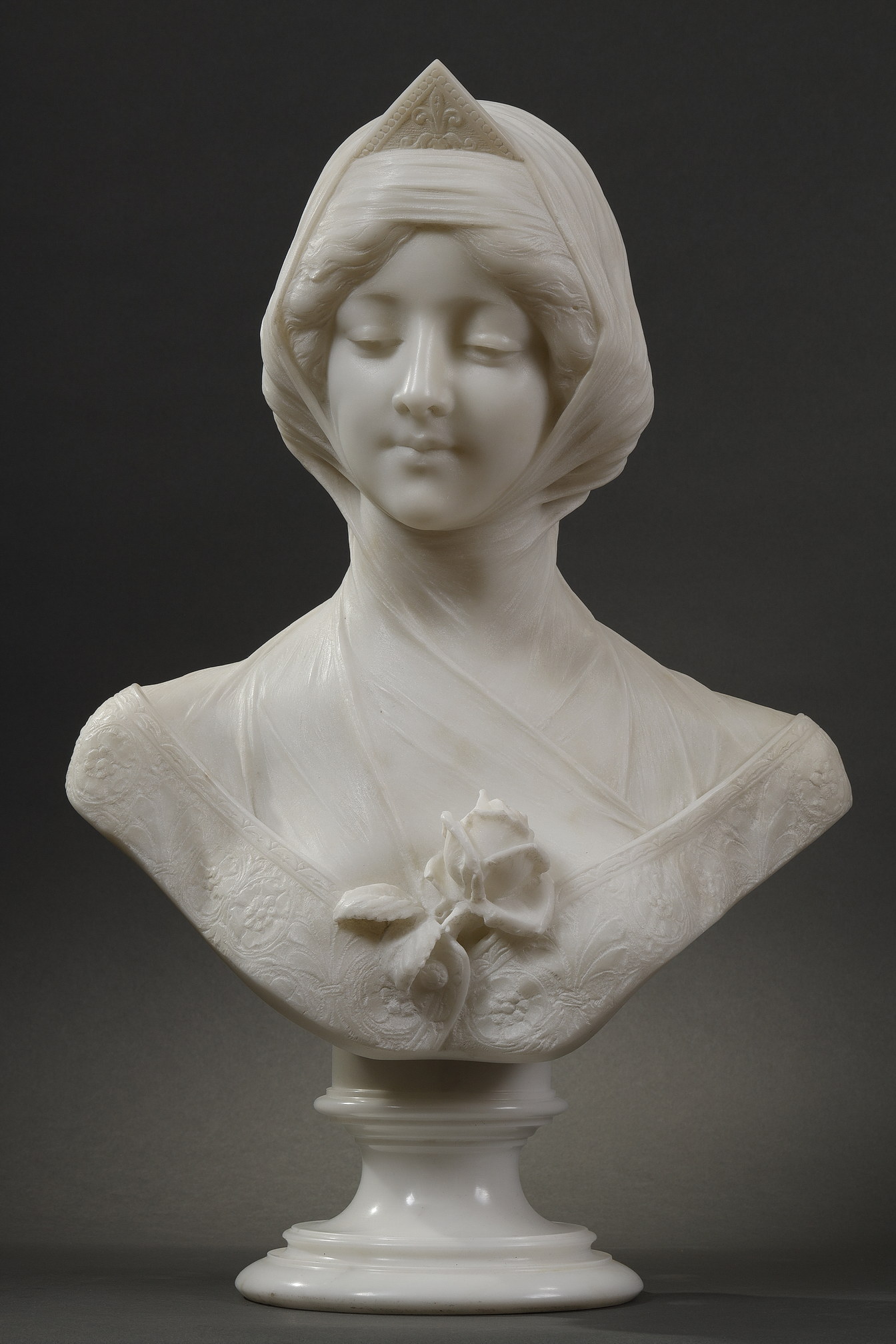
Veiled Bust With a Rose
technical sheet
| ARTIST | Adolfo Cipriani |
| DATE | ca. 1910 |
| DIMENSIONS | 56 × 39 × 19 cm |
| MATERIAL | White Carrara marble |
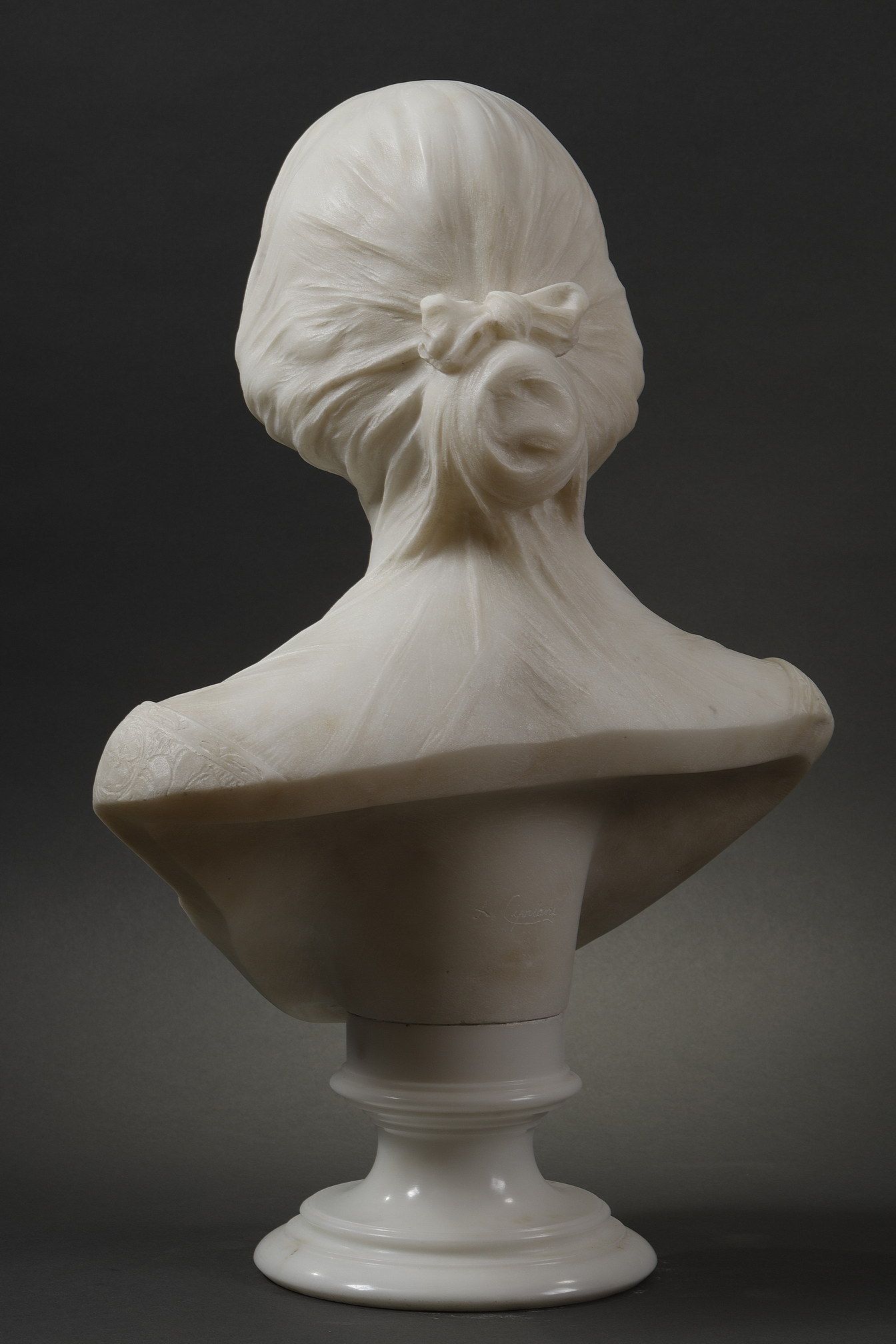
| SIGNED | “A. Cipriani” |
about the work
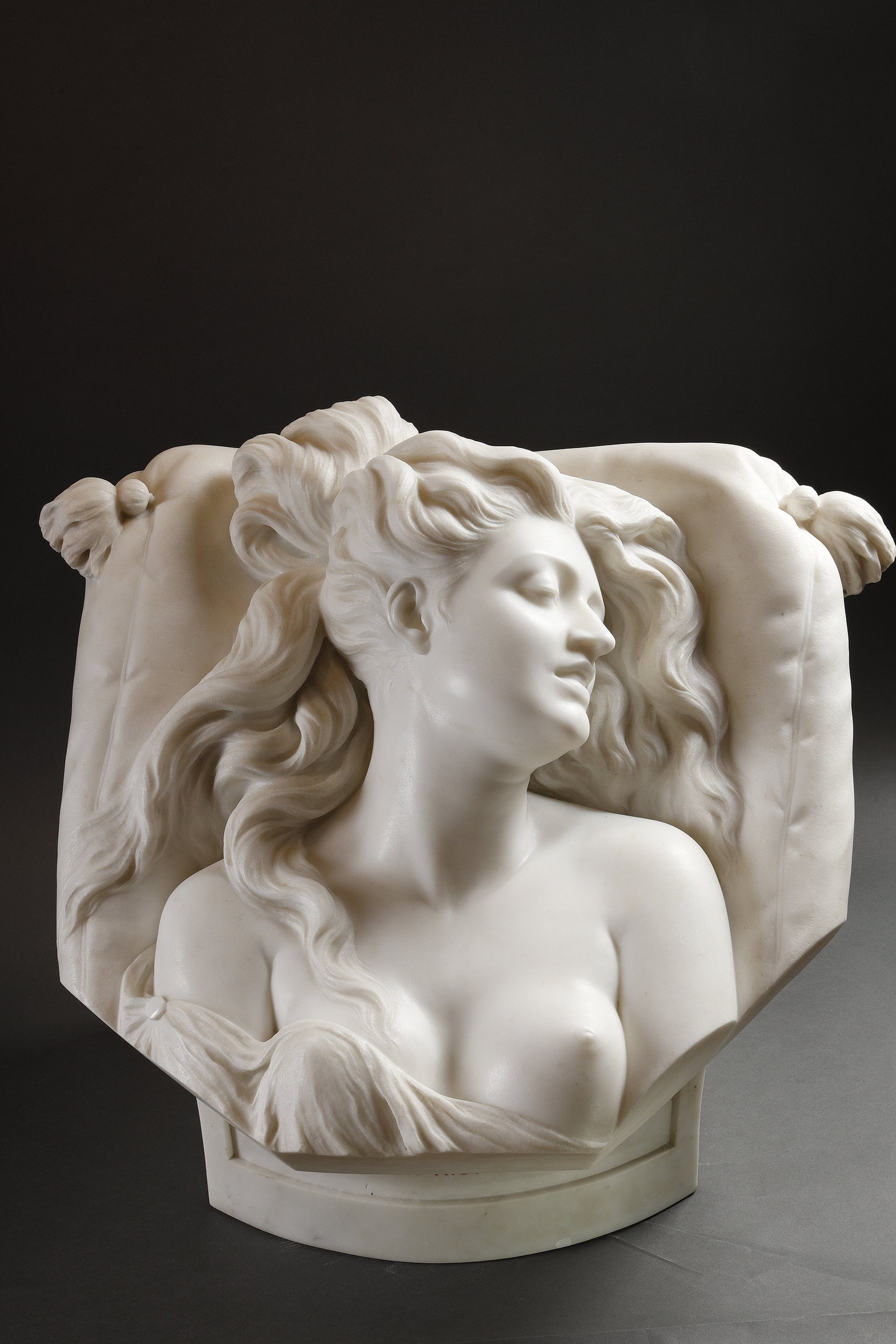
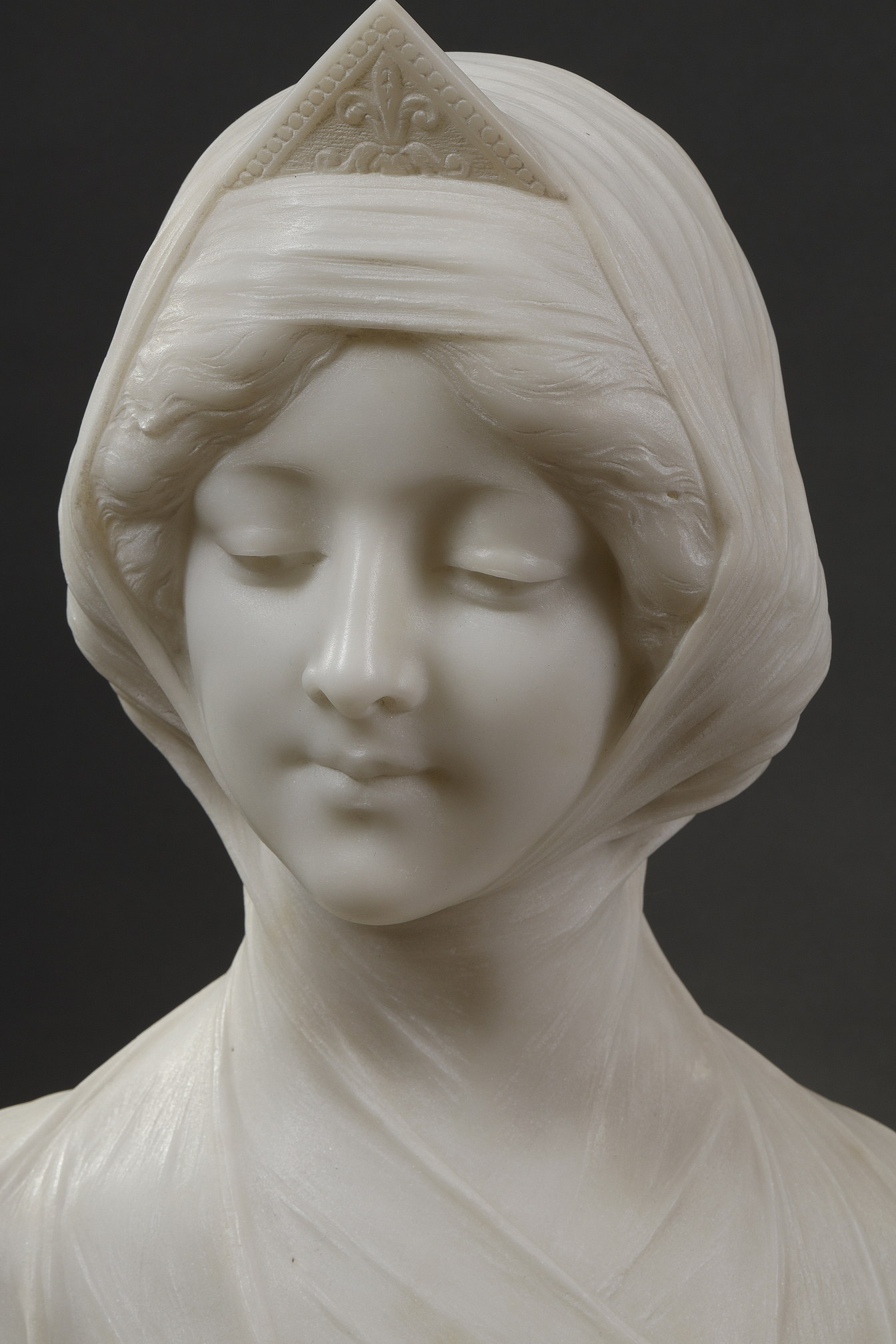
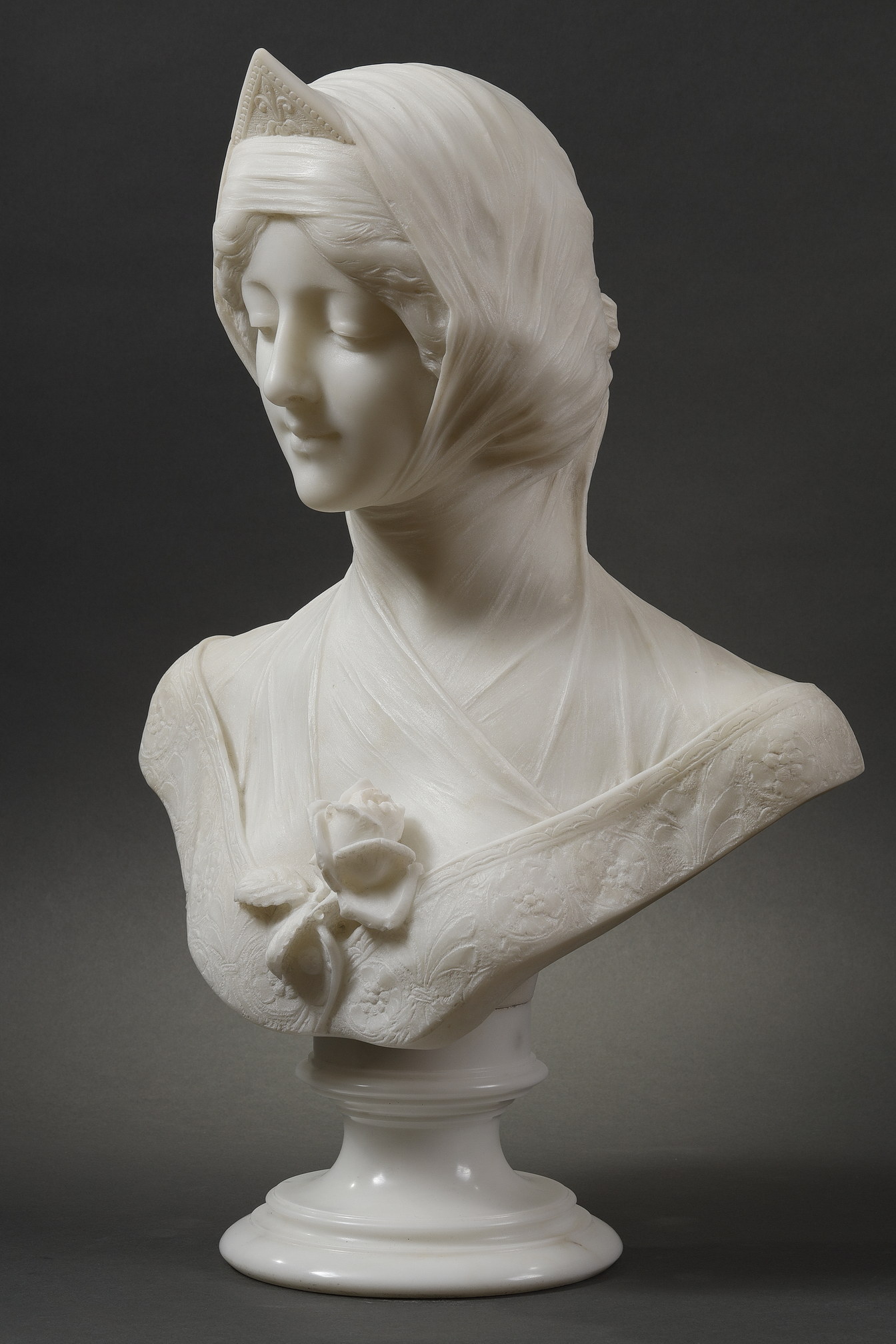
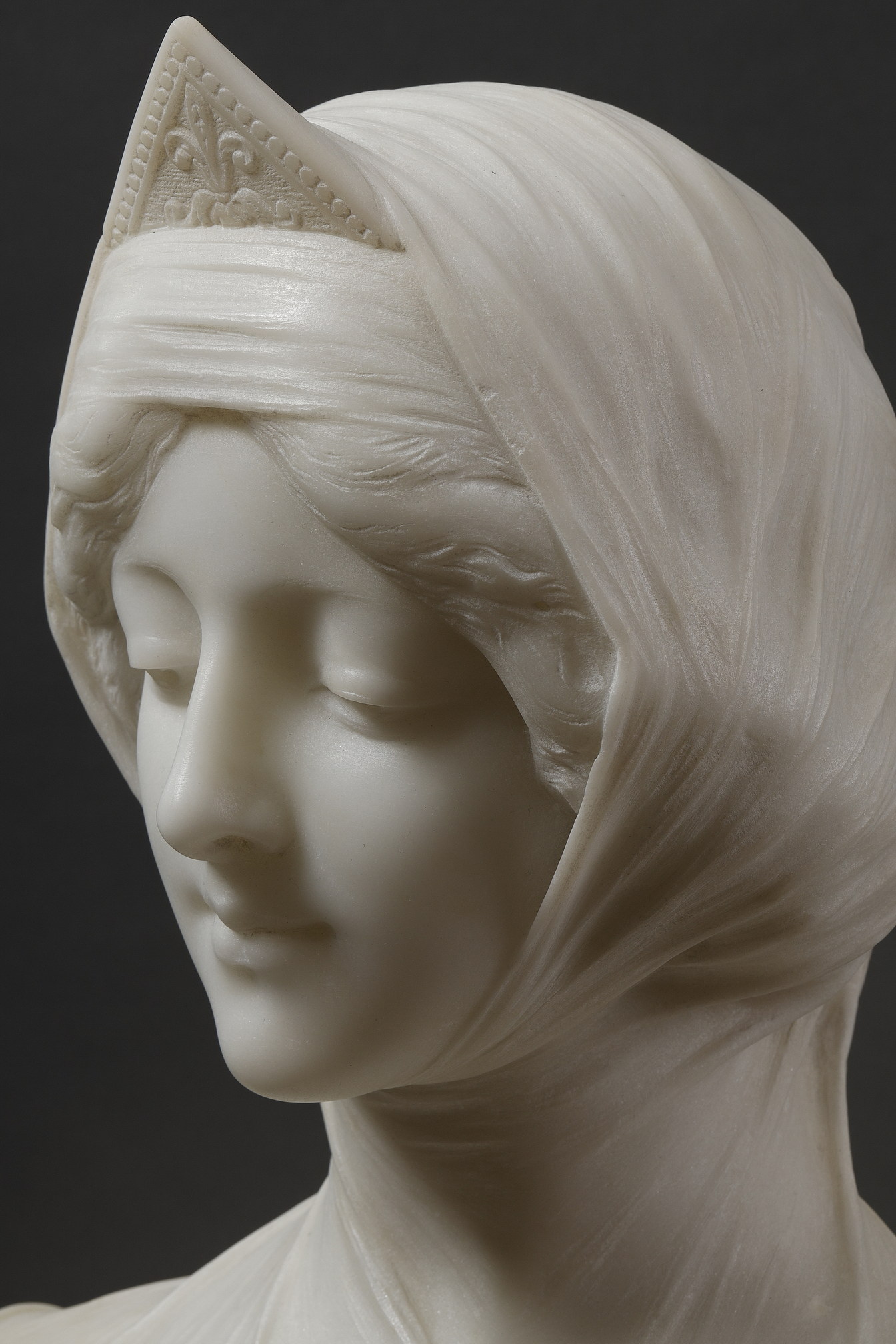
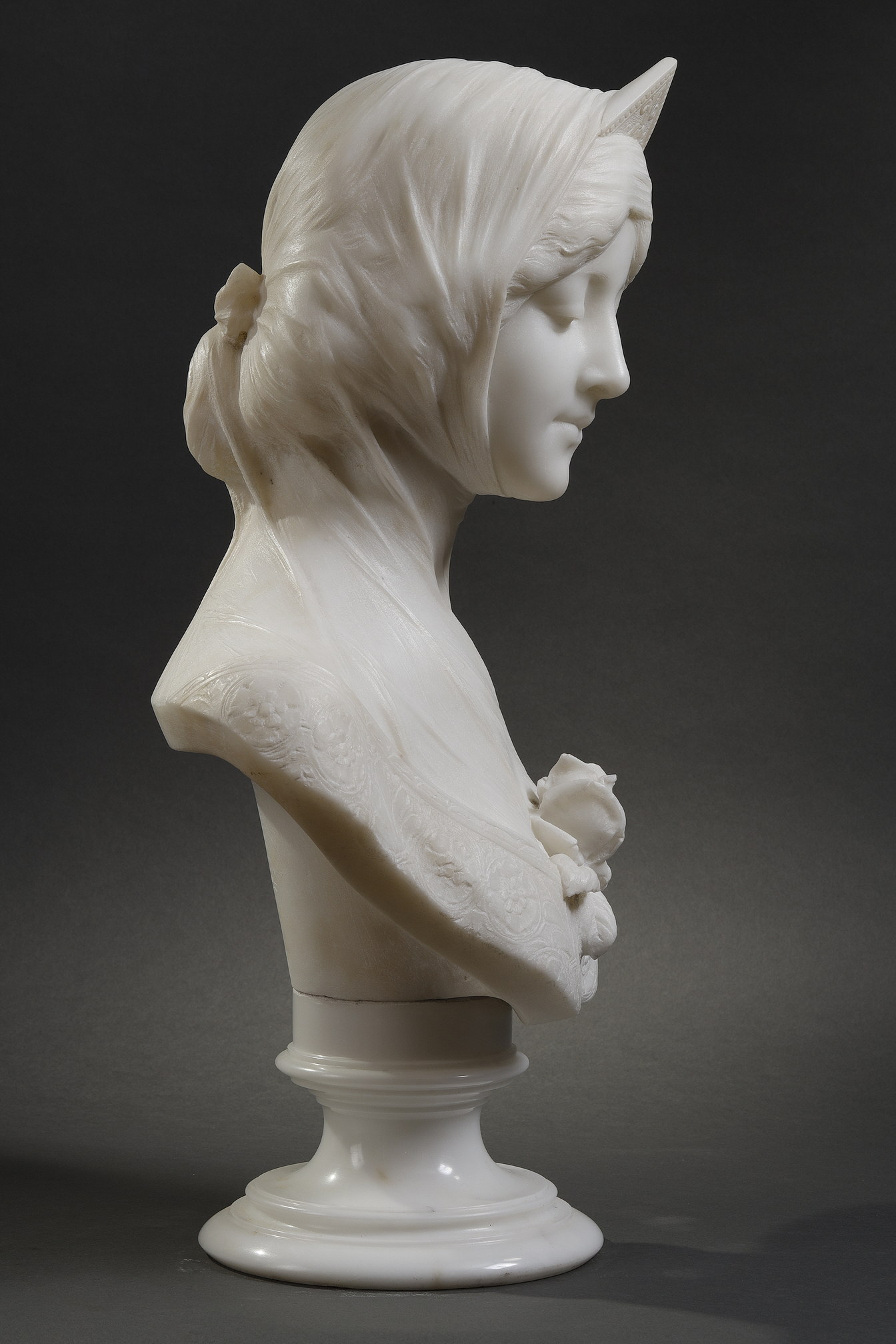
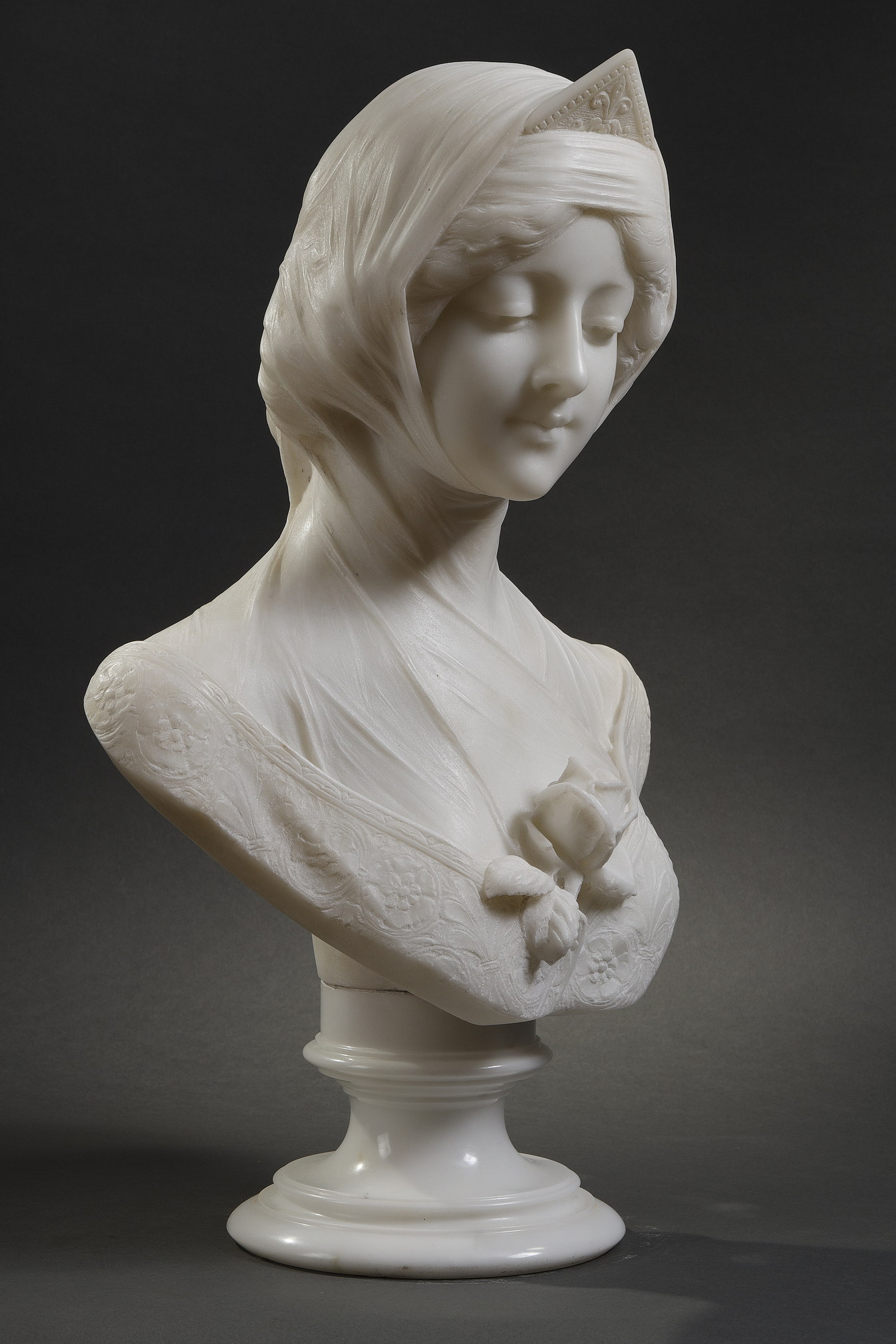
The present work is a marble bust of exceptional artistic refinement, depicting a young woman of serene and contemplative bearing. The figure wears a delicate headdress reminiscent of medieval or Renaissance styles, covering her hair and framing her face with quiet elegance. Her expression, with eyes closed or downcast, conveys a profound sense of serenity and inner life.
The drapery is meticulously carved, demonstrating the sculptor’s mastery in rendering the folds and textures of fabric. A finely sculpted rose rests on the front of the bust, a traditional symbol of beauty, purity, and courtly love.
Several iconographic features strongly suggest that this bust portrays Beatrice Portinari (1265–1290), the immortal muse of Dante Alighieri and central figure of the Vita Nova and the Divine Comedy. The headdress worn by the figure, a fitted veil framing the face with refined sobriety, is characteristic of the canonical representations of Beatrice in the Italian figurative tradition of the nineteenth century. It recurs consistently in busts and portraits inspired by the Dantesque model, particularly among neo-Florentine sculptors contemporary with Cipriani, who drew extensively from medieval iconography to portray the poet’s beloved.
The rose, moreover, carries here a significance beyond mere ornament: in Dantesque symbolism, the rose is the emblematic flower of Beatrice and of the spiritual love she embodies. In Canto XXXI of the Paradiso, Dante himself describes the mystical rose at whose centre the figure of his beloved radiates. Combined with the veil, an attribute of purity and transcendence, the flower further reinforces the identification with Beatrice rather than with an anonymous allegorical figure.
The recollected expression, with eyes lowered or closed, also participates in this reading: Beatrice is traditionally depicted in a state of inner grace, simultaneously remote and luminous, as Dante describes her at their first encounter. This sculptural inwardness is far from incidental, it constitutes a strong iconographic marker in Italian artistic production of the late nineteenth century, a period of intense Dantesque revival closely linked to the Risorgimento and Italian unification, which elevated Dante, and Beatrice, as emblematic figures of national cultural identity.
Adolfo Cipriani, active within this context, belongs fully to this tradition. His marble female busts, celebrated for their delicacy of execution and poetic sensibility, reflect a thorough knowledge of medieval iconography and a marked inclination toward literary and Romantic subjects. Taken together, the headdress, the veil, the rose, the expression, the artistic context, these elements converge to make this bust a highly probable representation of Beatrice Portinari, the eternal embodiment of ideal love in Western culture.
Literature
- PANZETTA, Antonio. Nuovo Dizionario degli Scultori Italiani dell’Ottocento e del primo Novecento. Turin : Adarte, 2003.
the ARTIST
Adolfo Cipriani
Italy, 1857 – 1941
Born in Italy in 1857, Adolfo Cipriani trained in the great Tuscan tradition of marble sculpture. Active from around 1880 to 1930, he specialized in female portraits and allegorical figures in alabaster and white Carrara marble.
similar works