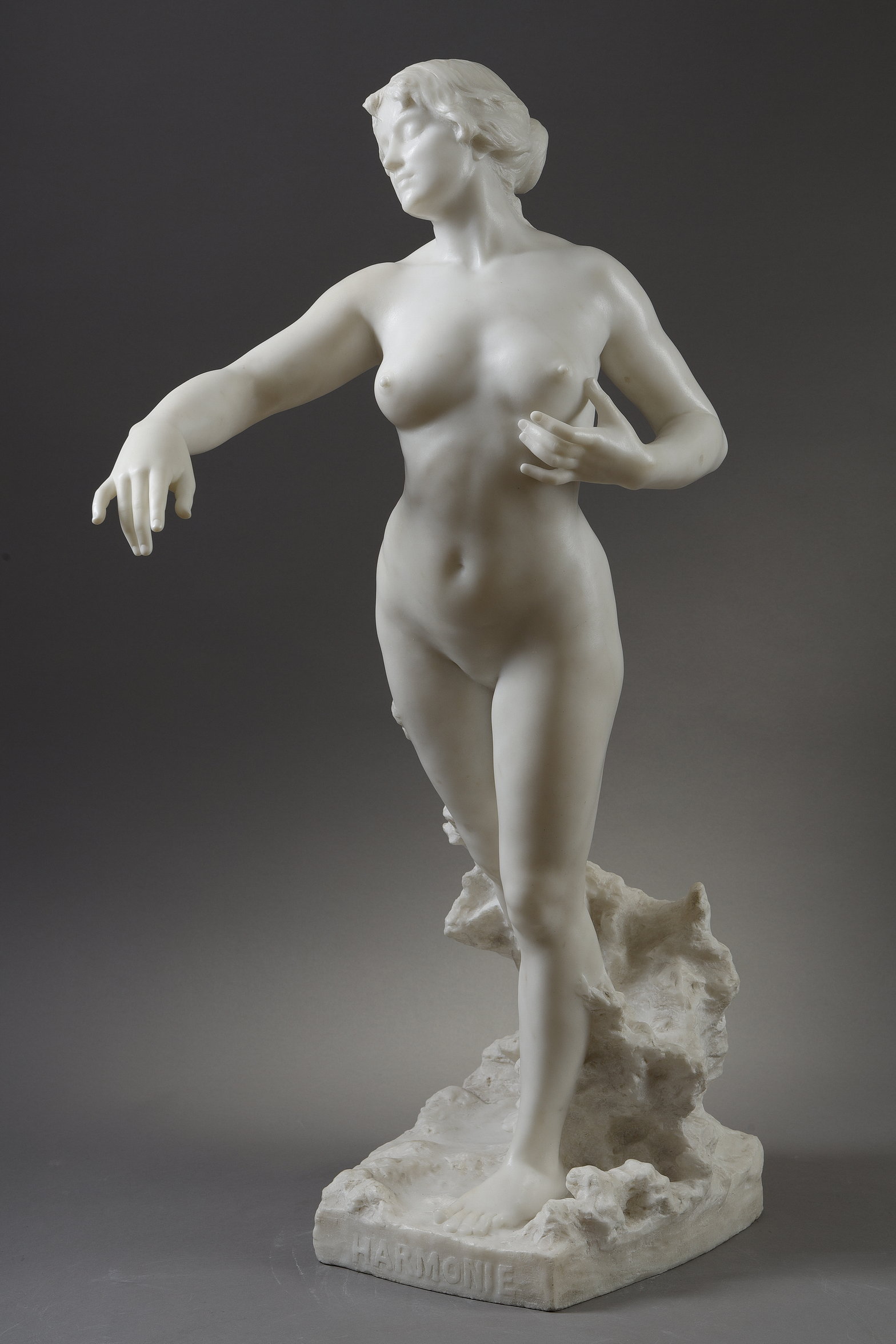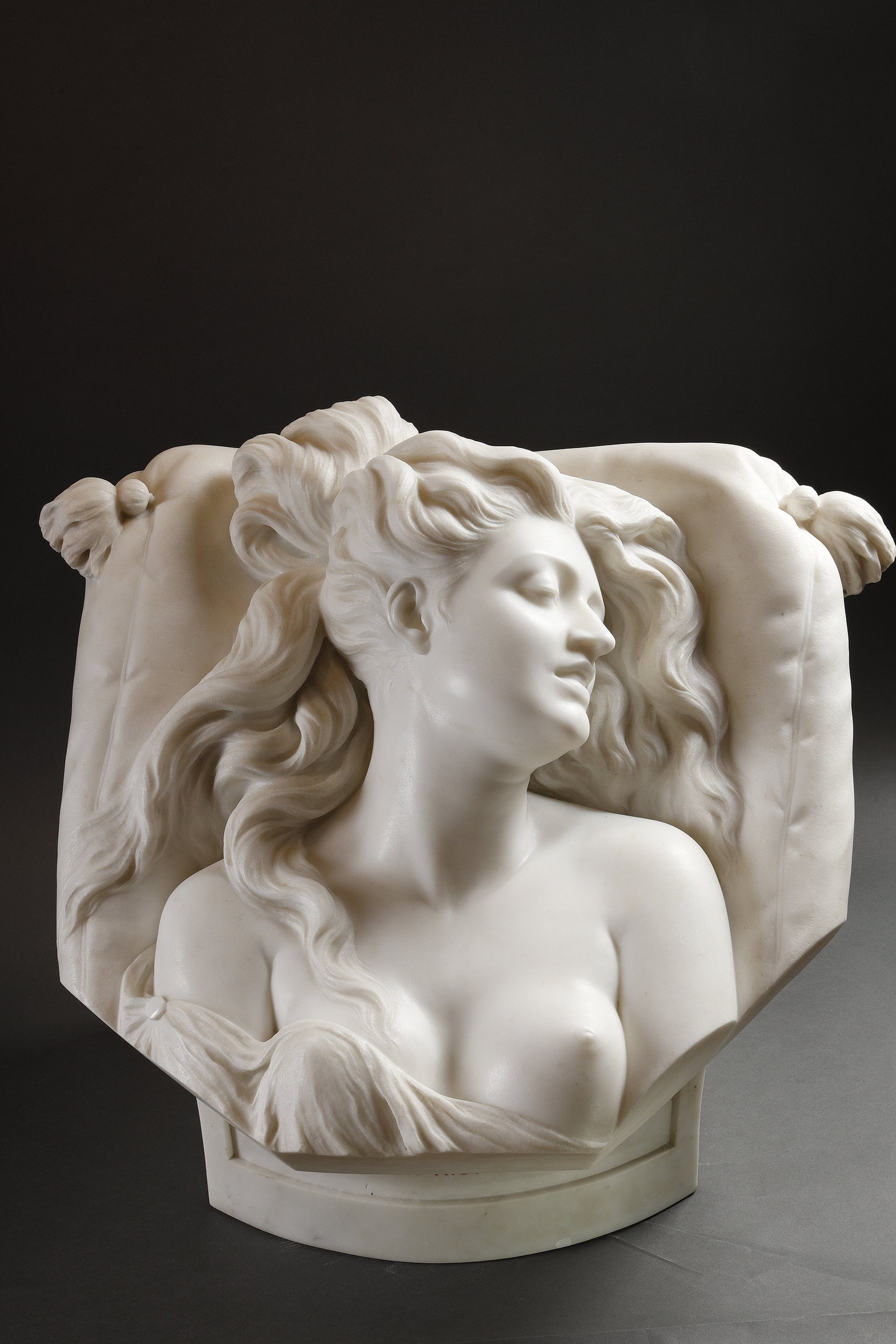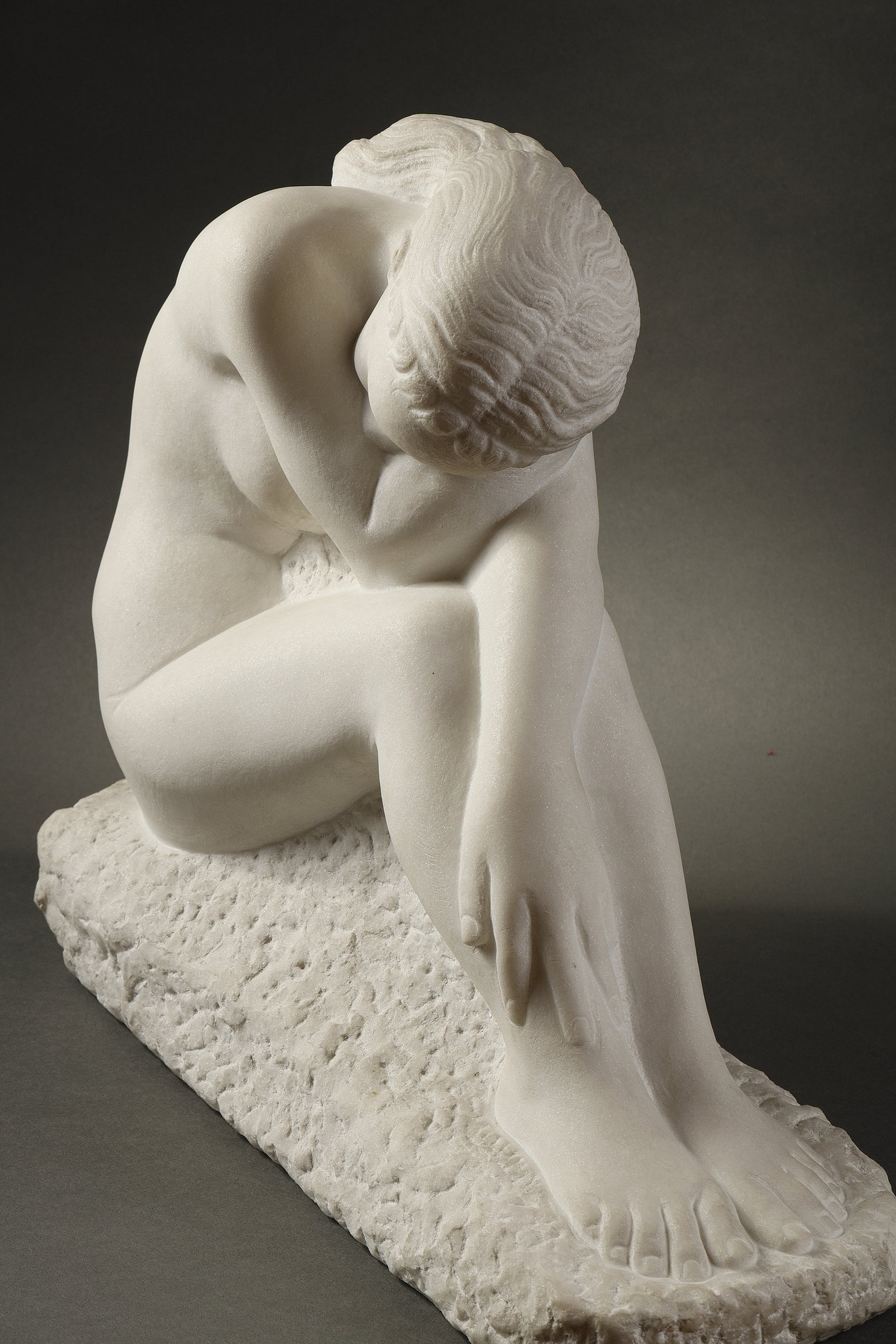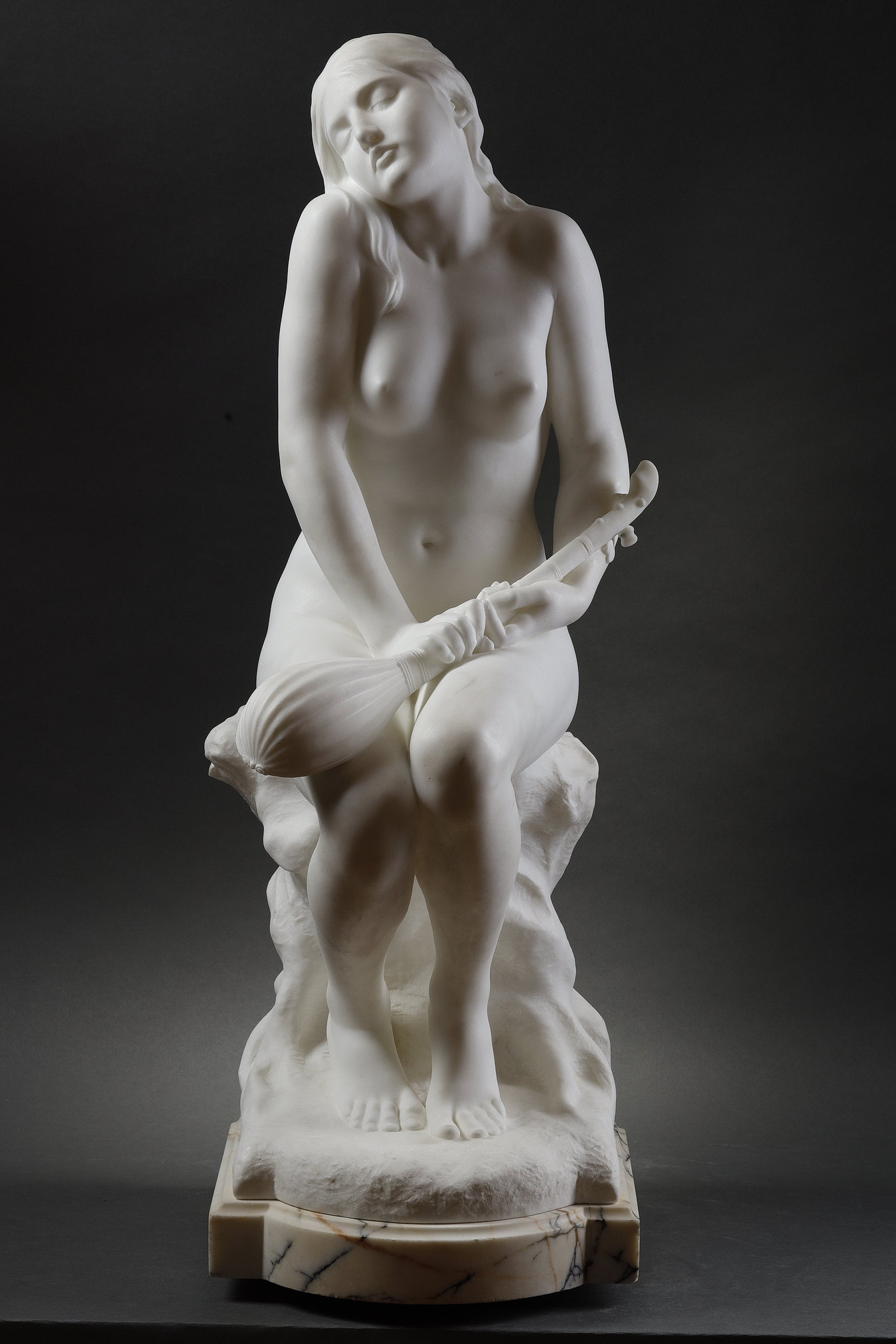
UMBERTO BIAGINI
The Allegory of Science
technical sheet
| ARTIST | Umberto Biagini |
| DATE | ca. 1900 |
| DIMENSIONS | 49 × 96 × 18 cm |
| MATERIAL | White Carrara marble |
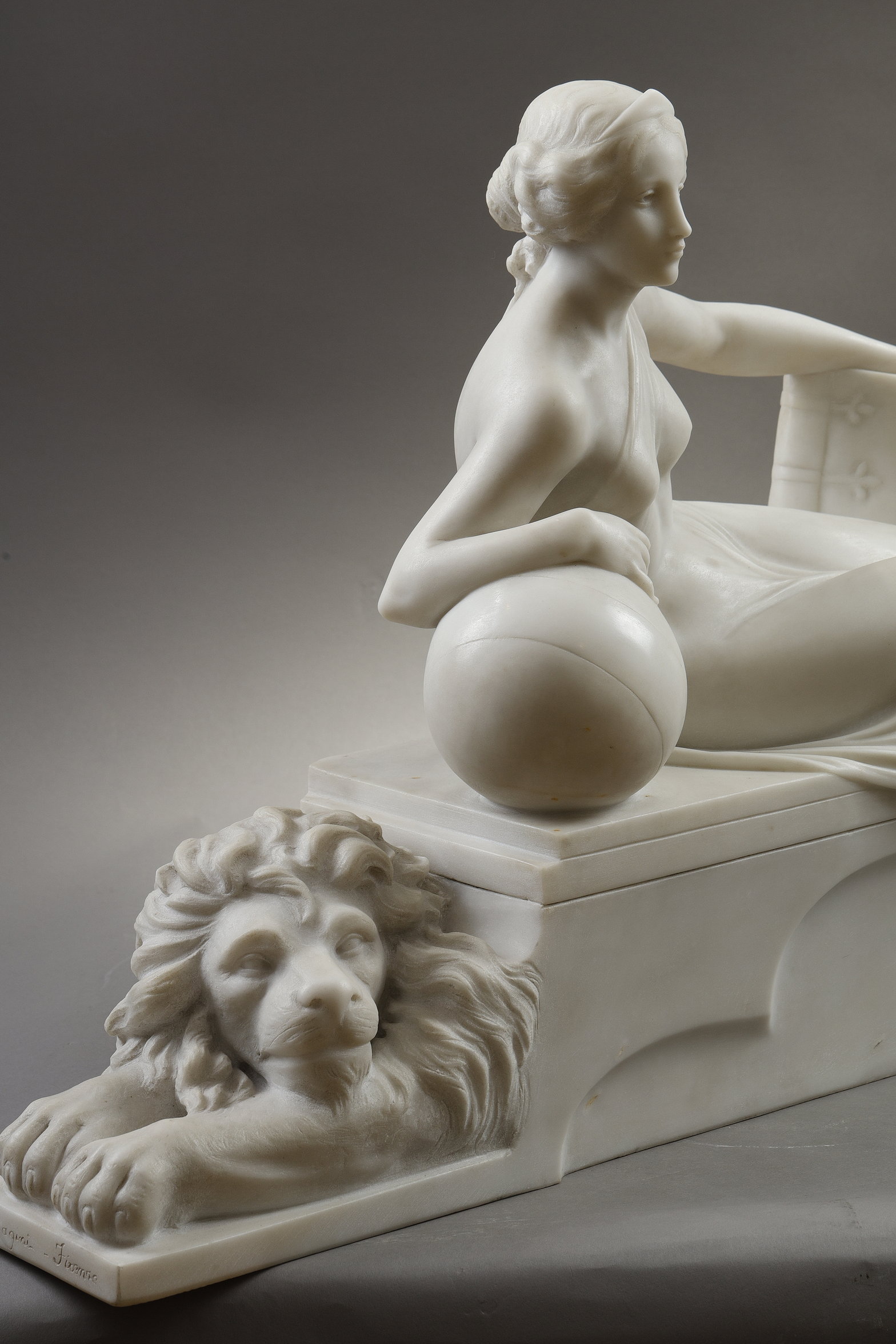
| SIGNED | “U. Biagini – Firenze” |
about the work
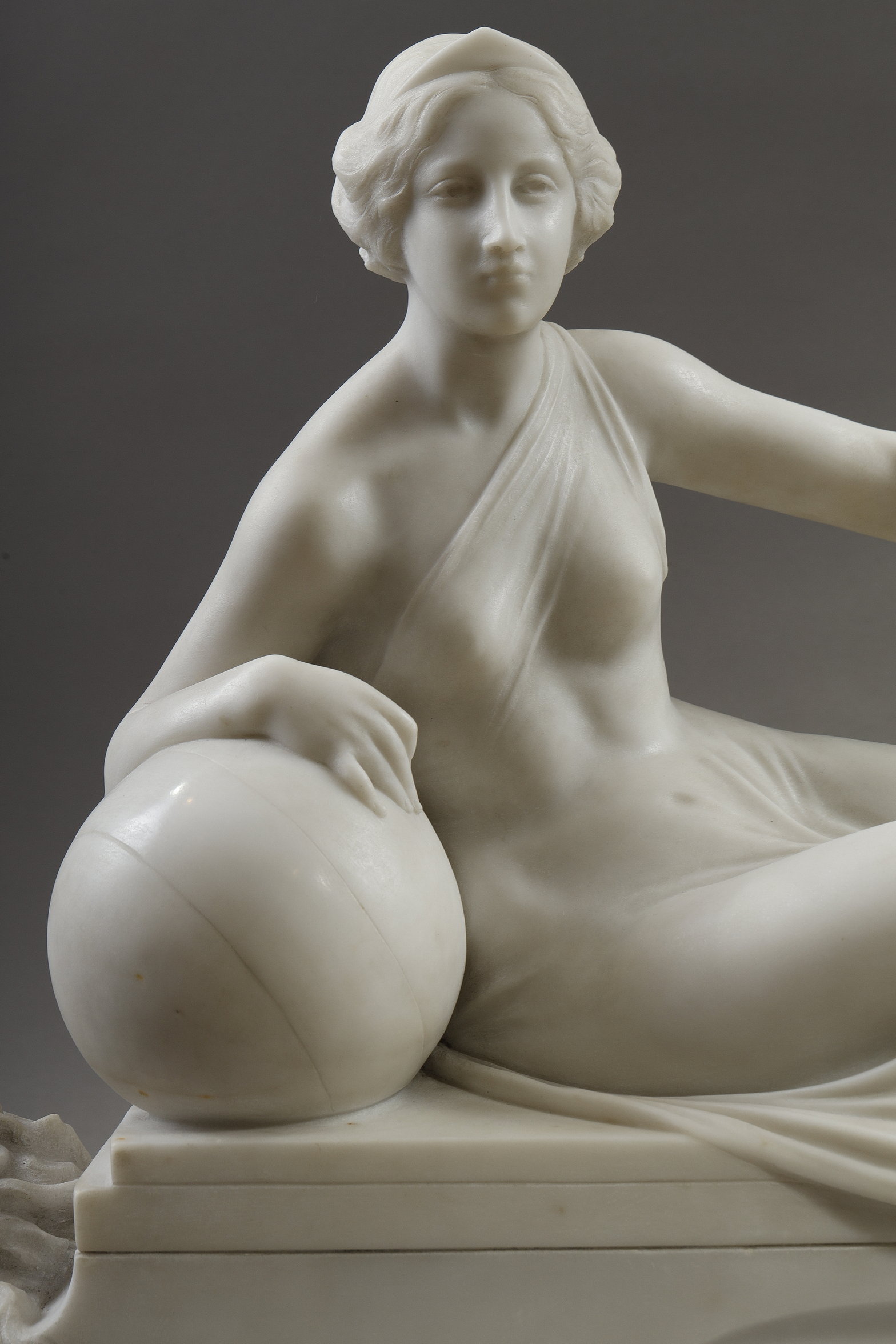
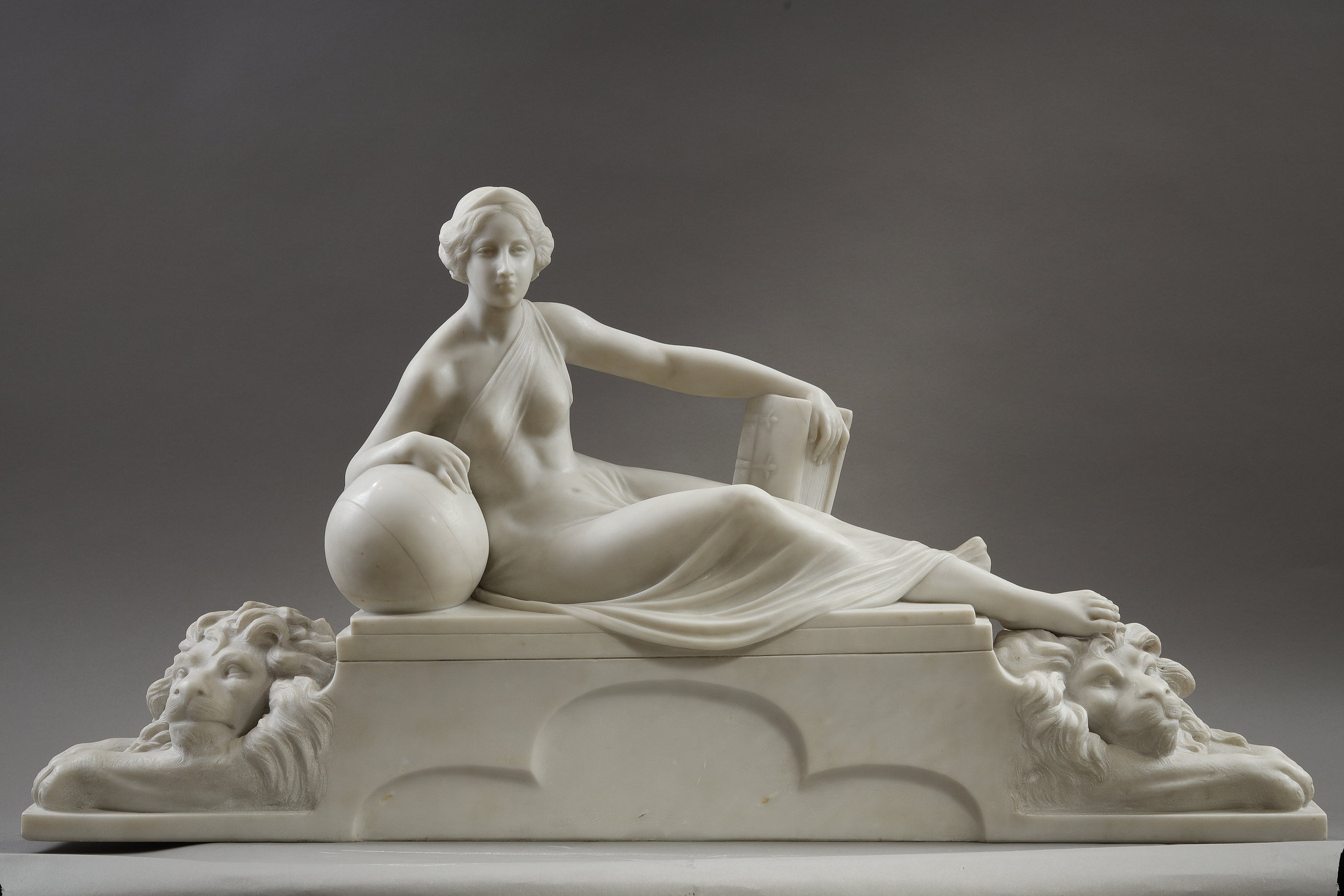
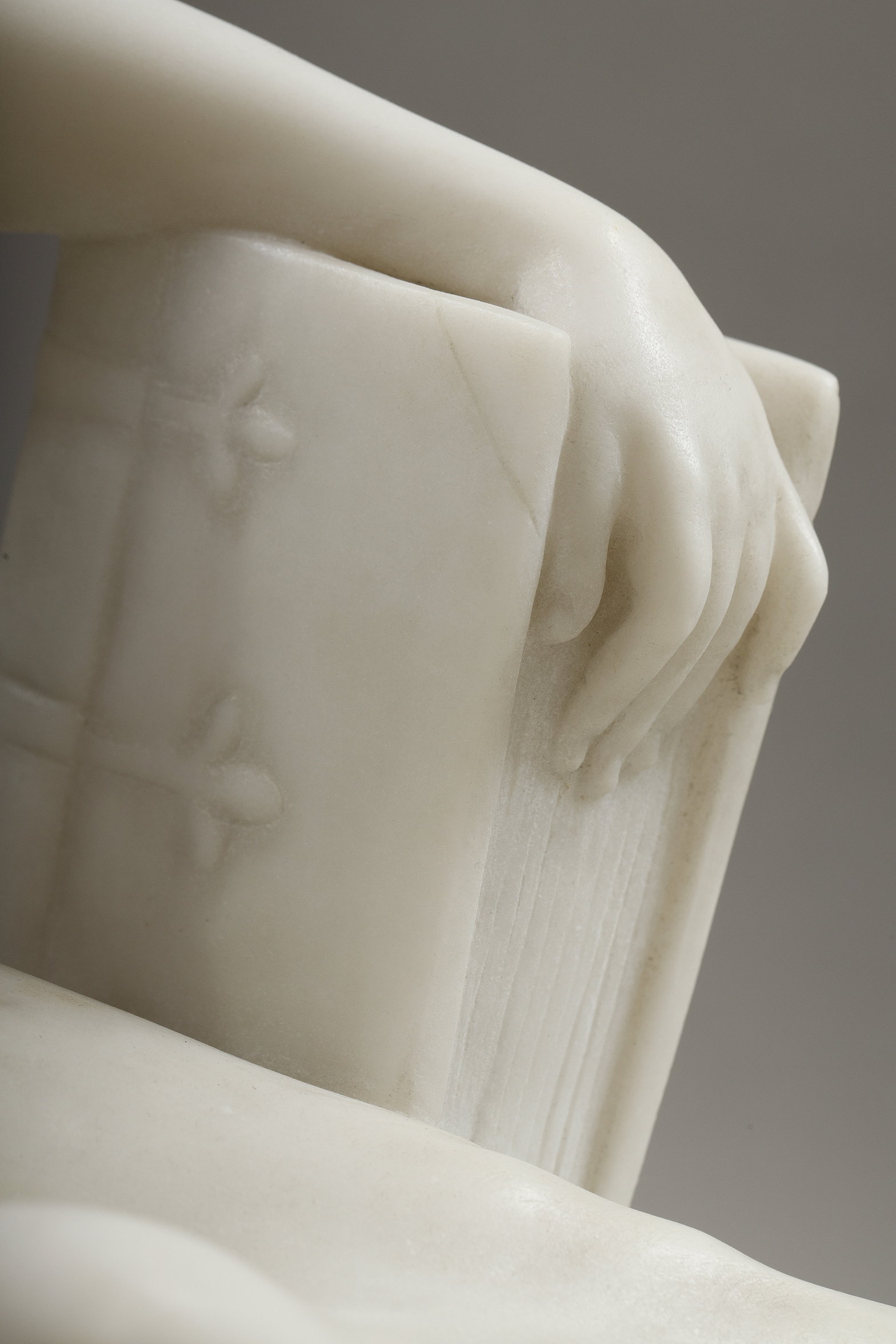
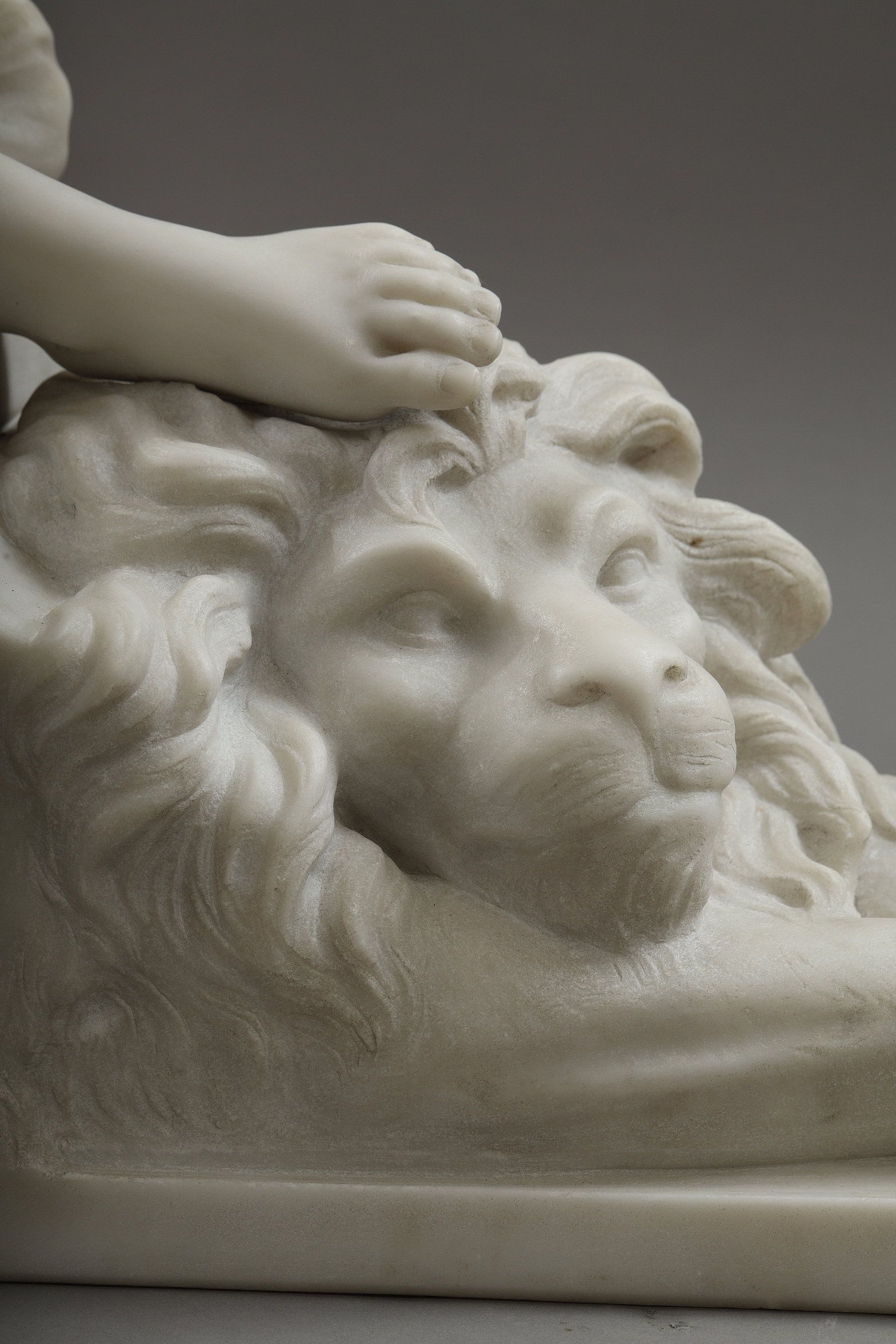
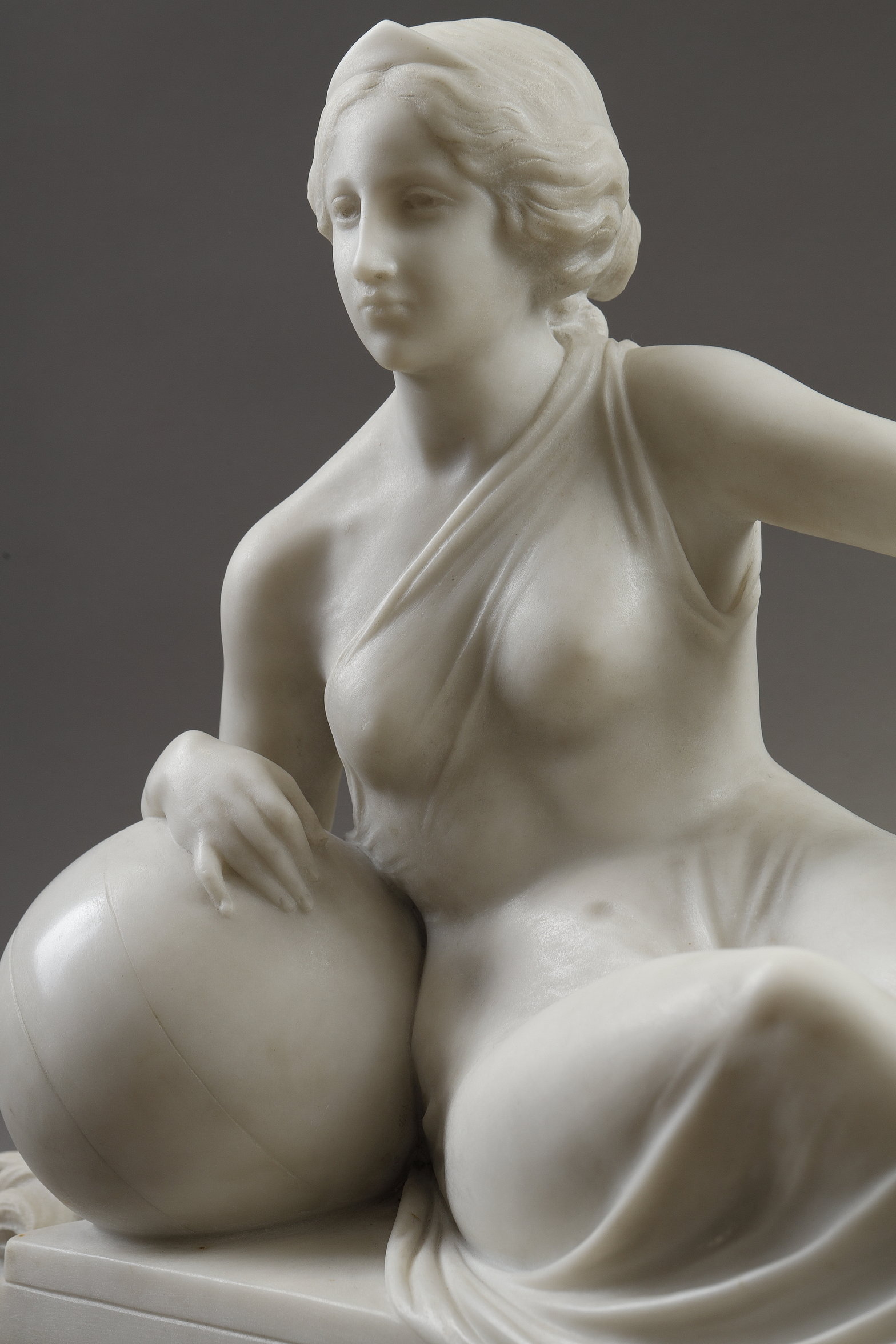
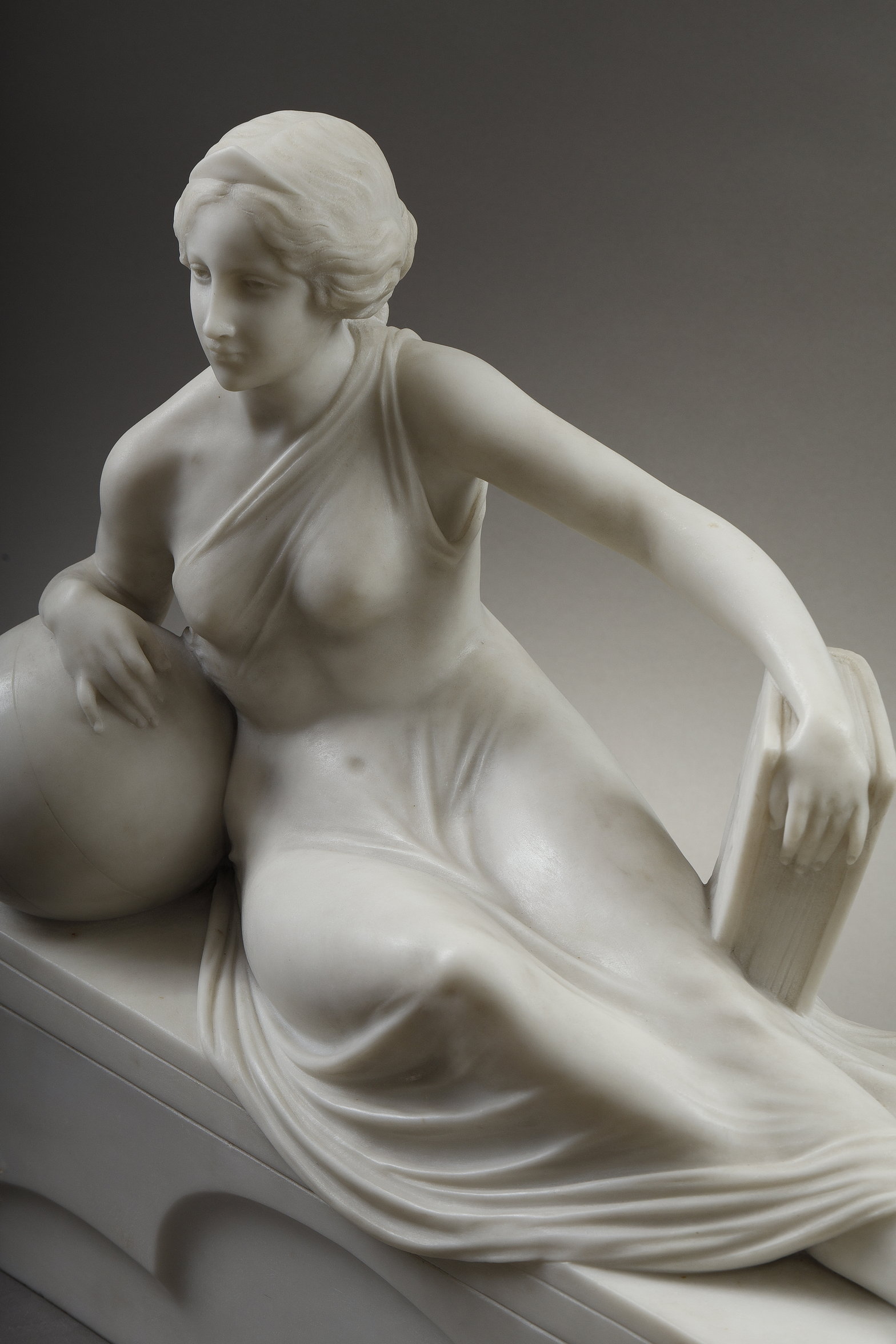
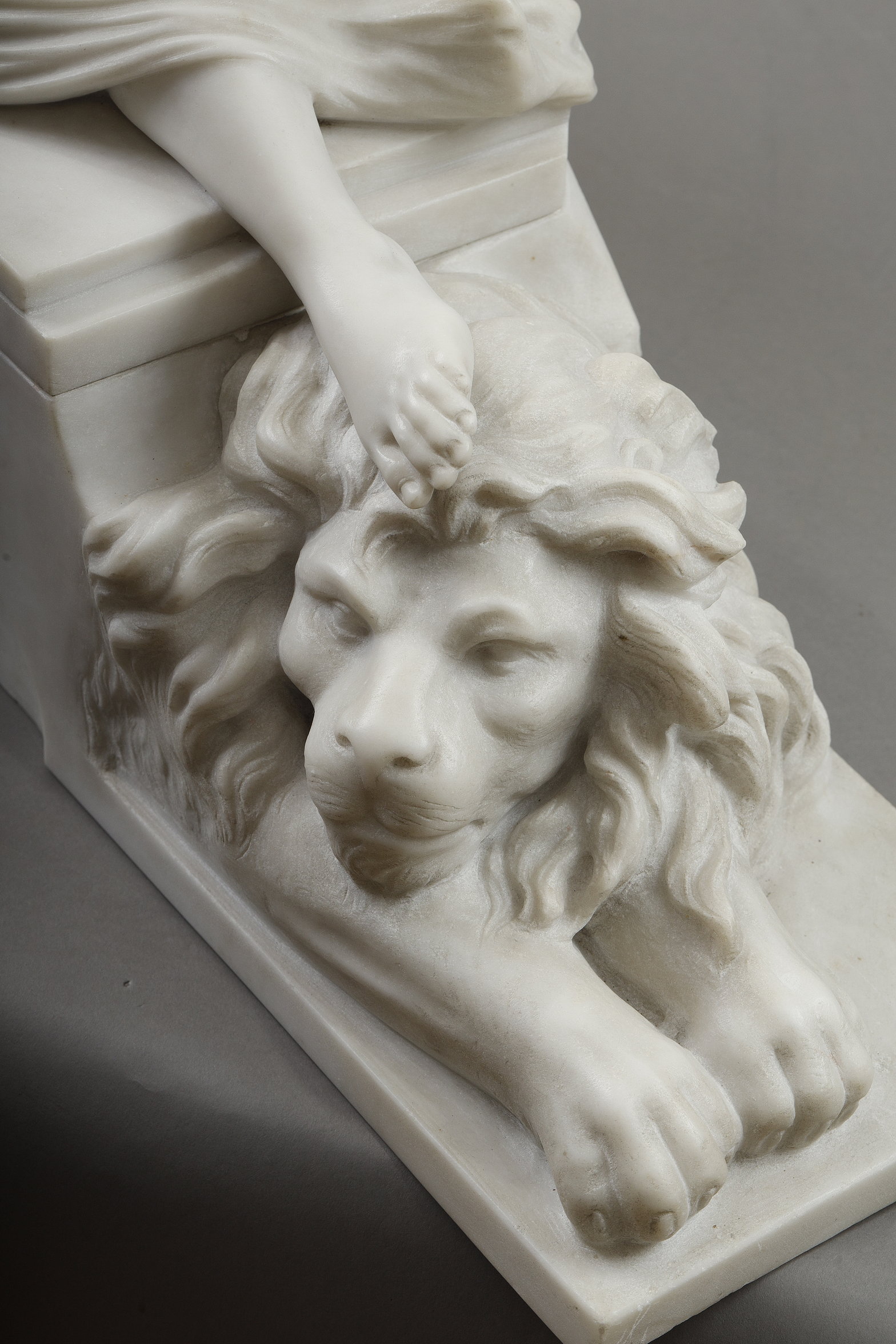
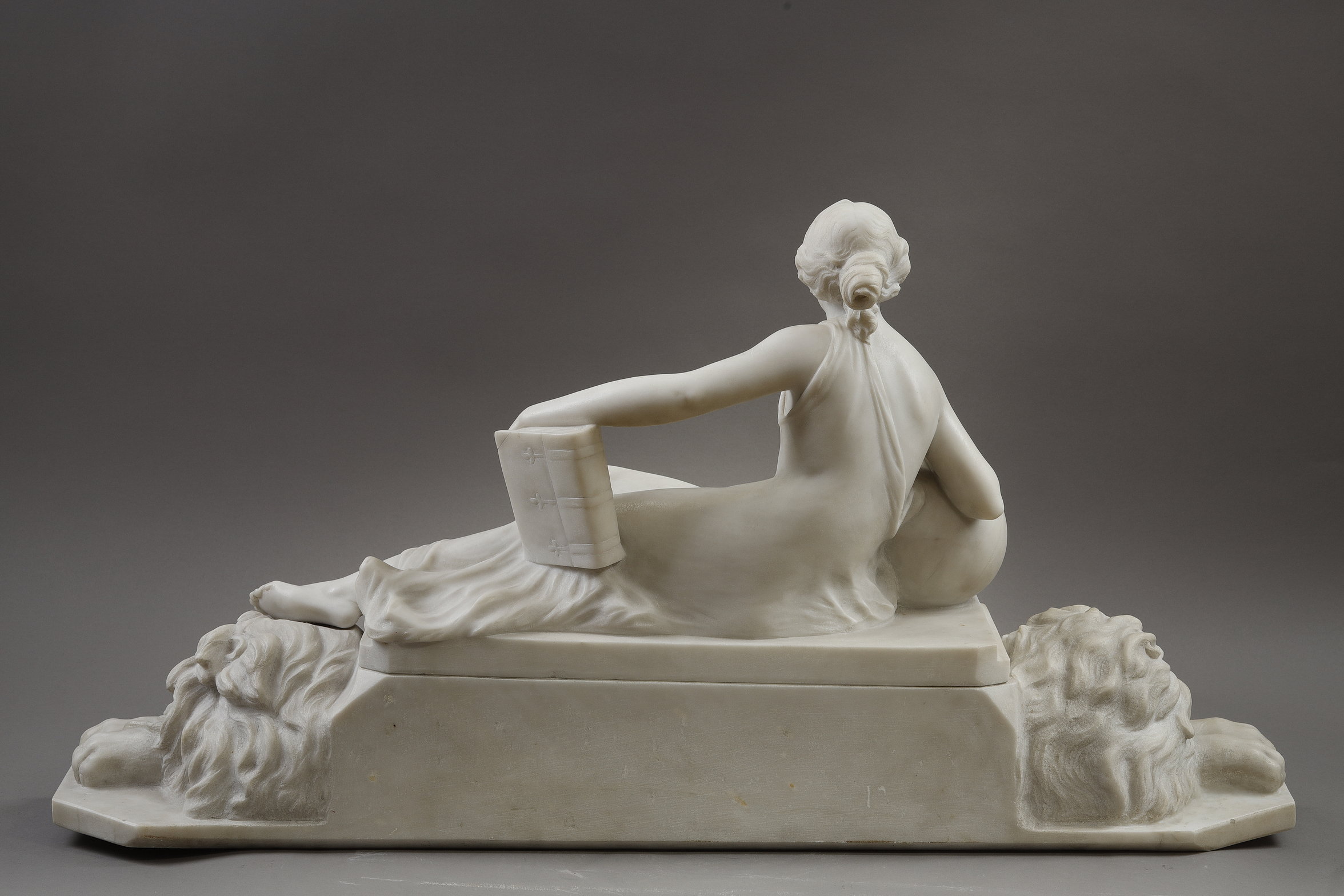
Carved around 1900 from Carrara white marble, The Allegory of Science by Umberto Biagini portrays Science in the form of a seated woman, both relaxed and commanding, on a pedestal flanked by two lions. In her left hand, she holds a book, symbolizing knowledge, while her right hand rests upon a terrestrial sphere, affirming the universal reach of human understanding.
The choice of posture and iconographic elements conveys an image of sovereign and serene science. The sphere beneath her hand can be interpreted as a symbol of intellectual mastery over the world, art, or geography, while the book serves as a reminder of Science’s fundamental role as a tool of learning and progress. The lions, their expressions softened and appearing tamed, embody the submission of raw strength to human intellect—a recurring theme in both humanist and Neoclassical thought.
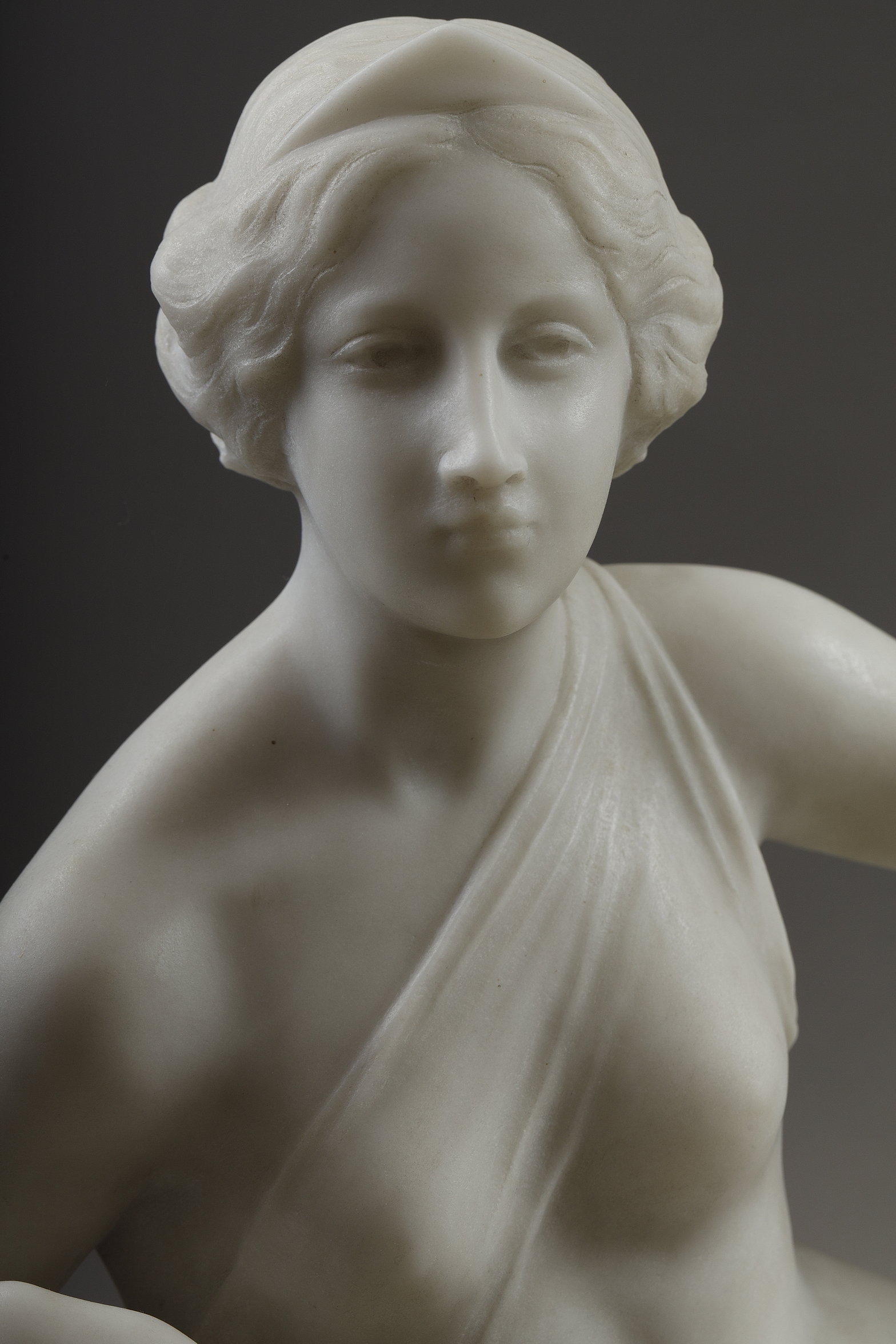
From a technical standpoint, the sculpture showcases Biagini’s exceptional craftsmanship. The drapery, meticulously sculpted, flows seamlessly over the figure’s body in a subtle interplay of transparency and fluidity, contrasting with the solidity of the pedestal on which she sits.
The overall composition imparts a sense of harmony and equilibrium between power and elegance, embodying a vision of science that is both benevolent and authoritative. Through this, The Allegory of Science stands as a masterful synthesis of classical tradition and the academic aesthetic of the early 20th century, highlighting the fundamental role of knowledge in the advancement of humanity.
the ARTIST
Umberto Biagini
Italian
A native of Volterra, the Tuscan city of alabaster, Umberto Biagini was an Italian sculptor active in the late 19th and early 20th centuries. Working between Italy and France, he created allegorical and decorative works in marble and alabaster, influenced by Neoclassicism.
similar works