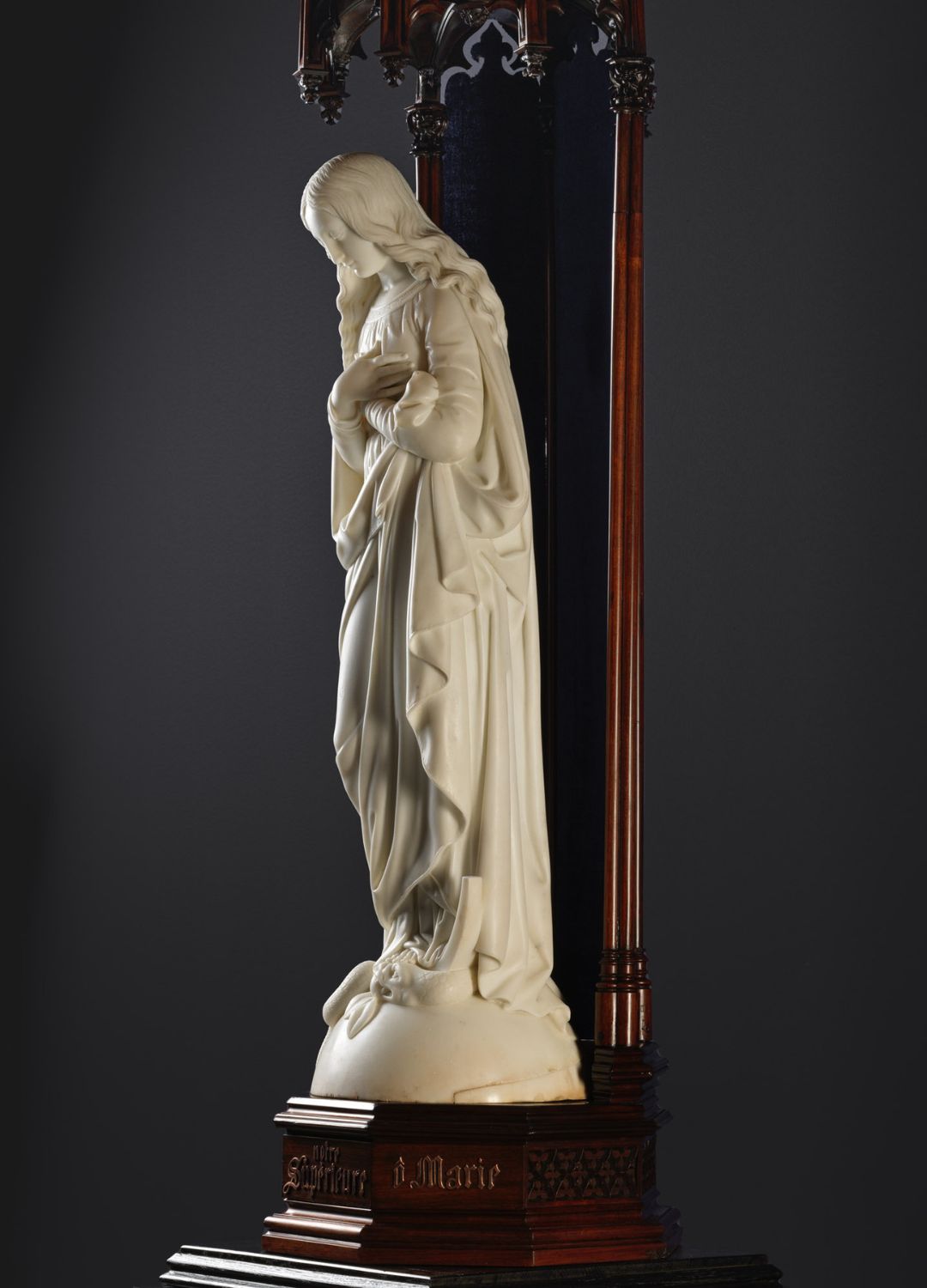
CHARLES HENRI GEERTS · (1807–1855)
Virgin Mary
TECHNIcal sheet
| ARTIST | Charles Henri Geerts |
| DATE | 1846 |
| MATerial | White Carrara marble, oakwood, rosewood |
| DIMENSIONS | Total H. 277 cm • Sculpture 112 × 35 × 35 cm • Base 110 × 74 × 94 cm • Canopy 167 × 60 × 60 cm |
|
Signature |
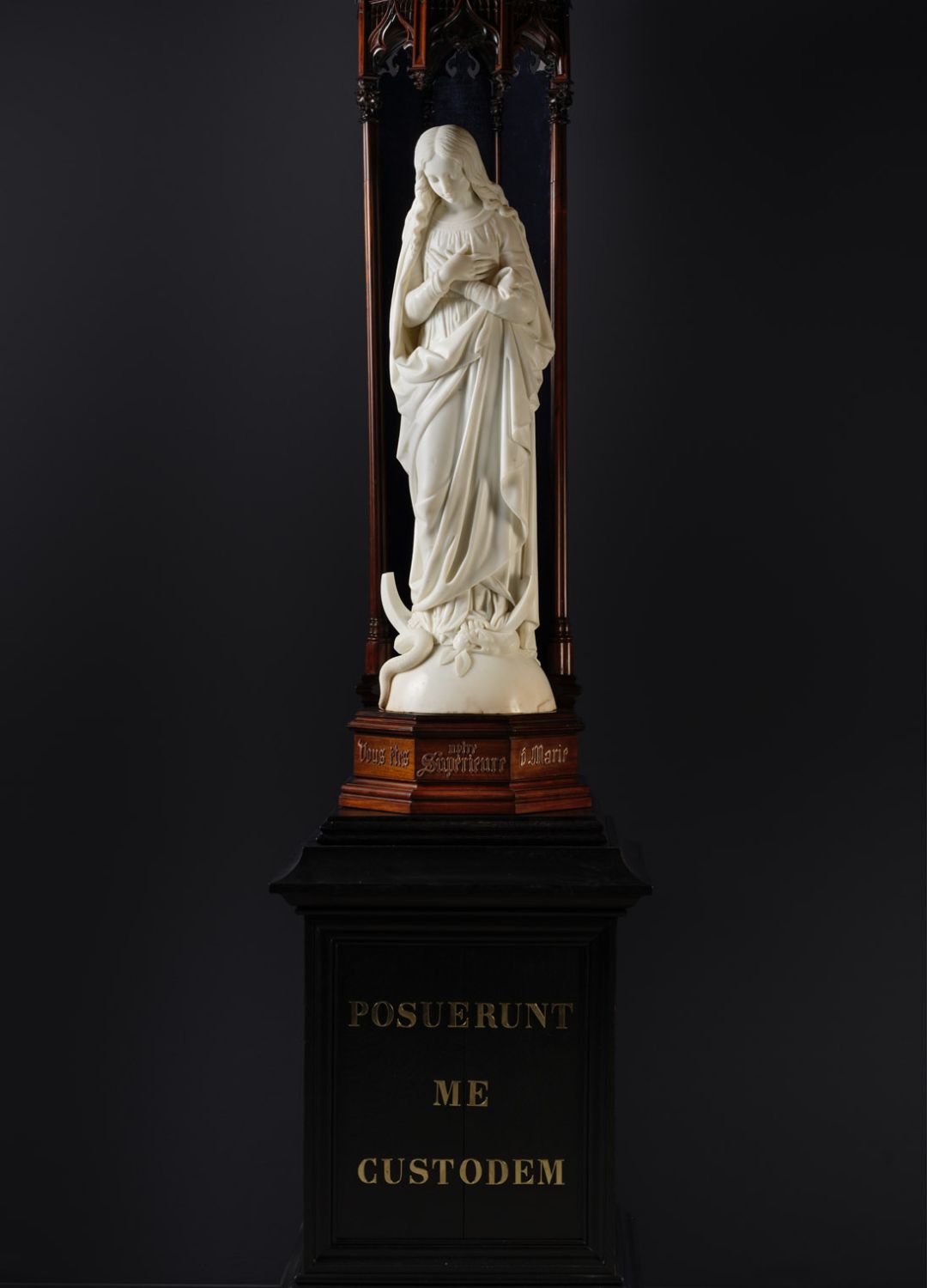
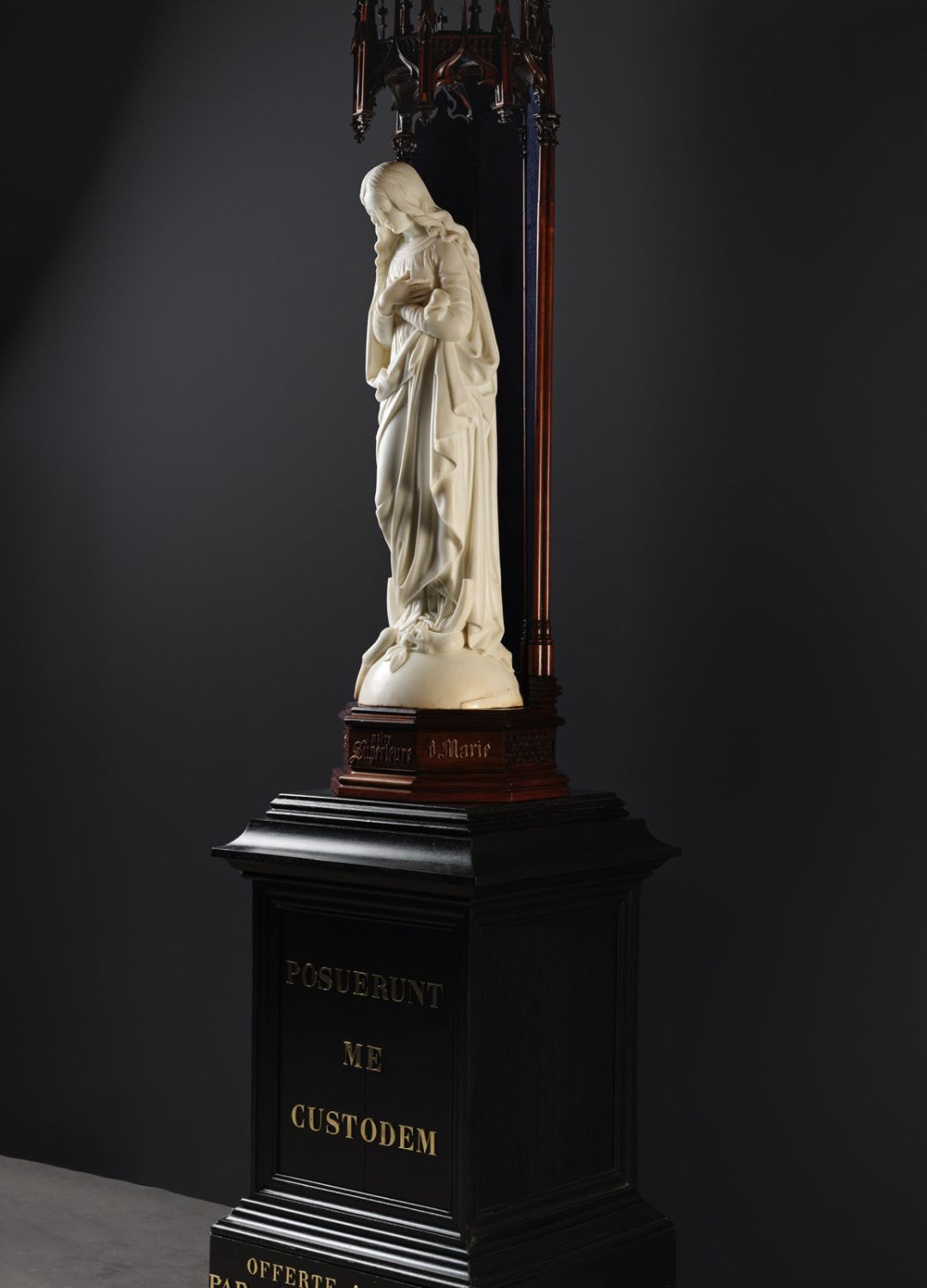
Ch. Geerts, 1846 Inscription on the base : « POSUERUNT ME CUSTODEM » · « OFFERTE À M.S. PAR THERINA DEVERT 13 JANVIER 1848 » |
|
PROVENANCE |
Therina Devert, Marquise de Chièvre (1810–) • Couvent des Oiseaux, rue de Sèvres, Paris (1848) • Tower House, Westgate-on-Sea, Kent (1912) • Saint Augustine’s College, Westgate-on-Sea, Kent (1971–1993) • Collection privée, Angleterre |
| CONSERVATION | M Museum Leuven • Belgium |
ABOUT THE WORK
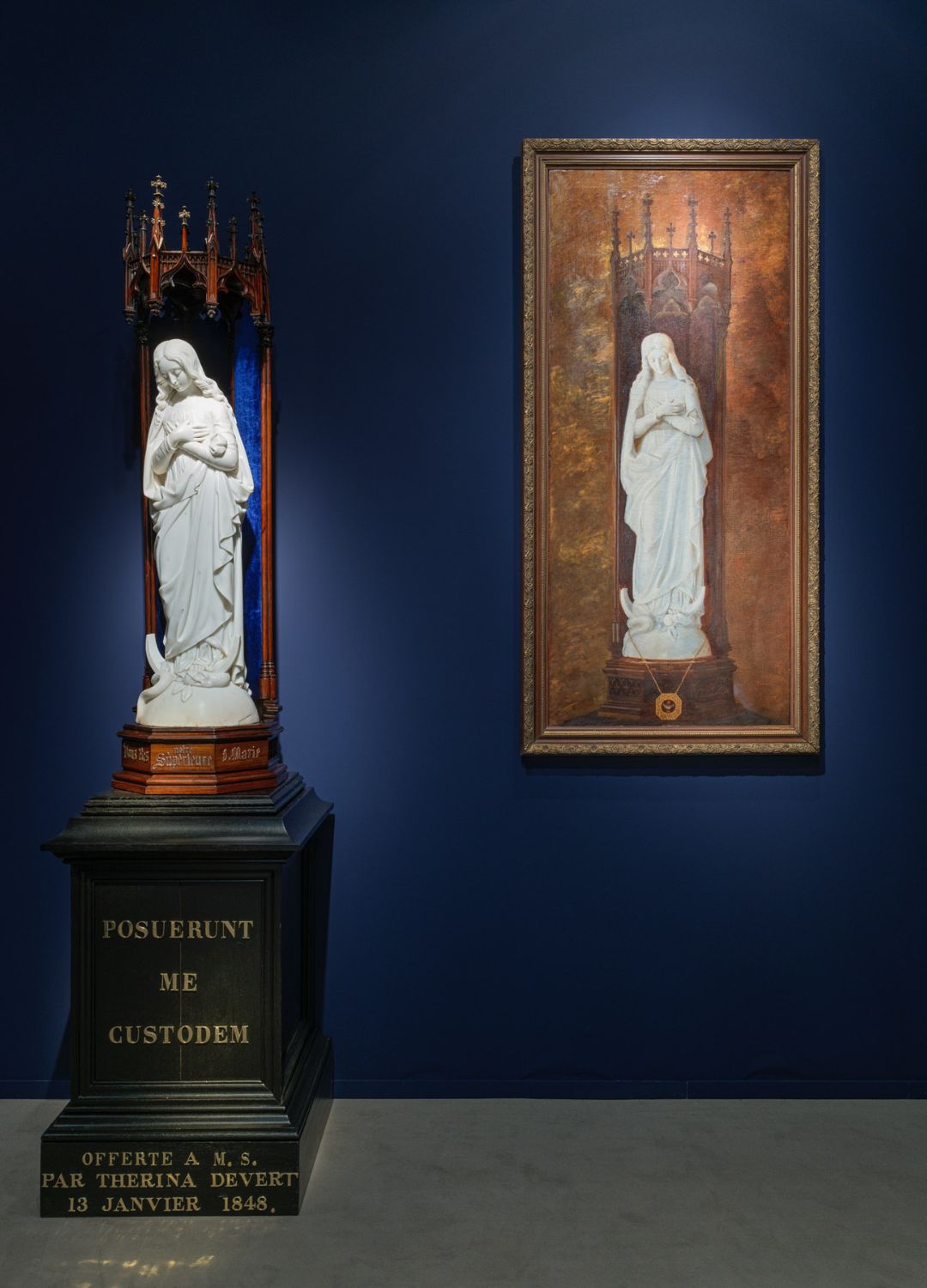
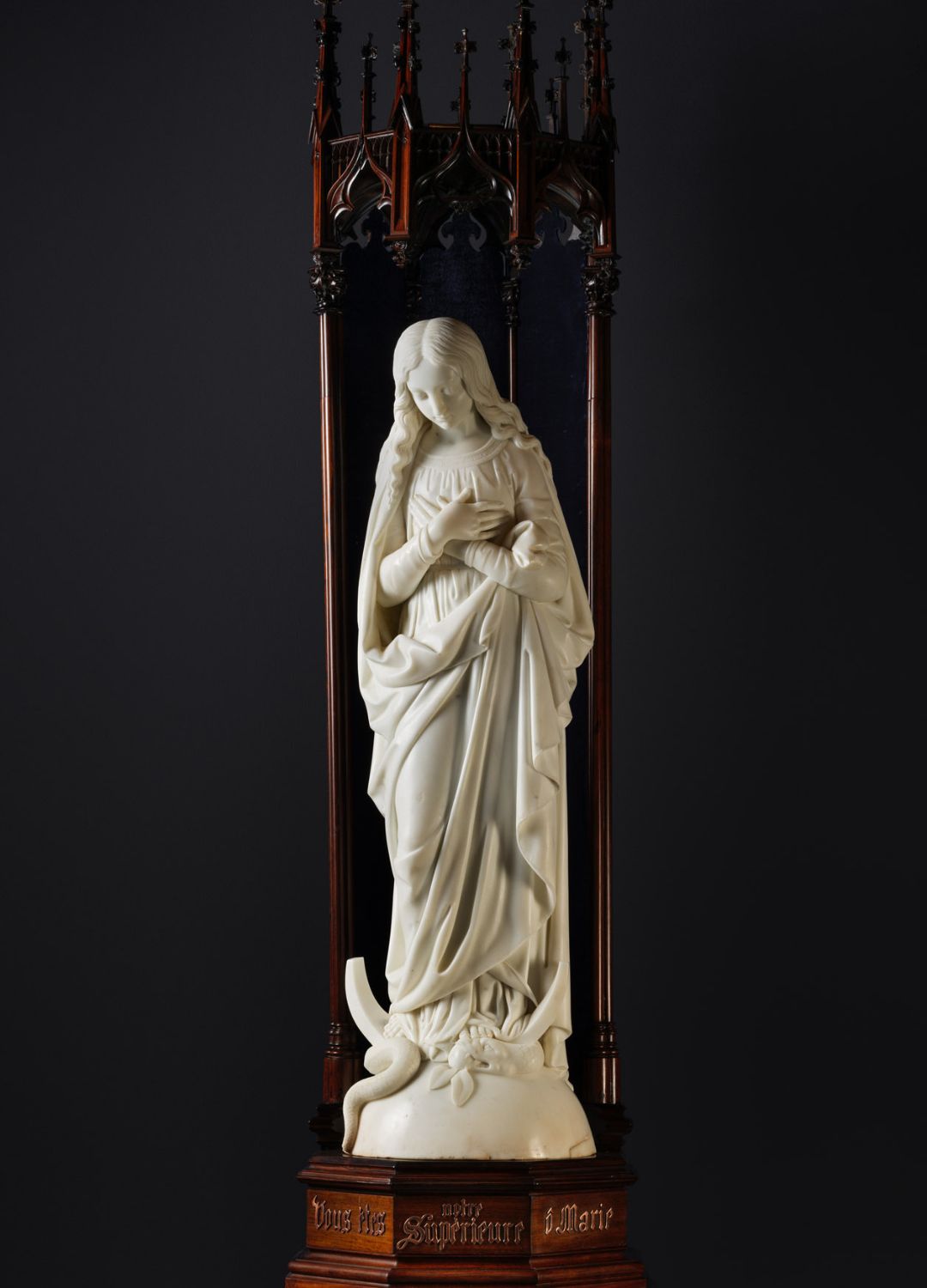
The statue of the Virgin Mary standing on a serpent is carved from white Carrara marble, with an oak wood canopy and a rosewood base engraved with the Latin words “POSUERUNT ME CUSTODEM,” translated as “They have made me a keeper.” This biblical quotation, drawn from the Song of Songs, lends the work a profound spiritual dimension, underscoring the protective role of the Virgin.
Commissioned by Therina Devert, Marquise de Chièvre, on 13 January 1846, and given to Mother Marie-Sophie of the Couvent des Oiseaux in Paris, the sculpture was executed by Charles Henri Geerts at the height of his art. The quality of execution, particularly visible in the delicate treatment of the veil, the serpent, and the folds of the cloak, attests to an exceptional mastery of marble for an artist of 38.
After more than a century and a half in English religious institutions, the sculpture has now entered the permanent collection of the M Museum Leuven in Belgium, a symbolic return to the artist’s homeland. Its original carved oak canopy, which has accompanied the work since its creation, is itself a remarkable piece of 19th-century religious furniture.

Charles Henri Geerts (Antwerp, 10 June 1807 — Leuven, 16 June 1855) is one of the most talented Belgian sculptors of the 19th century. A pupil of Guillaume Geefs at the Royal Academy of Fine Arts in Antwerp, he quickly specialized in religious sculpture in marble. His style, marked by neo-classical gentleness and radiant spirituality, places him among the great representatives of European devotional sculpture of his time.
His works adorn the greatest churches of Belgium, the Netherlands, and England. Appointed professor at the Academy of Leuven in 1845, he trained a generation of sculptors there while continuing an intense creative activity until his untimely death at the age of 48. The M Museum Leuven holds several of his major works, testifying to the lasting influence of his art.
ŒUVRES SIMILAIRES