CHARLES VAN DER STAPPEN · (1843–1910)
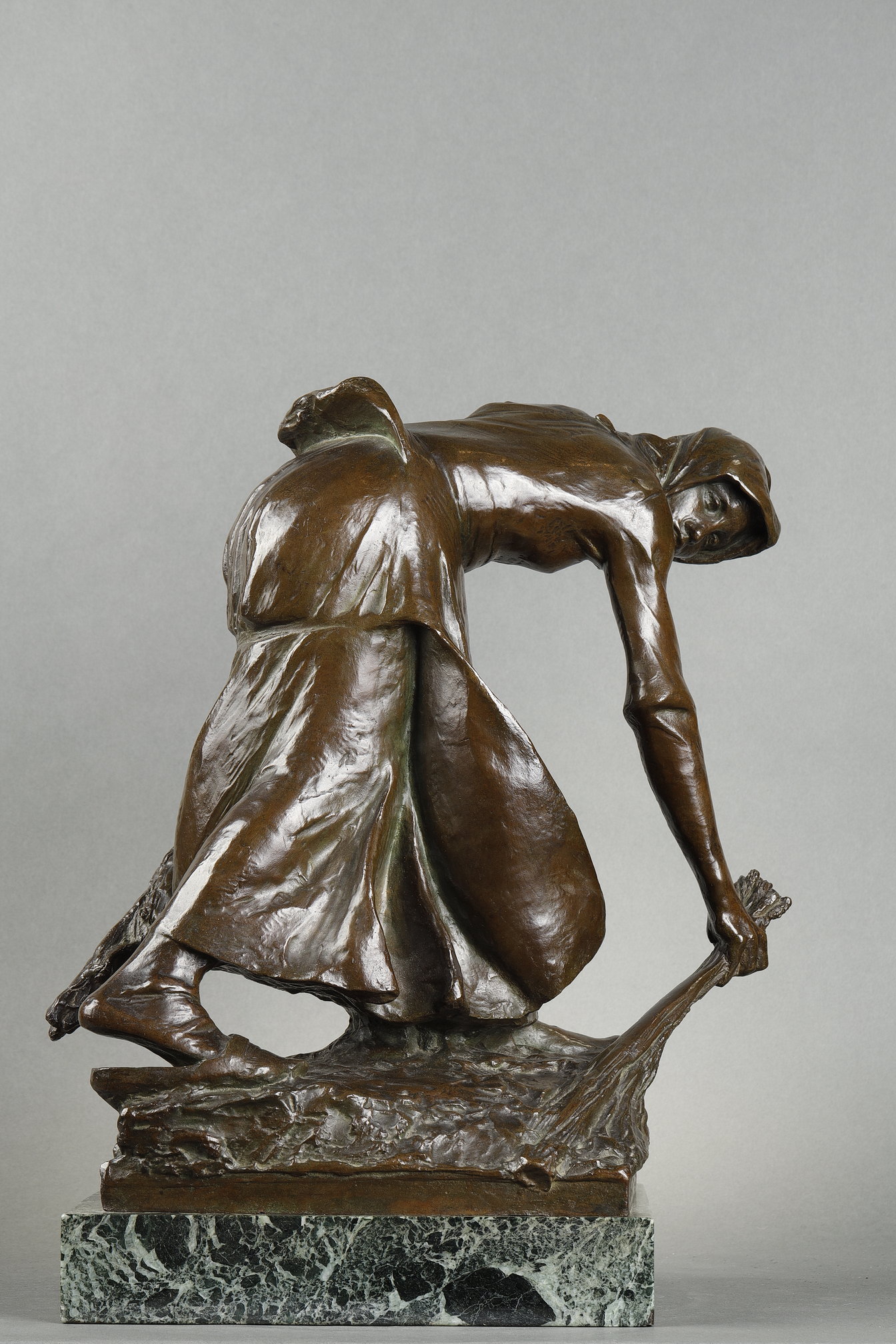
The Gleaner
technical sheet
| ARTIST | Charles Van der Stappen |
| DATE | September 1891 |
| DIMENSIONS | 39,5 cm (Height) / 44,5 cm (Total Height) |
| MATERIAL | Brown-patinated Bronze on a vert de mer marble base |
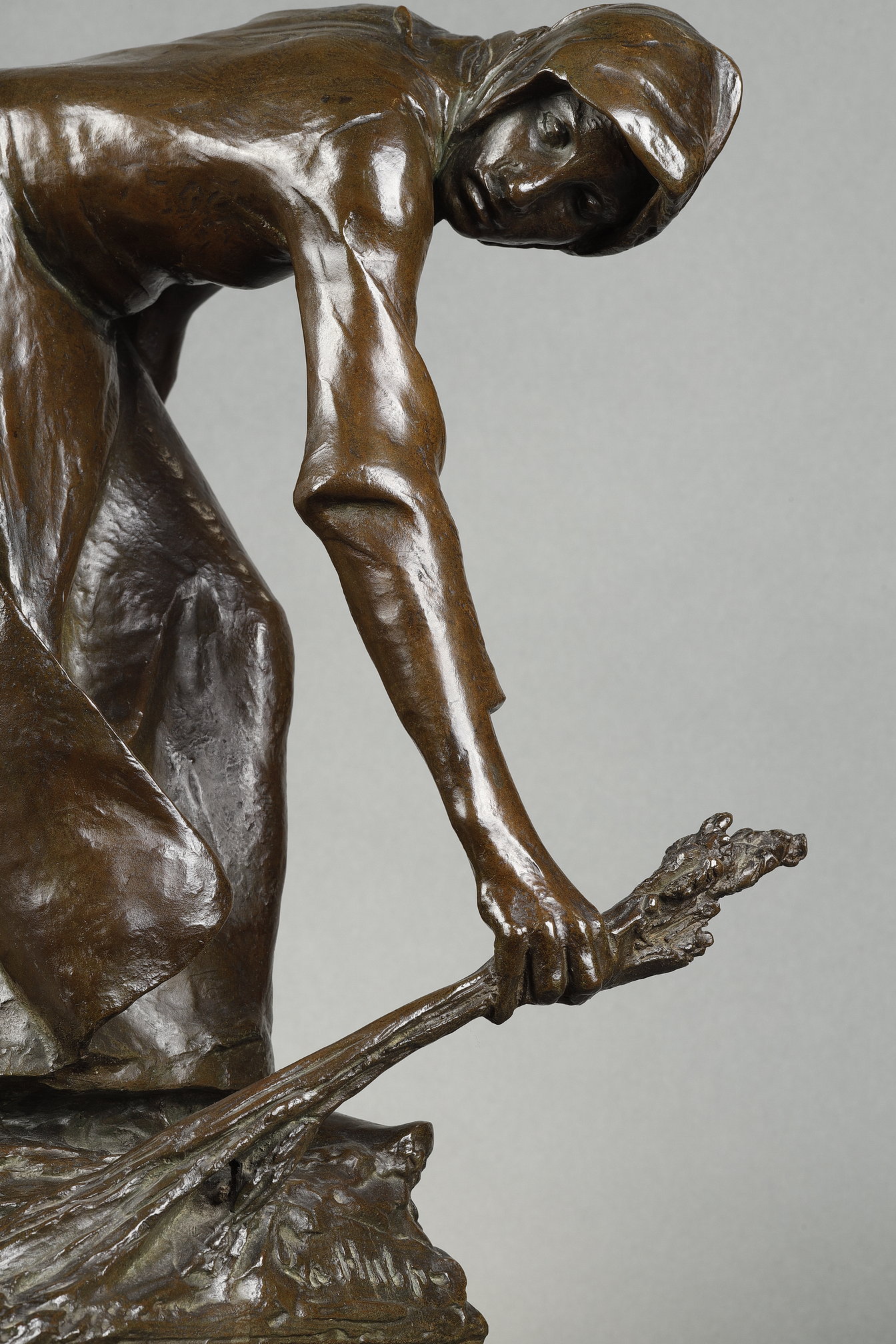
| SIGNED | “September 91” and “Ch. Van der Stappen” |
| FOUNDRY | “J. Petermann, Fondeur, Bruxelles” |
| INSCRIPTION | “La Hulpe” |
about the work
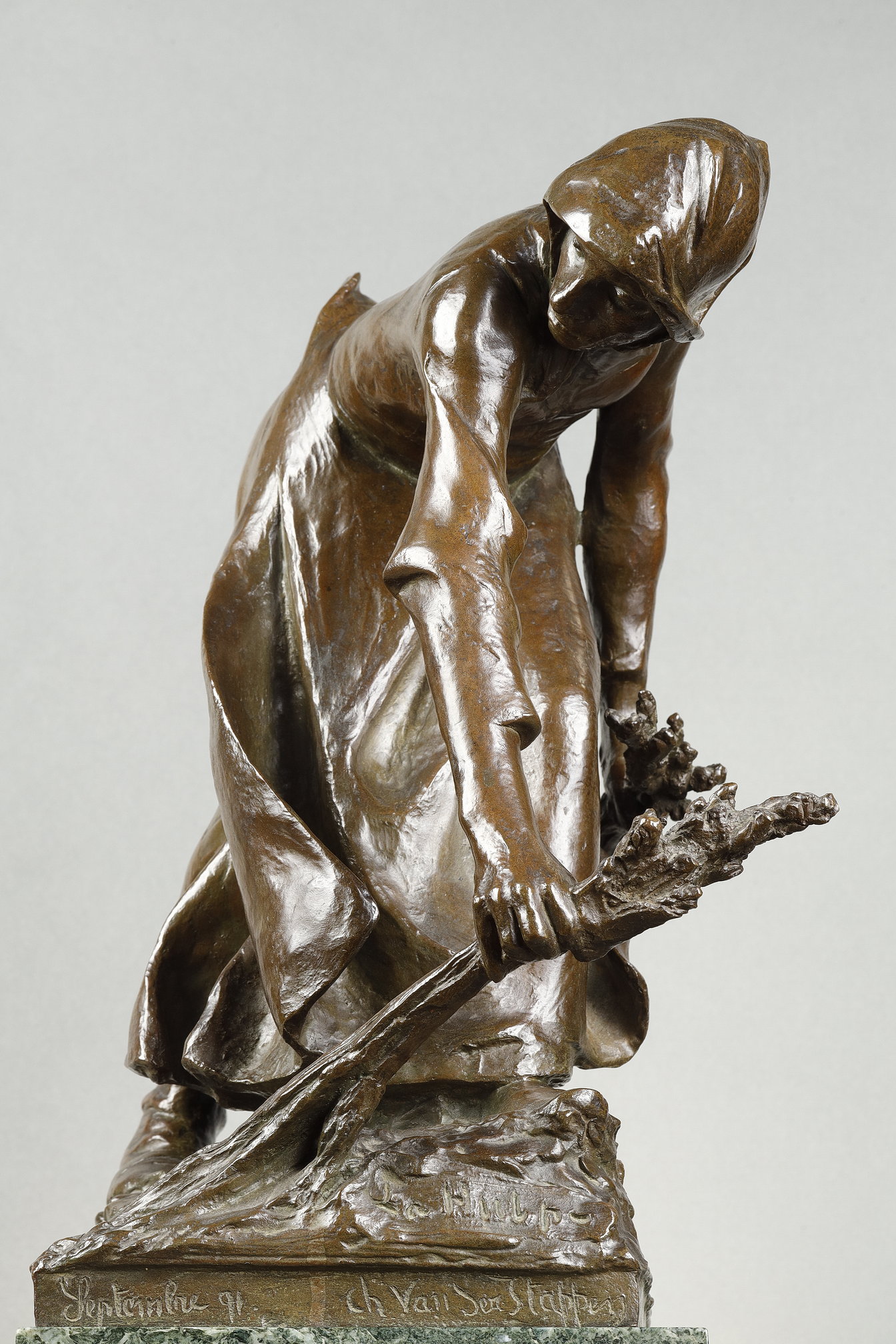
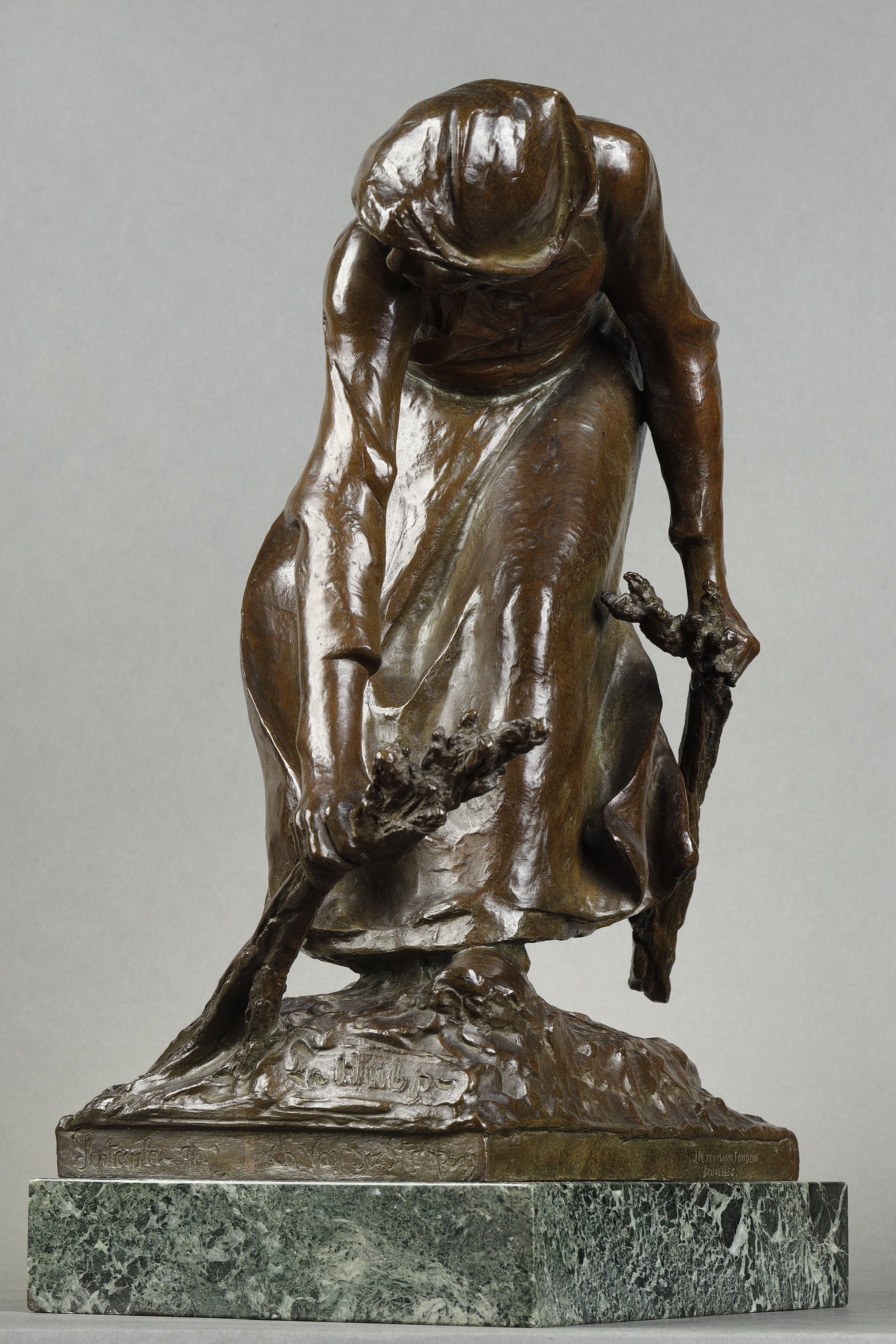
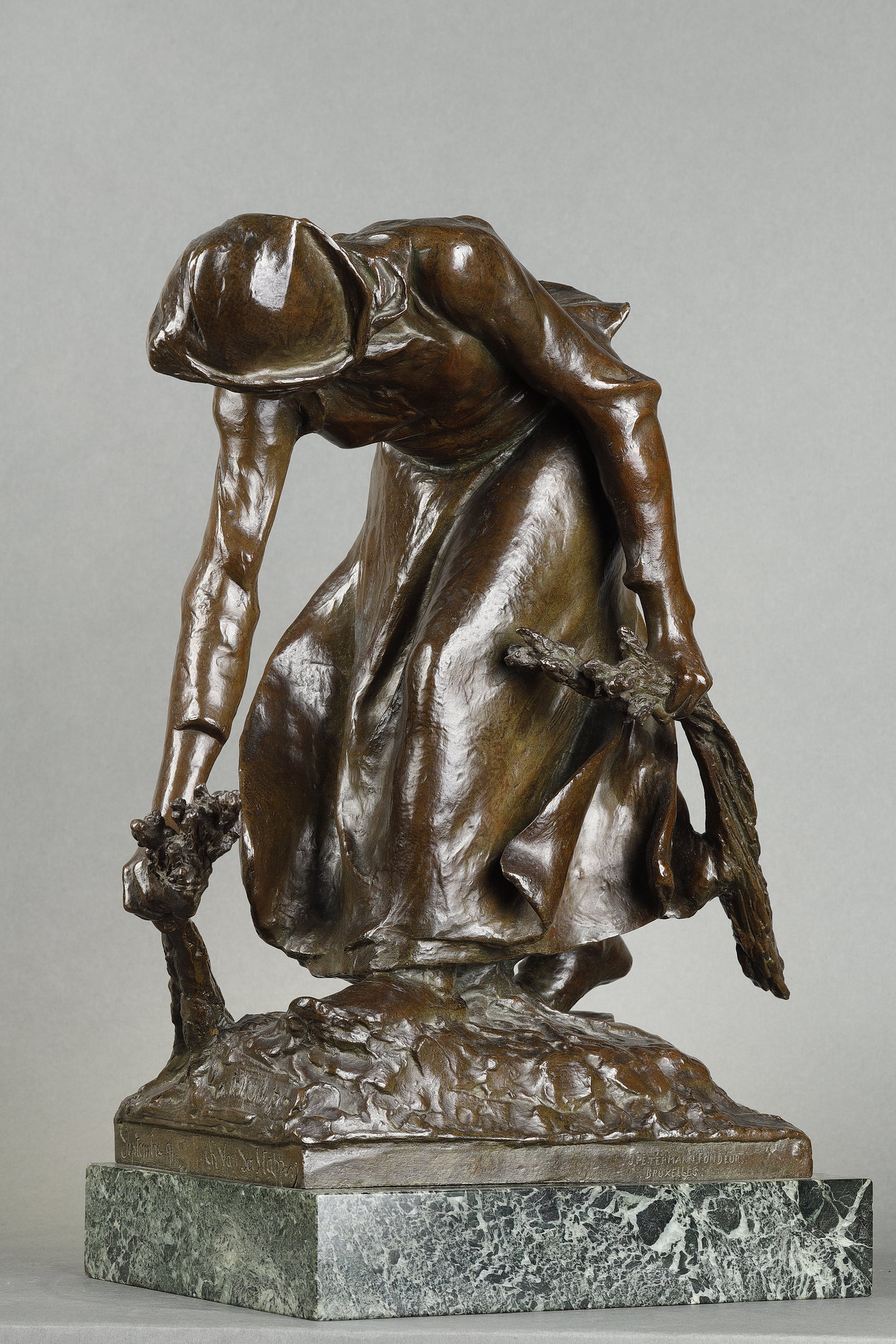
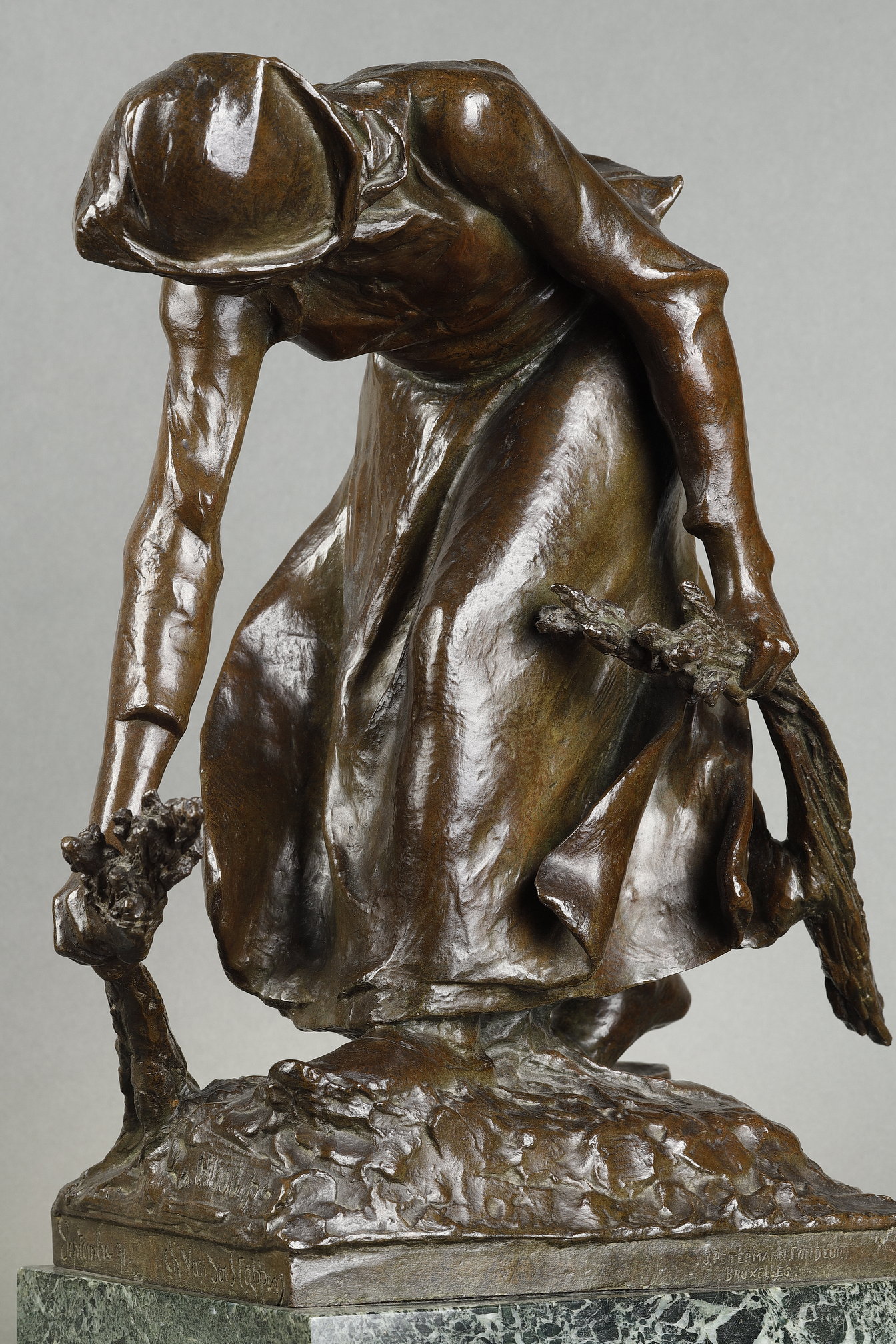
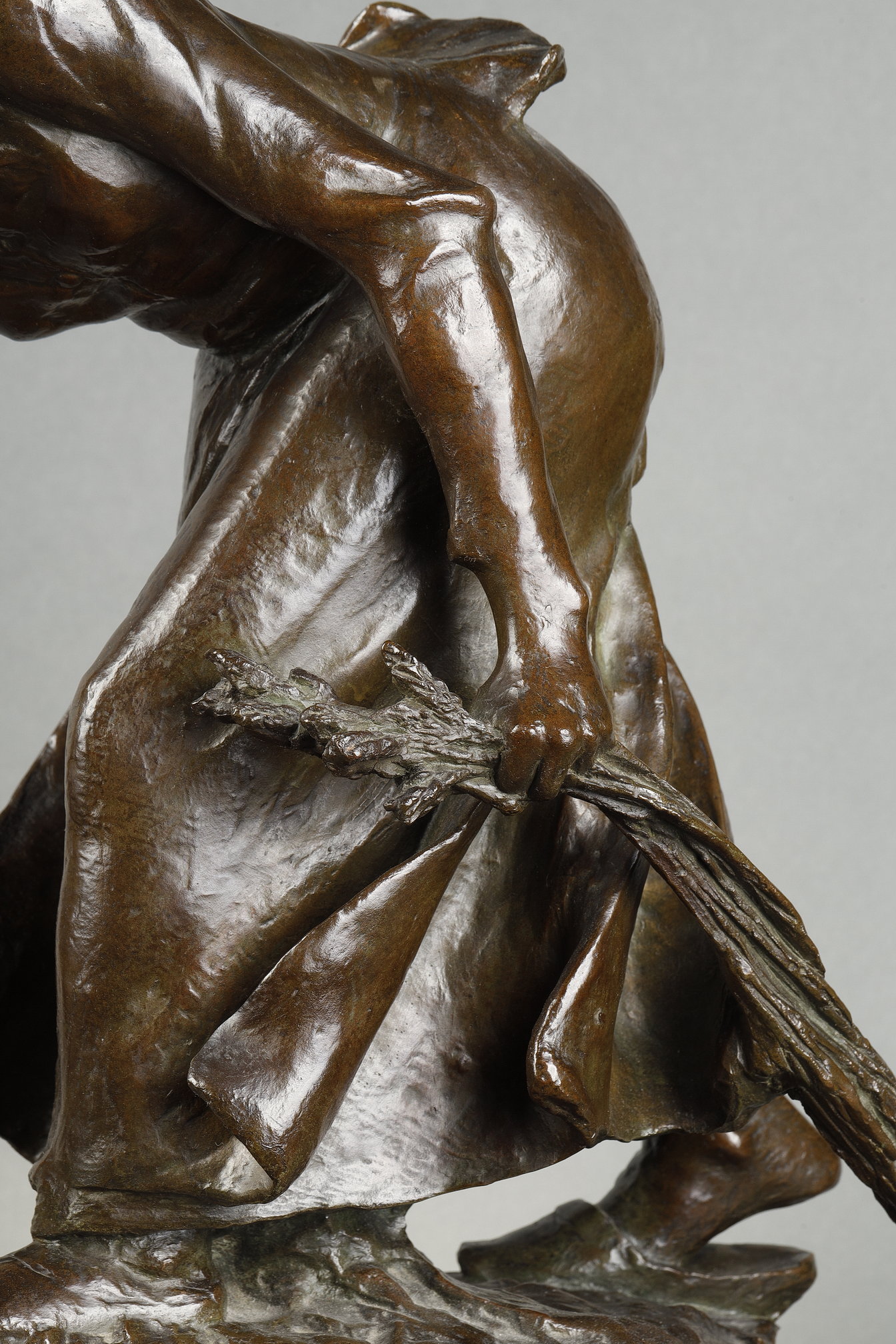
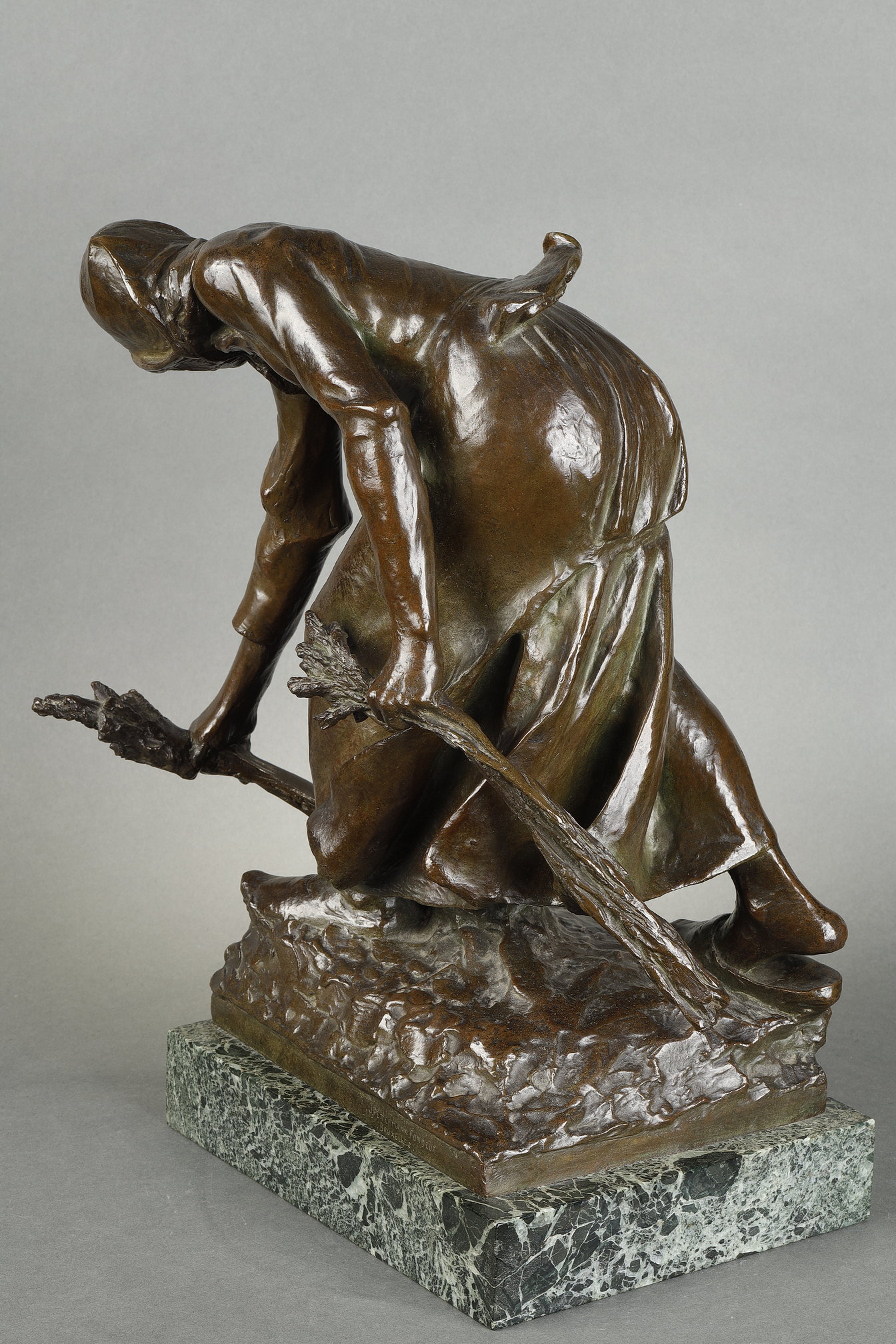
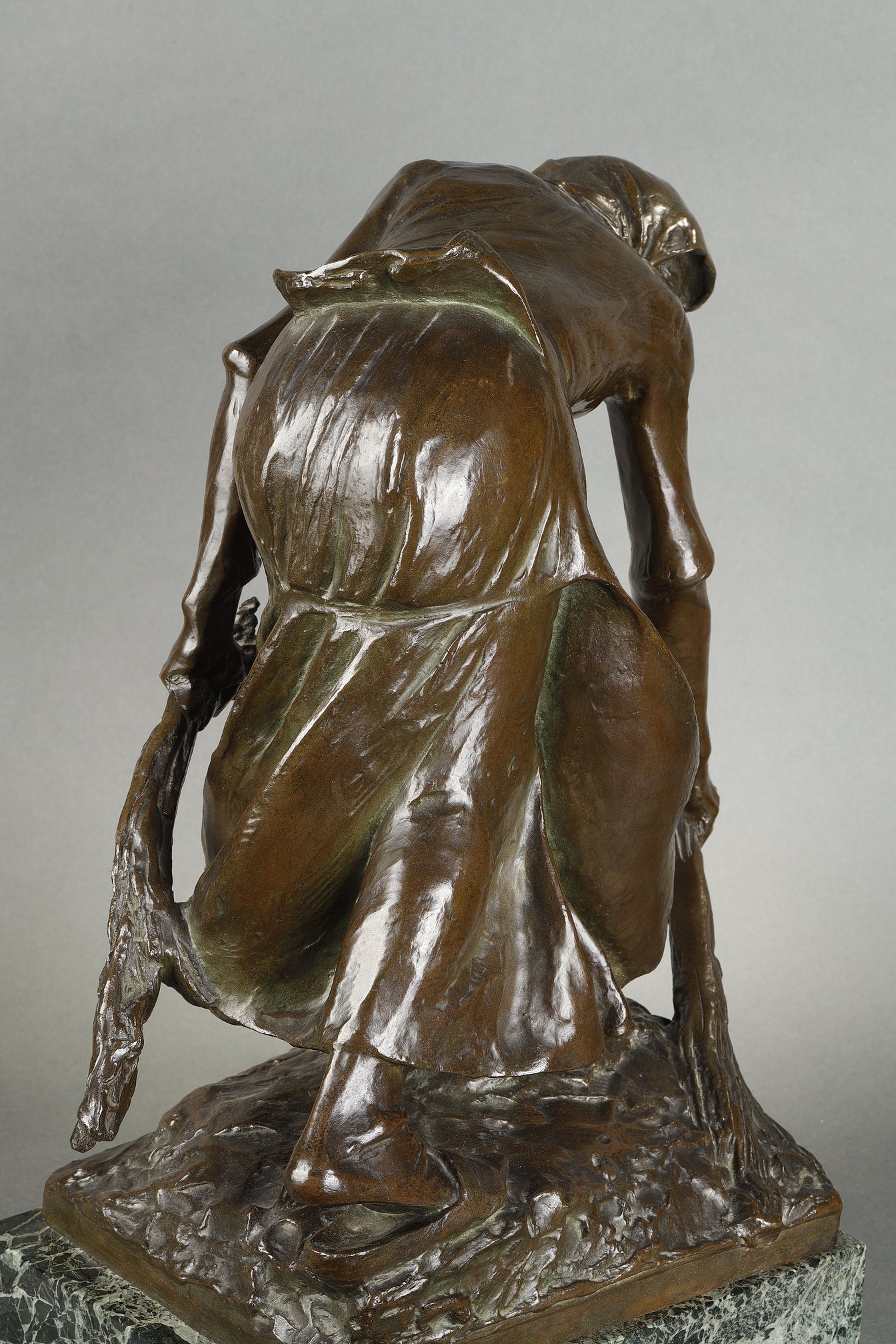
Created in September 1891, The Gleaner marks a decisive moment in Charles Van der Stappen’s artistic evolution. Around this period, the sculptor withdrew from Brussels to the quiet countryside of La Hulpe, where he sought a more direct connection with nature and manual labour. This environment deeply influenced his artistic vision, leading him away from allegorical or monumental subjects toward a more introspective and human form of realism.
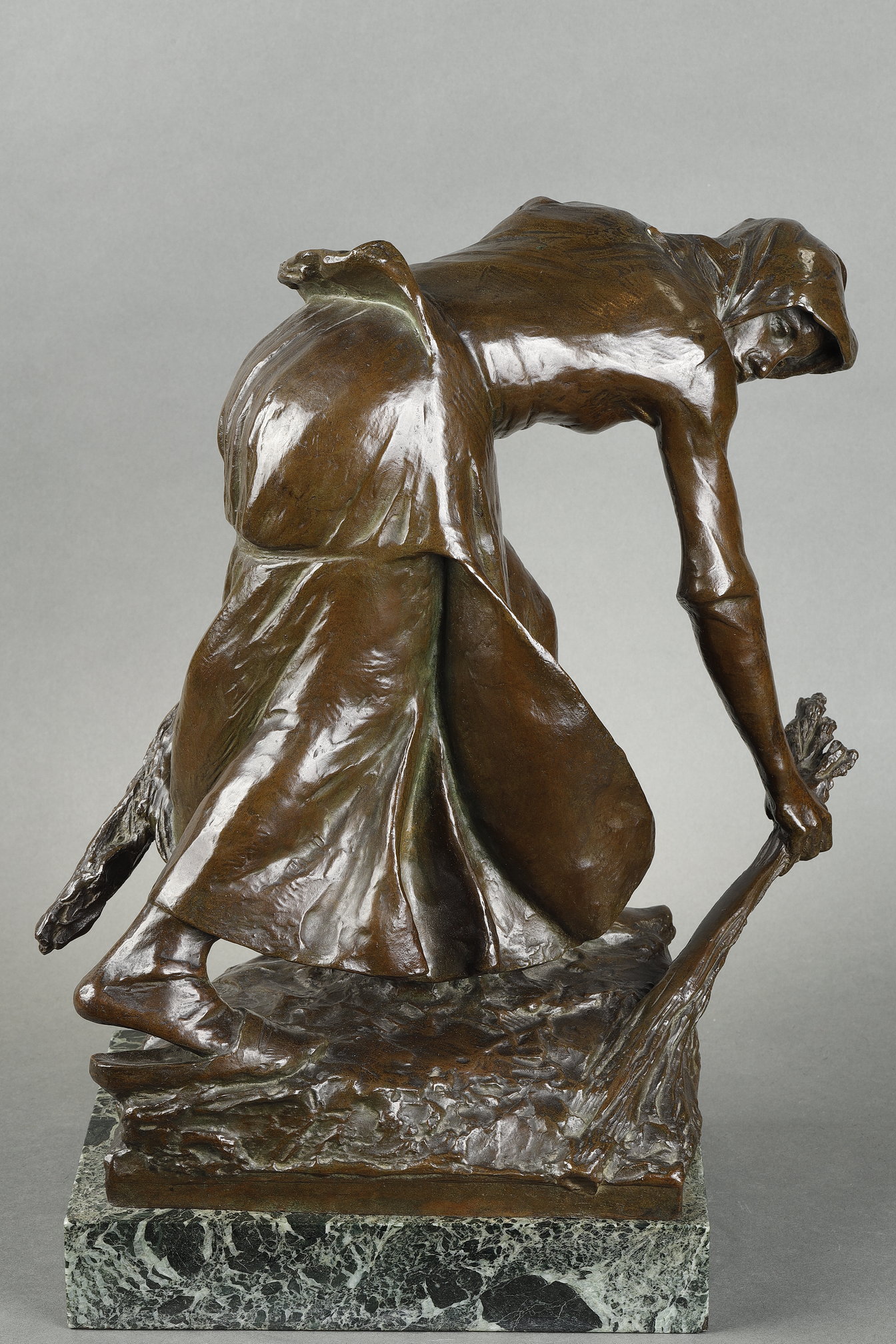
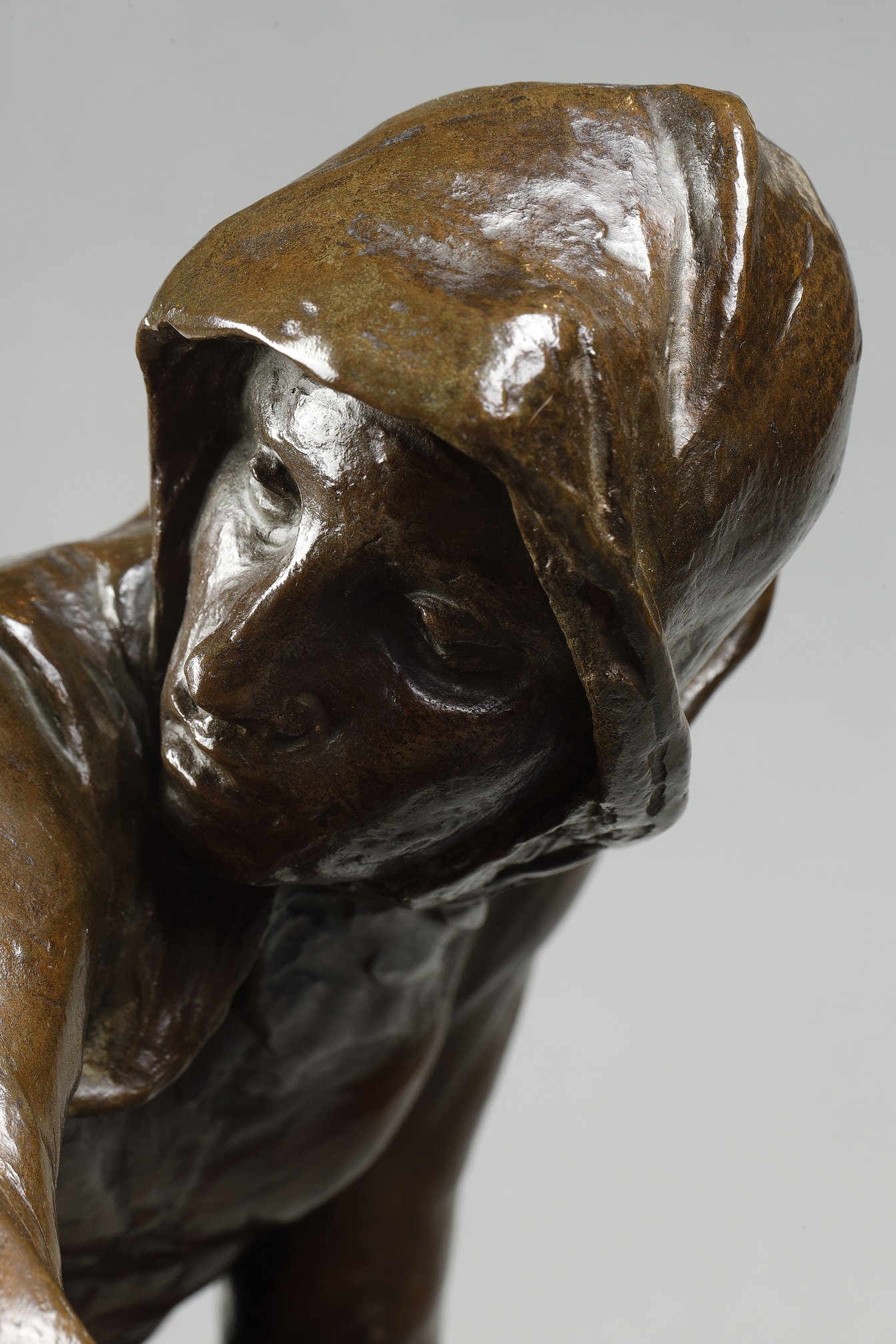
This bronze, cast by J. Petermann in Brussels, reflects that transformation with remarkable sensitivity. The female figure bends forward to gather the remnants of the harvest — a gesture of humility, endurance, and quiet dignity. Van der Stappen captures not only the physical strain of the movement but also its inner poetry. The twisted torso, the flowing drapery, and the bowed head evoke both fatigue and serenity, grounding the scene in the rhythm of rural life.
The Gleaner belongs to the same naturalist current that flourished in Belgium at the end of the nineteenth century, alongside artists such as Constantin Meunier, who shared Van der Stappen’s empathy for the working class. Yet Van der Stappen’s approach is more lyrical than social; his sculpture transcends mere observation to become a meditation on human resilience and the bond between body and earth.
The deep brown patina enhances the tactile quality of the modelled surfaces, while the vert de mer marble base anchors the figure with quiet monumentality. Referenced in Engelen-Marx, La Sculpture en Belgique à partir de 1830, vol. 6, p. 3656, this work stands as one of the finest examples of Van der Stappen’s La Hulpe period, when the sculptor, far from the city’s academic constraints, achieved a new synthesis of realism, emotion, and timeless simplicity.
Literature
- BRUNEEL-HYE DE CROM, M. LUWEL, M. (1967). Tervueren 1897. Tervueren: Musée Royal de L’Afrique Centrale, p.98 & 118.
- ENGELEN, C. MARX, M. Compagnie des Bronzes. Brussel: Algemeen Rijksarchief en Rijksarchief in de Provincien, 2002. p.359.
- ENGELEN, C. MARX, M. La Sculpture en Belgique à partir de 1830. Louvain: Engelen-Marx, 2006. Tome VI p. 3650-3659.
- DEMUR, A. DUPONT, C. LECLERCQ, C. VANDEPITTE F. (2010). CHARLES VAN DER STAPPEN. Gand-Courtrai: Editions Snoeck.
the ARTIST
Charles Van der Stappen
Saint-Josse-ten-Noode, 1843 – Ixelles, 1910
Charles Van der Stappen was a prominent Belgian sculptor who played a key role in the artistic renaissance of Belgium during the late 19th and early 20th centuries. Born in Saint-Josse-ten-Noode in 1843, Van der Stappen began working at an early age to support himself. He refined his skills at the Brussels Academy of Fine Arts, studying various disciplines including figure sculpture and nature-based compositions, while simultaneously apprenticing in several studios.
similar works