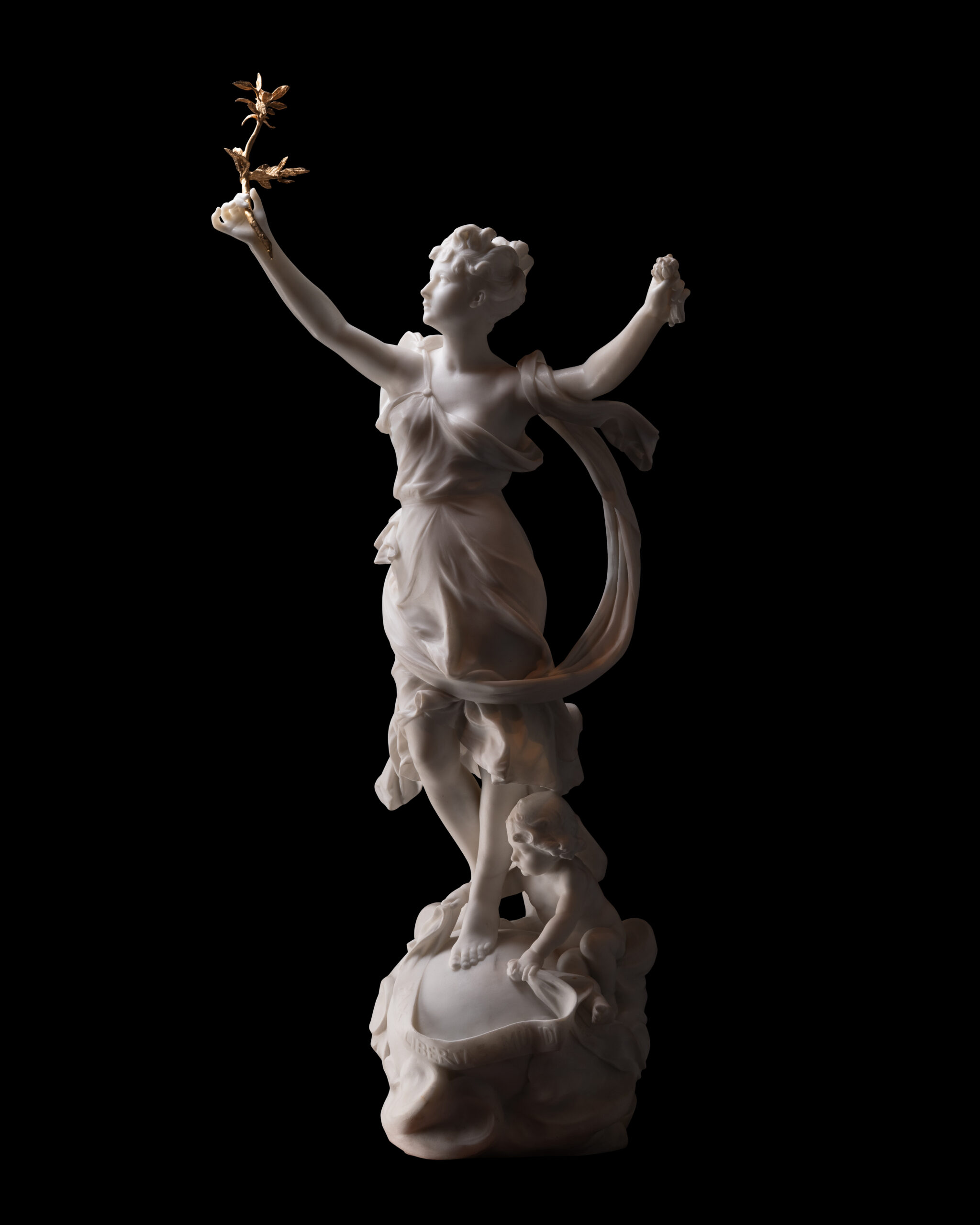
LUCA MADRASSI · (1848–1919)
Pax Libertas Mundi
technical sheet
| ARTIST | Luca Madrassi |
| DATE | Late 19th century |
| DIMENSIONS | 104 cm (height) / 28 x 26 cm (Base) |
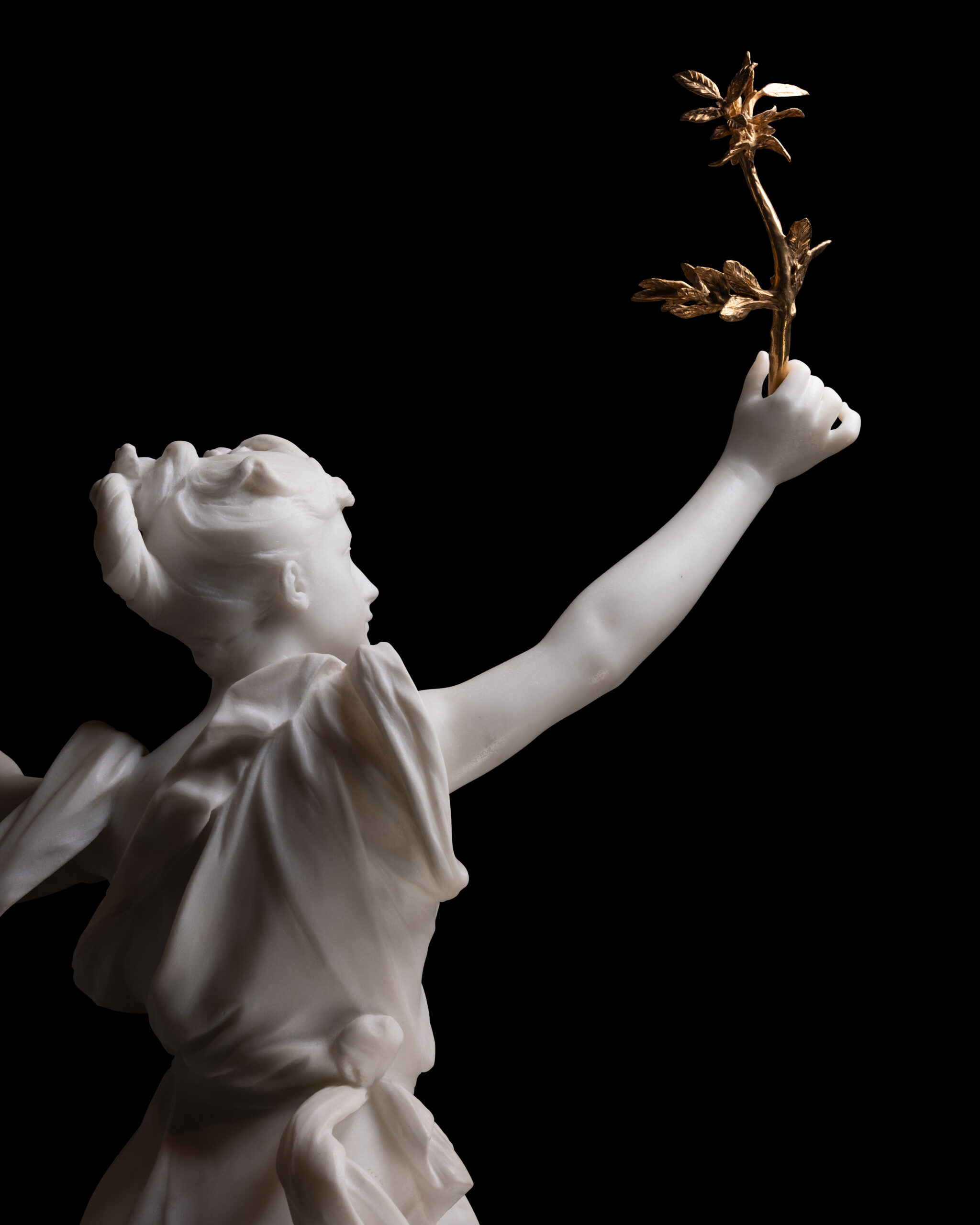
| MATERIAL | White Carrara marble and gilded bronze |
| SIGNED | “Luca Madrassi Paris” |
| TITLED | « Pax Libertas Mundi » |
about the work
With Pax Libertas Mundi, Luca Madrassi gives form to a universal allegory characteristic of the late nineteenth century, in which political idealism, humanist pacifism and faith in progress converge in a synthetic and immediately legible image.
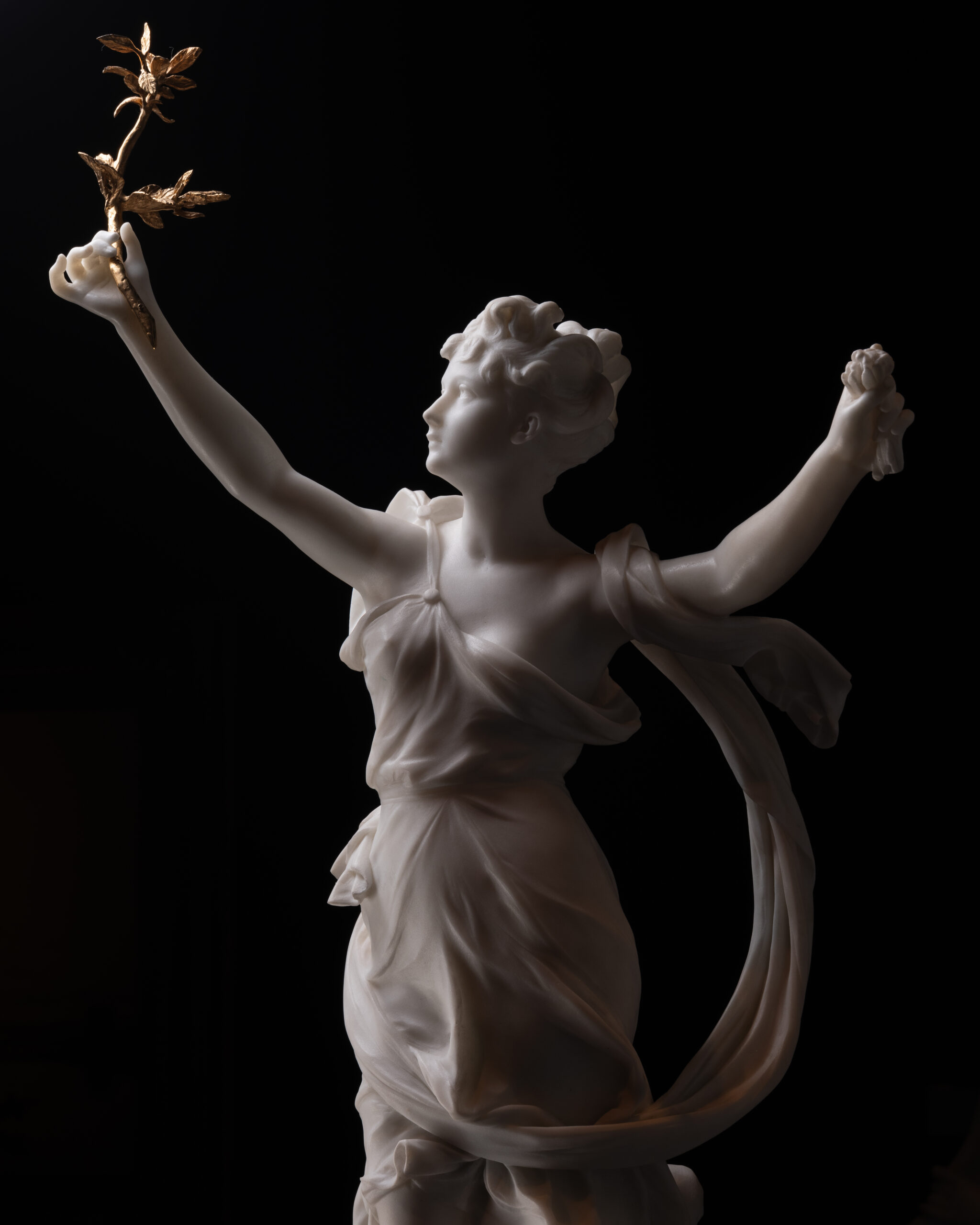
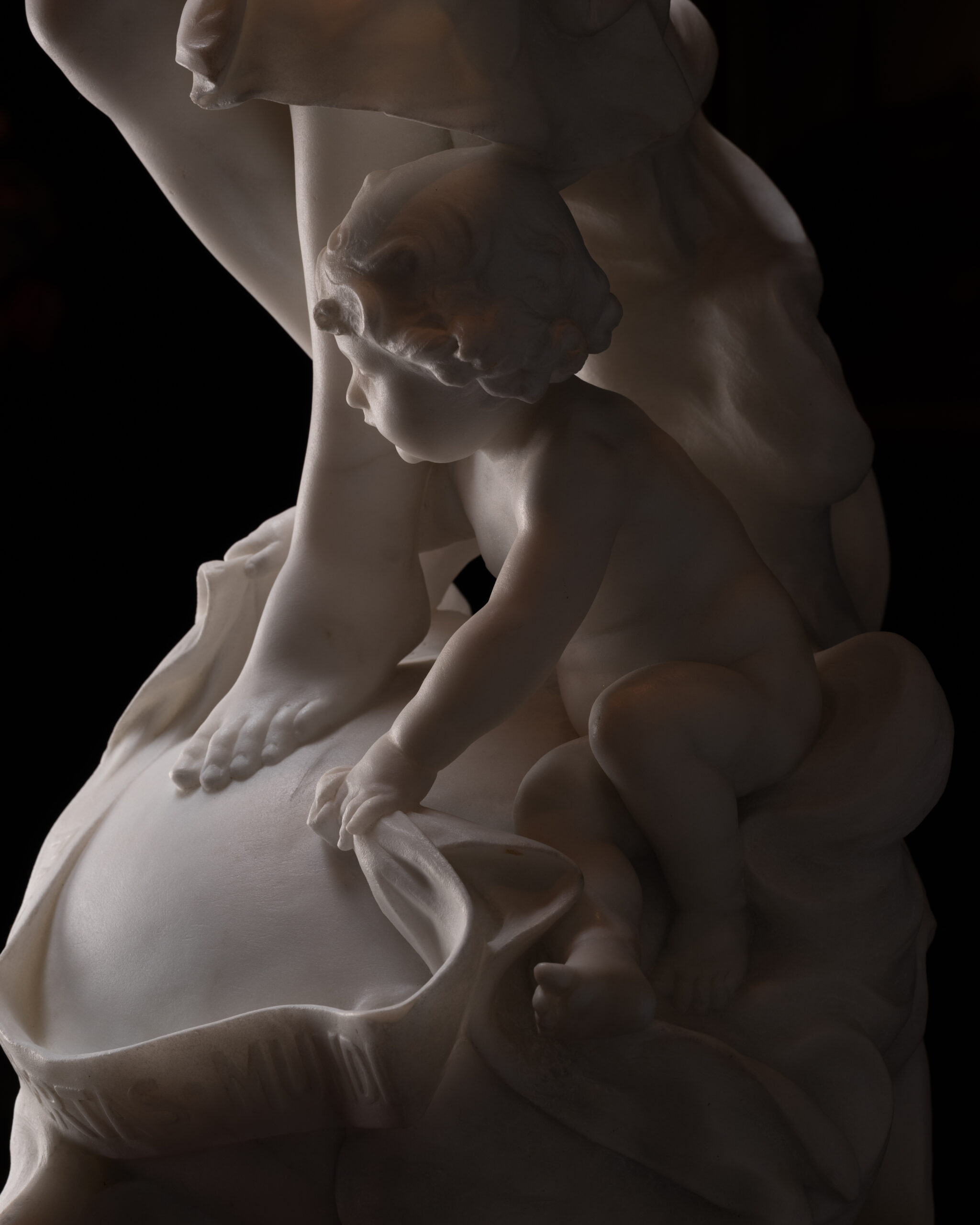
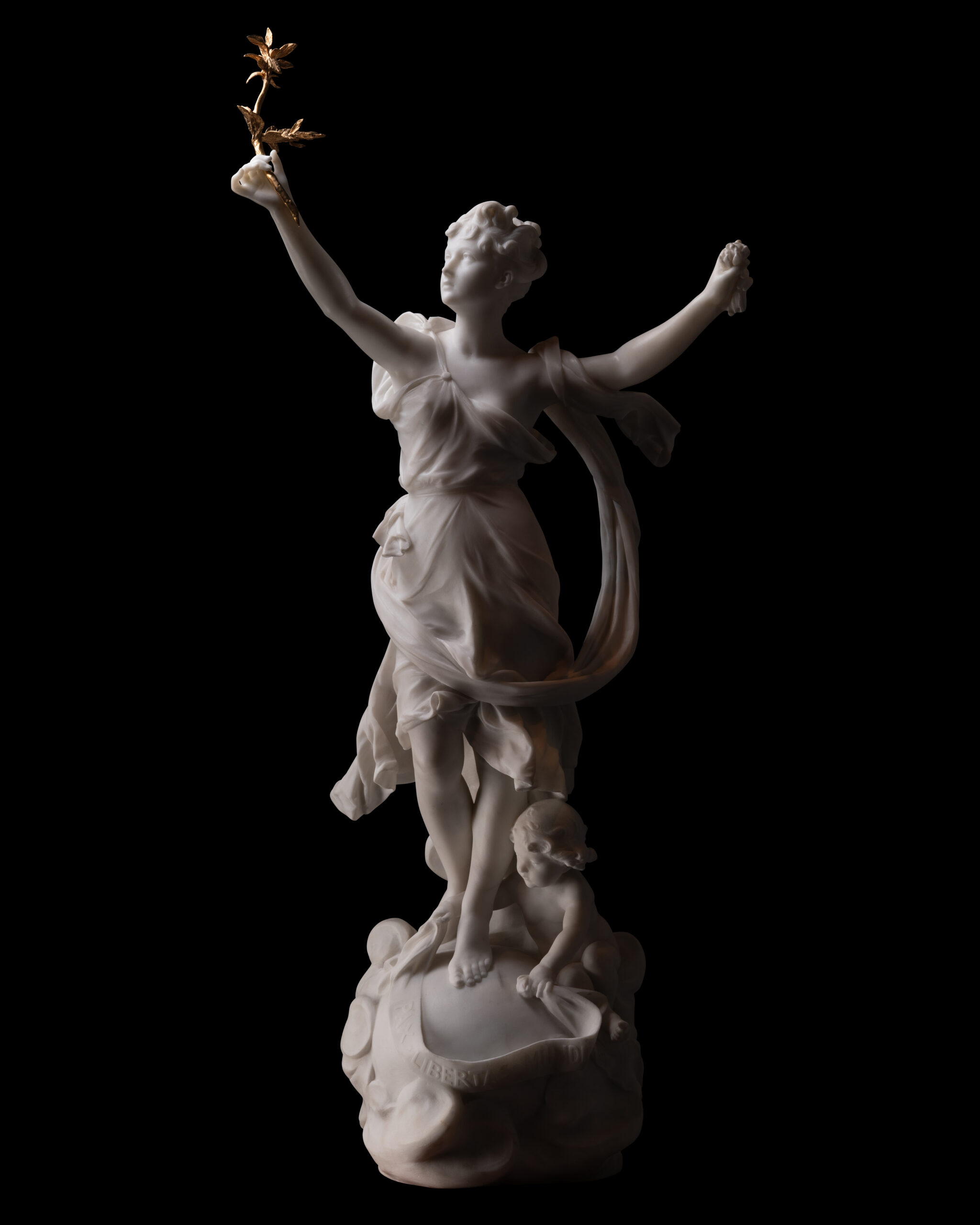
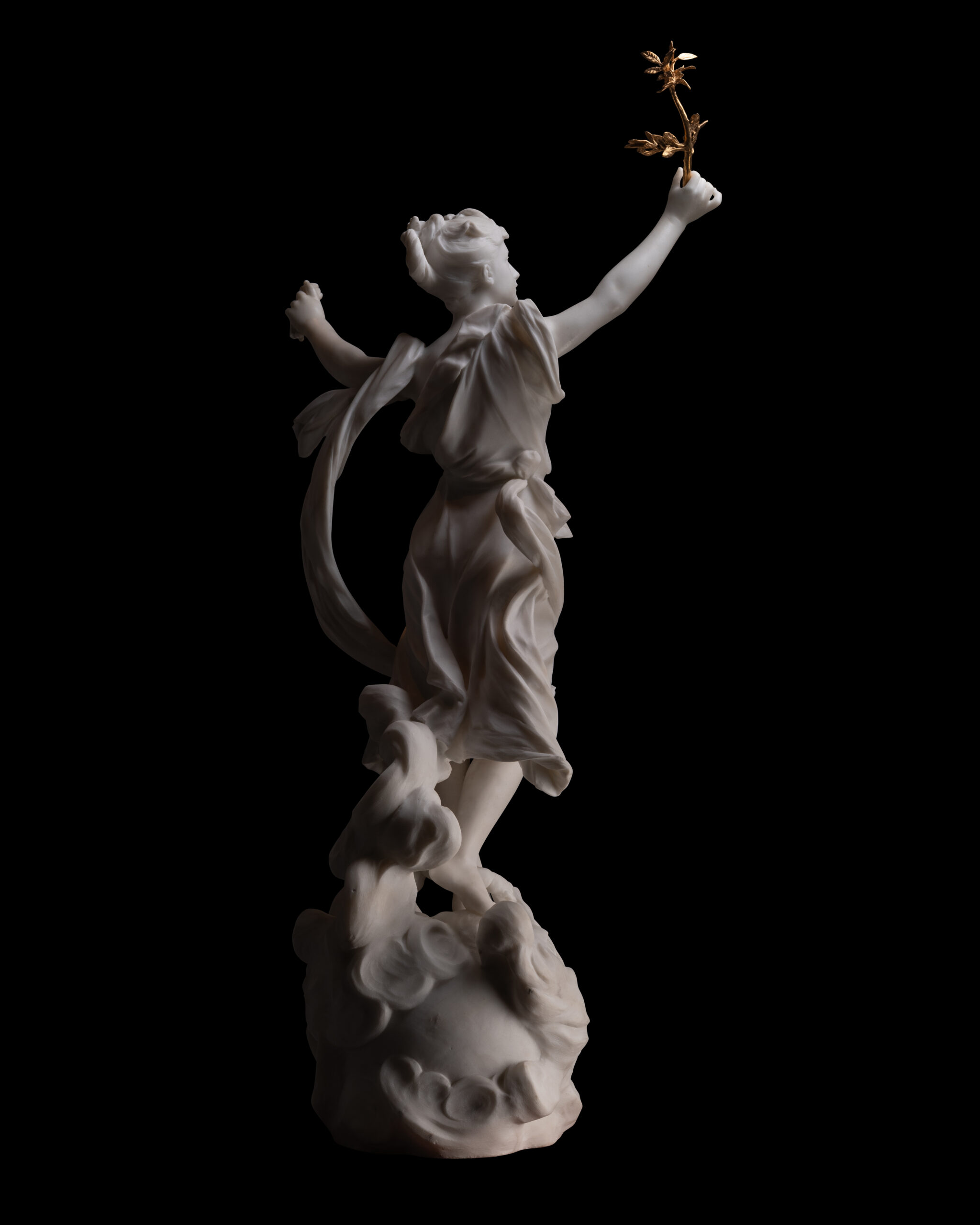
The sculpture depicts a female figure, draped in the antique manner, standing upon a terrestrial globe partially enveloped in clouds. Her arms opened wide, she adopts a posture of elevation and welcome, suggesting the universality of her message.
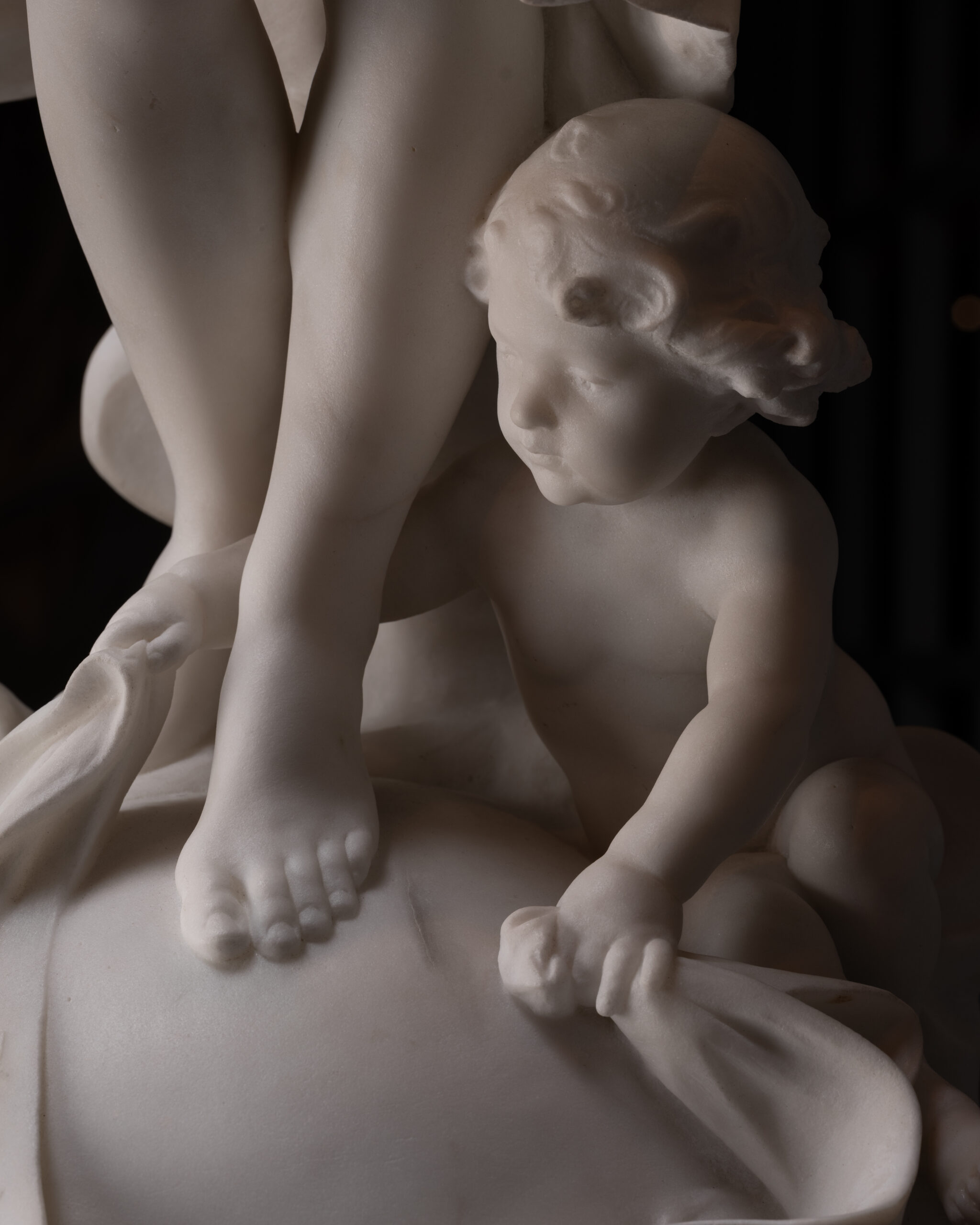
At her feet, a kneeling putto supports a phylactery bearing the device PAX LIBERTAS MUNDI. The inscription, in Latin, lends the work a timeless and solemn resonance. It articulates three fundamental concepts — peace, liberty and the world — in a formula that transcends any national framework to assert a universal ambition. The choice of Latin, the language of moral authority and humanist tradition, reinforces this programmatic dimension.
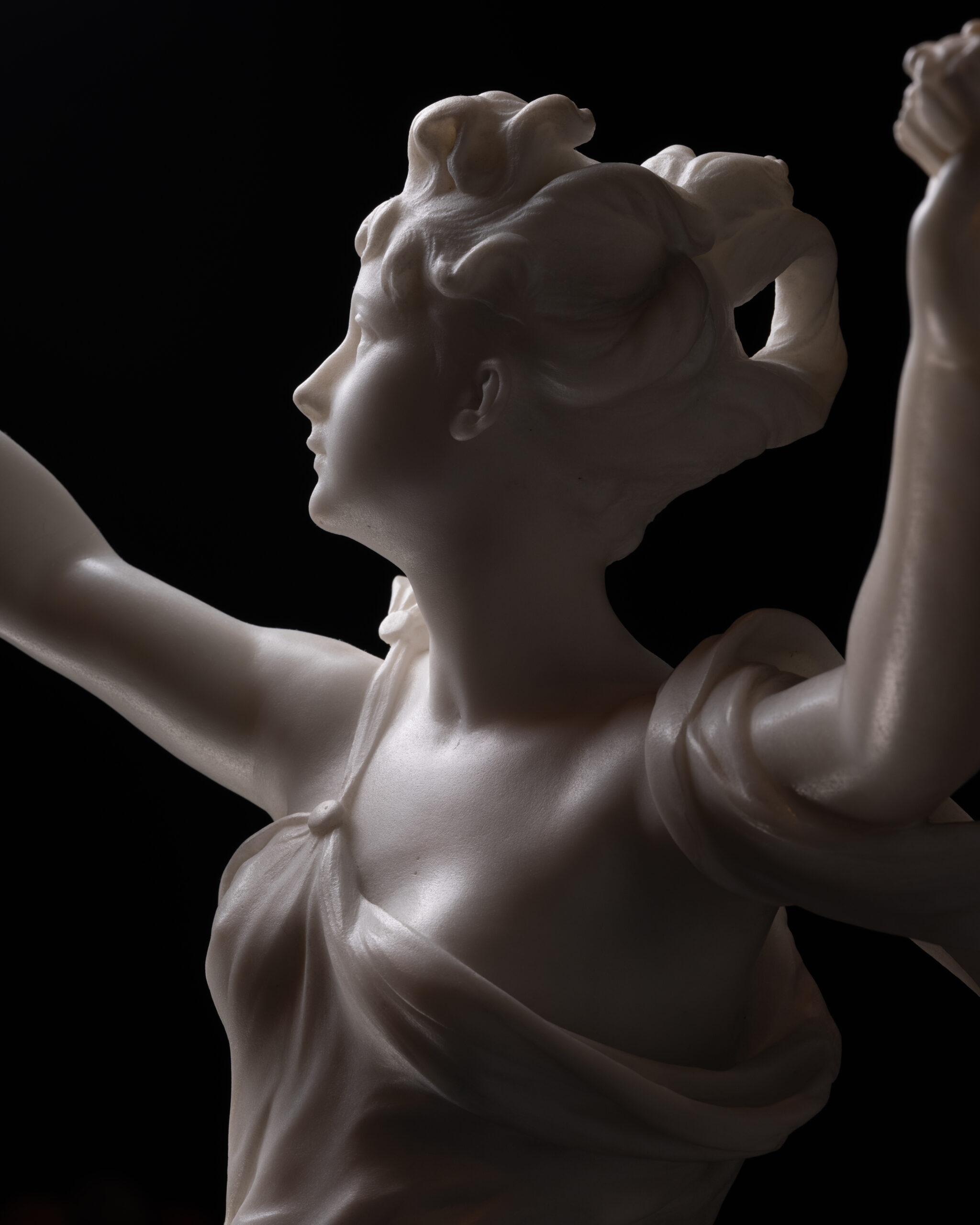
The treatment of the marble is of great refinement: the draperies, animated by supple and deeply cut folds, create an ascending movement that accompanies the impulse of the body and heightens the impression of moral elevation. The transitions between polished surfaces and more animated passages bear witness to Madrassi’s technical mastery and to his grounding in a late academic tradition, one nonetheless open to a more Symbolist sensibility.
Known principally through its bronze editions, Pax Libertas Mundi finds in this marble version a particularly accomplished expression. The choice of marble, a material of prestige and permanence, transforms the allegory into a true sculpted manifesto.
Through this work, Madrassi situates himself fully within the intellectual climate of the Belle Époque, marked by the rise of pacifist movements, belief in the moral progress of humanity, and the affirmation of universalist ideals. Pax Libertas Mundi does not recount a specific antique myth: it proposes a vision — that of a world governed by peace and liberty, elevated to the rank of absolute value.
Literature
- BÉNÉZIT, E. Dictionnaire des peintres, sculpteurs, dessinateurs et graveurs. Paris: Librairie Gründ, 1999. Vol. 9, p. 166.
- THIEME, U. BECKER, F. Allgemeines lexicon der bildenden Künstler von der antike bis zur gegenwart. Germany: E.A. Seemann. 1999. Vol. 23. p. 540.
the ARTIST
Luca Madrassi
Tricesimo, 1848 – Paris, 1919
Sculptor of Italian origin naturalised French, student of Cavelier and practitioner of Gustave Doré, creator of universalist allegories of the Belle Époque. Luca Madrassi was born in 1848 in Tricesimo, in Friuli, in north-eastern Italy. He began his artistic studies in Rome before continuing his training at the École des Beaux-Arts in Paris, where he was a student of sculptor Pierre-Jules Cavelier (1814–1894).
similar works