ALFRED DUBUCAND · (1828-1894)
The Ostrich Hunter
technical sheet
| ARTIST | Alfred Dubucand |
| DATE | ca. 1876 |
| DIMENSIONS | 63 × 77 × 33 cm |
| MATERIAL | Brown patinated bronze with gilt highlights |
| SIGNED | “DUBUCAND” |
| PROVENANCE | Private collection, France |
about the work
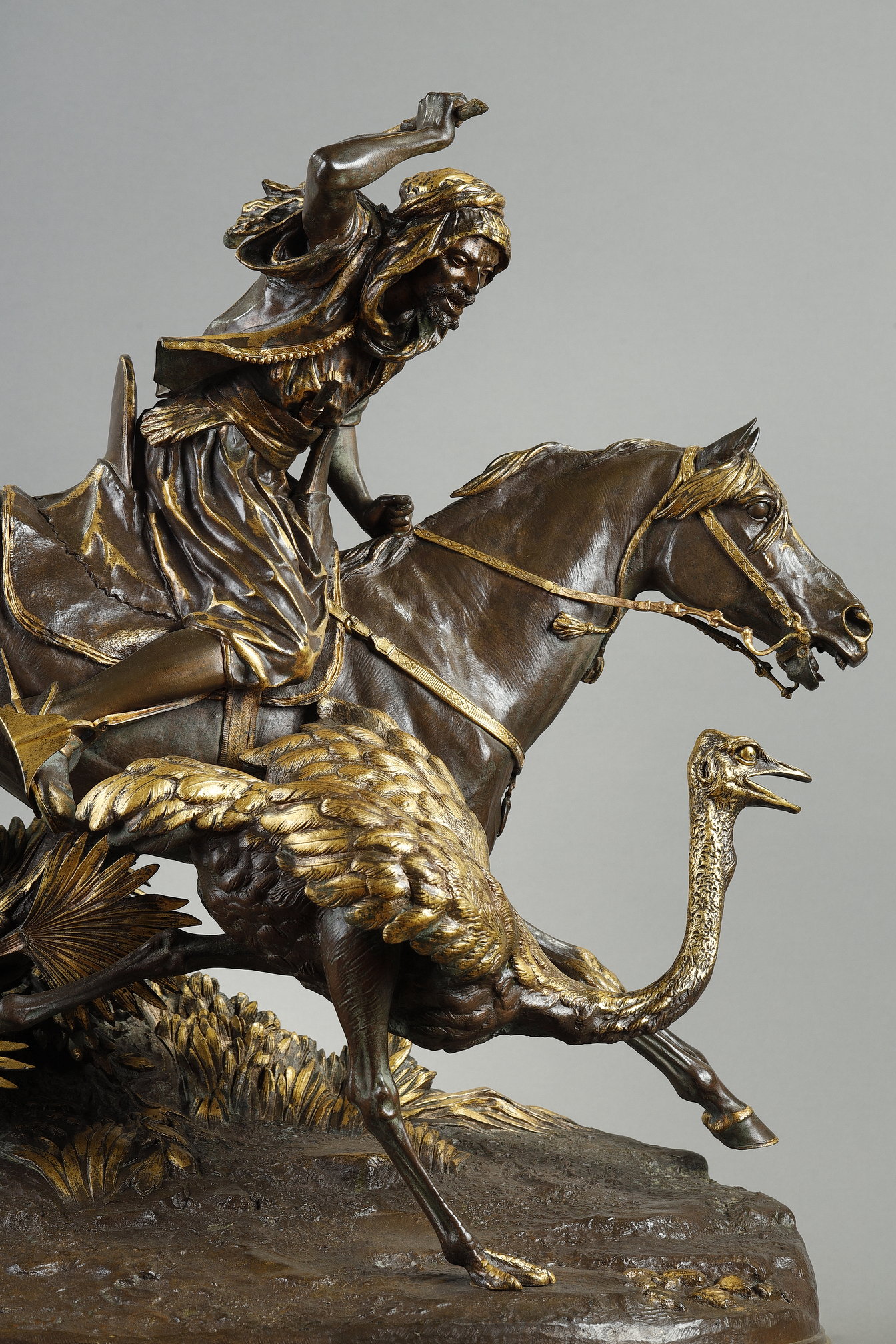
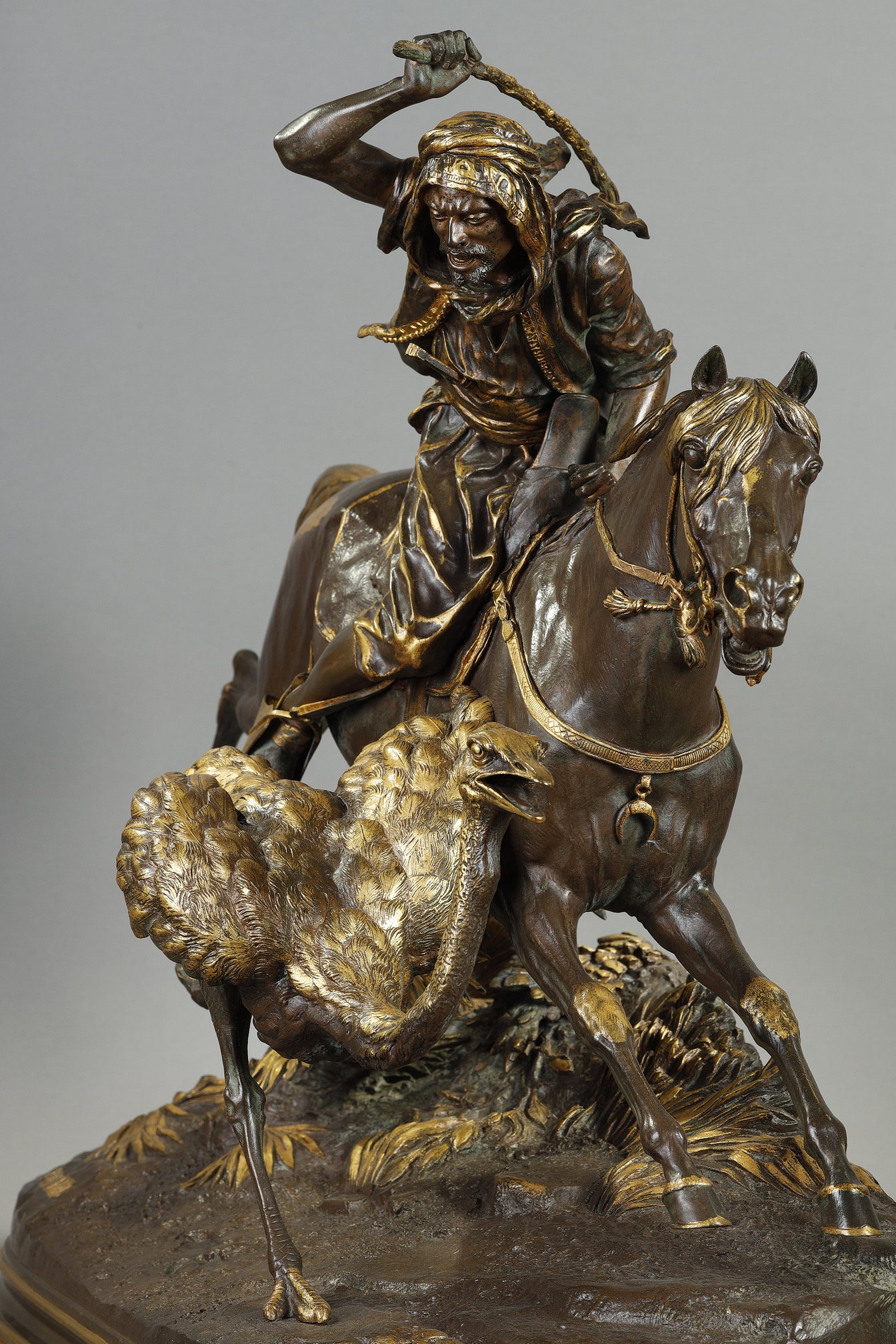
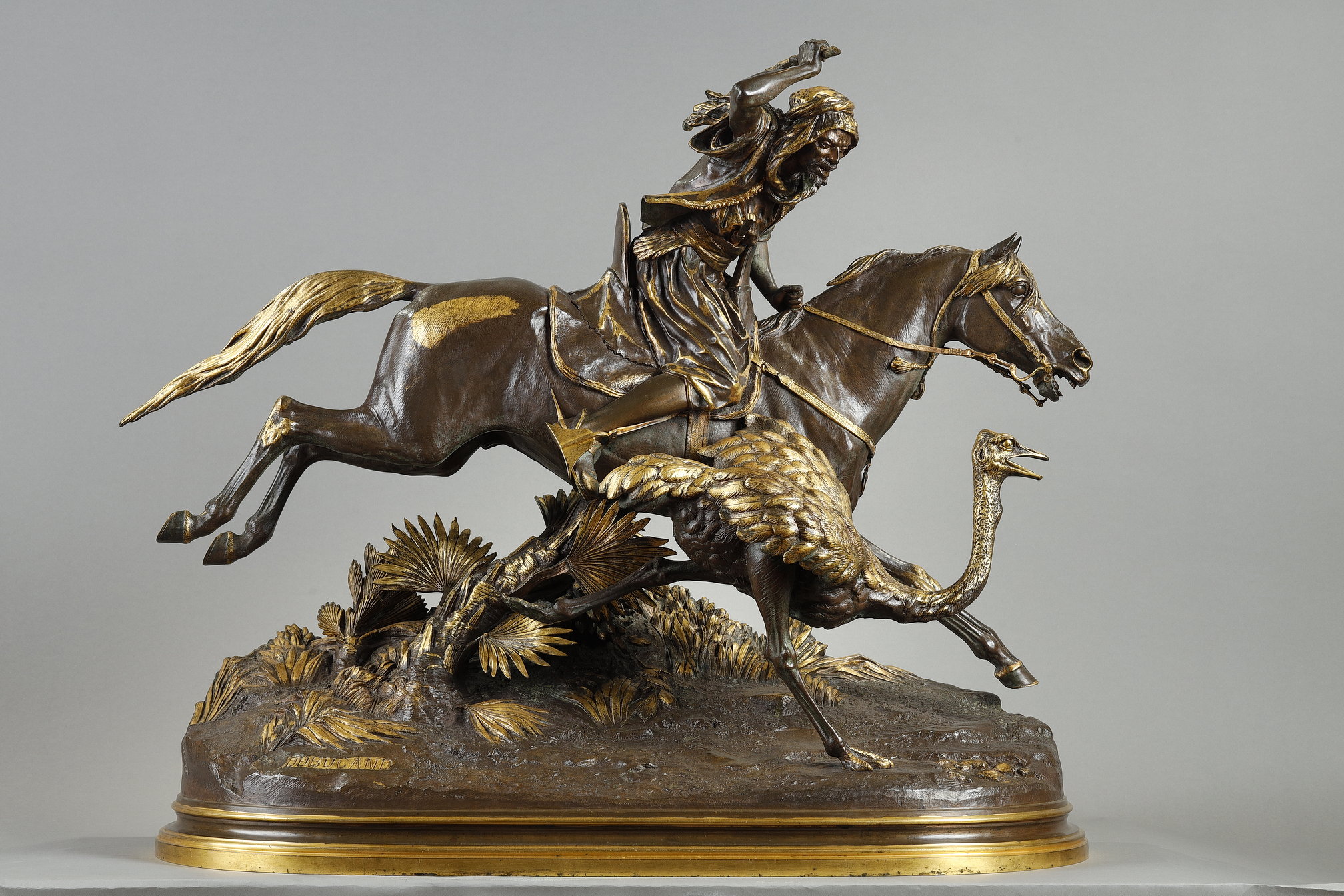
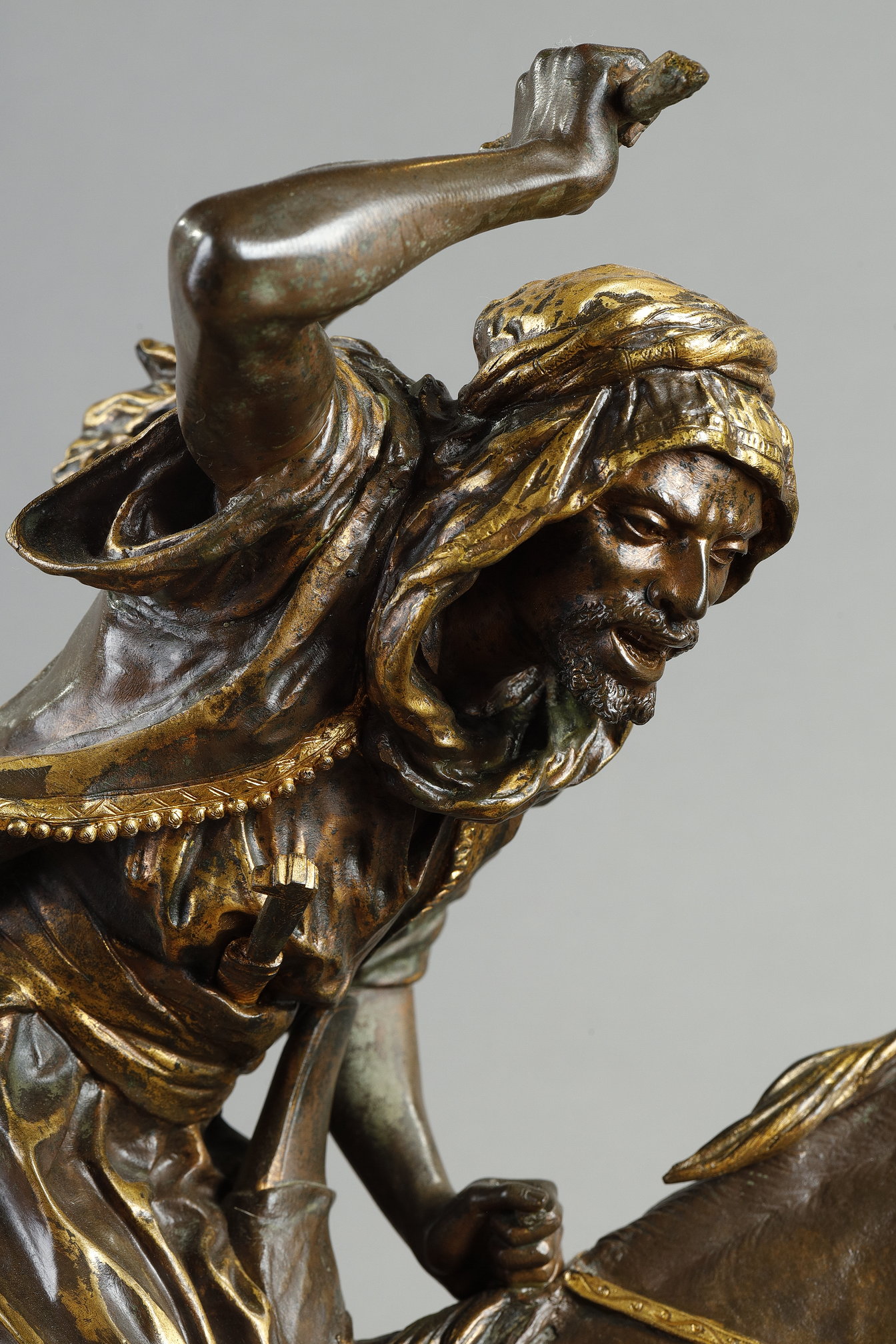
The Ostrich Hunter by Alfred Dubucand is a striking example of Orientalist sculpture at its finest. Demonstrating a remarkable sense of movement and extraordinary technical refinement, the artist captures a precise and dramatic moment at the heart of a traditional ostrich hunt in North Africa.
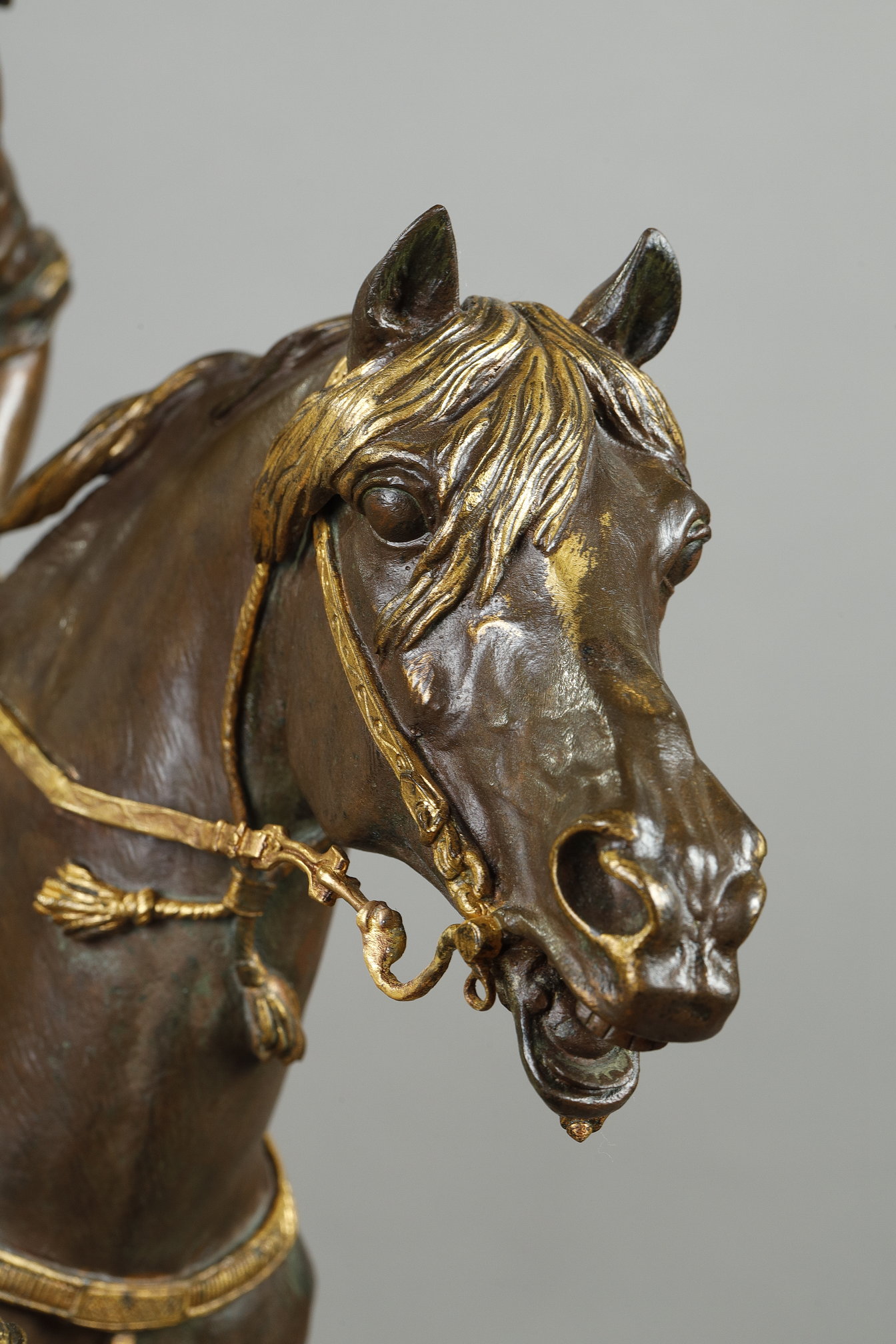
The composition depicts an Arab hunter charging forward at full speed through a lush desert landscape. With one hand, he controls the reins; with the other, he raises a hunting club, poised to strike the fleeing ostrich ahead of him. The horse’s windswept tail, the rider’s forward-leaning posture, and the ostrich’s long outstretched legs all contribute to an intense impression of speed and urgency.
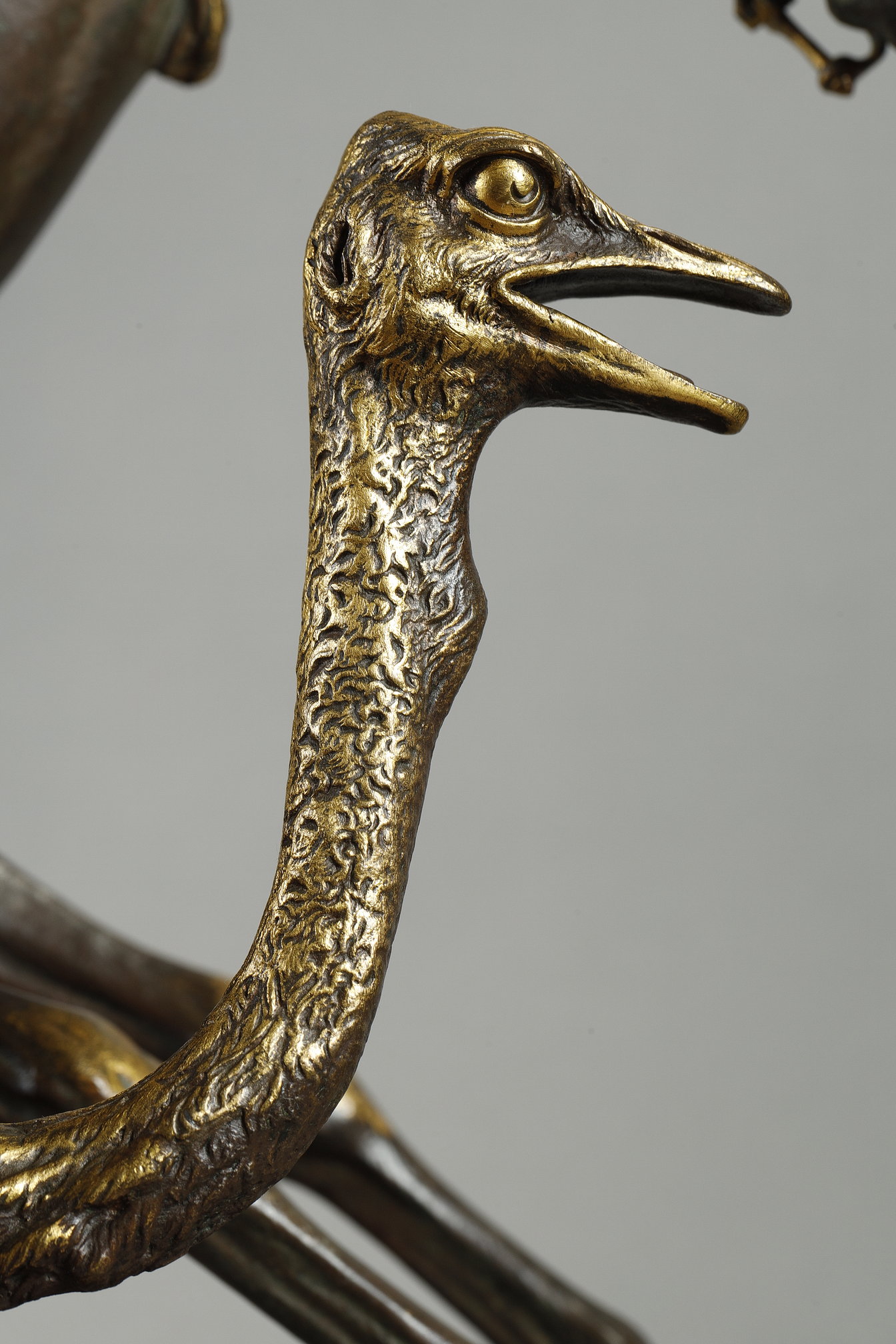
Dubucand’s mastery lies in his exceptional attention to detail and texture: the meticulously rendered ostrich plumage, the delicate folds of the hunter’s tunic, and the expressive musculature of the horse all reveal a profound understanding of anatomy and form. The patina work is equally refined, with gilded highlights accentuating certain areas, guiding the viewer’s eye and enhancing the depth and contrasts of the scene.
This sculpture extends beyond mere action — it also reflects a historical reality. Inspired by North African hunting practices, ostriches were traditionally pursued to exhaustion before being struck down with a wooden club. In Dubucand’s work, the ostrich’s open beak and half-spread wings convey this decisive moment, when the exhausted and vulnerable animal is on the verge of capture. This subject held a particular importance within Dubucand’s oeuvre: The Ostrich Hunt was exhibited at the 1876 Philadelphia International Exhibition, attesting to the artist’s growing international recognition and to the success of his Orientalist compositions.
The Ostrich Hunter stands as a testament to Dubucand’s virtuosity and narrative talent. It combines naturalistic precision, anthropological observation, and dramatic intensity within a single remarkable bronze — a true jewel of 19th-century Orientalist sculpture.
Literature
- DAUMAS, General. “Les Cavaliers et les Chevaux du Sahara.” Revue des Deux Mondes (1829–1971), vol. 12, no. 5, 1851, pp. 944–67.
- KJELLBERG, P. Les Bronzes du XIXe Siècle, Dictionnaire des sculpteurs. Les Éditions de l’Amateur, Paris, 1989, pp. 299–301.
the ARTIST
Alfred Dubucand
1828 – Paris, 1894
French master of animal bronze, known for precise and lifelike style. Born in Paris in 1828, Alfred Dubucand became one of the leading French sculptors of the 19th century, renowned for his intricate animalier bronzes. Trained under Justin-Marie Lequien and deeply influenced by Antoine-Louis Barye, Dubucand quickly developed a distinctive style that combined anatomical precision with artistic sensitivity.
similar works