AUGUST GAUL · (1869–1921)
Ente (Duck)
technical sheet
| ARTIST | August Gaul |
| DATE | 1911 |
| DIMENSIONS | Sculpture: 40 × 30 × 20 cm / Base: 16 × 16.5 cm |
| MATERIAL | Dark patinated bronze |
| FOUNDRY | Hermann Noack |
| SIGNED | “A. GAUL” / Founder’s stamp: “H. NOACK – BERLIN FRIEDENAU” |
about the work
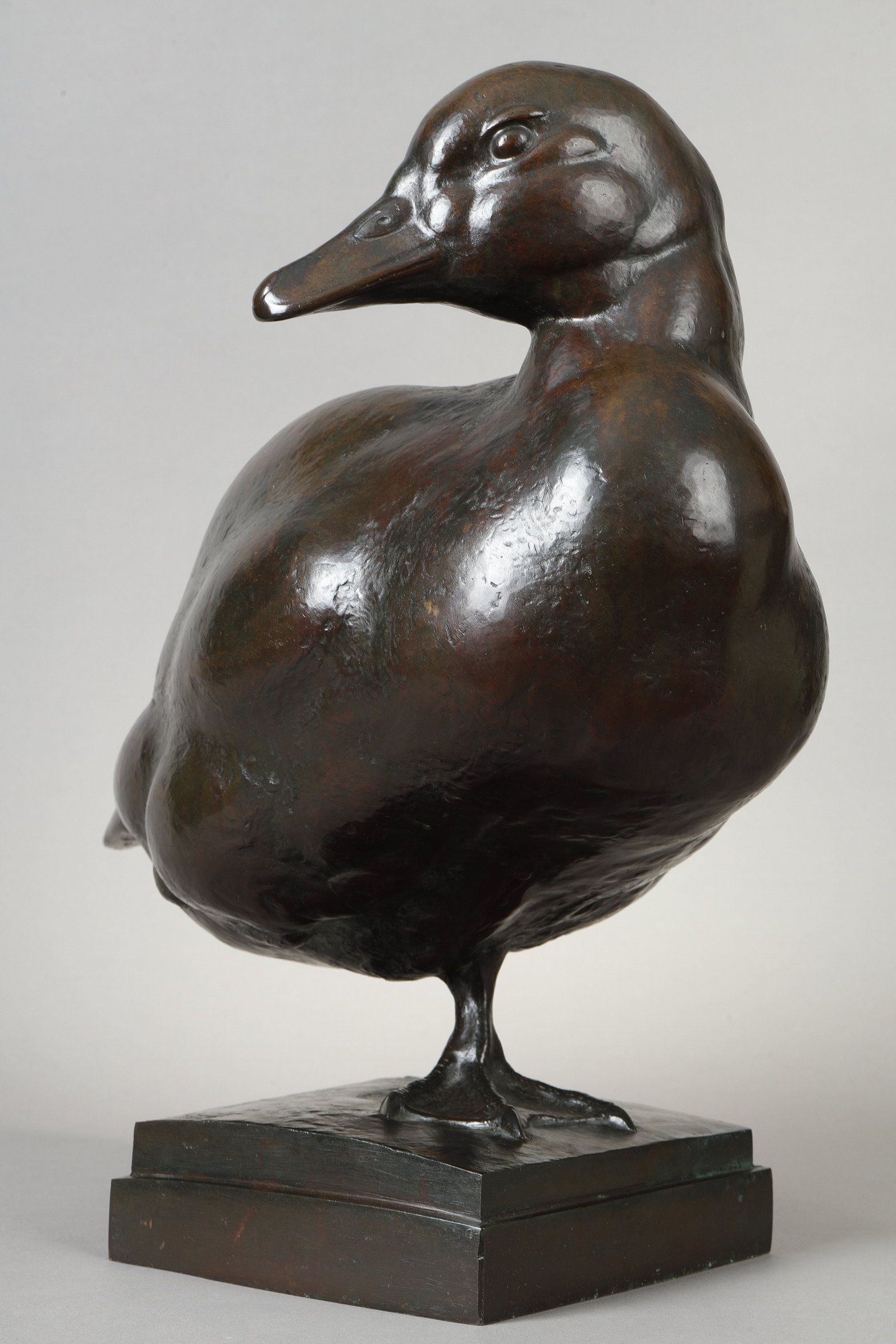
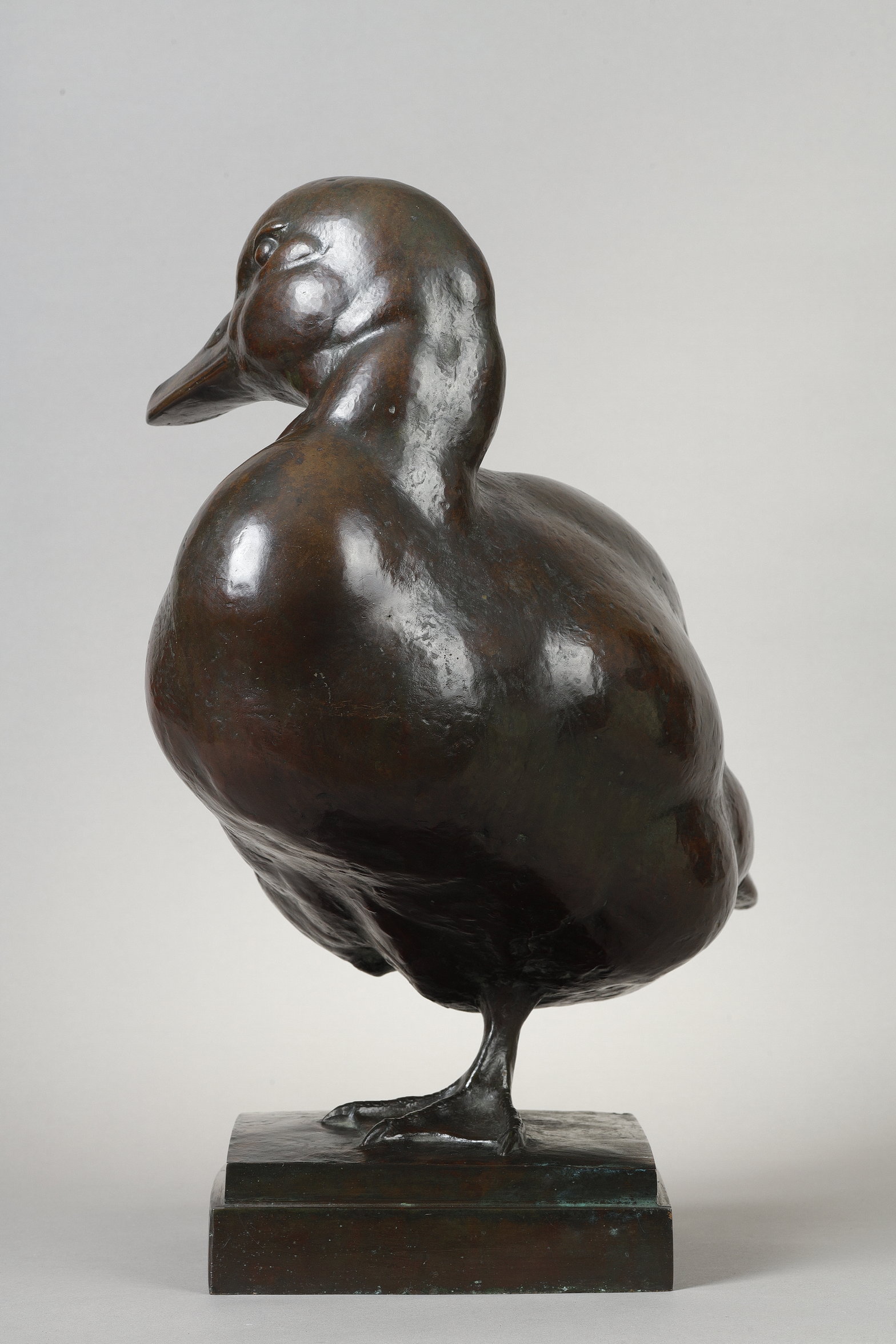
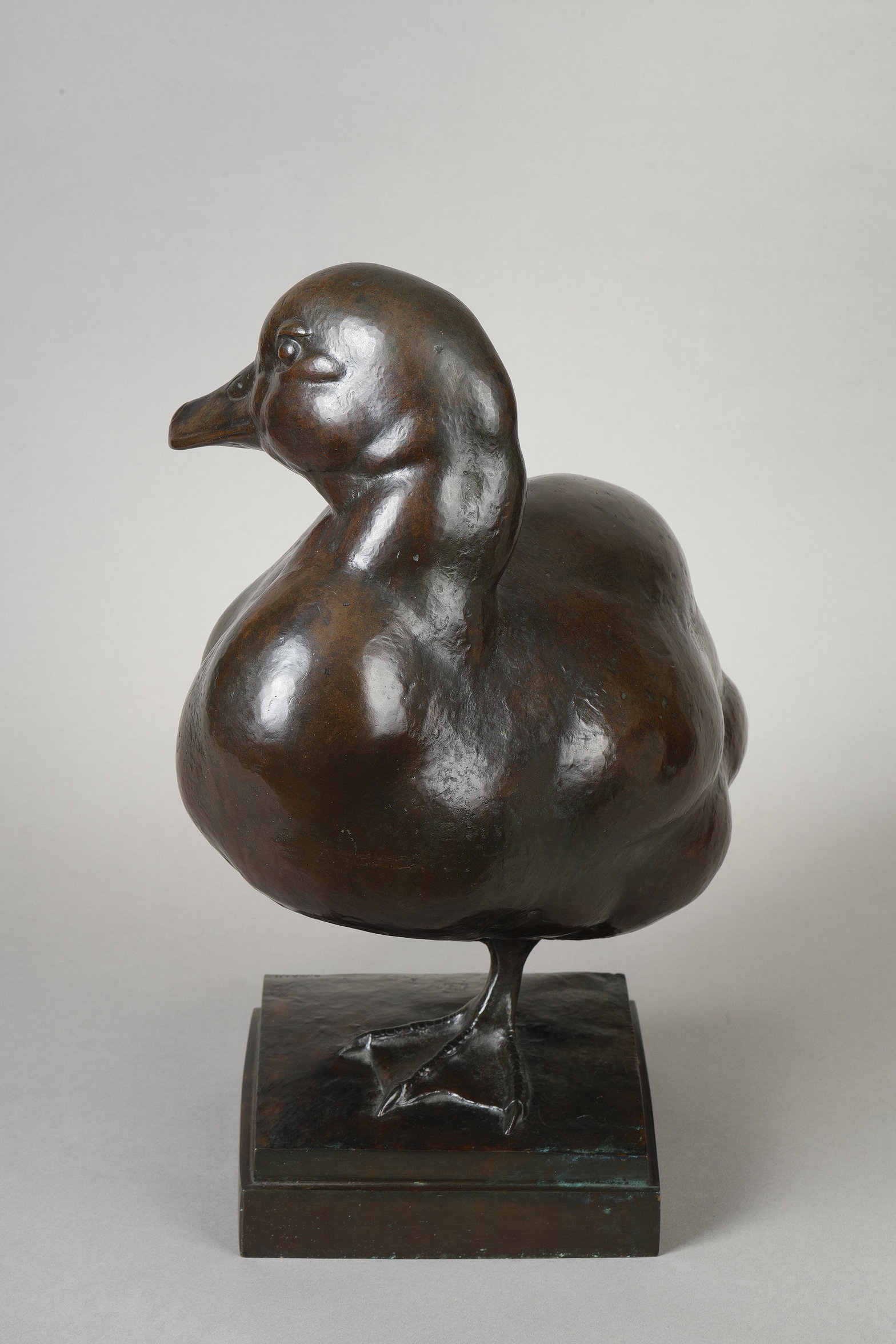
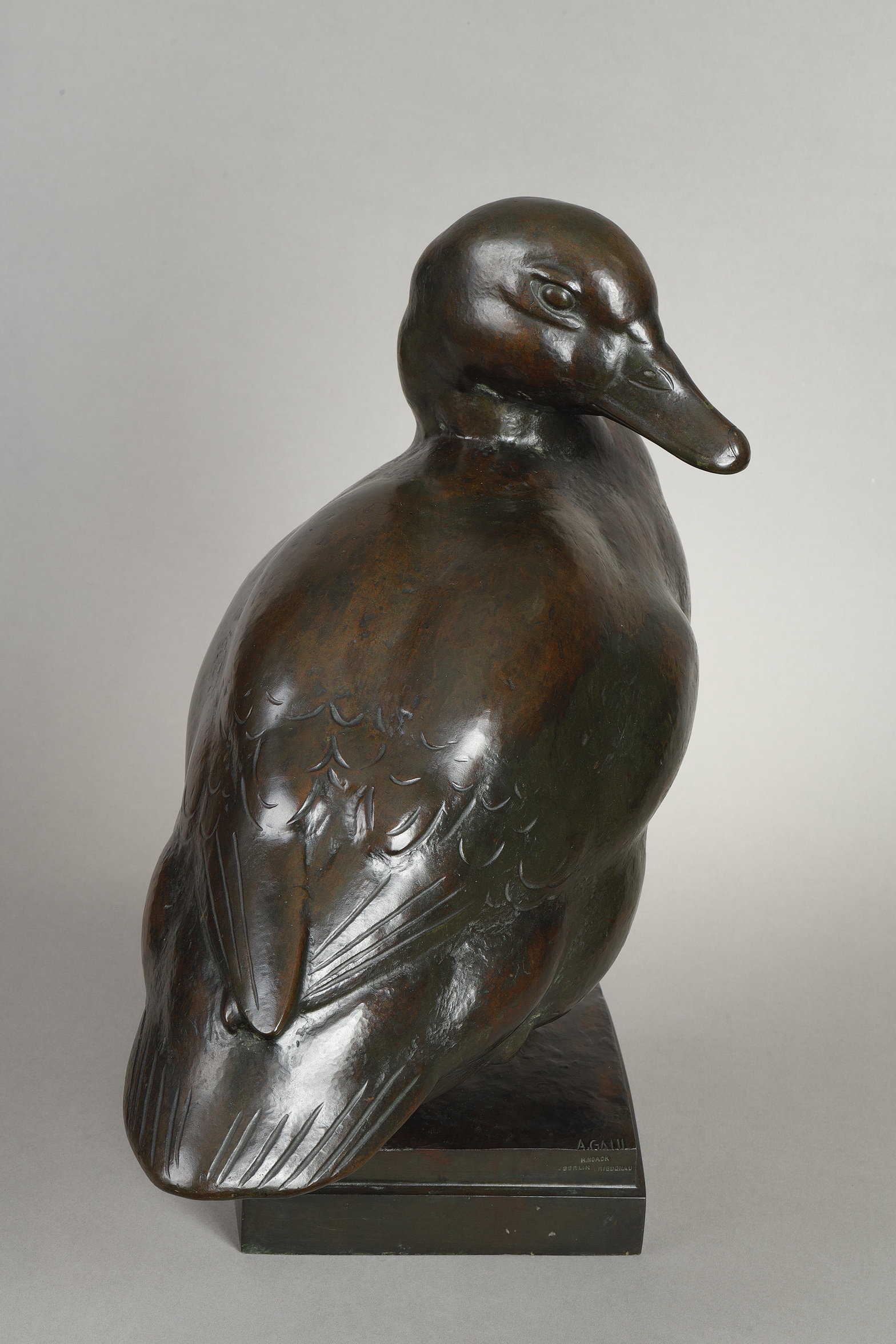
This elegant bronze sculpture by August Gaul depicts a duck in a moment of absolute calm, perfectly illustrating the sculptor’s singular approach to the animal world. Far from any descriptive or anecdotal naturalism, the work rests on a masterful synthesis of observation and formal construction.
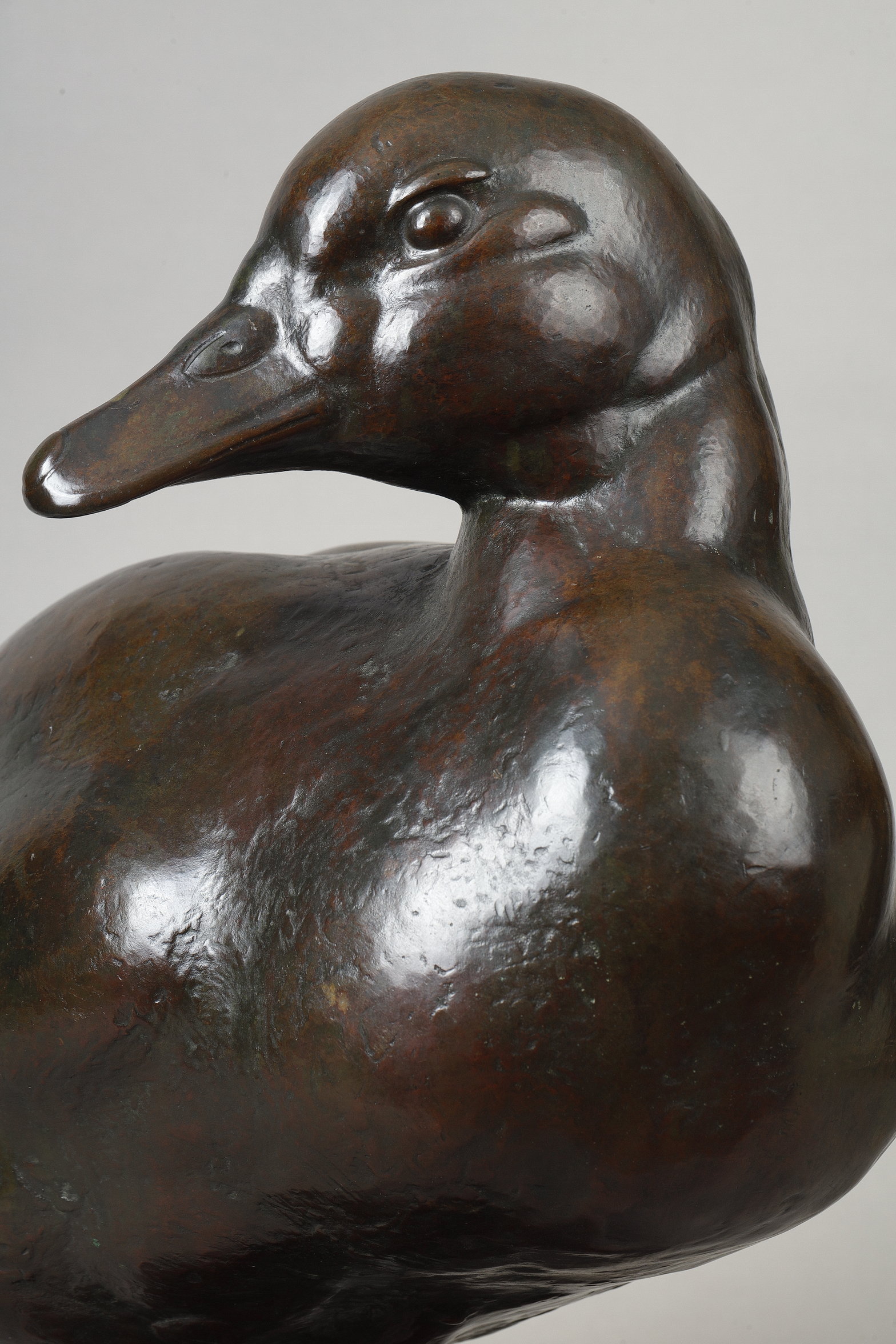
The body is conceived as a compact and unified volume, structured around a continuous curve that gives the whole a stable and balanced presence. The delicately turned head, along with one raised foot, introduces a subtle variation, instilling the composition with a discreet vitality without disrupting its harmony.
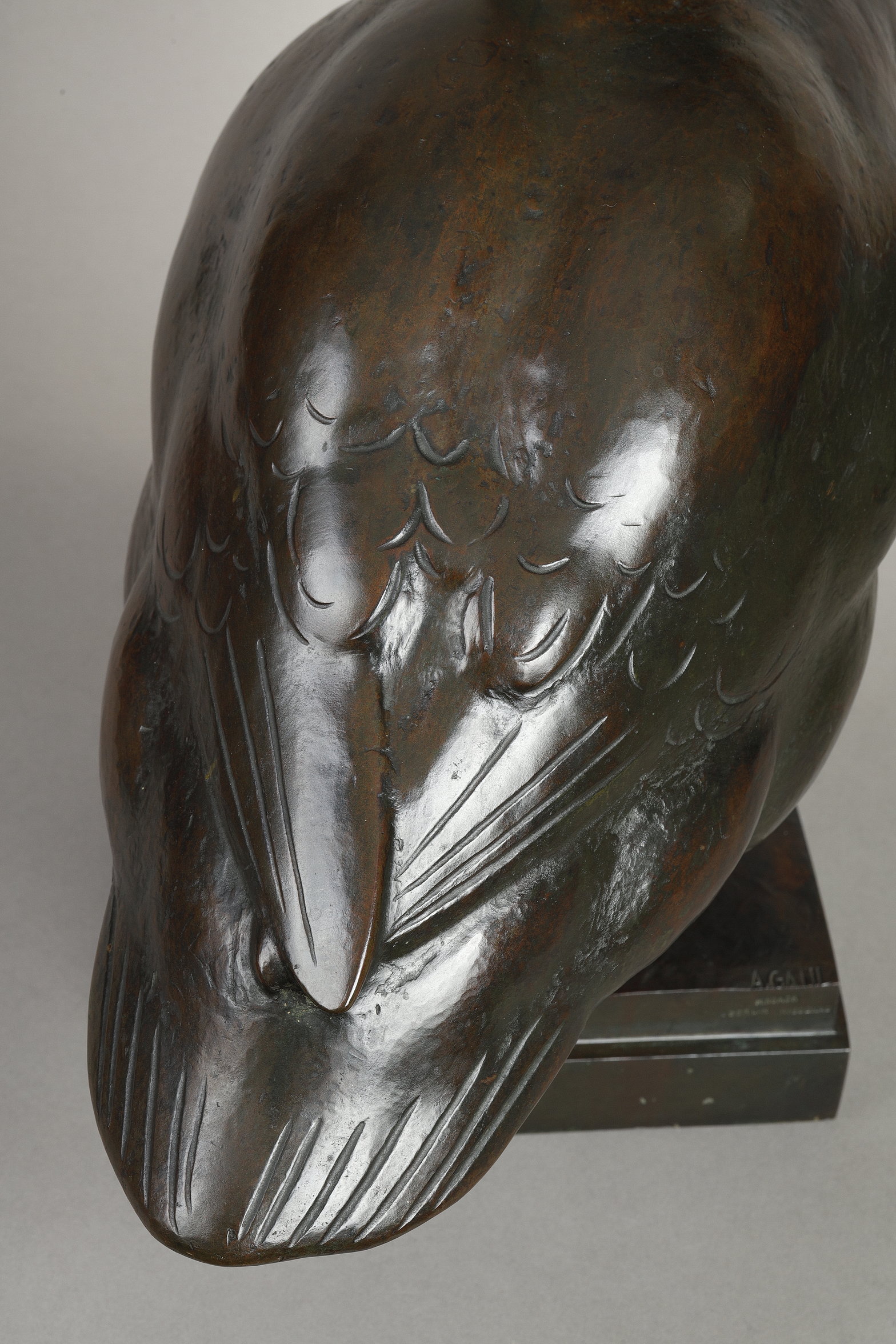
Rather than detailing the plumage, Gaul favours a modelling in broad, supple planes, allowing light to reveal the richness of the volumes. The deliberately spare surface suggests the material without ever describing it, maintaining a constant respect for the intrinsic qualities of bronze.
In his treatment of the surface, Gaul intervenes after casting through a highly controlled chiselling process: fine incisions, discreetly distributed, animate the bronze and suggest the plumage without ever falling into descriptive detail. These late interventions, almost instinctive, fully participate in the definitive shaping of the work, progressively revealing the vibration of the surface while preserving the unity of the volume.
This model is part of the series created by the artist for the fountain at the entrance of the Renaissance-Theater in Berlin in 1911, where several duck figures were arranged in composition. Original figures from this same ensemble are also held at the Giersch Museum of Goethe University in Frankfurt, attesting to the importance of this motif in Gaul’s oeuvre.
This work fully embodies the artist’s essential quest: to move beyond simple imitation toward a synthetic, almost timeless form. Through this peaceful representation, devoid of any narrative effect, Gaul succeeds in expressing the very essence of the living and anticipates certain directions of 20th-century animal sculpture, notably that of François Pompon. Of apparent simplicity, this duck thus reveals a remarkable mastery of form and balance, characteristic of the finest achievements of the artist.
Literature
- Emil Waldmann, August Gaul, Berlin, Paul Cassirer, 1919, p.77
the ARTIST
August Gaul
1869 – Berlin, 1921
Born in 1869 near Hanau into a family of stonemasons, August Gaul was a German master of synthetic animal sculpture. Working between the academicism of Begas and the research of Hildebrand, he is recognised as a precursor of François Pompon.
similar works