RAYMOND DE MEESTER DE BETZENBROECK · (1904–1995)
The Eagle With the Broken Wing
technical sheet
| ARTIST | Raymond de Meester de Betzenbroeck |
| DATE | ca. 1930 |
| DIMENSIONS | 81 × 22 × 21.5 cm |
| MATERIAL | Bronze |
| FOUNDRY | Batardy |
| TECHNIQUE | Lost-wax cast technique |
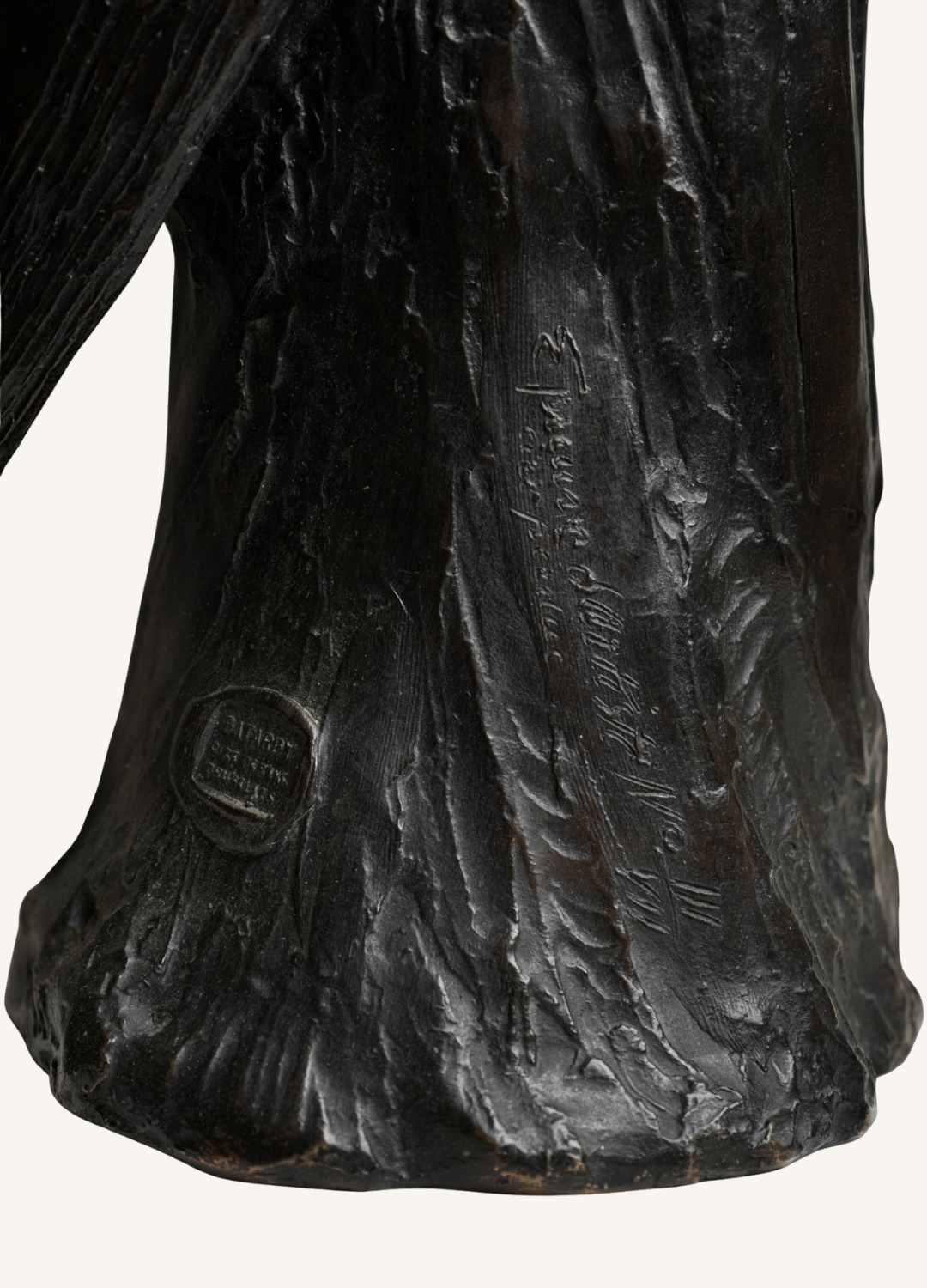
| SIGNED | “Raymond de Meester de Betzenbroeck” — “Epreuve d’artiste N°III/VII”, “Cire perdue” — Founder’s stamp: “BATARDY CIRE PERDUE BRUXELLES” |
| EXHIBITION | Espozione Biennale Internazionale d’Arte di Venezia 1936 |
about the work
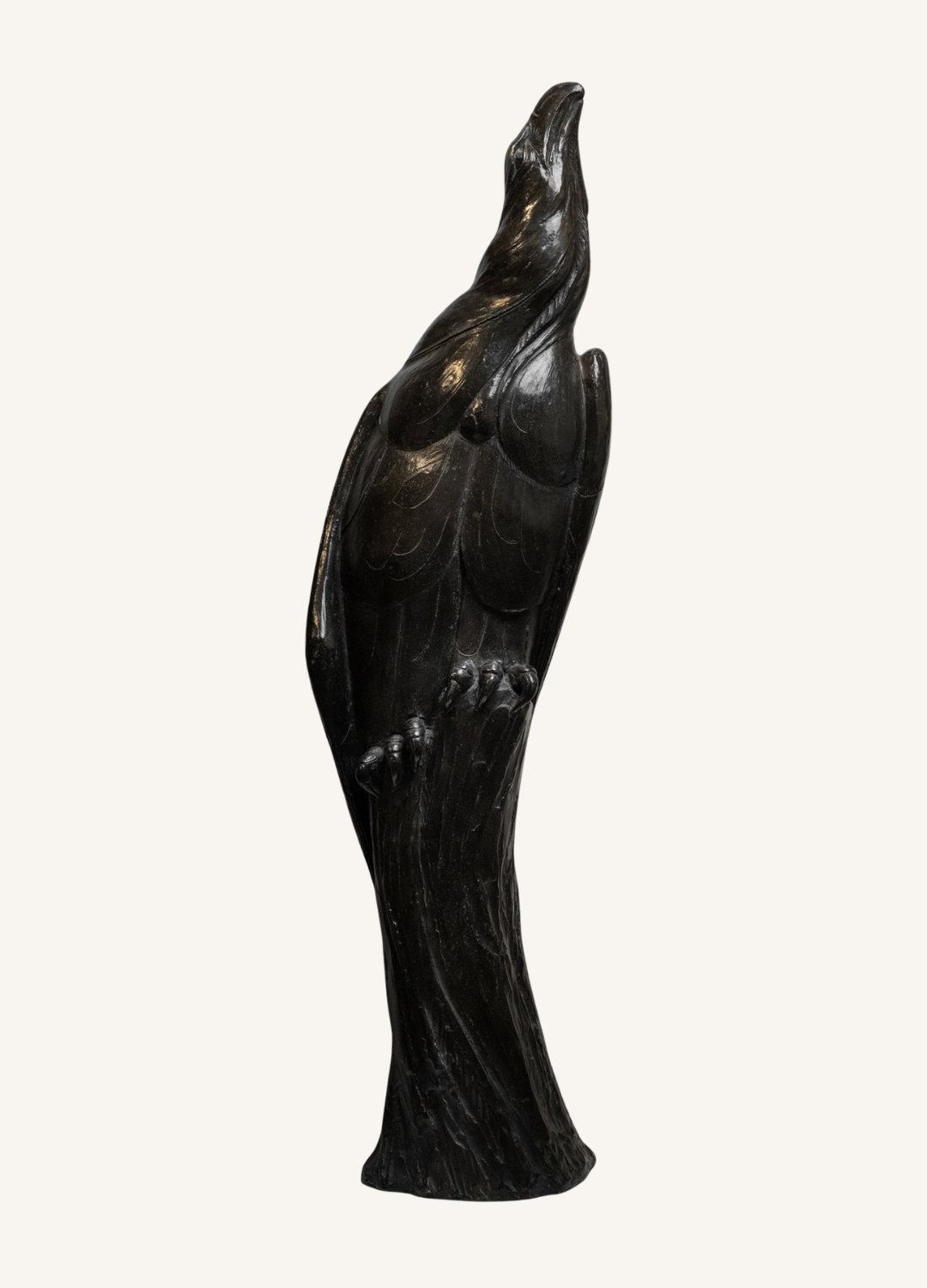
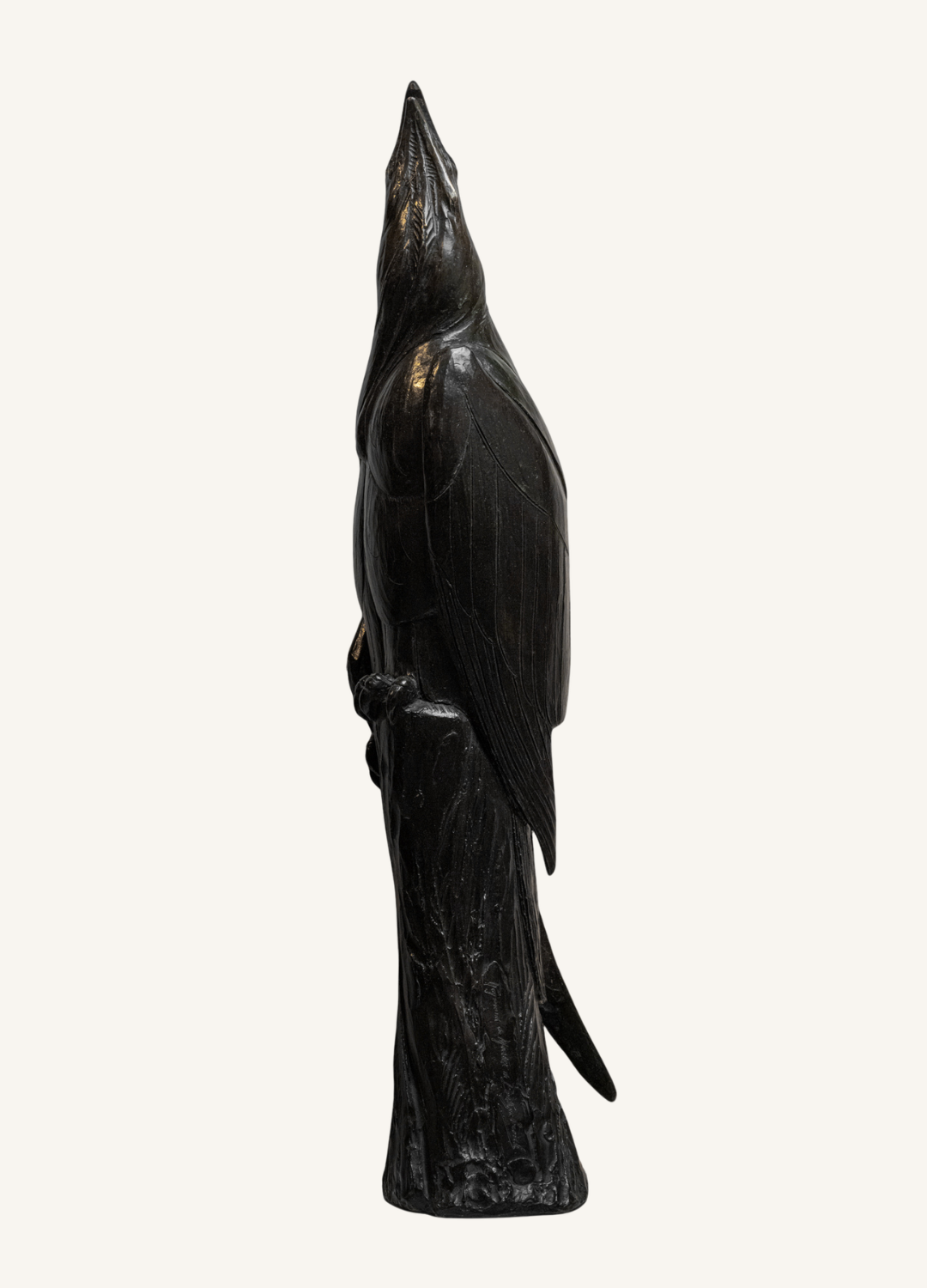
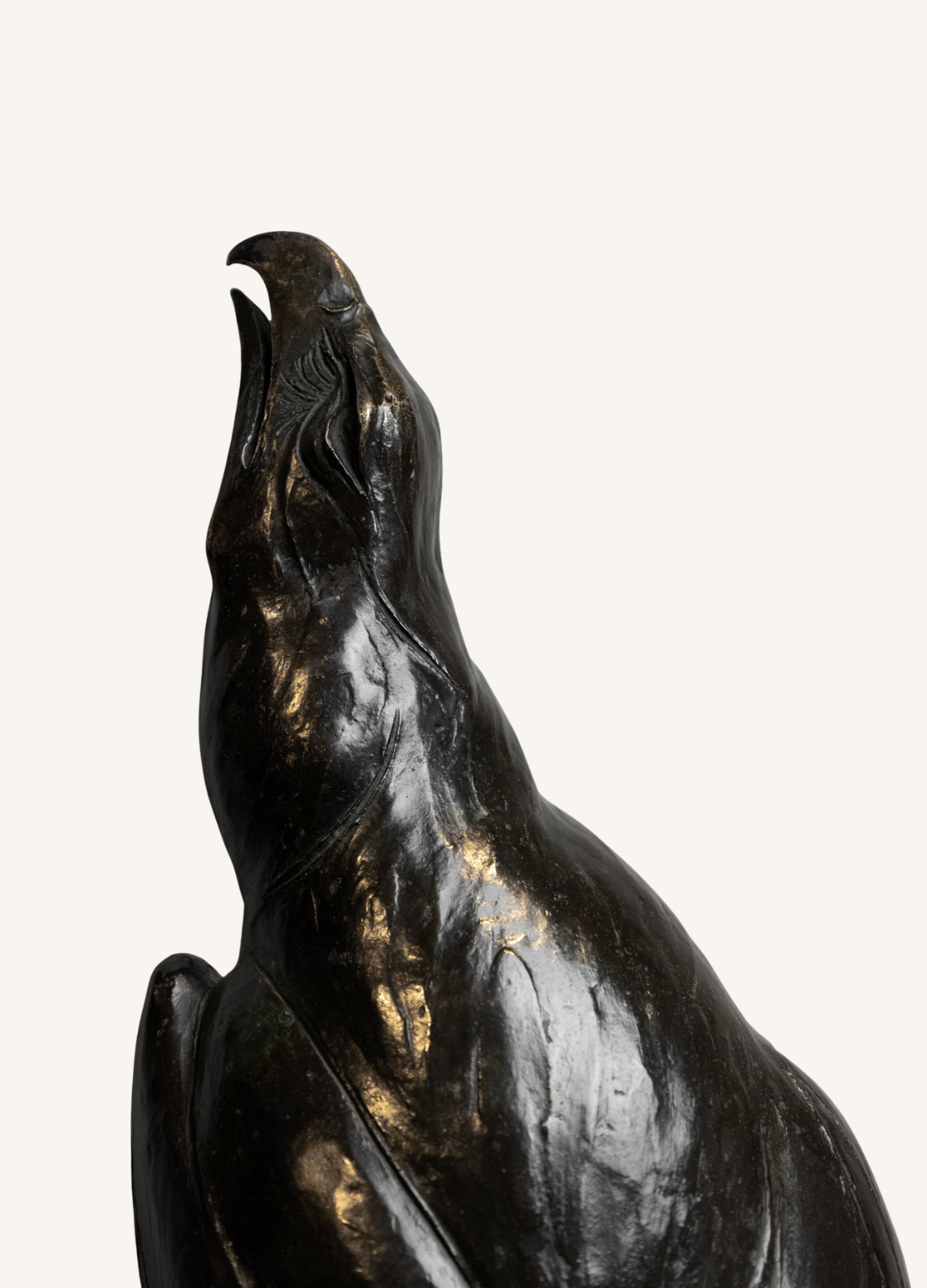
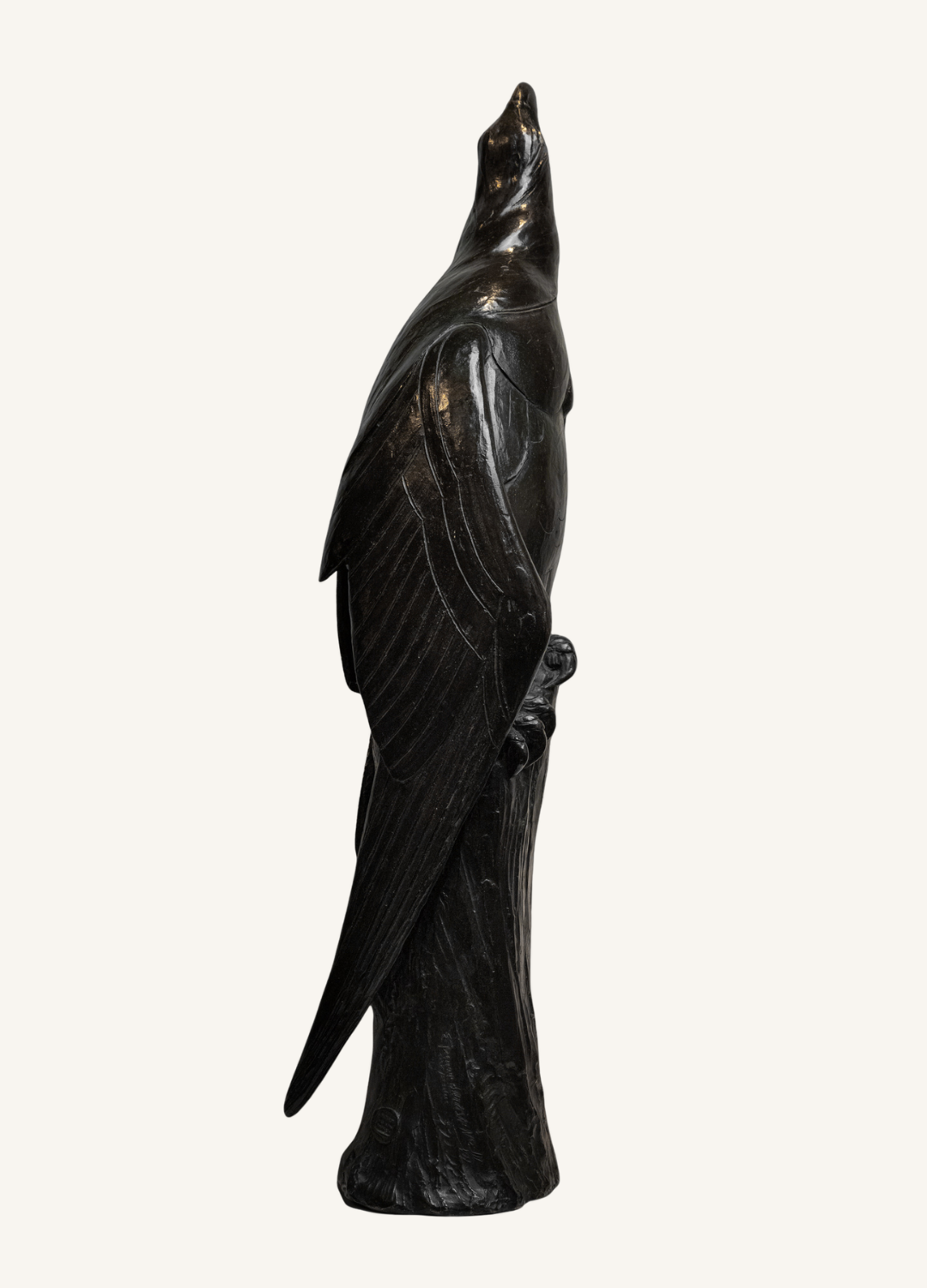
Raymond de Meester de Betzenbroeck’s The Eagle with the Broken Wing rises vertically, almost hieratic in presence. The bird is not depicted in full flight nor in the traditional heroic surge, but held in a posture of thwarted ascent. The body is elongated, drawn upward as if pulled toward the sky. The neck stretches forward, the beak slightly open in a silent cry. This is not a triumphant eagle. It is an eagle in struggle.
Line is fundamental. The sculptor simplifies the volumes in order to privilege a fluid, continuous, almost organic silhouette. The wings are pressed close to the body, yet one appears constrained, its line subtly weakened, introducing a delicate rupture in the symmetry. This asymmetry is the key to the work. It evokes injury without resorting to anecdotal naturalism.
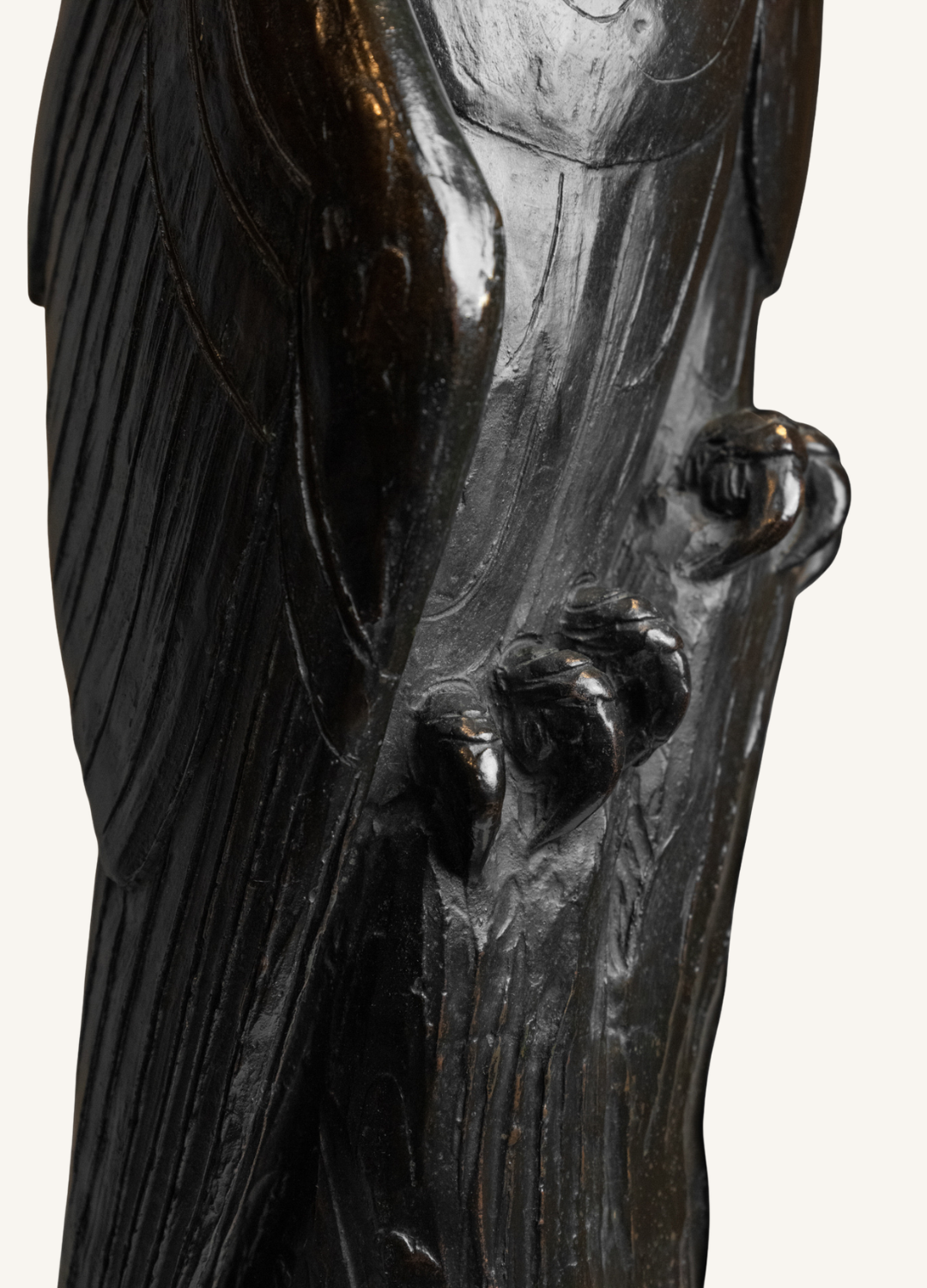
The surface is smooth and patinated, with soft transitions between planes. There is no attempt to render the detail of feathers. De Meester privileges mass and inner tension. The trunk that forms the base prolongs the bird’s body in a continuous upward movement. Eagle and support become inseparable. The sculpture reads as a single vertical thrust.
Symbolically, the eagle is traditionally associated with power, sovereignty, and spiritual elevation. Here, that power is attained yet restrained. The work speaks less of domination than of resistance, less of victory than of dignity in adversity.
What is striking is the absence of overt drama. There is no torn wing, no excessive pathos. The wound is internalised. It reveals itself in the tension of the neck, the closed wings, and the contained verticality of the form.
The sculpture belongs to an aesthetic that oscillates between symbolism and modernist stylisation. Naturalism is present, but disciplined. The result is a work of remarkable formal restraint, in which fragility enhances the nobility of the subject. It is a sculpture that evokes wounded pride, thwarted greatness, and endurance. An eagle that can no longer fly, yet refuses to bow.
Literature
- Gérard, Jo. Raymond de Meester de Betzenbroeck. Brussels: Galerie Dieleman, 1989. (n°45)
the ARTIST
Raymond de Meester de Betzenbroeck
Ixelles, 1904 – Evere, 1995
Self-taught Belgian animalier sculptor, observer of living creatures between zoo and menagerie, award-winner on three continents. Raymond de Meester de Betzenbroeck was born in 1904 in Ixelles, a municipality of Brussels. Grandson of Senator Raymond de Meester de Betzenbroeck (1841–1907), he grew up in a cultivated family environment and graduated from the Institut Saint-Boniface-Parnasse in 1924.
similar works