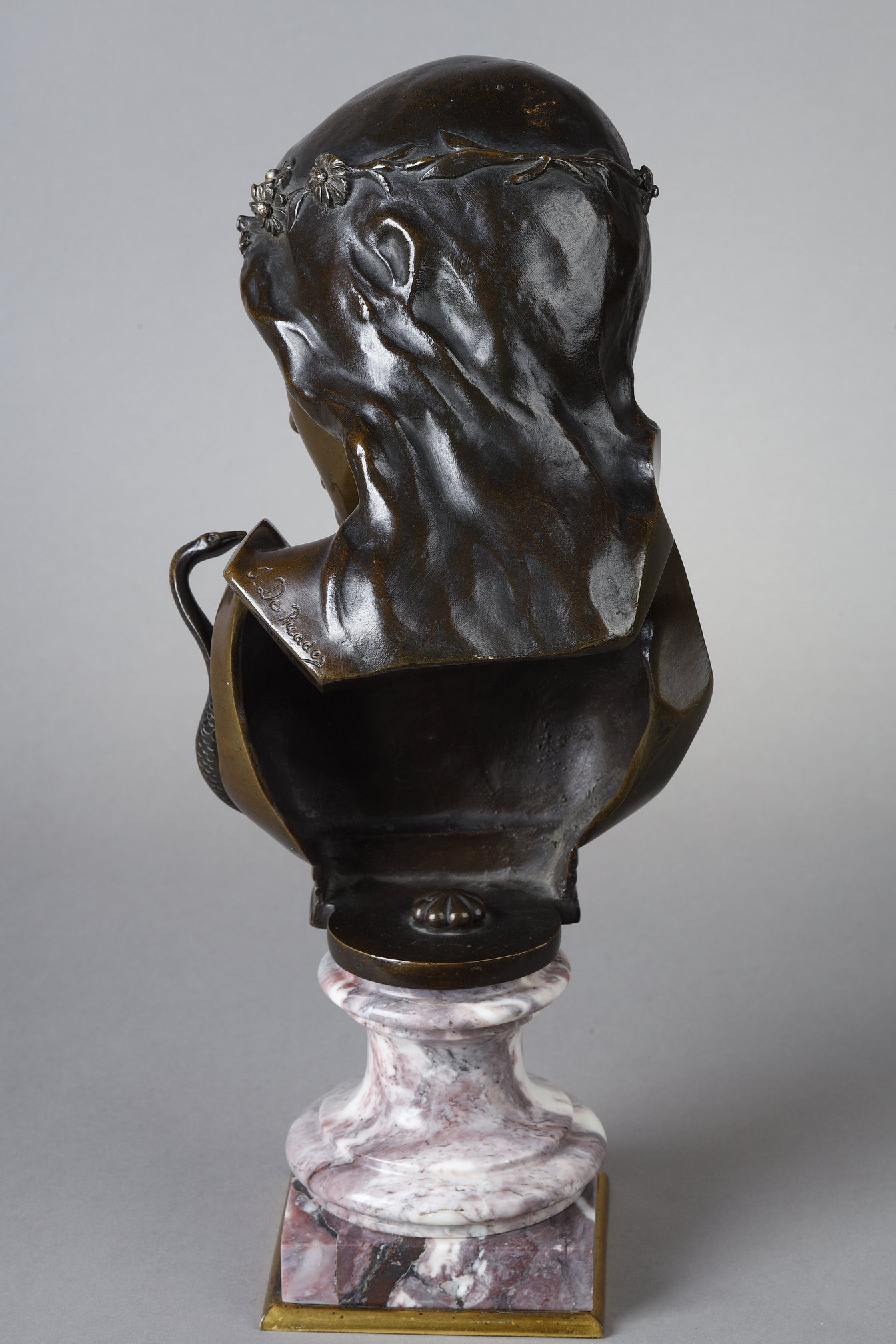
ISIDORE DE RUDDER · (1855-1943)
Cleopatra
technical sheet
| ARTIST | Isidore De Rudder |
| DIMENSIONS | 37 x 17 x 15,5 cm / D10 cm (base) |
| MATERIAL | Bronze on marble base |
| SIGNED | “I. De Rudder” |
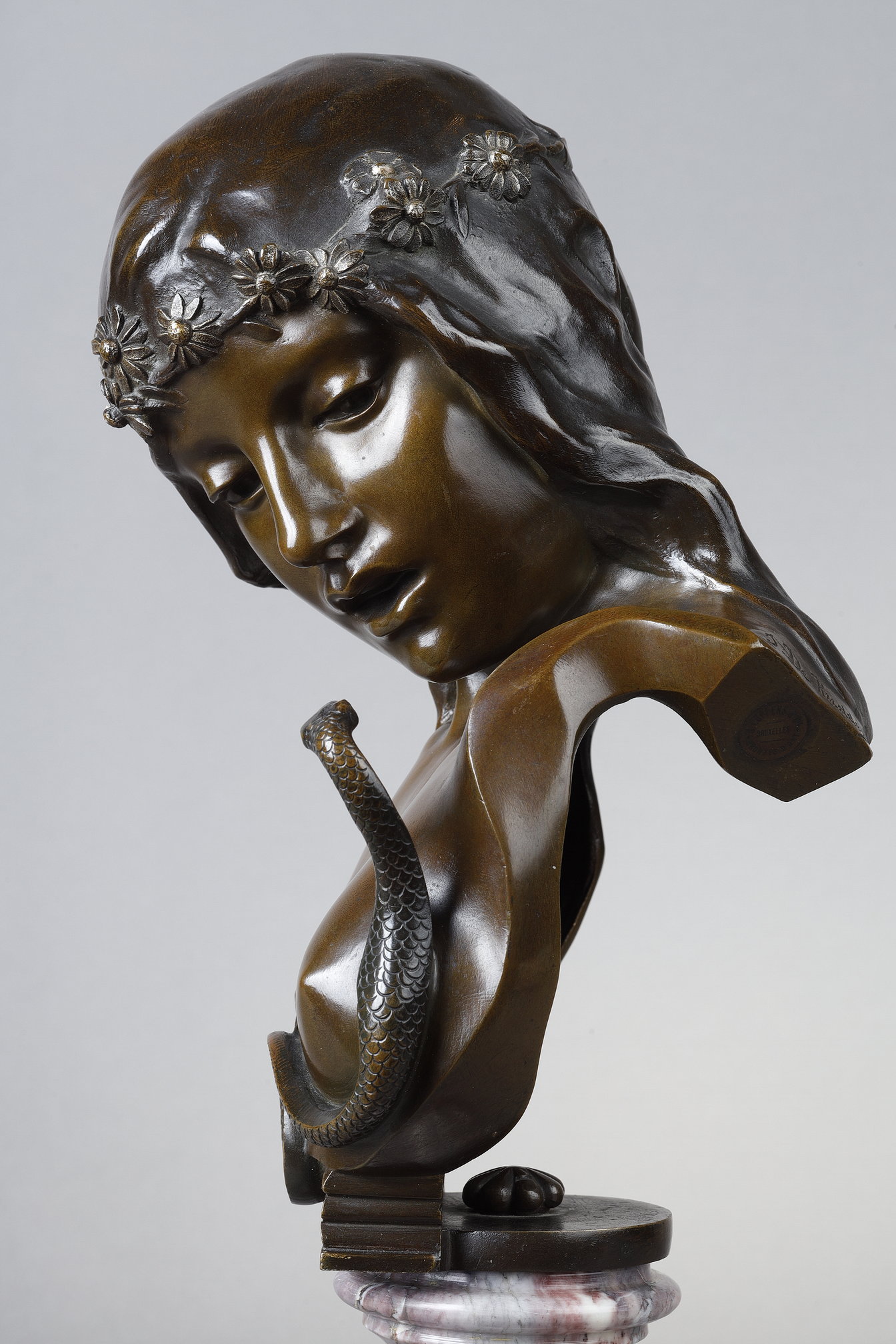
| FOUNDRY STAMP | H. Luppens & Cie Bronze d’Art Bruxelles |
about the work
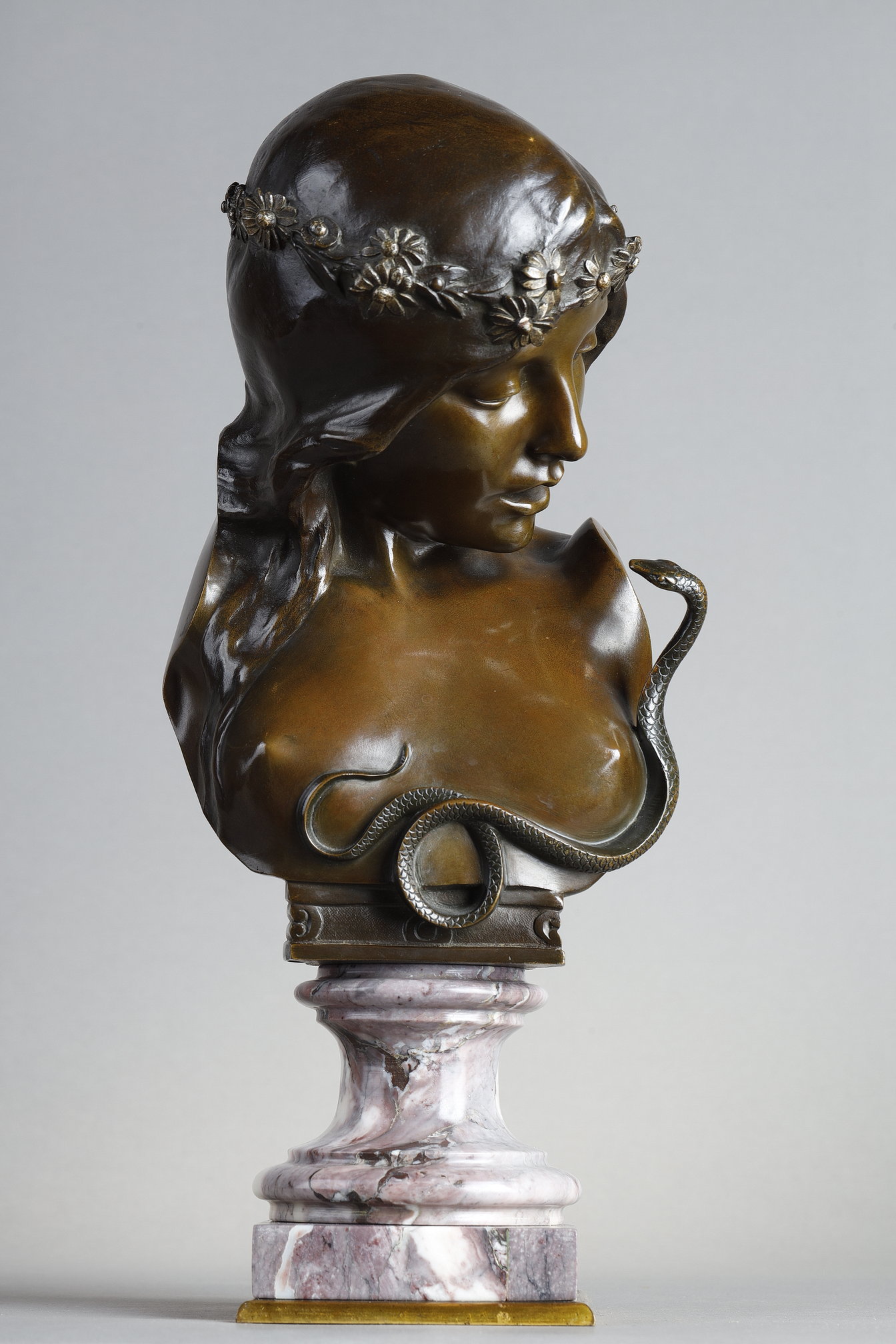
This finely crafted bronze sculpture by Belgian artist Isidore De Rudder (1855–1943) portrays Cleopatra, the last active ruler of the Ptolemaic Kingdom of Egypt, at the poignant moment of her legendary suicide. Captivated by antiquity and the emotional depth of historical figures, De Rudder offers a romantic, symbolic interpretation of the queen’s final hours.
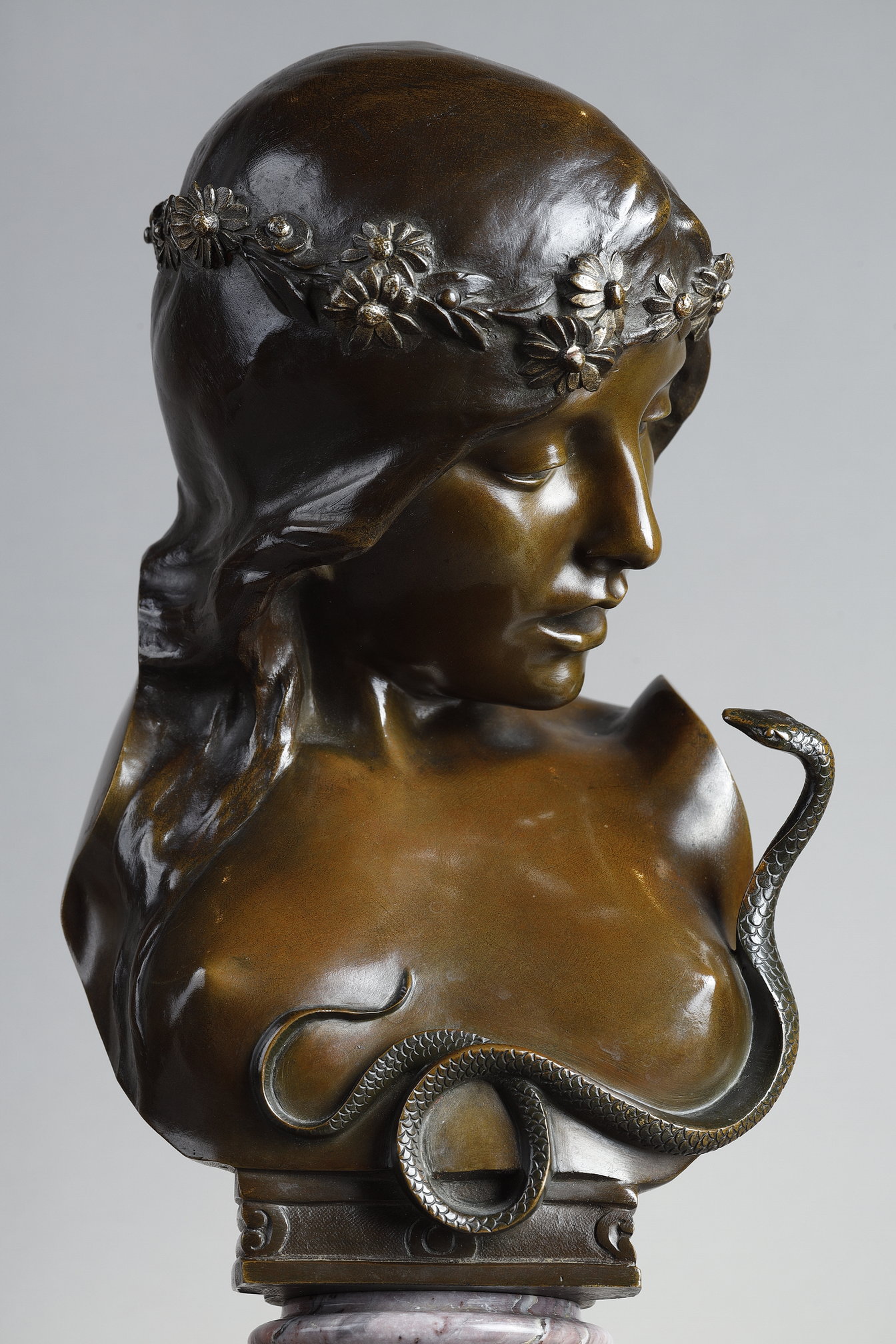
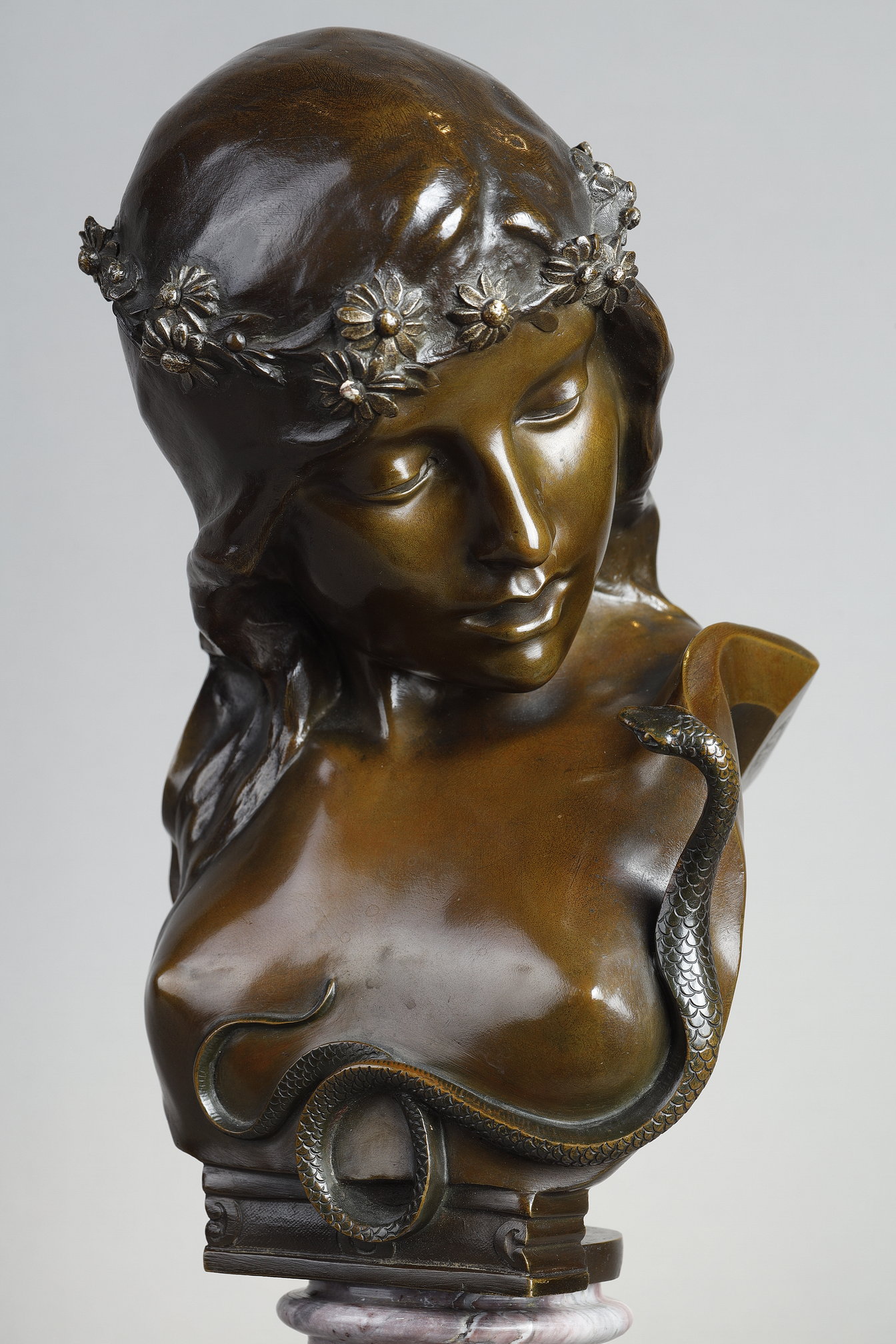
The bust is elegantly modeled, capturing Cleopatra’s serene beauty and introspective gaze, framed by a delicate wreath of flowers. An asp—a coiled serpent symbolic of her fate—creeps across her chest. The piece blends Art Nouveau fluidity and decorative motifs with a classical foundation, fusing grace and gravitas.
The sculpture alludes to the tragic events of 31 BC: the Battle of Actium, where Cleopatra and Mark Antony were defeated by Octavian. Believing Cleopatra dead, Antony ended his own life. Cleopatra chose to die by snakebite rather than face humiliation in Rome.
De Rudder distills this complex historical tapestry into a quiet, intimate moment. The bronze patina adds visual depth and emotional resonance, enhancing the work’s sensual and dramatic presence. The artist’s restraint avoids overt theatricality, instead suggesting Cleopatra’s dignity, inner strength, and resolute acceptance of fate.
This bust stands as a testament to Isidore De Rudder’s technical finesse and narrative skill, reflecting the enduring allure of powerful female figures in both art and mythology.
Literature
- BENEZIT, E.Dictionnaire des peintres, sculpteurs, dessinateurs et graveurs. Paris: Librairie Gründ, 1961. Vol.2. p. 1104-1110.
the ARTIST
Isidore De Rudder
1855 – 1943
Isidore De Rudder embodies the transition toward sculptural modernity. Isidore De Rudder was a prominent Belgian sculptor celebrated for his versatility and innovative approach to both decorative and monumental art. Born into an artistic family in Brussels in 1855, he trained at the Brussels Academy of Fine Arts from 1869 to 1880, later refining his skills under Eugène Simonis.
similar works