HENRI GAUQUIÉ · (1858-1927)
Nil Virtuti Invium
technical sheet
| ARTIST | Henri Gauquié |
| DATE | Late 19th-century |
| DIMENSIONS | 90 x 59,5 x 30,5 cm |
| MATERIAL | White Carrara marble |
| SIGNED | “H. Gauquié” |
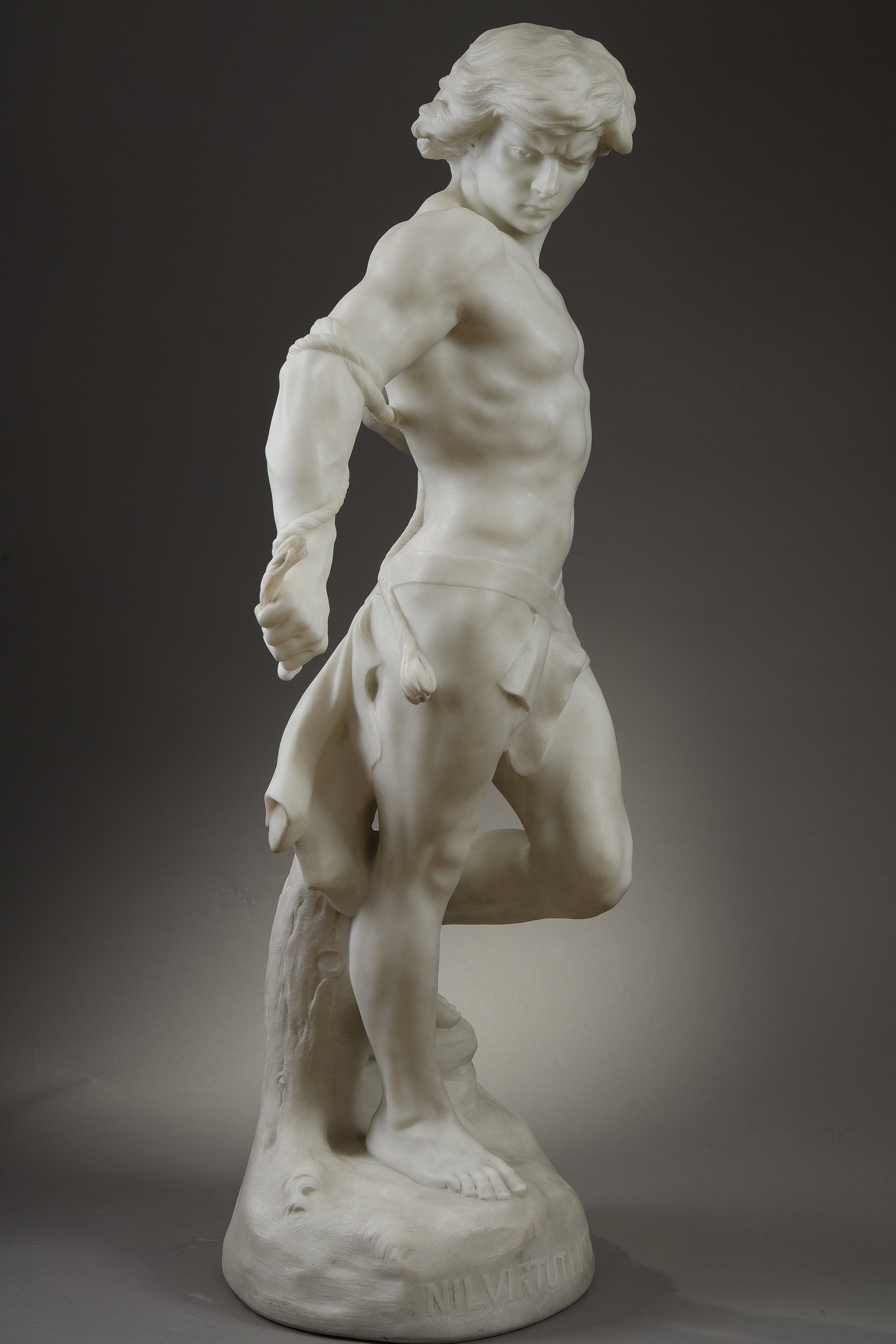
| INSCRIPTION | “Nil Virtuti Invium” (trad. “Nothing is inaccessible to virtue”) |
| PROVENANCE | Private Dutch collection since 2005 |
about the work
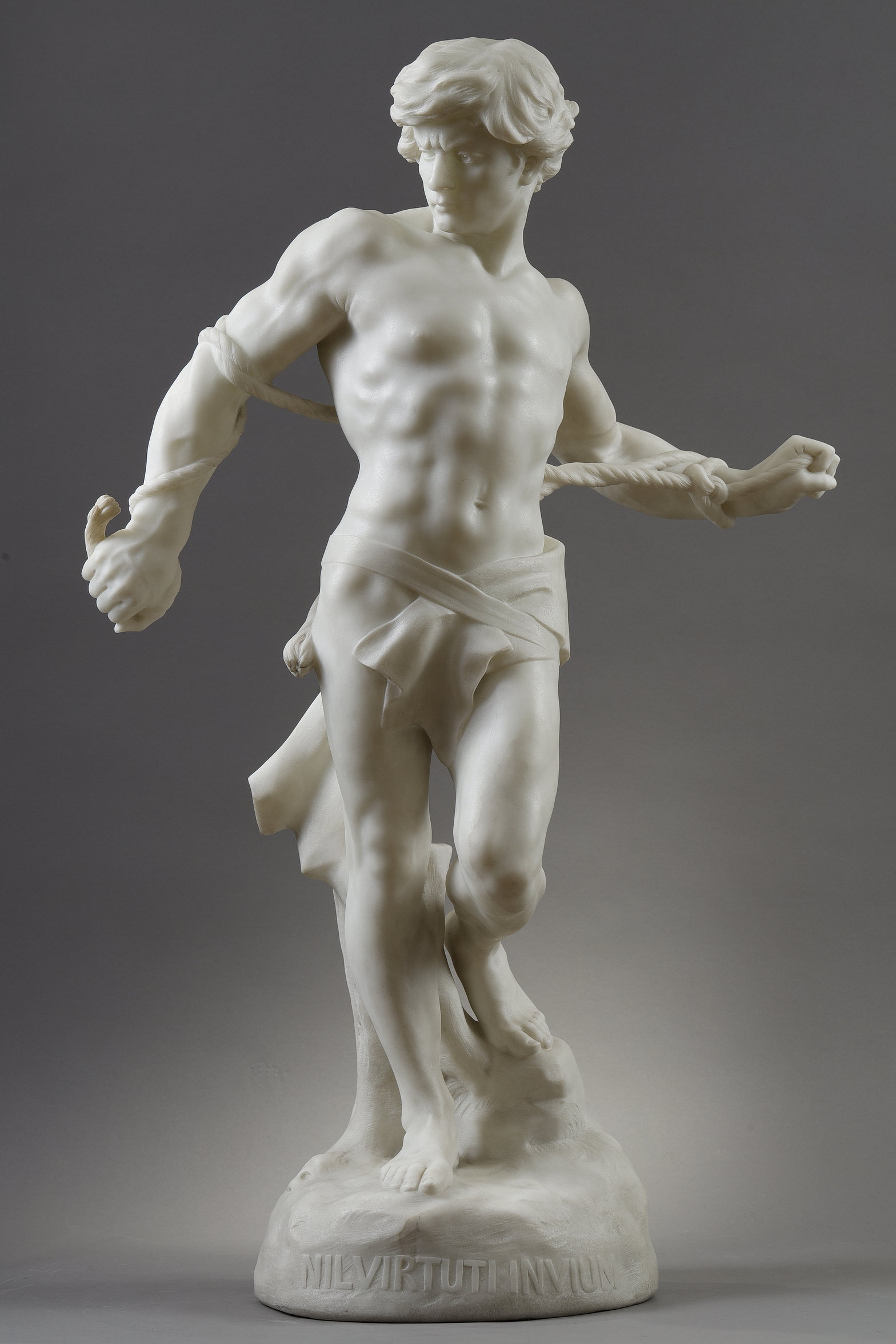
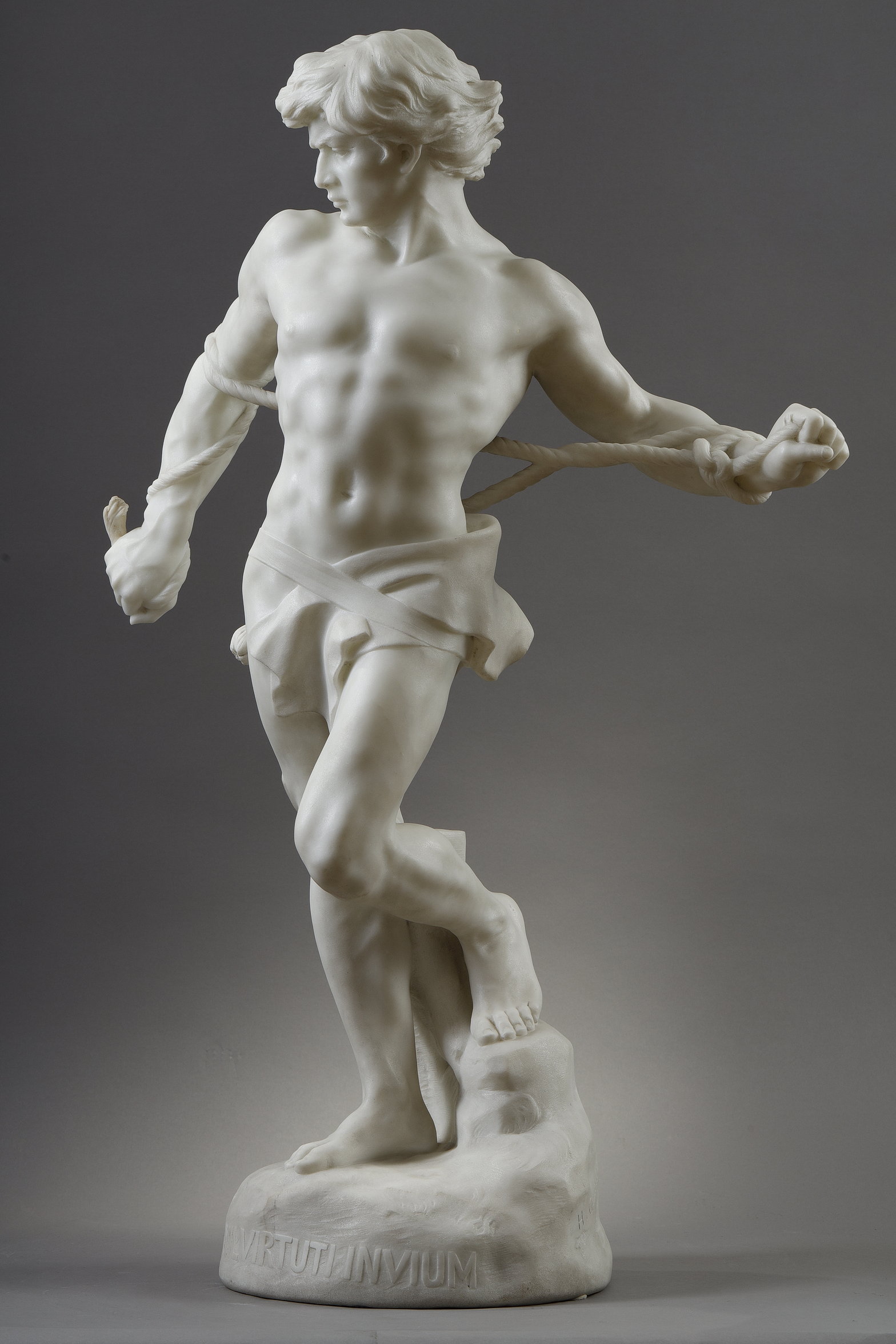
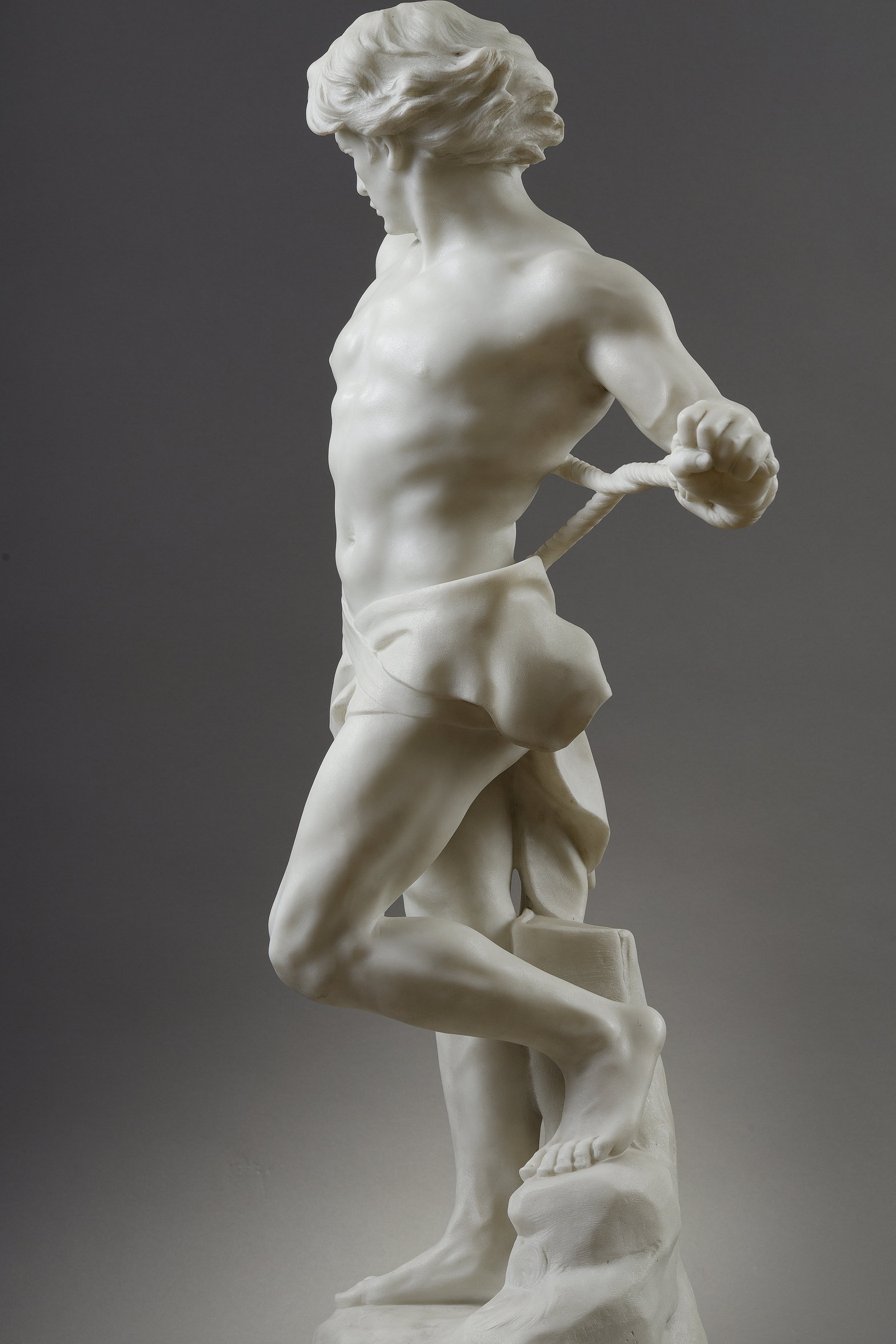
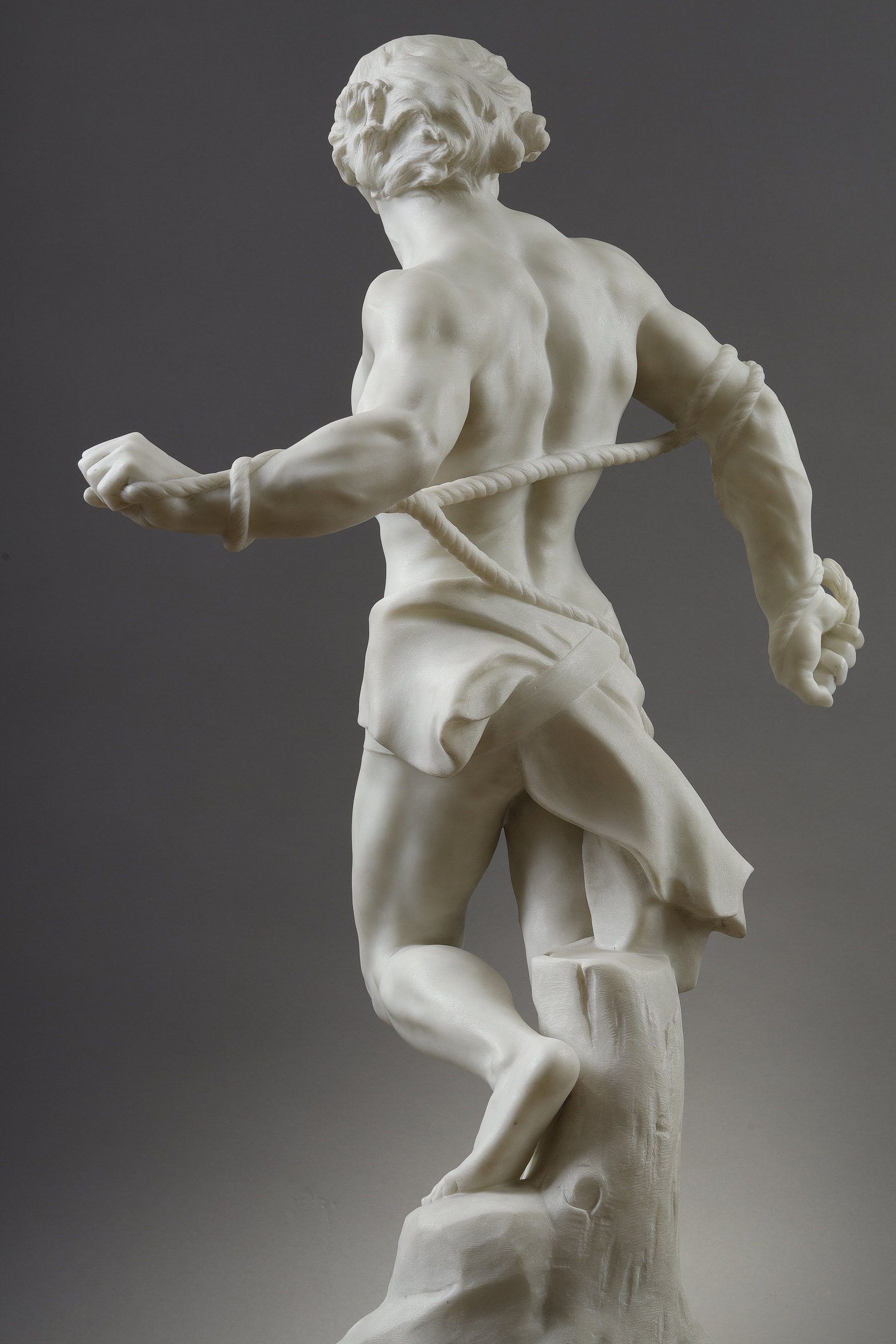
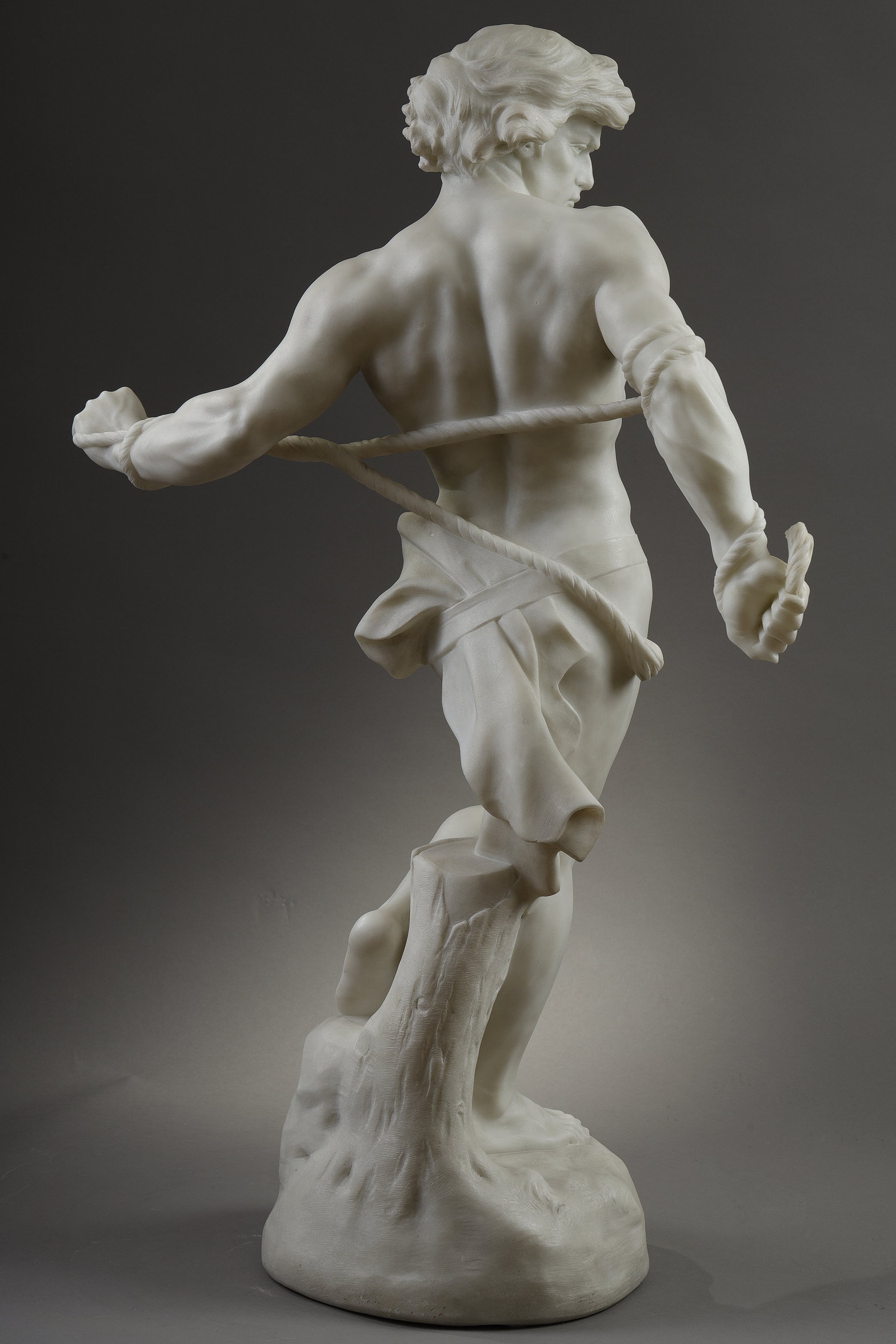
Henri Gauquié’s sculpture Nil Virtuti Invium is a powerful allegory, expressing the triumph of virtue over adversity. Rather than depicting a specific myth or historical figure, the work presents an idealized hero embodying moral strength and determination.
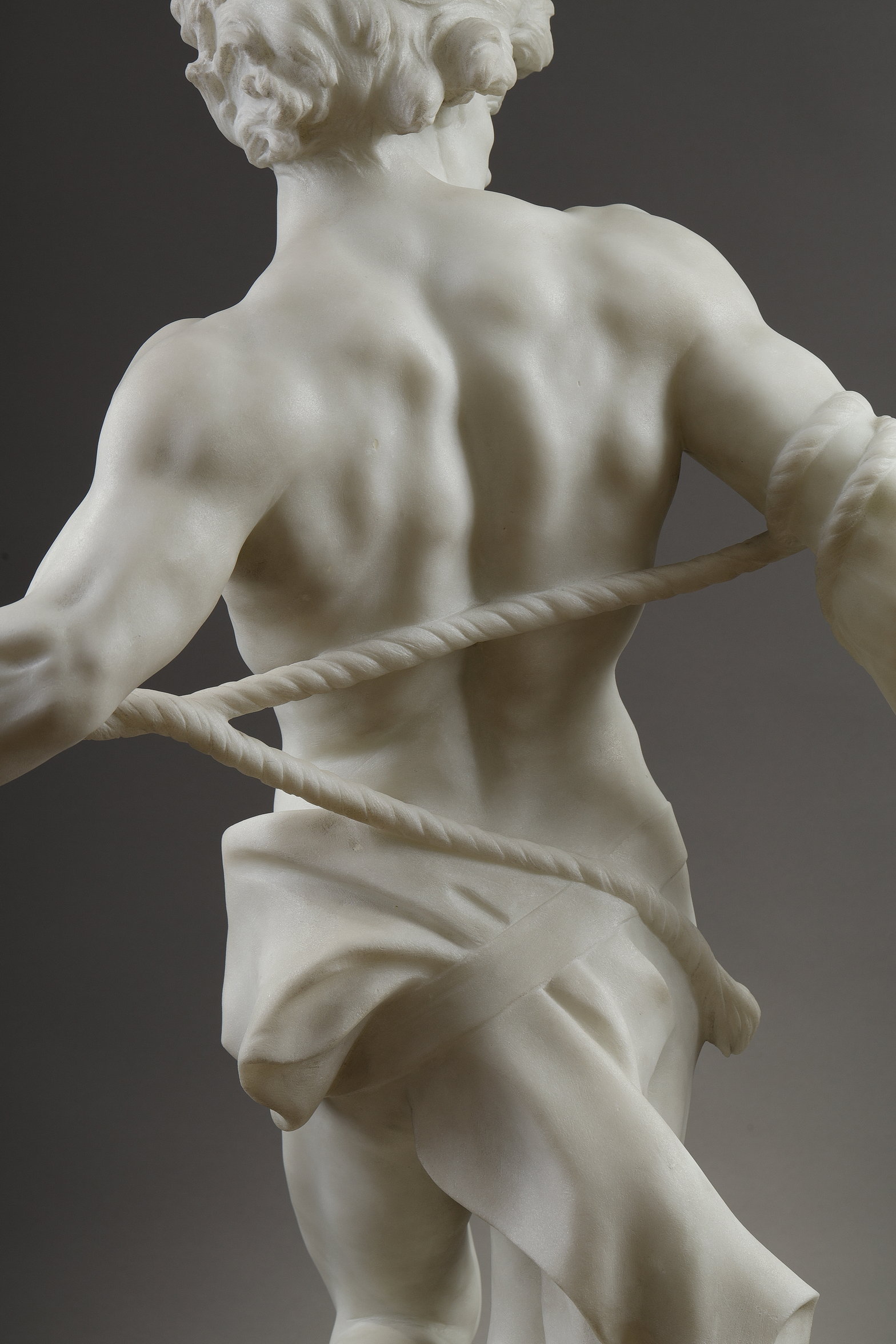
The young man is shown in the act of breaking his ropes—his body taut with effort, muscles defined, and gaze fixed on freedom. Far from a passive victim, he is an active protagonist, embodying the Latin inscription on the base : Nil Virtuti Invium (Nothing is inaccessible to virtue). The pose evokes Prometheus, Samson, or other mythic heroes, yet he remains a universal neoclassical archetype of resolve and liberation.
Gauquié combines academic precision with emotional intensity. In this work, he captures muscular tension and the drama of action, while infusing it with a symbolic resonance that bridges neoclassicism, symbolism, and naturalism.
Nil Virtuti Invium invites viewers to reflect on the inner power that moves humanity forward. It proclaims that through virtue—understood as courage, integrity, and perseverance—no barrier is insurmountable. In channeling this ideal, Gauquié crystallizes the spirit of 19th-century artistic values, transforming invisible moral force into a visible act of heroism.
Literature
- BENEZIT, E. Dictionnaire des peintres, sculpteurs, dessinateurs et graveurs. Vol.14, Editions Gründ, Paris, 1999. p.918
- LIMOUSIN, C. Henri Désiré Gauquié (1858-1927): Catalogue raisonné. Editions Invenit, 2023.
the ARTIST
Henri Gauquié
1858 – 1927
A turn-of-the-century sculptor, virtuoso of the body in tension and of symbolic expression. Henri Gauquié was a leading French sculptor active at the close of the 19th and the dawn of the 20th centuries. Born in 1858 in Flers-lez-Lille, he trained at the École des Beaux-Arts in Paris under the celebrated animalier sculptor Emmanuel Frémiet.
similar works