edward vereycken · (1893–1965)
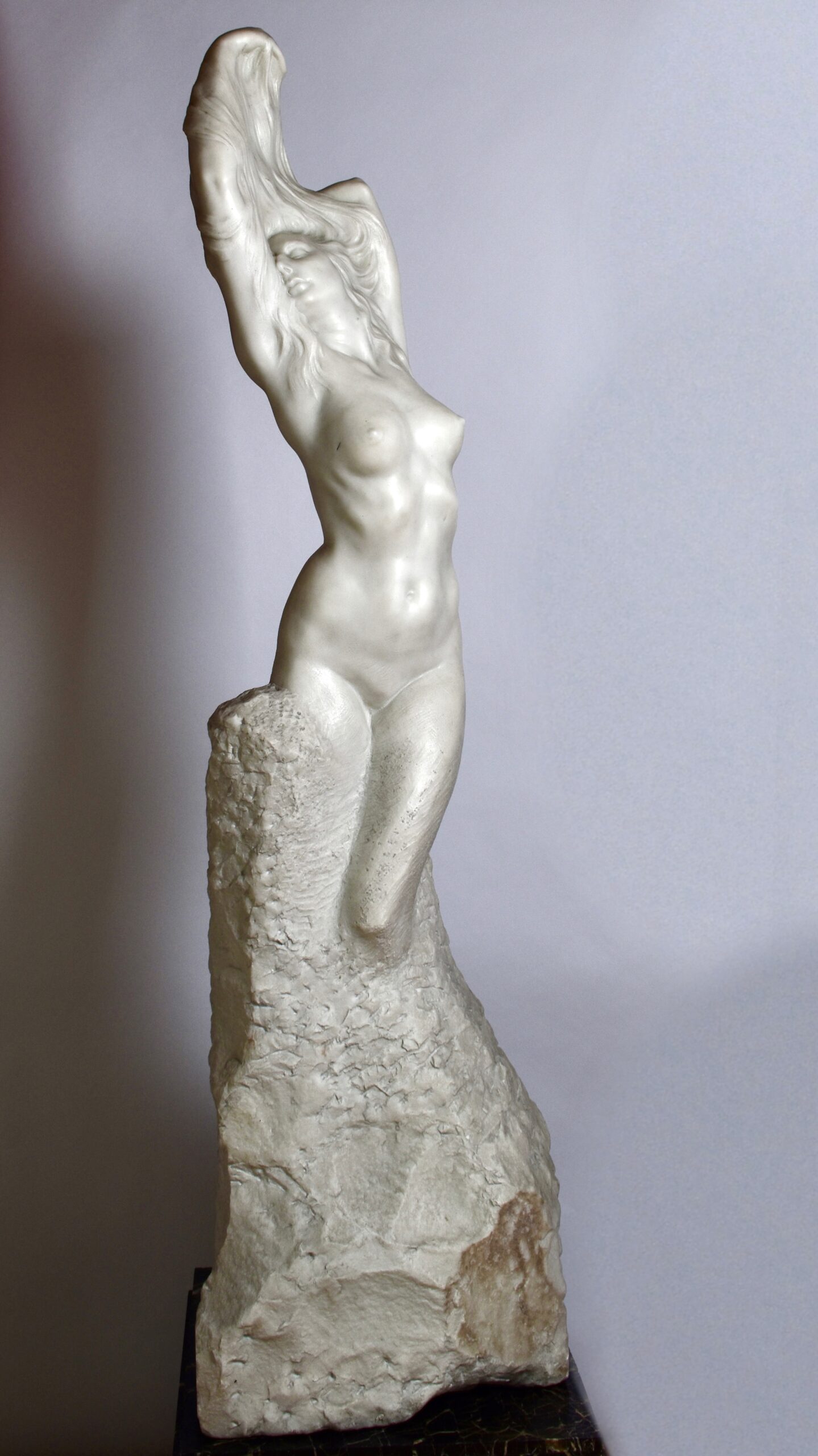
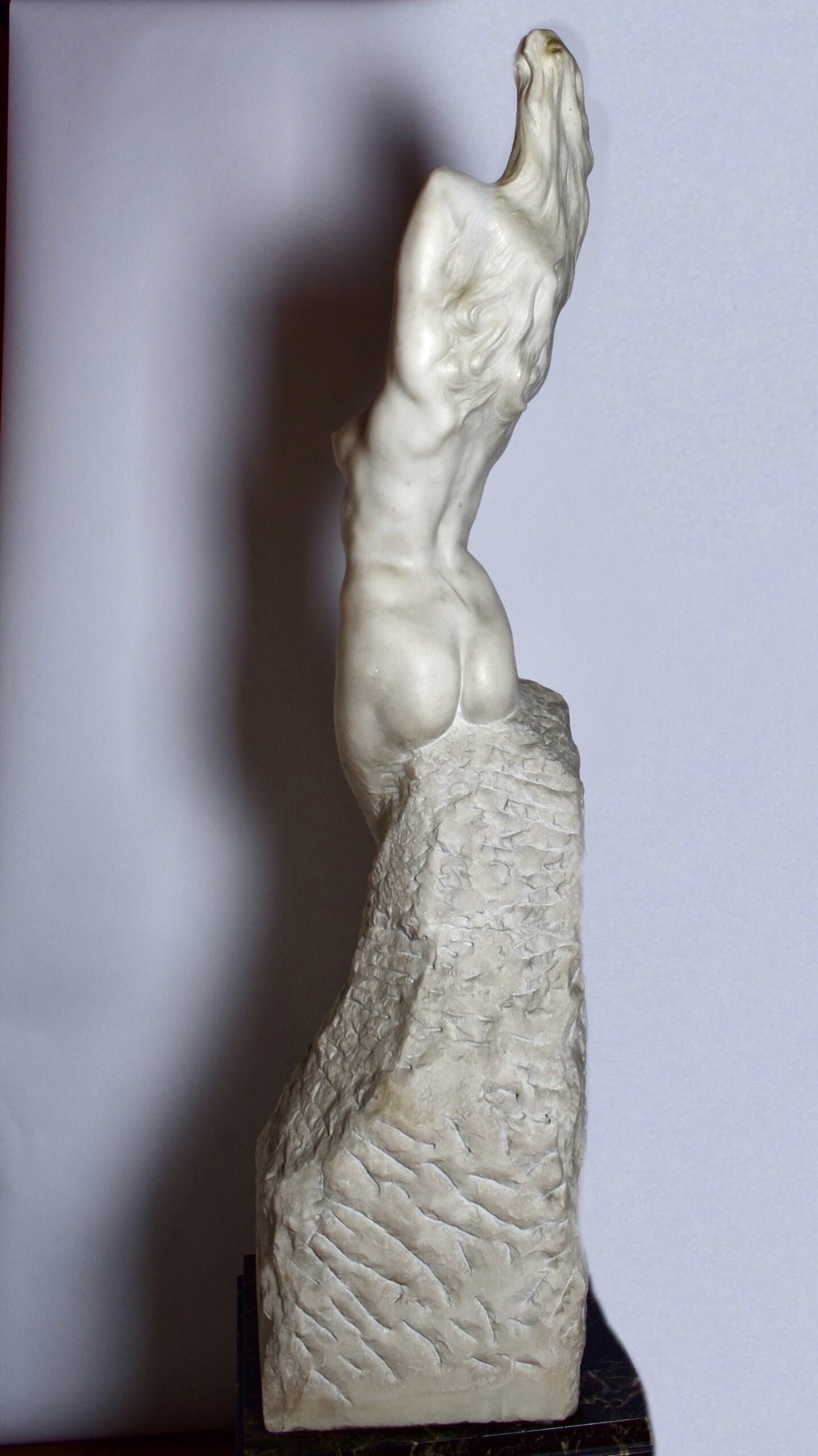
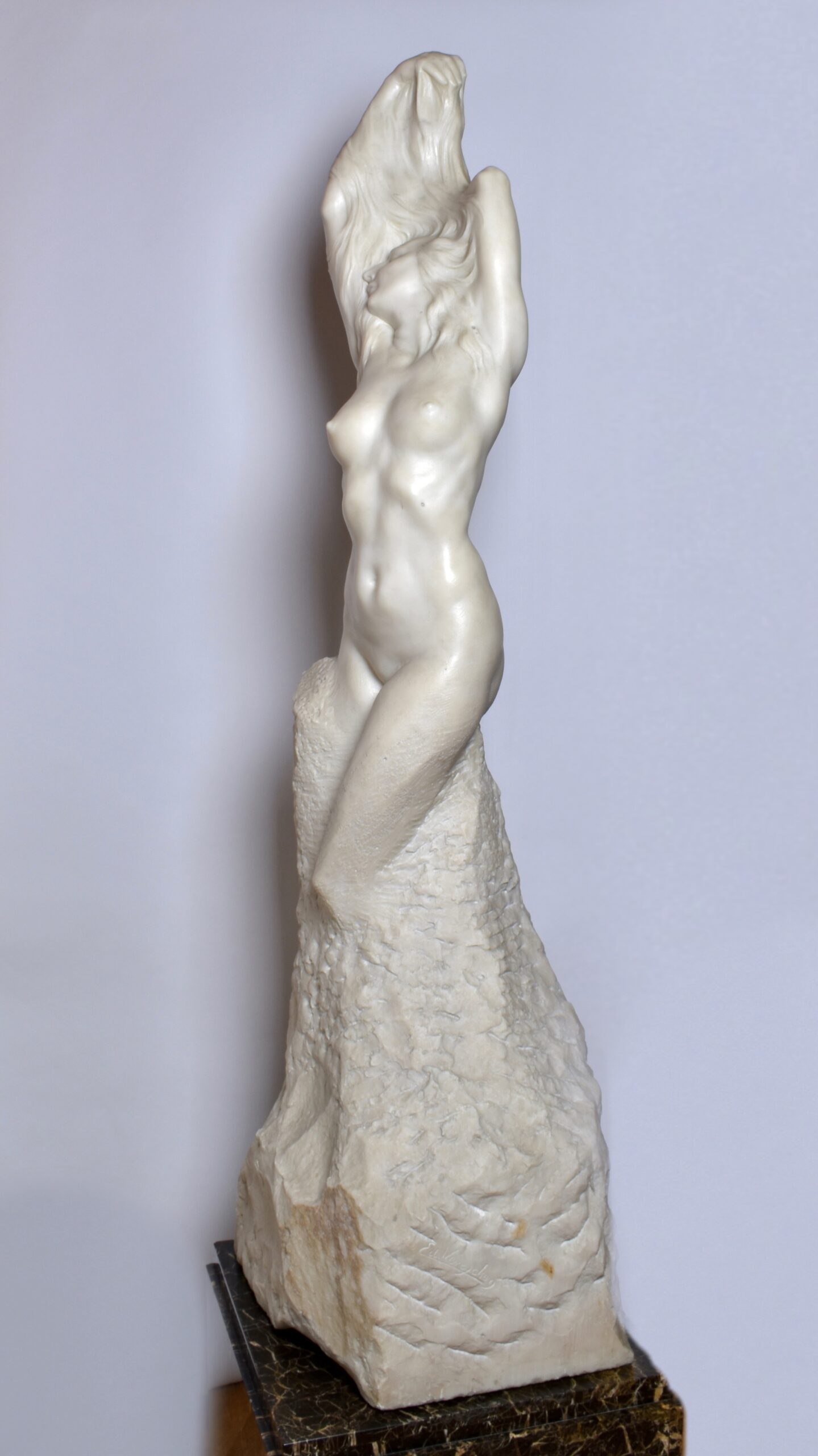
Galatea
technical sheet
| ARTIST | Edward Vereycken |
| DATE | 1930 |
| material | White Carrara marble • Portor marble base |
| DIMENSIONS | Height : 170 cm |
| Signature | Ed. Vereycken |
| PROVENANCE | Triennale of Antwderp, 1930 • Private collection, commune de Saint-Nicolas • Artimo Fine Art Gallery, 2002-2005 • Private collection, Belgium, 2005 • Artimo Fine Art Gallery, 2022. |
| CONSERVATION | Private Collection • Belgium |
about the work
A magnificent marble sculpture, Galatea stands as a testament to the exceptional talent of Belgian artist Edward Vereycken and to his dedication to his craft. Carved from the finest Carrara marble, the 170 cm figure is an embodiment of elegance and beauty. Its base, of luxurious Portor marble, lends a further note of sophistication to this already captivating piece.
First unveiled at the Triennale of Antwerp in 1930, Galatea has a rich history spanning several decades. It remained for a long period in a private collection in the Saint-Nicolas commune before entering the Artimo Fine Arts Gallery, passing then into another private Belgian collection and finally returning to the gallery. This storied past highlights the high regard in which Vereycken’s work is held.
Galatea vividly illustrates the artist’s deep understanding of the human form, which he rendered in marble with both grace and dynamism. A work of timeless elegance and universal appeal, it continues to captivate art enthusiasts across generations.
the ARTIST
edward vereycken
Antwerp, 1893 — 1965, Herentals
Vereycken began young in the ateliers of Professor Baggen and sculptor Oscar Jespers, while attending the Academy of Fine Arts under Baron Vinçotte. He volunteered to serve on the front lines during the First World War; wounded three times and eventually discharged, he was then able to devote himself entirely to his art. After the war he travelled to Italy, France, the United States and Canada.
He created eighteen monuments, largely commemorative, among them the imposing Infantry Monument on Poelaert Square in Brussels. Winner of the Prix de Rome in 1920 for his Perseus, and often compared to Rodin for his anatomical precision, he knew both wealth and poverty. Faithful to his principles, he believed in a universal, timeless art that sought the very essence of its subject.