Philippe Wolfers · (1858–1929)
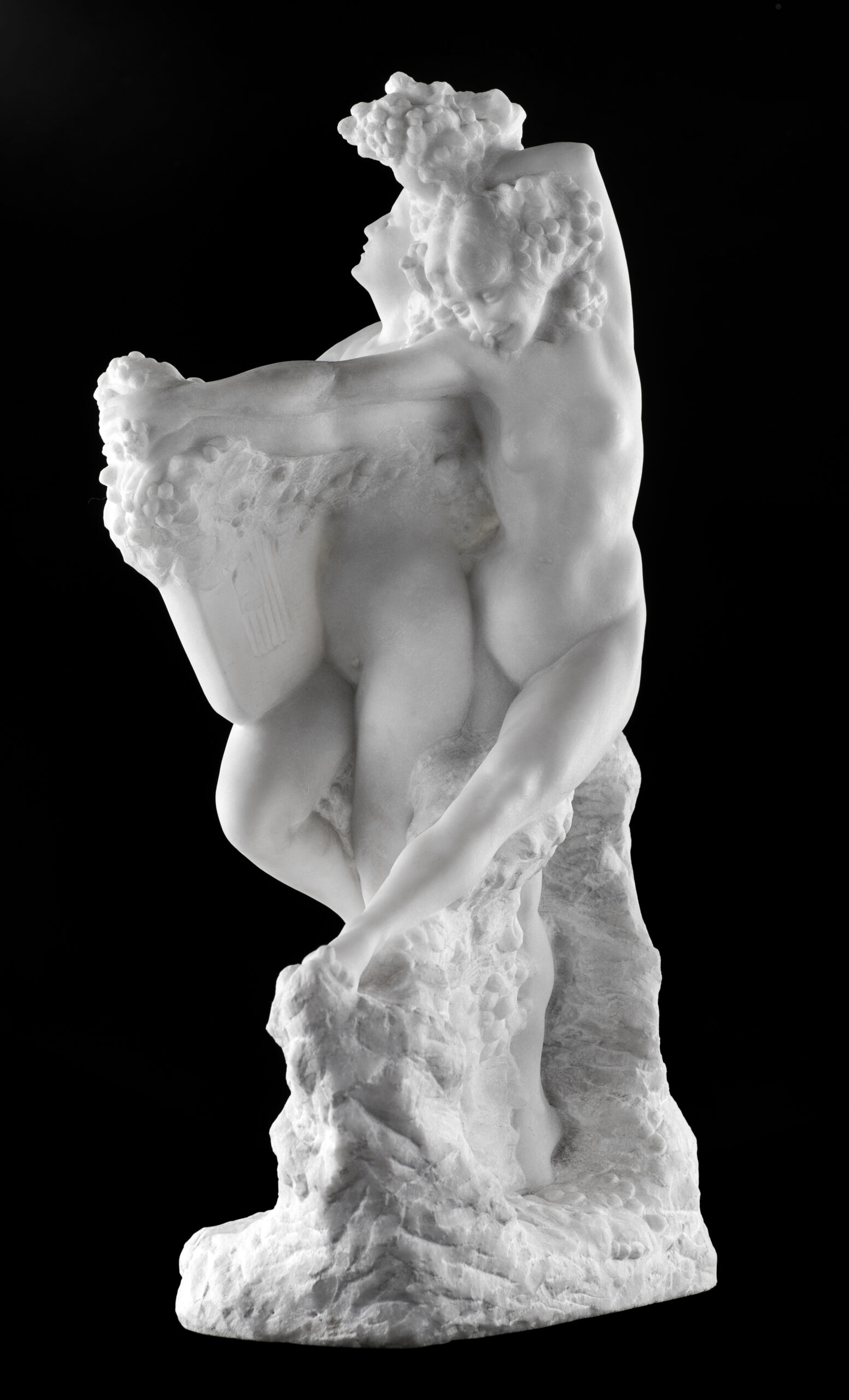
The Bacchantes
technical sheet
| ARTIST | Philippe Wolfers |
| DATE | 1912 |
| material | White Carrara marble |
| DIMENSIONS | 50 x 29,5 x 20 cm |
| Signature | Ph. Wolfers |
| PROVENANCE | Philippe Wolfers Museum, Brussels |
| CONSERVATION | Private Collection • Europe |
ABOUT THE WORK
The theme of the dance appears for the first time in Wolfers’s work around 1911. The artist linked it to the ancient motif of the “Bacchantes,” which he developed in several sculptural groups between 1911 and 1912. Les Bacchantes, also called Bacchanales, may be regarded as the culminating subject of those years.
The group held a special significance for Wolfers. He kept one marble example for himself, the other being given to his daughter Nelly; two of the three bronzes were presented to friends, and only one appears to have been sold, to the Galleria Pesaro. It is tempting to compare the work with Rik Wouters’s Zotte Geweld, made the same year: the two artists were on good terms, and Wolfers already owned a sculpture by the younger man.
The face of the woman whose leg and arm thrust forward strongly recalls the features of Nel Wouters, who is said to have modelled for several of Philippe’s sculptures around 1912. It is not inconceivable that Wolfers was influenced by Wouters’s masterpiece.
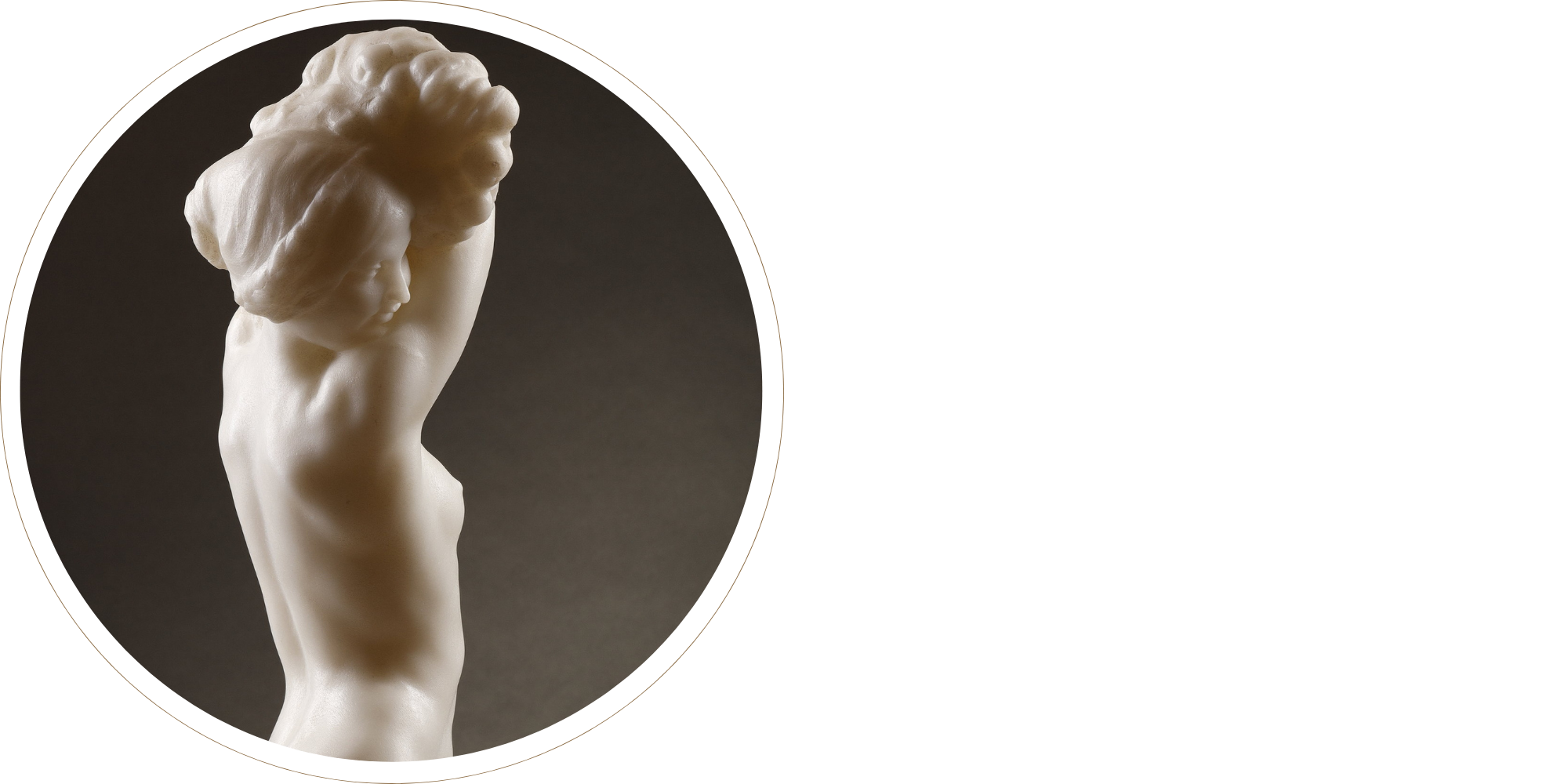
Sculptor, goldsmith and jeweller, Philippe Wolfers is one of the essential figures of Belgian Art Nouveau, alongside Victor Horta and Henry van de Velde. Heir to a dynasty of goldsmiths, he trained at the Royal Academy of Fine Arts in Brussels, notably under Isidore De Rudder, and became artistic director of Wolfers Frères in 1892. Until 1905 he excelled in jewellery, compared to that of Lalique.
From 1905 he devoted himself fully to sculpture, exploring marble, bronze, porphyry and ivory. His work, initially Symbolist, evolved towards the clean lines of Art Deco. He left a corpus of about a hundred sculptures; his creations are today held in the Royal Museums of Art and History, the MSK in Ghent and the Victoria and Albert Museum.