Philippe Wolfers · (1858–1929)
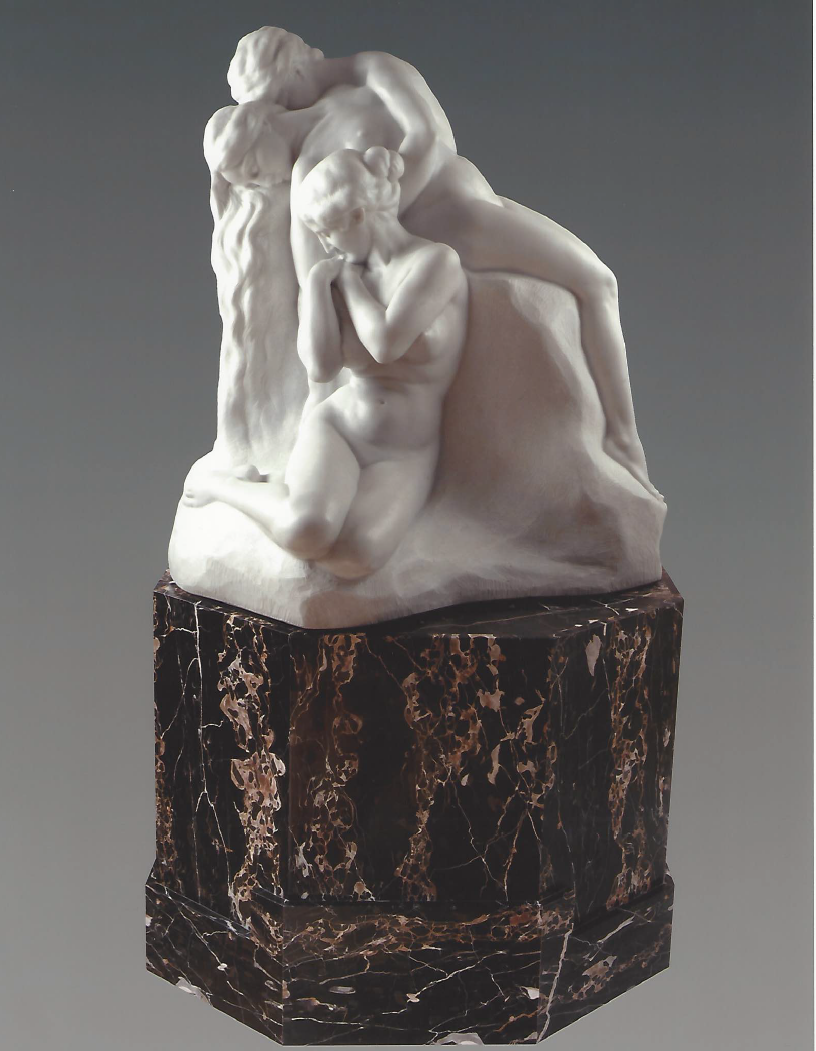
The Sleeping Muses
technical sheet
| ARTIST | Philippe Wolfers |
| DATE | ca. 1917-1921 |
| material | White Carrara marble |
| DIMENSIONS | 103 x 102 x 79 cm |
| Signature | Ph. Wolfers |
| PROVENANCE | Commissioned by the artist’s son-in-law for Renée Wolfers, the sculptor’s daughter. Kept in the entrance hall of the family home in Belgium until 1995 |
| CONSERVATION | Private Collection • South America |
ABOUT THE WORK
Les Muses endormies, also known as Les Sources endormies (The Sleeping Springs), embodies one of the summits of Belgian Symbolist sculpture. Conceived by Philippe Wolfers late in his career, this white Carrara marble brings together three nude female figures, allegories of the Muses, plunged into a deep sleep as if frozen in silent meditation.
Their pose is at once sensual, poetic and inward: one sits with arms folded in a pensive attitude, while the other two melt into a fluid triangular composition, their bodies following the natural curves of the block. The long wavy hair, the modest nudity and the softness of the forms betray the influence of Art Nouveau; yet the simplification of volumes already foreshadows the Art Deco aesthetic.
The family archive records this sculpture as a “unique example,” exceptional for Wolfers, whose models were generally issued in editions of six; a bronze was nonetheless cast in 1917 from the same model. A work of transition, it closes the Art Nouveau era and anticipates the pared-down modernity of the 1920s.
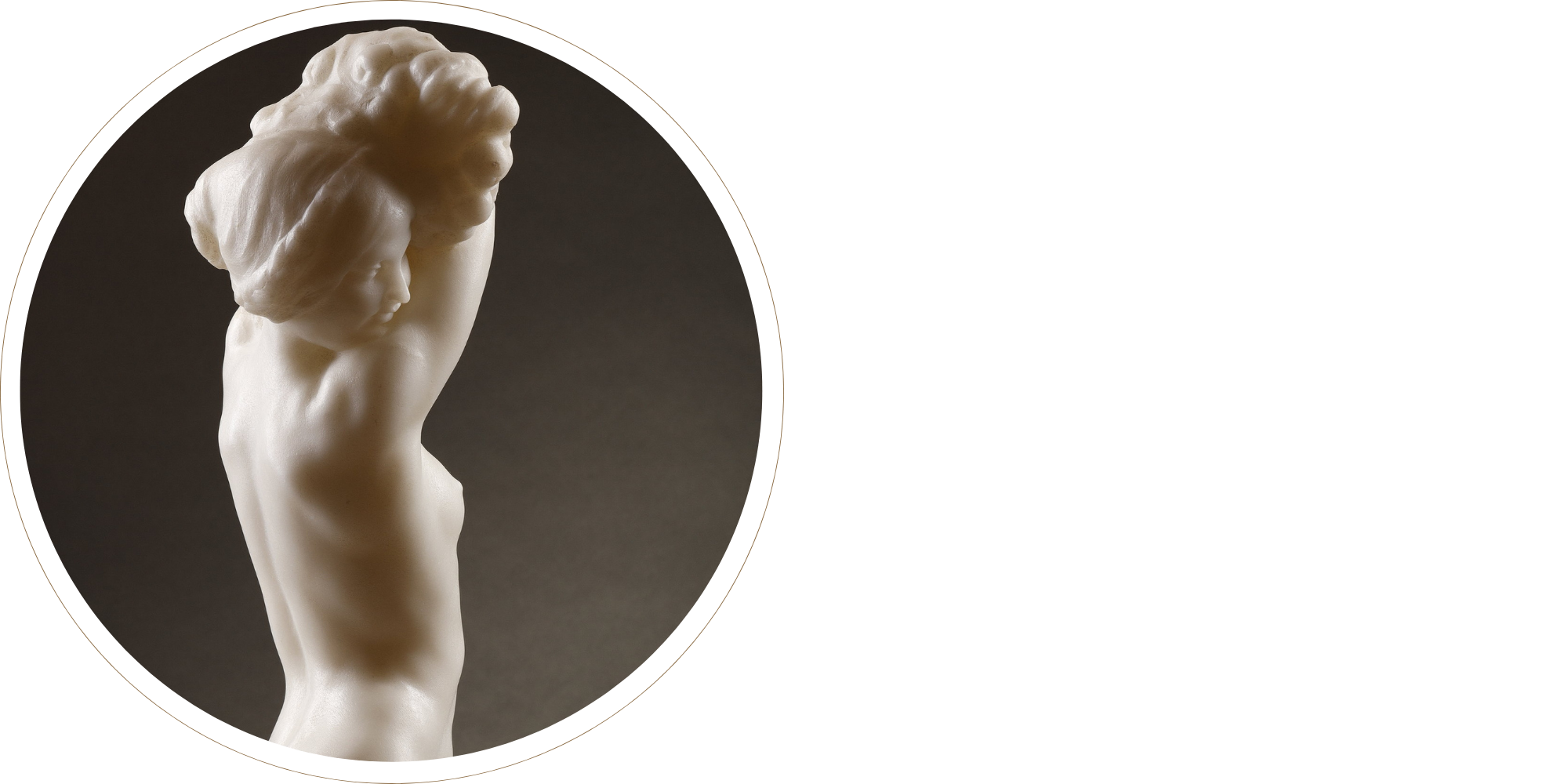
Sculptor, goldsmith and jeweller, Philippe Wolfers is one of the essential figures of Belgian Art Nouveau, alongside Victor Horta and Henry van de Velde. Heir to a dynasty of goldsmiths, he trained at the Royal Academy of Fine Arts in Brussels, notably under Isidore De Rudder, and became artistic director of Wolfers Frères in 1892. Until 1905 he excelled in jewellery, compared to that of Lalique.
From 1905 he devoted himself fully to sculpture, exploring marble, bronze, porphyry and ivory. His work, initially Symbolist, evolved towards the clean lines of Art Deco. He left a corpus of about a hundred sculptures; his creations are today held in the Royal Museums of Art and History, the MSK in Ghent and the Victoria and Albert Museum.