ALBÉRIC COLLIN · (1886–1962)
Stag & Two Hinds
technical sheet
| ARTIST | Albéric Collin |
| DATE | ca. 1924 |
| DIMENSIONS | Stag: 32 × 56 × 14 cm | Hinds: 30 × 85 × 14 cm |
| MATERIAL | Bronze, lost-wax cast |
| FOUNDRY | Claude Valsuani |
| SIGNED | “Albéric Collin” | Stamp: “C. Valsuani Cire Perdue” | Inscription: “BRONZE” |
about the work
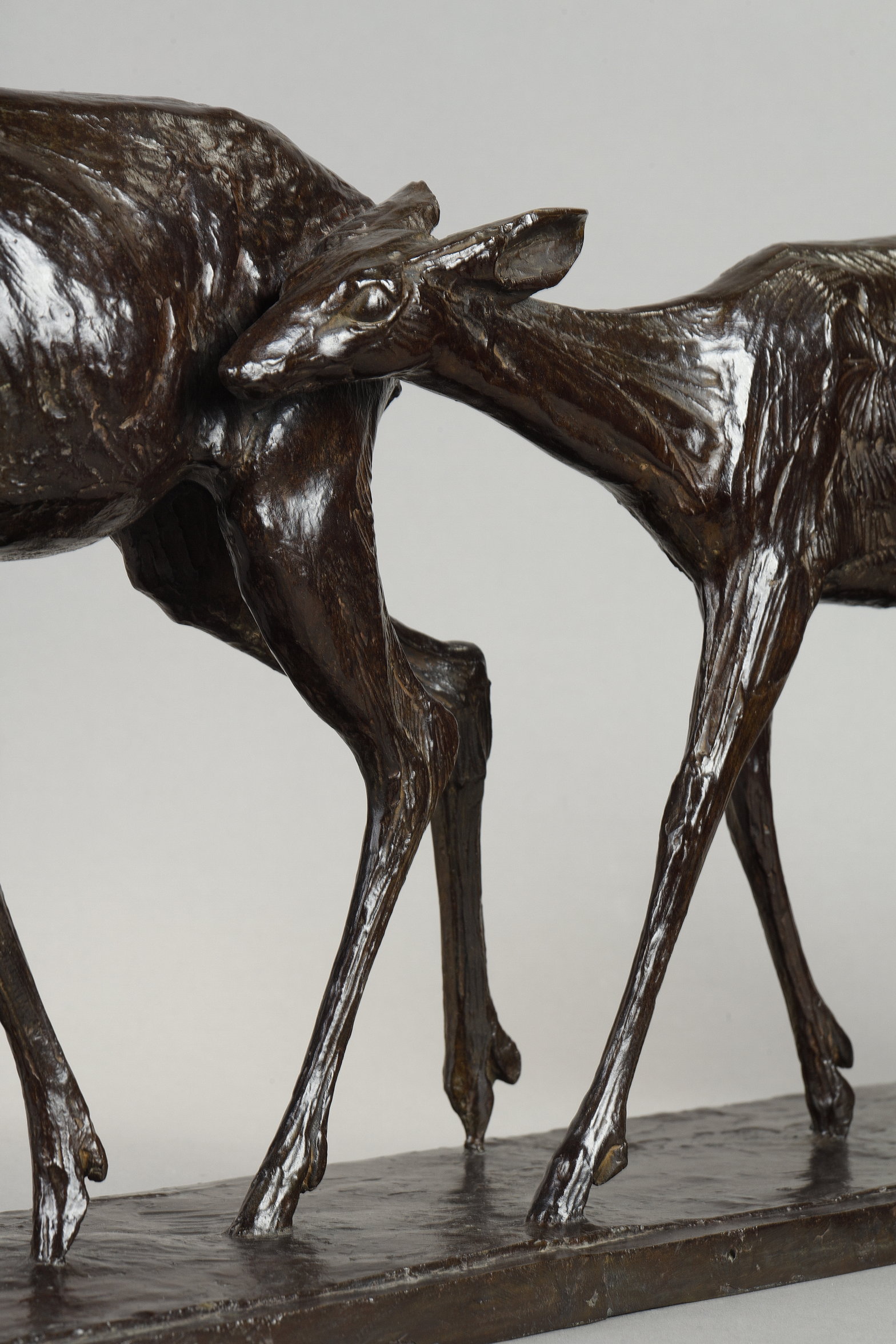
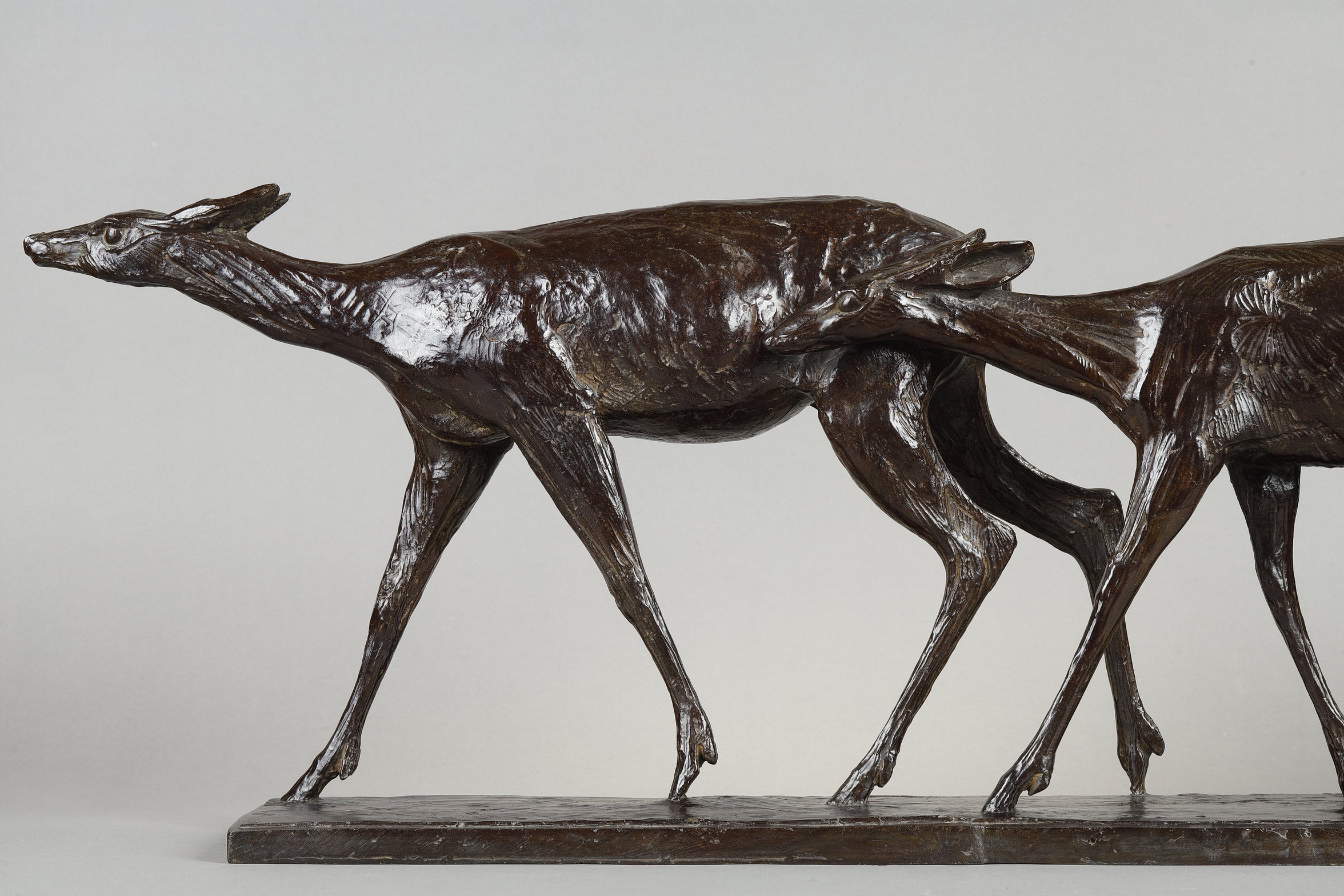
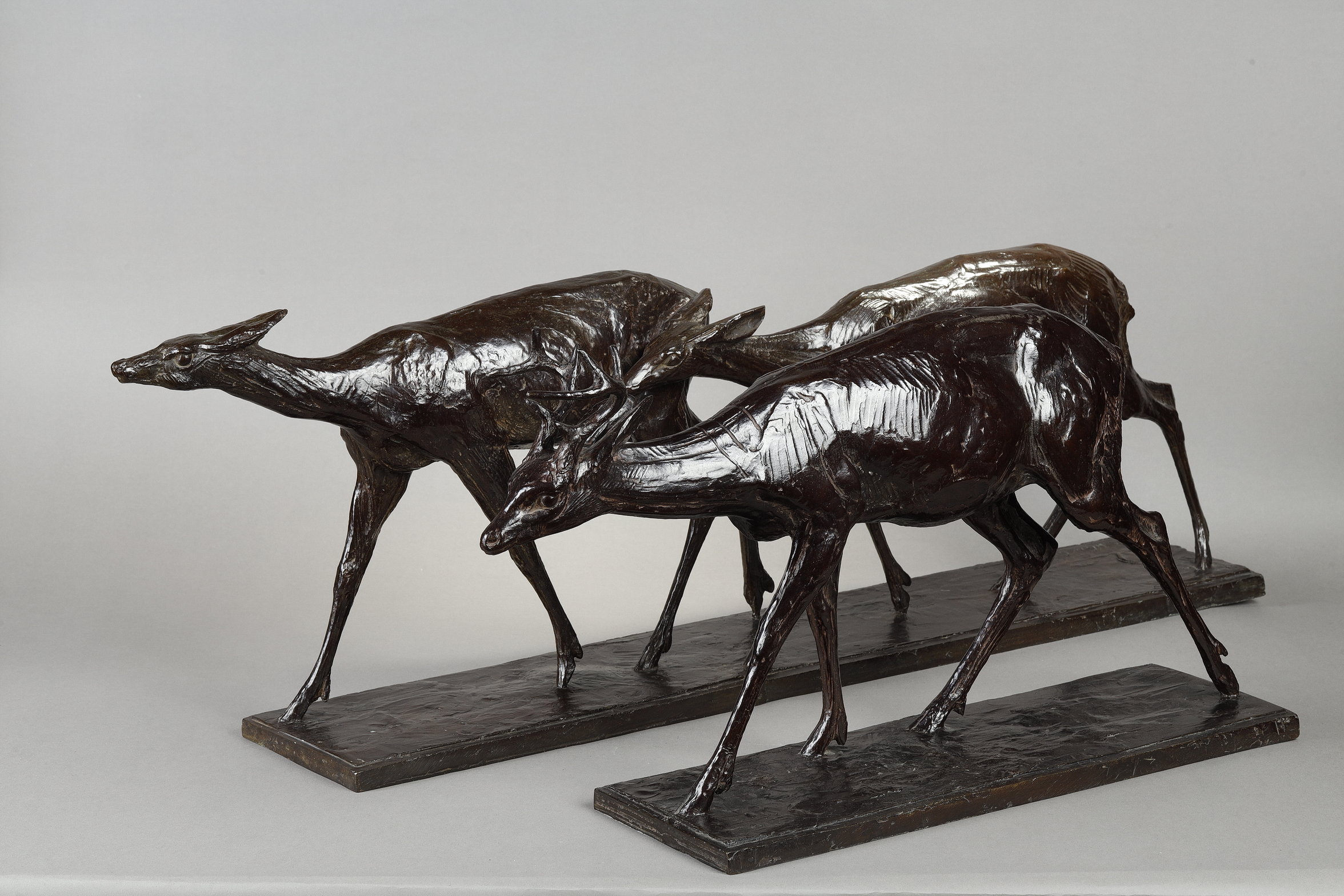
The group of the Two Hinds unfolds in a parallel movement. The two figures advance in the same direction, their slender silhouettes forming a fluid and continuous line. The second inclines her head slightly toward the first, establishing a discreet relationship between the bodies. The volumes are structured in broad planes, and the elongated limbs accentuate the animals’ fragile verticality. The composition is balanced, without overt narrative emphasis. The ensemble suggests a silent and harmonious progression.
The catalogue of the exhibition held at Place de Meir, December 1922 to January 1923, records the presentation of a plaster entitled Groupe de Biche (group of hinds).
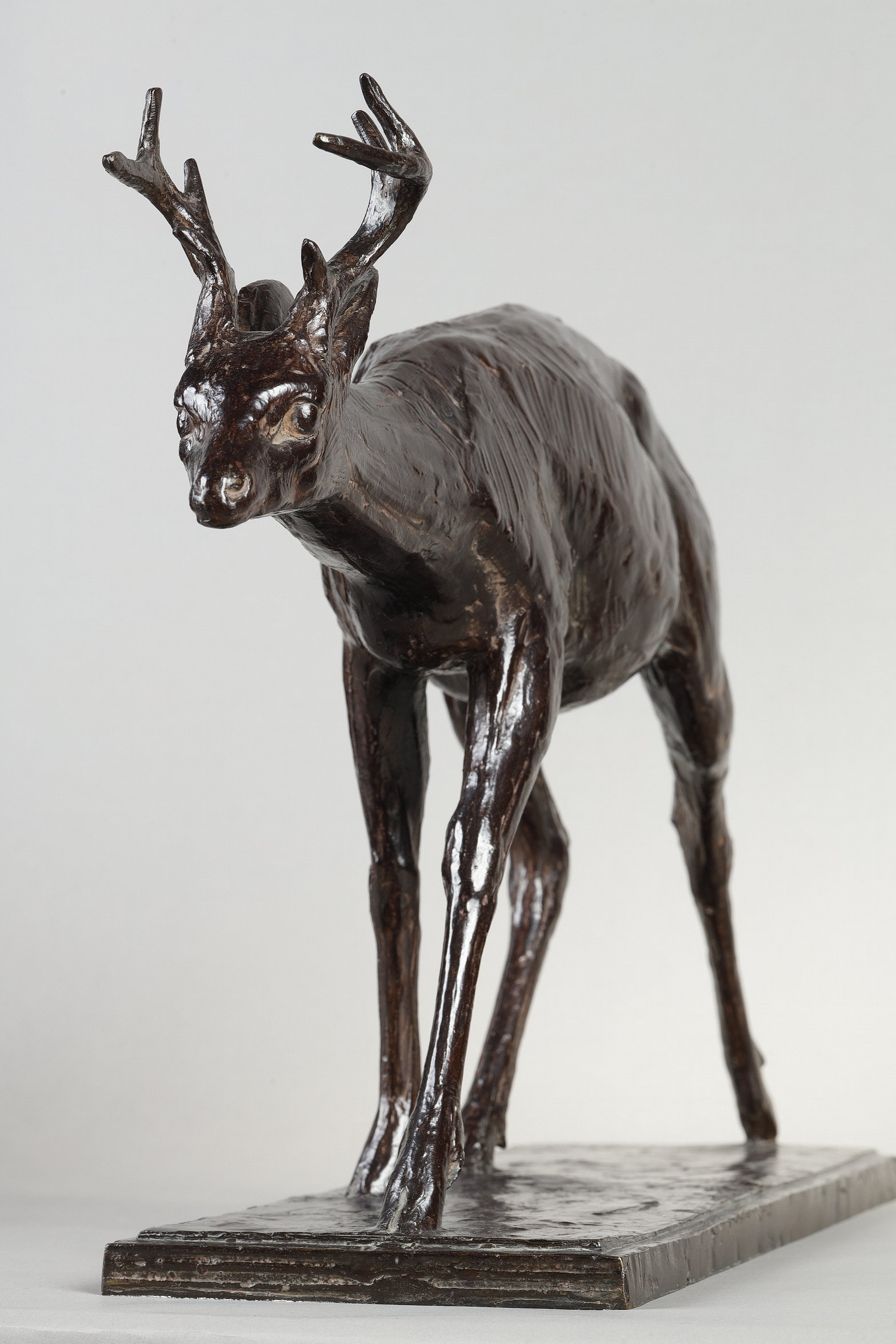
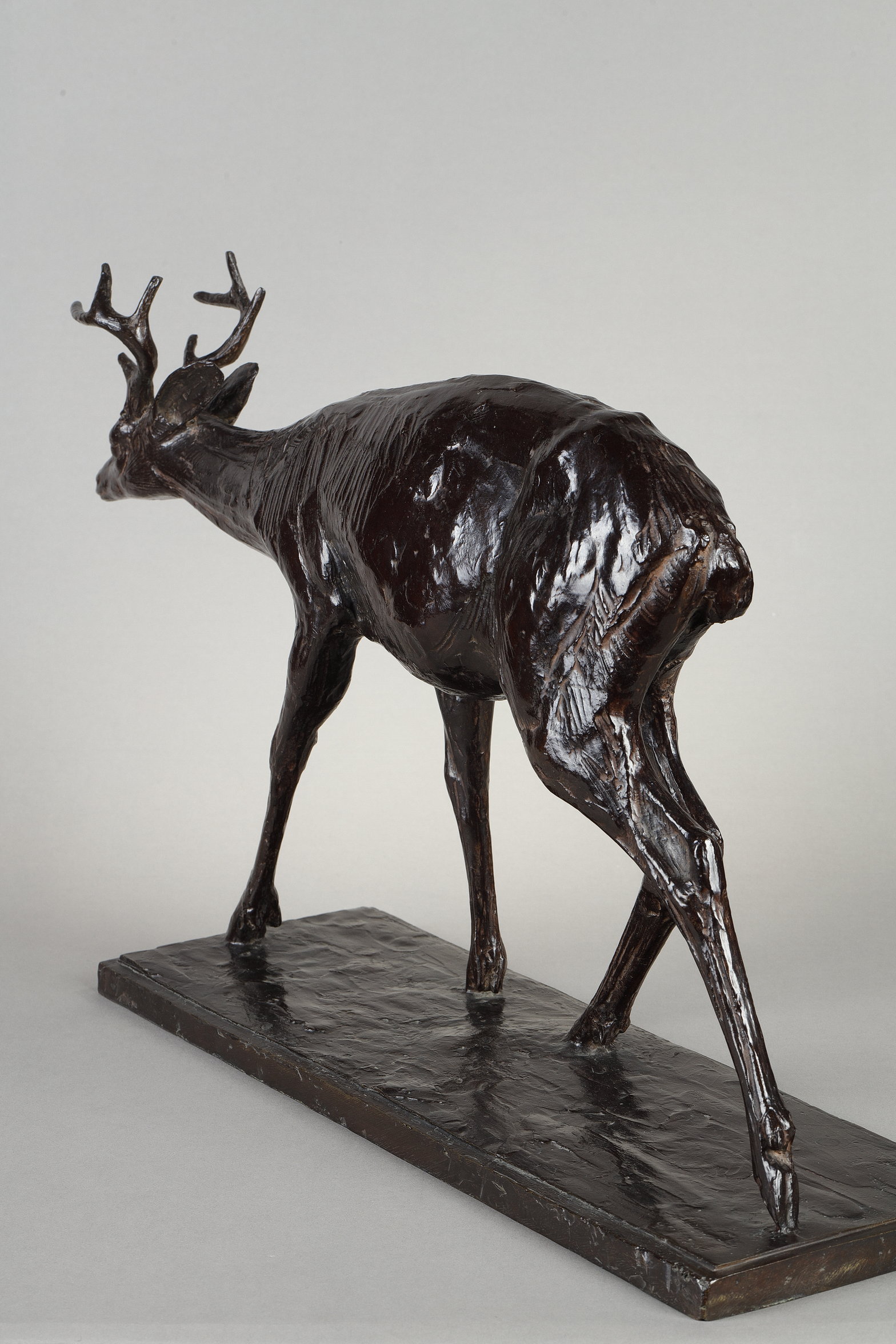
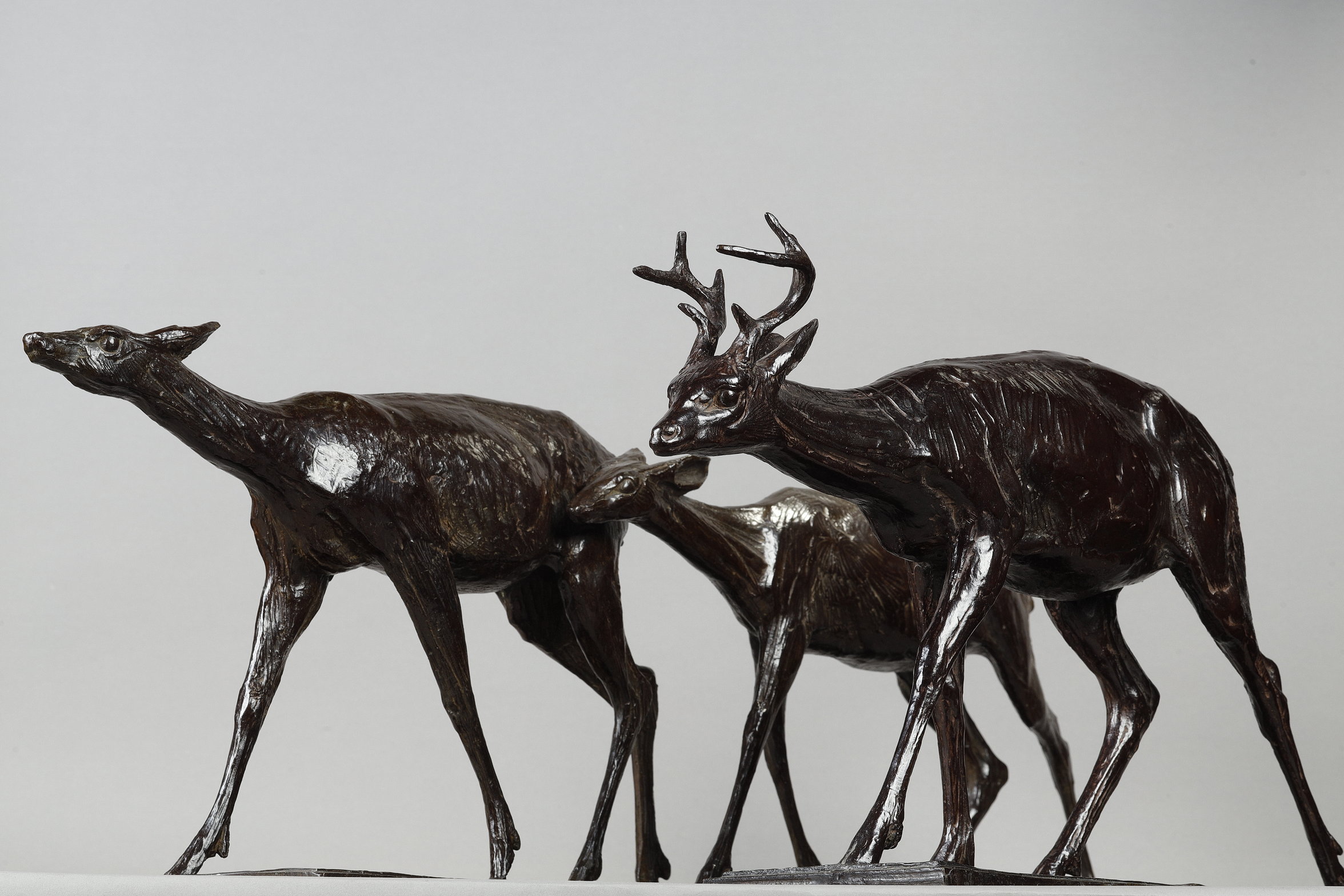
The Stag develops within a slow and silent stride. The body extends horizontally, carried by slender, sinewy legs. The elongated neck leads the eye toward a slightly inclined, attentive head, while the antlers, soberly branched, structure the upper space of the composition.
The masses are constructed in broad planes, without descriptive excess. The modelling remains firm, reinforcing the animal’s internal tension. Light glides across the surface, revealing the muscular structure without overstatement. The stag’s elegance lies in the balance between apparent fragility and formal solidity. The composition rests on a narrow rectangular base that heightens the impression of movement. The animal does not pose; it passes through space. This sense of contained motion gives the work a calm yet assertive presence.
The Galerie Giroux catalogue notes the exhibition of a plaster entitled Stag between December 1923 and January 1924.
Presented together today, these sculptures reveal an evident formal coherence. The Stag and the Two Hinds share the same pursuit of elongated lines, simplified masses, and a careful attention to restrained movement. Together they form a remarkably unified ensemble, in which the animals’ measured stride establishes a continuous and deliberate rhythm.
This pairing highlights Collin’s commitment to a refined animal sculpture attentive to silhouette and structural clarity.
Literature
- Cor Engelen and Mieke Marx. La sculpture en Belgique à partir de 1830. Vol. 1. Louvain, 2006.
- Catalogue d’exposition : Albéric Collin, sculpteur. Paris : Galerie Le Goupy, juin 1922.
- Catalogue d’exposition : Albéric Collin, sculpteur. Anvers : Salle des Fêtes, Place de Meir, décembre 1922-janvier 1923.
- Catalogue d’exposition : Albéric Collin, sculpteur. Bruxelles : Galerie Giroux, 22 décembre 1923-3 janvier 1924.
the ARTIST
Albéric Collin
1886 – 1962
Born in Antwerp in 1886, Albéric Collin was a renowned Belgian animal sculptor of the 20th century, trained at the Royal Academy of Fine Arts. His friendship with Rembrandt Bugatti was decisive in shaping his artistic direction.
similar works