MARNIX D’HAVELOOSE · (1885–1973)
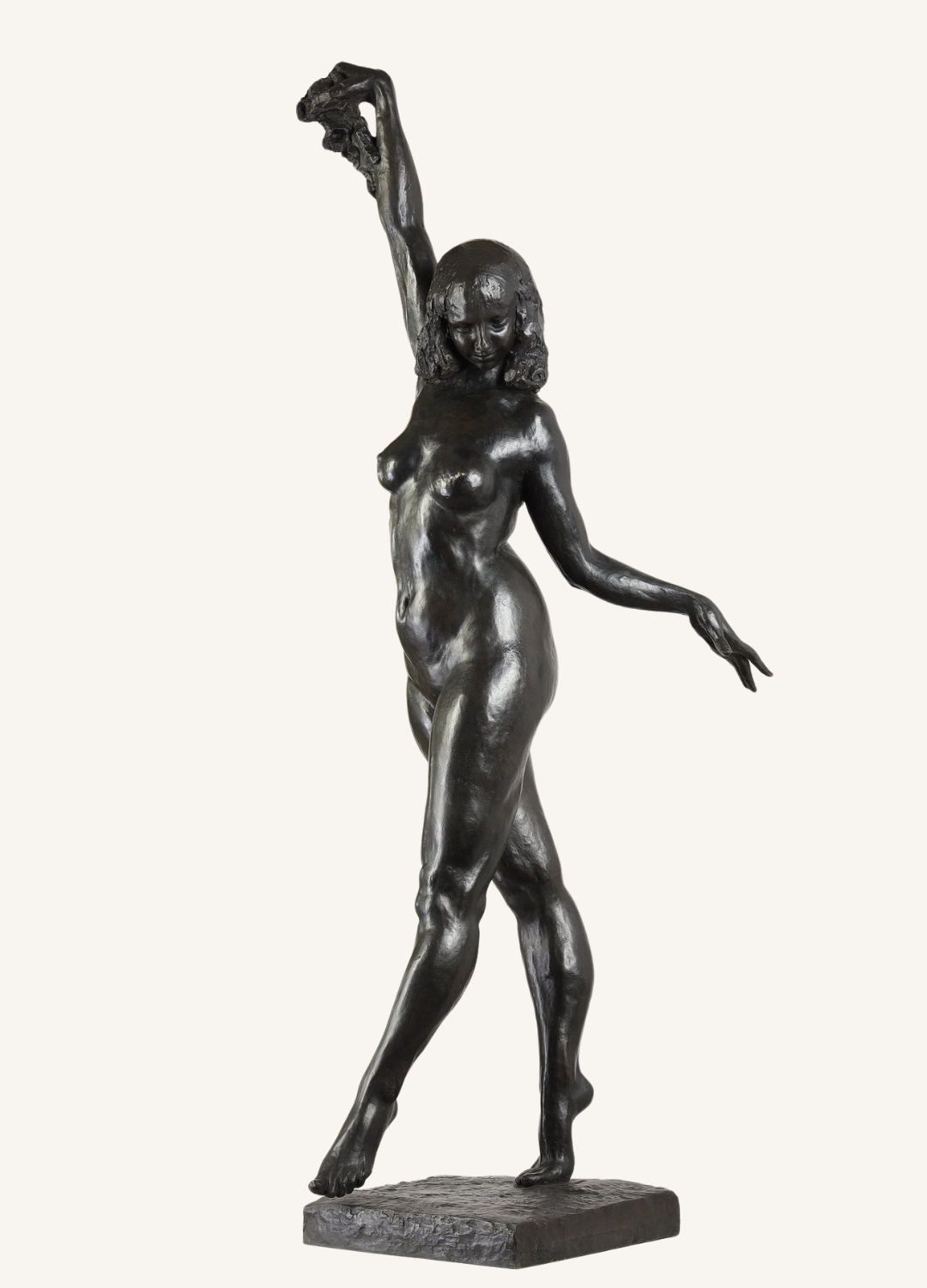
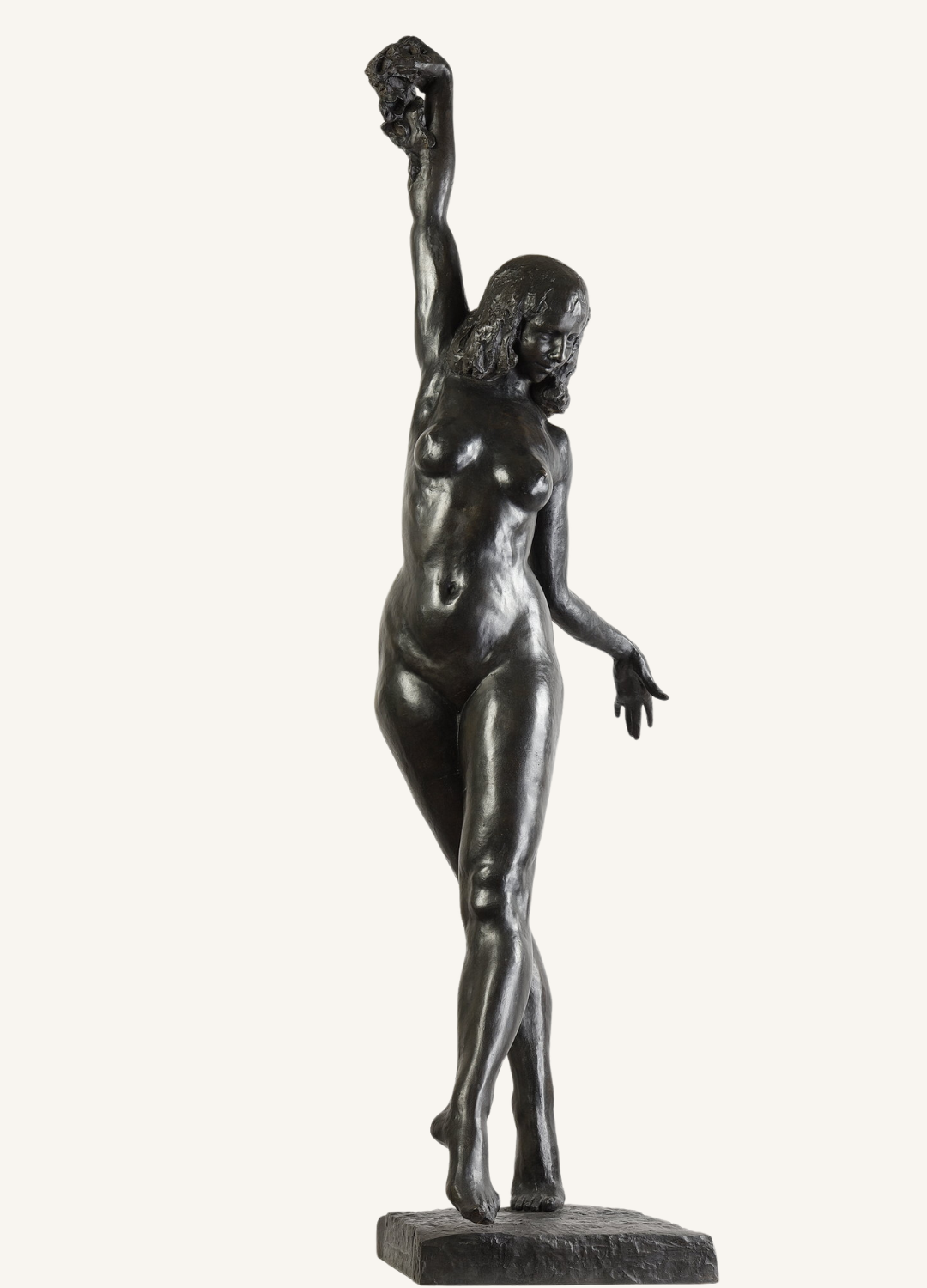
The Dancer
technical sheet
| ARTIST | Marnix d’Haveloose |
| DATE | ca. 1912 |
| DIMENSIONS | 215 cm (height) |
| MATERIAL | Bronze |
| SIGNED | Marnix d’Haveloose |
about the work
The Dancer is one of the most emblematic works of Marnix d’Haveloose, a Belgian sculptor trained at the Maldegem School of Drawing and at the Brussels Academy under Charles Van der Stappen and Julien Dillens.
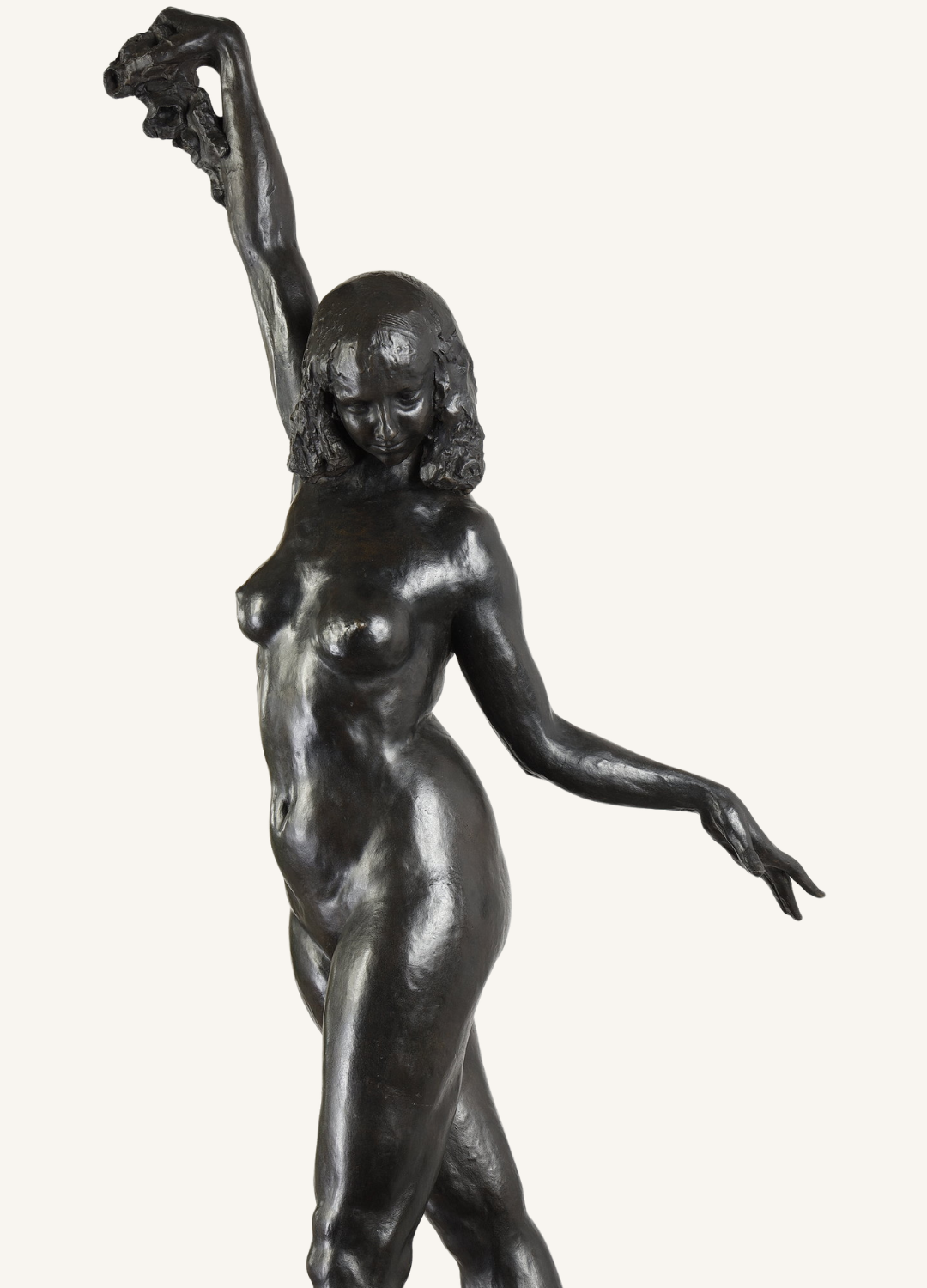
This large-scale bronze figure depicts a young nude woman in an ascending movement: the right arm raised, the torso slightly twisted, the left leg forward in graceful balance. The elongated and rhythmic composition evokes the fusion of body and gesture, typical of d’Haveloose’s sculptural language.
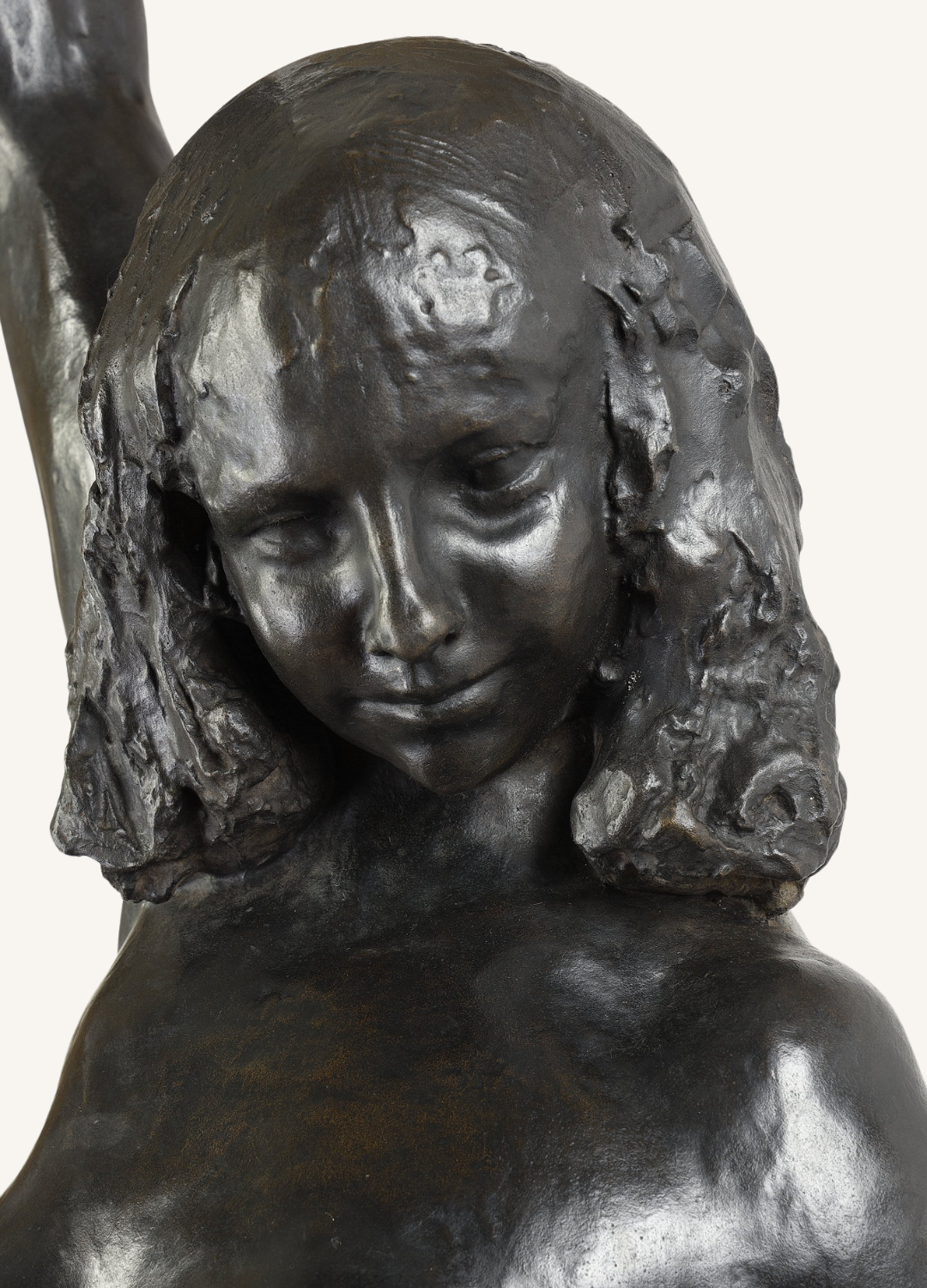
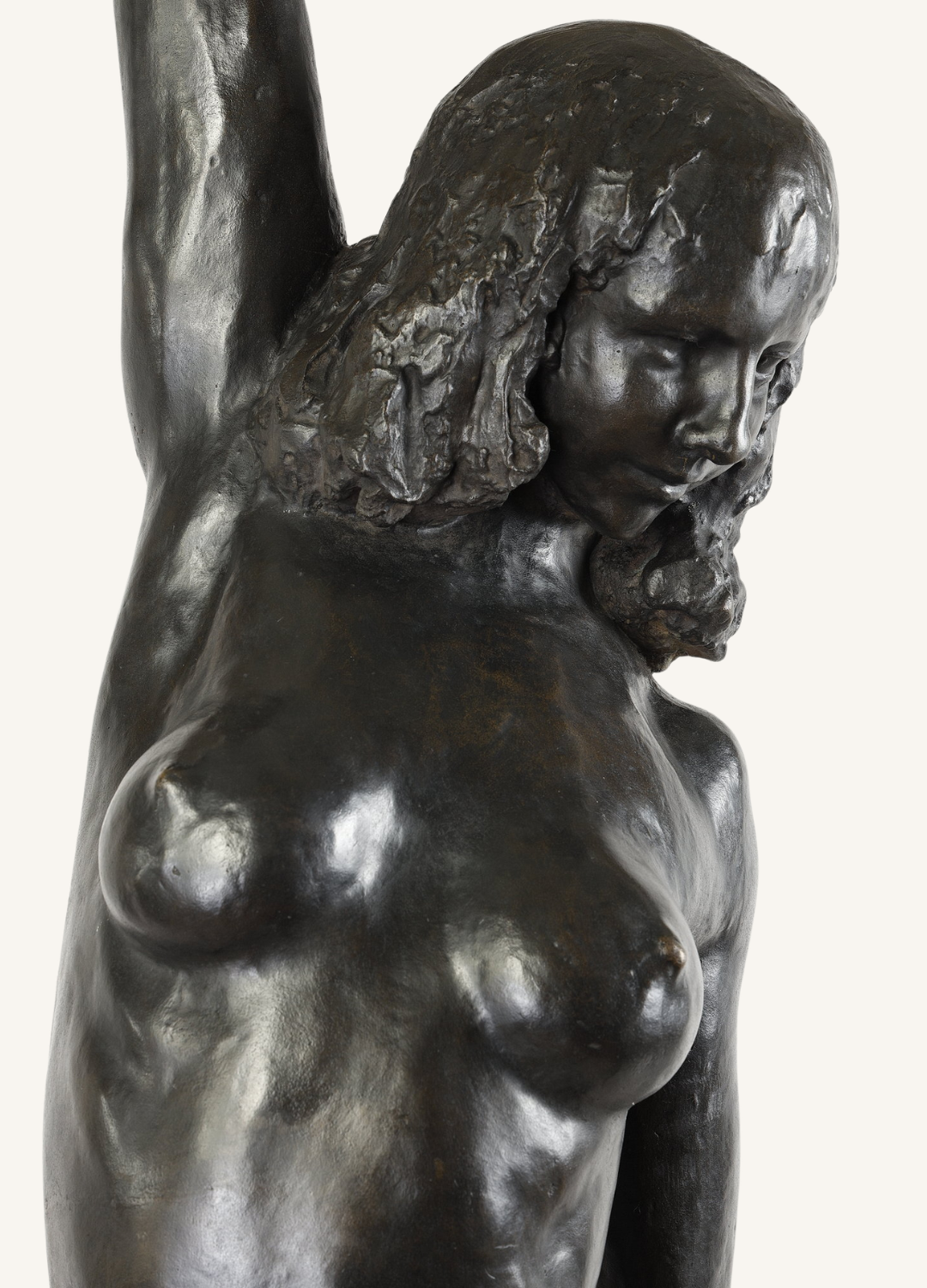
The artist succeeds in expressing the tension between anatomical rigour and sensual expressiveness. The modelling of the bronze, vibrant with light, conveys the musicality of movement: the gesture becomes dance, the dance becomes sculpture. This fluid monumentality belongs to the Belgian Symbolist heritage while anticipating a plastic modernity close to Delvaux or Minne.
Through The Dancer, d’Haveloose condenses his vision of art as “emotion made visible,” in his own words. Refusing academic coldness, he favours the sincerity of gesture and the spontaneous beauty of the body. The work, created around 1910, reflects the spirit of a generation of Belgian artists who, following Van der Stappen and Dillens, sought to reconcile the decorative impulse with plastic truth. D’Haveloose achieves here the perfect synthesis of academic rigour and modern sensuality: a work that is at once carnal and spiritual, where bronze becomes movement, and movement becomes poetry.
The present example in bronze corresponds to the monumental model of 1912 acquired by the Musée d’Ixelles from the artist. According to the Museum’s archives, only two examples were cast: one kept in the communal collections, and a second mentioned as having been acquired by Queen Marie-José of Belgium, last Queen of Italy.
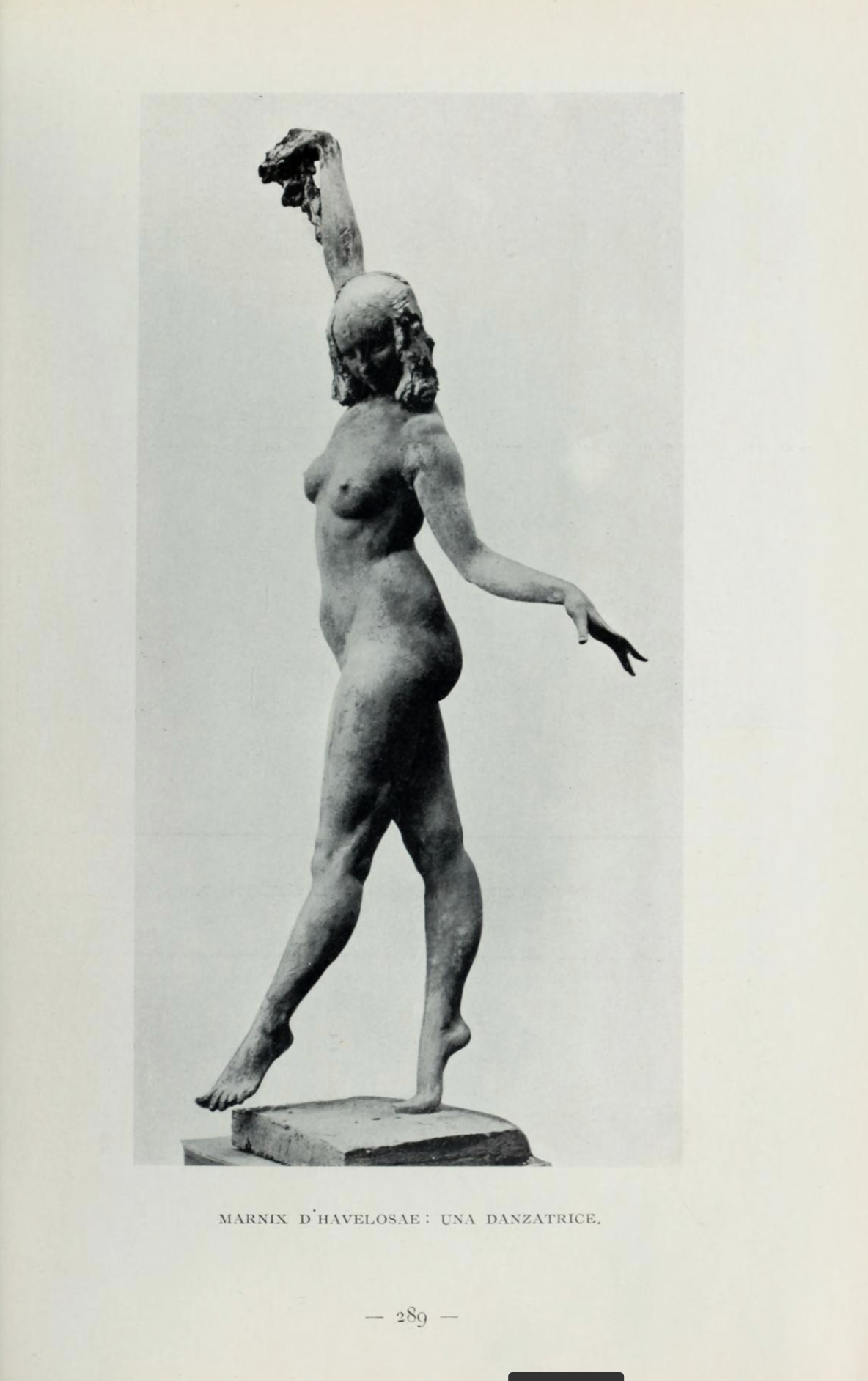
The Dancer was exhibited several times during the 20th century: at the Venice Biennale in 1912 (p.289), in the Belgian Pavilion, where it was praised by the Italian press; at the exhibition “Five Belgian Artists” at the Petit Palais in Paris in 1952; and at the Spring Exhibition of Watermael-Boitsfort in April–May 1969.
Literature
- Ugo Ojetti. La Decima Esposizione d’arte a Venezia. Begamo: Istituto Italiano d’arti grafiche, 1912, p. 37 and 289.
the ARTIST
Marnix d’Haveloose
1885 – 1973
Born in Maldegem in 1885, Marnix d’Haveloose studied at the academies of Bruges and Brussels, where he was a pupil of Charles Van der Stappen and Julien Dillens. He reconciled academic rigour with the expressive aspirations of Symbolism, and died in Ixelles in 1973.
similar works