RAYMOND DE MEESTER DE BETZENBROECK · (1904–1995)
The Elephant
technical sheet
| ARTIST | Raymond de Meester de Betzenbroeck |
| DATE | ca. 1930 |
| DIMENSIONS | 45 × 65 cm |
| MATERIAL | Bronze on marble base |
| FOUNDRY | Batardy |
| TECHNIQUE | Lost-wax casting |
| SIGNED | “R. de Meester de B” — Artist’s proof III/VII — Founder’s stamp: BATARDY — Lost-wax cast |
about the work
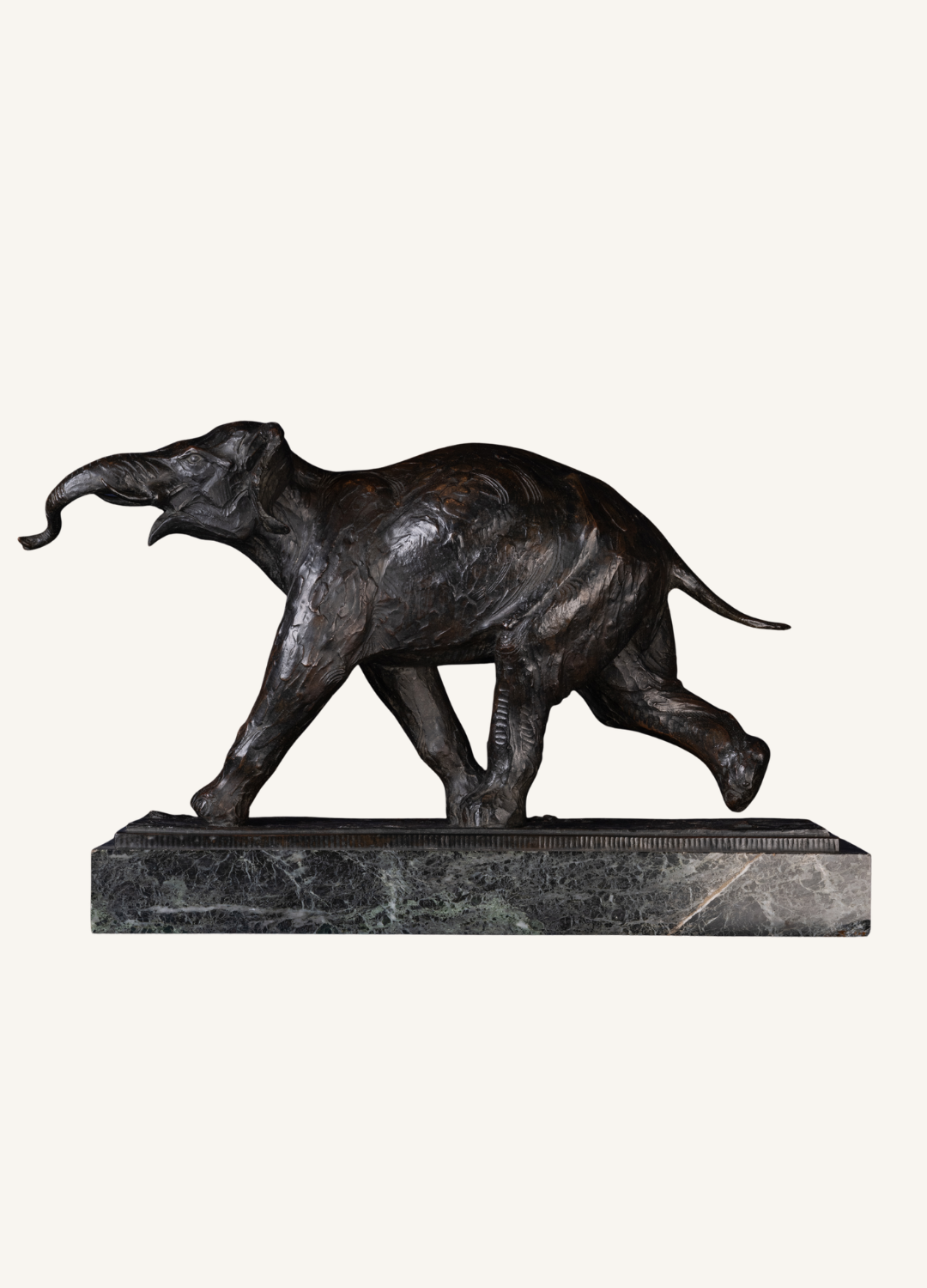
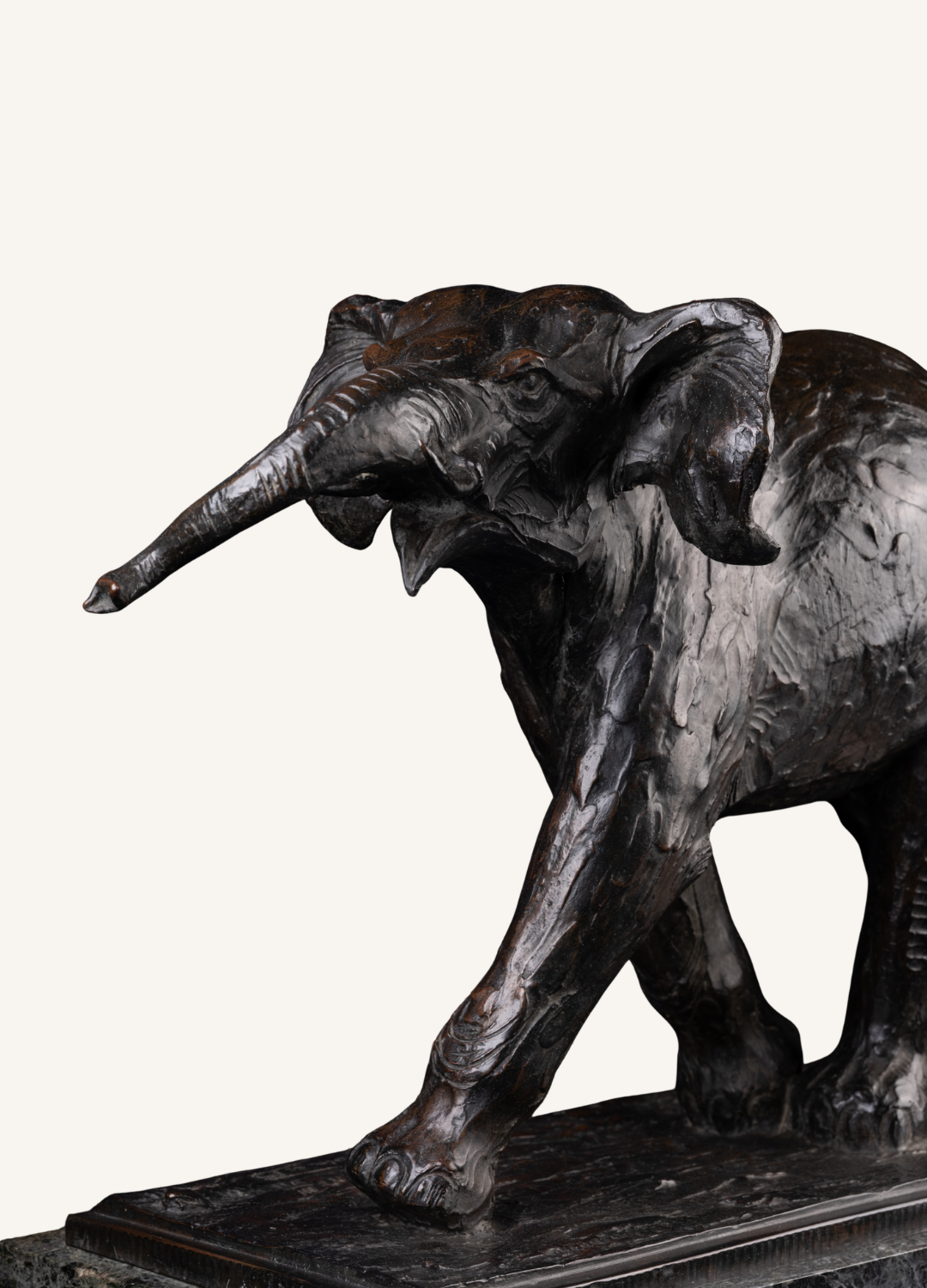
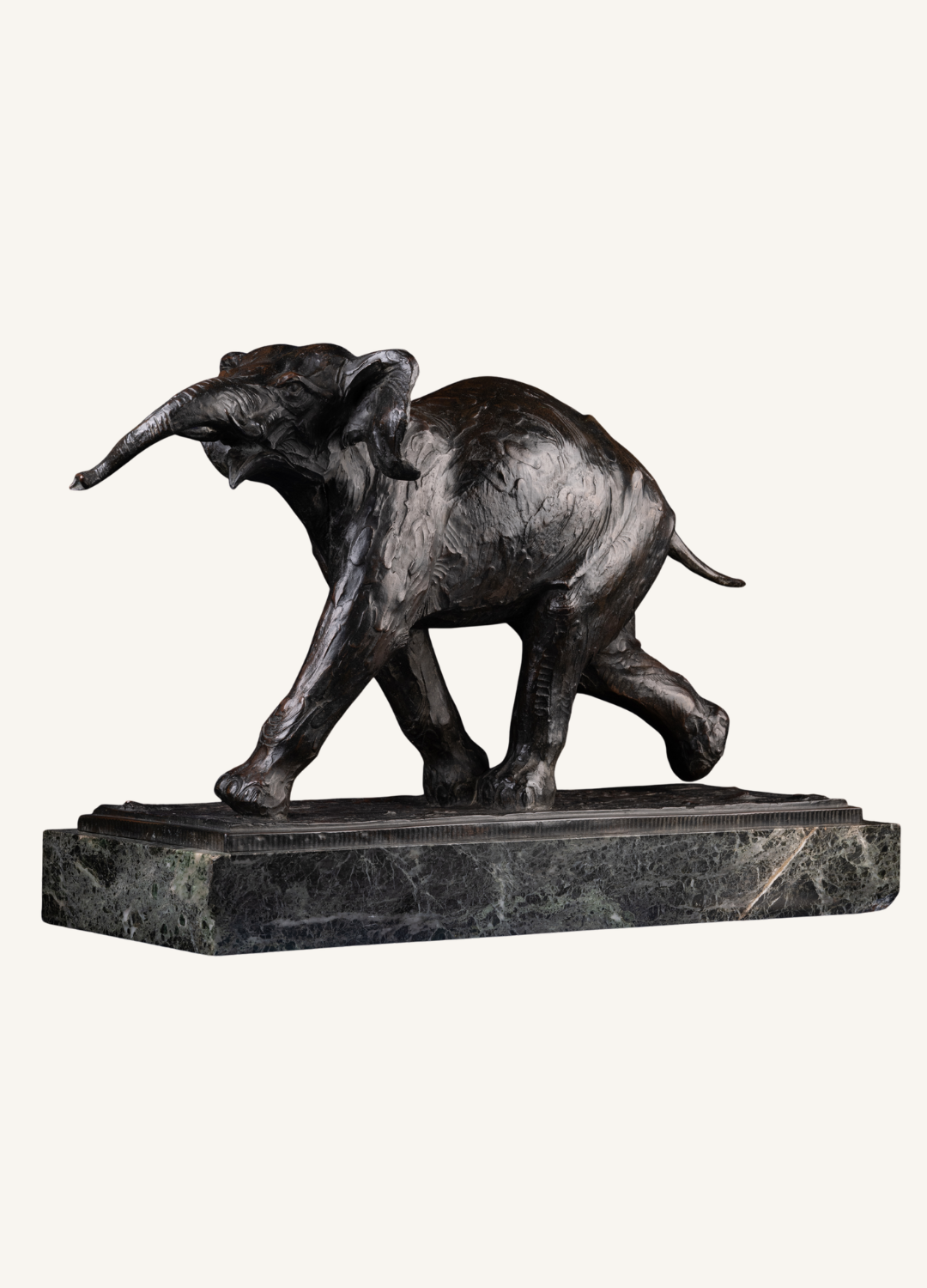
This sculpture depicts an elephant in motion, captured in a moment of slow yet powerful forward movement. The body is oriented from left to right, the head slightly raised, with the trunk curved forward in a gesture that suggests exploration or deep breathing. One front leg steps forward while the hindquarters follow in a natural sway, lending the composition an impression of continuous motion.
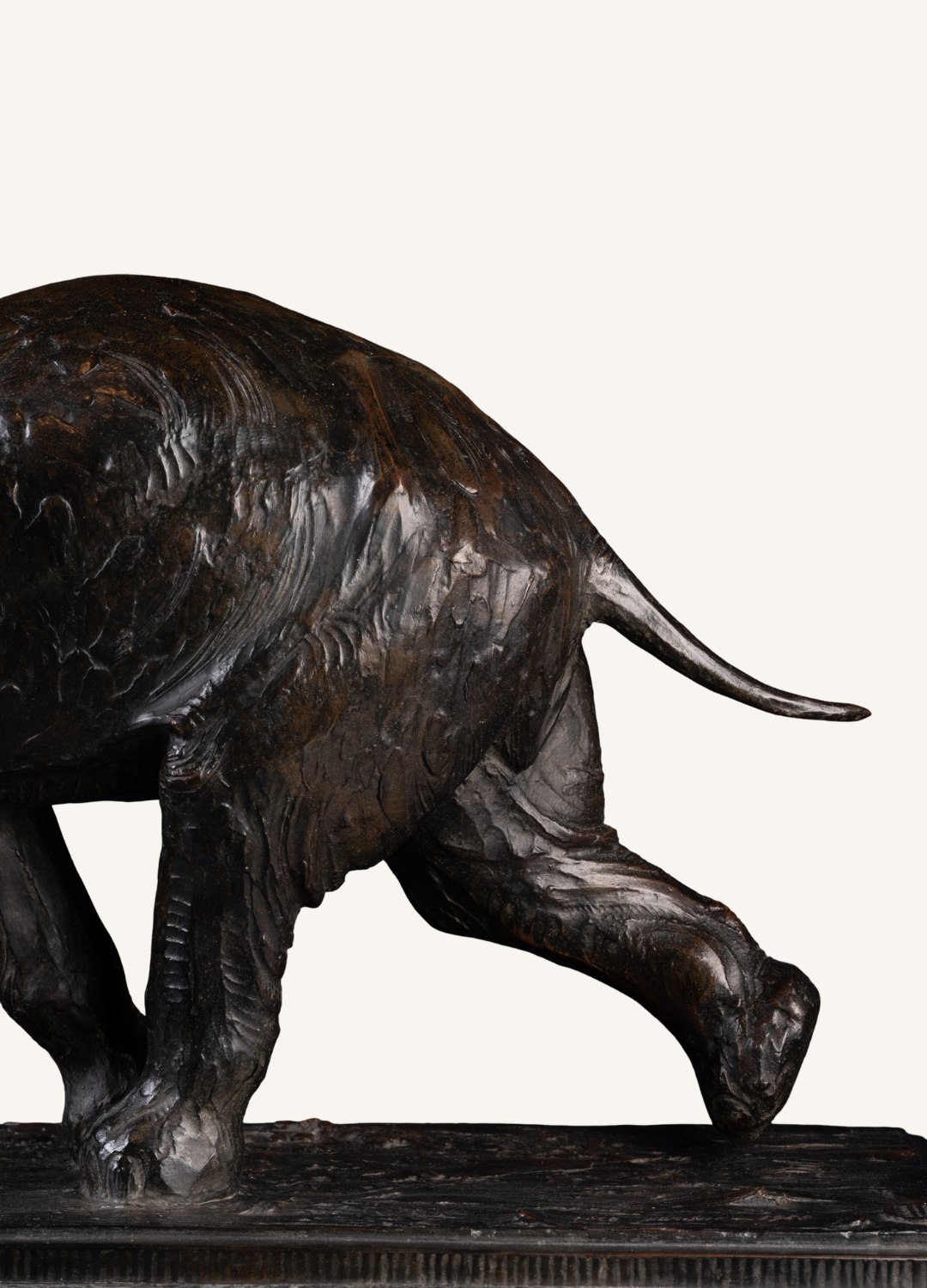
The posture is both stable and animated. The animal’s weight is distributed with precision, conveying its true mass without appearing overly heavy. The back forms a supple, gently arched line, guiding the viewer’s gaze from the head to the tail, which stretches backward to accentuate the walking rhythm.
The surface of the bronze is intentionally textured. Modeling marks remain visible, animating the elephant’s skin with folds, tensions, and irregular reliefs. This texture catches the light and creates shadow play that enhances the sense of volume and physical presence. The elephant is not idealized: its skin is thick, marked, almost rugged — faithful to direct observation of the living animal.
The head receives particular attention. The folds around the eye, the base of the trunk, and the slightly open mouth give the impression of breath — as if the animal were advancing while slowly exhaling. The gently curved trunk adds a note of suppleness to this powerful mass.
The sculpture is anchored by a dark, sober, and solid marble base, which visually grounds the work and highlights the contrast between the stability of the base and the movement of the body above it.
This piece perfectly illustrates De Meester de Betzenbroeck’s artistry: a rigorous observation of the living animal, transformed into a sculpture that goes beyond mere anatomical description to convey presence, rhythm, and inner energy. The elephant is not a decorative symbol but a living being, captured in its natural motion — embodying strength, slowness, and dignity.
the ARTIST
Raymond de Meester de Betzenbroeck
Ixelles, 1904 – Evere, 1995
Self-taught Belgian animalier sculptor, observer of living creatures between zoo and menagerie, award-winner on three continents. Raymond de Meester de Betzenbroeck was born in 1904 in Ixelles, a municipality of Brussels. Grandson of Senator Raymond de Meester de Betzenbroeck (1841–1907), he grew up in a cultivated family environment and graduated from the Institut Saint-Boniface-Parnasse in 1924.
similar works