GODEFROID DEVREESE · (1861–1941)
Bacchanal Vase
technical sheet
| ARTIST | Godefroid Devreese |
| DATE | Terracotta Model : 1893 / Marble : ca. 1920 |
| DIMENSIONS | 88 × 40 × 37 cm |
| MATERIAL | White Carrara marble |
| SIGNED | “G. Devreese” |
| PROVENANCE | Private collection, England |
about the work
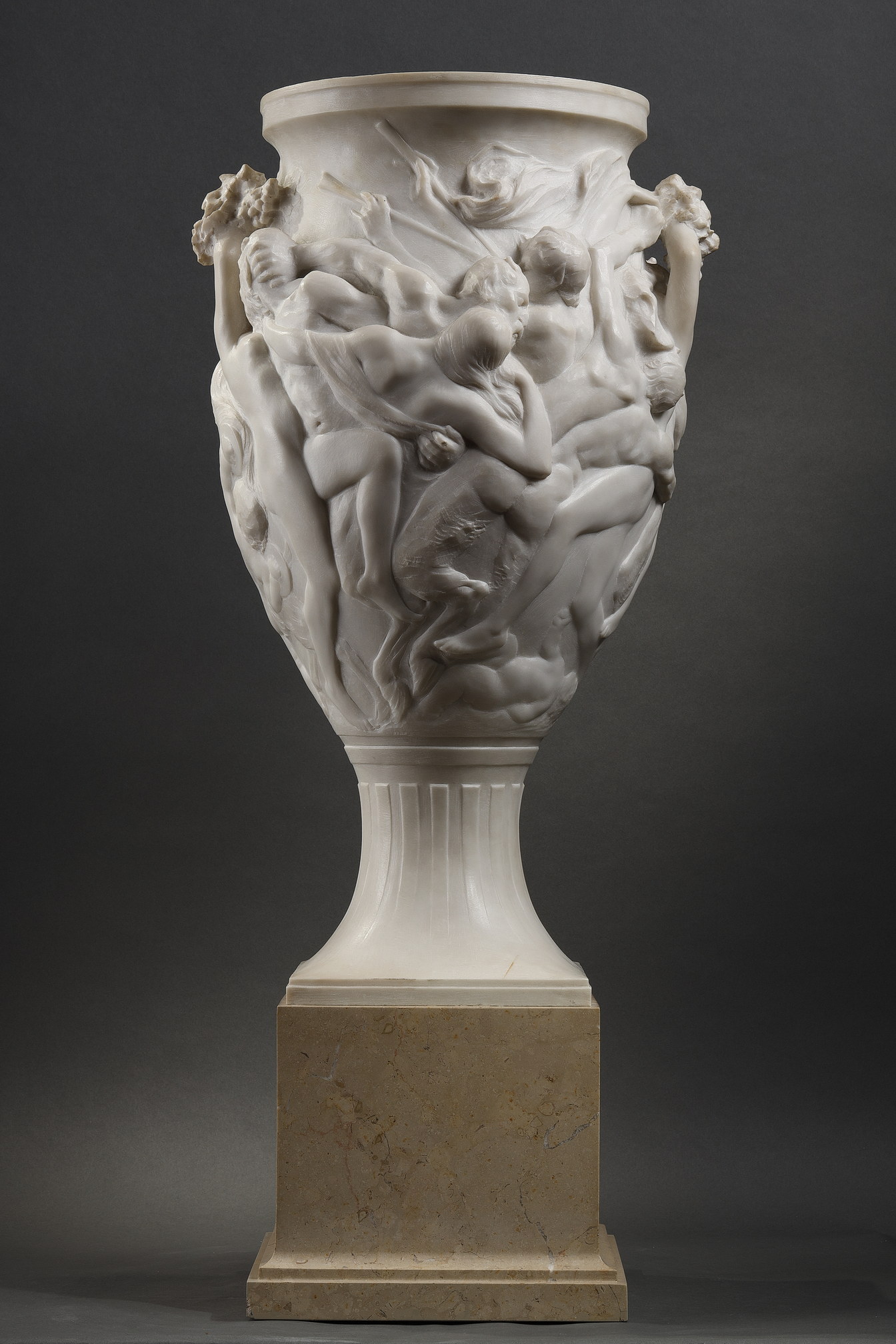
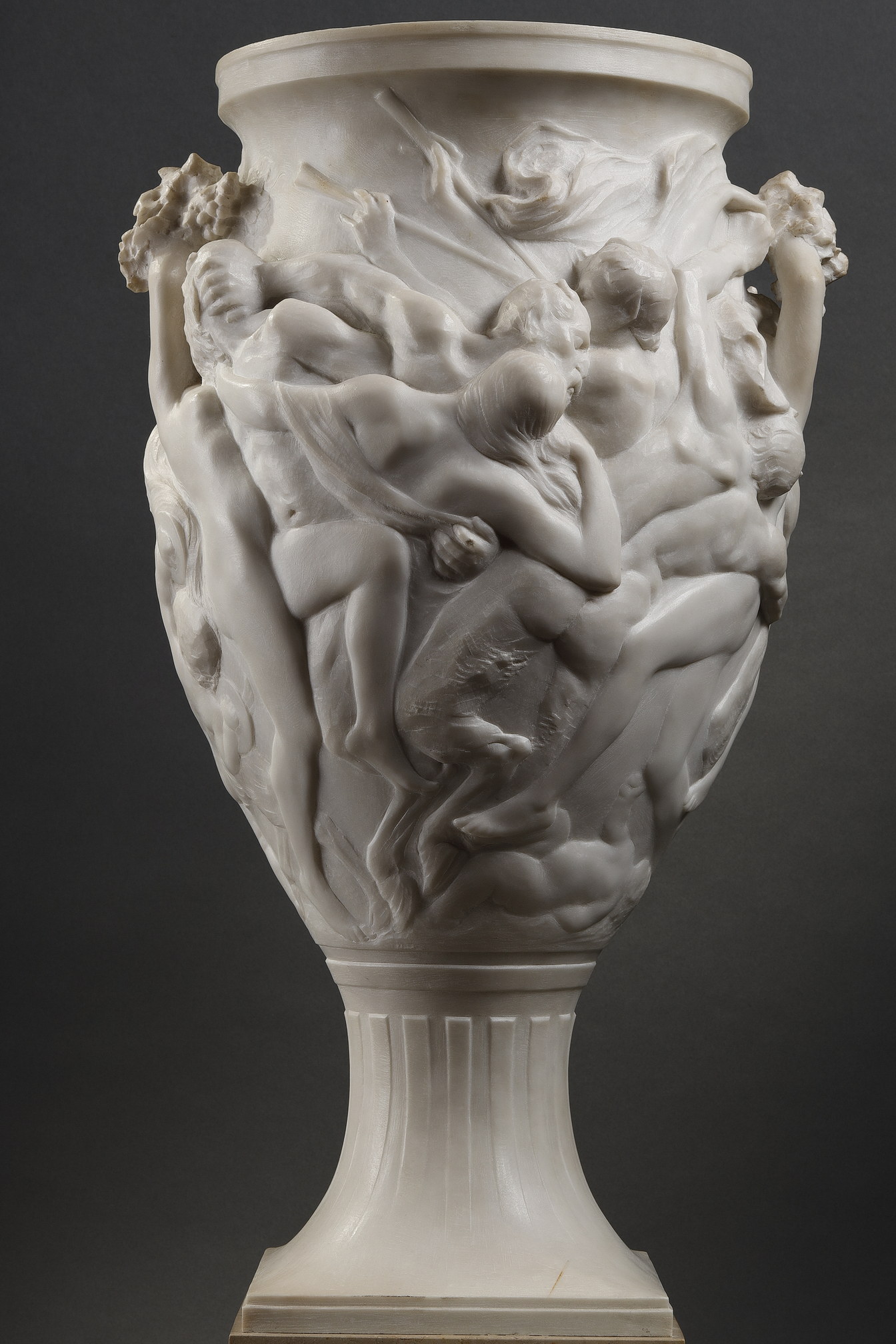
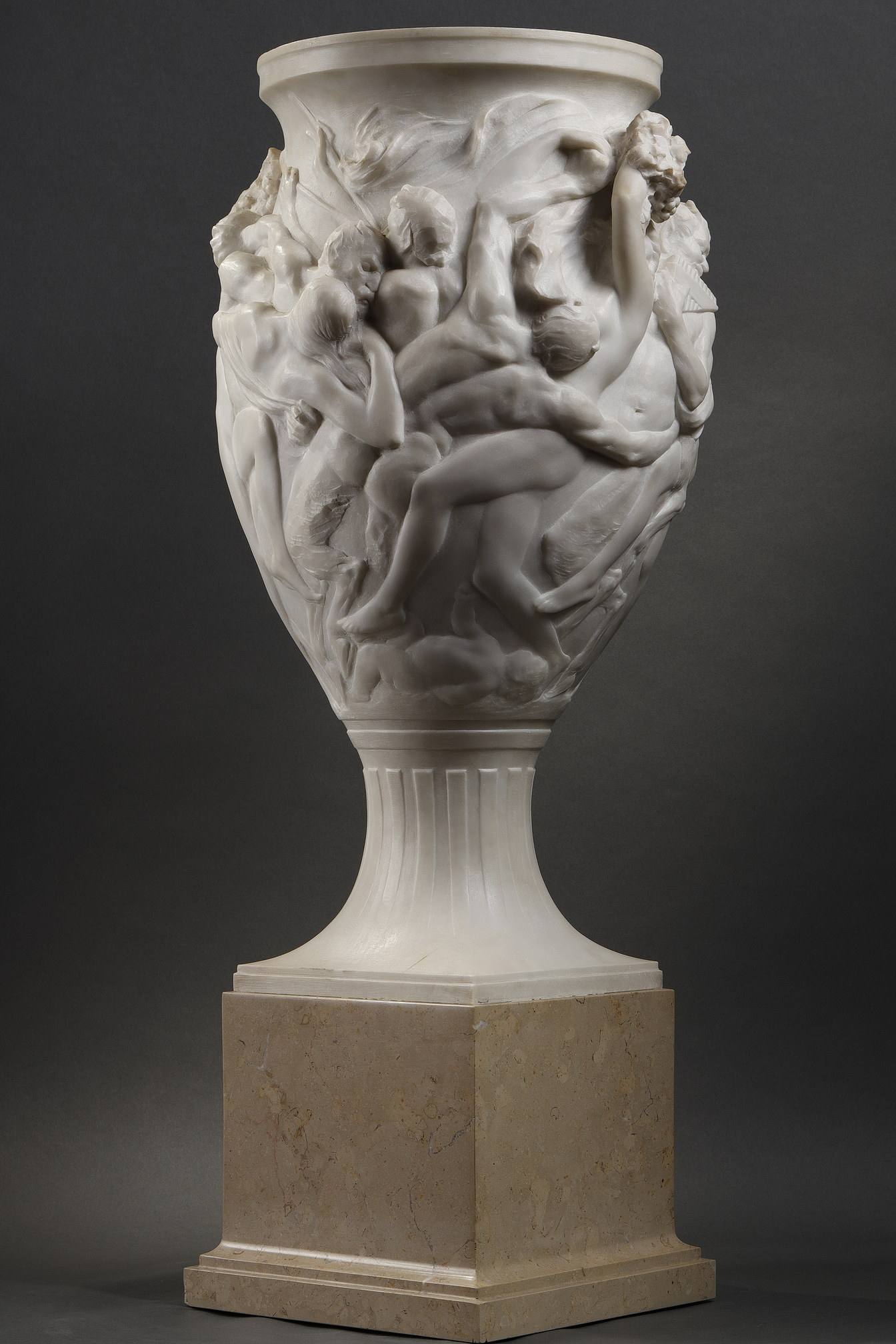
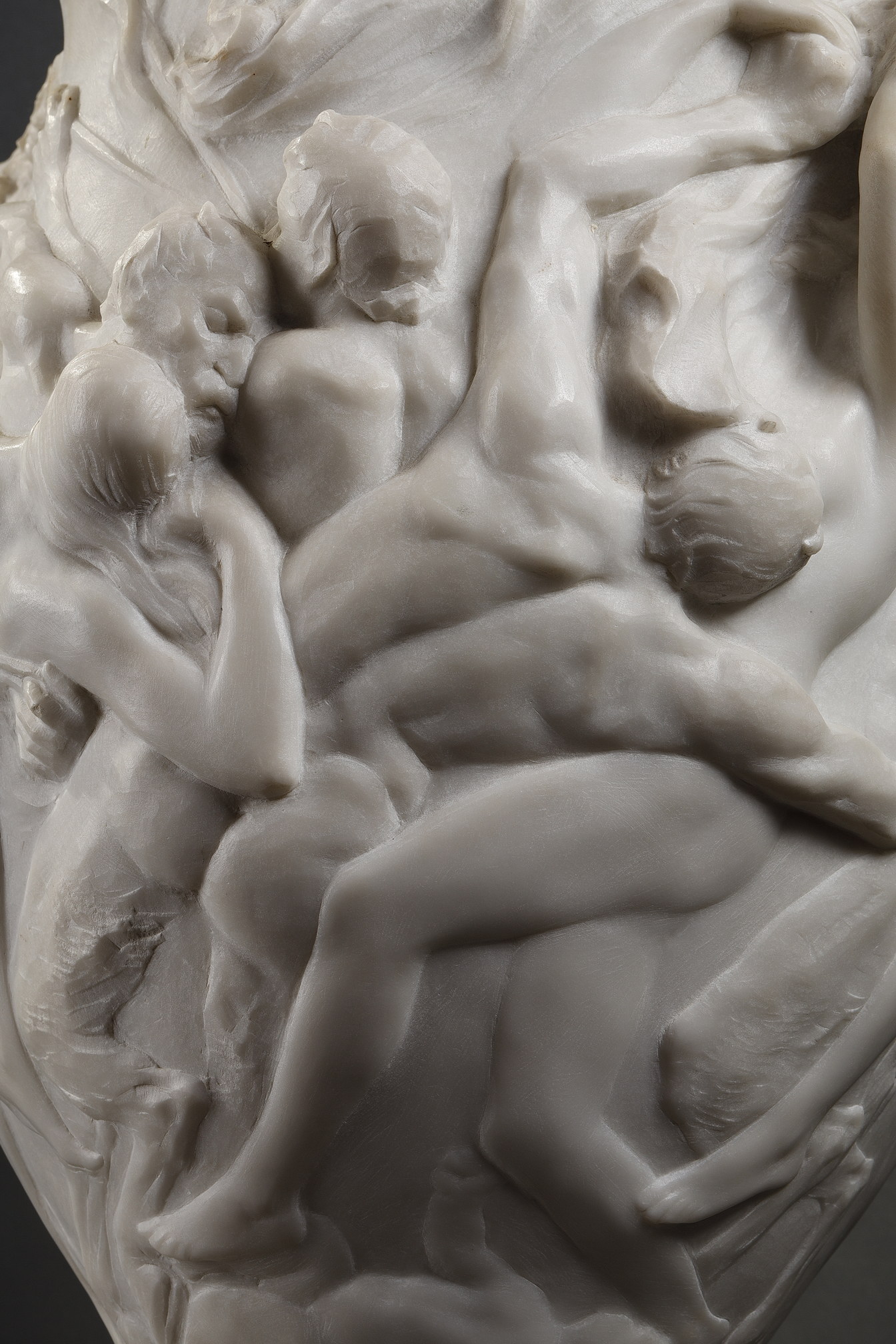
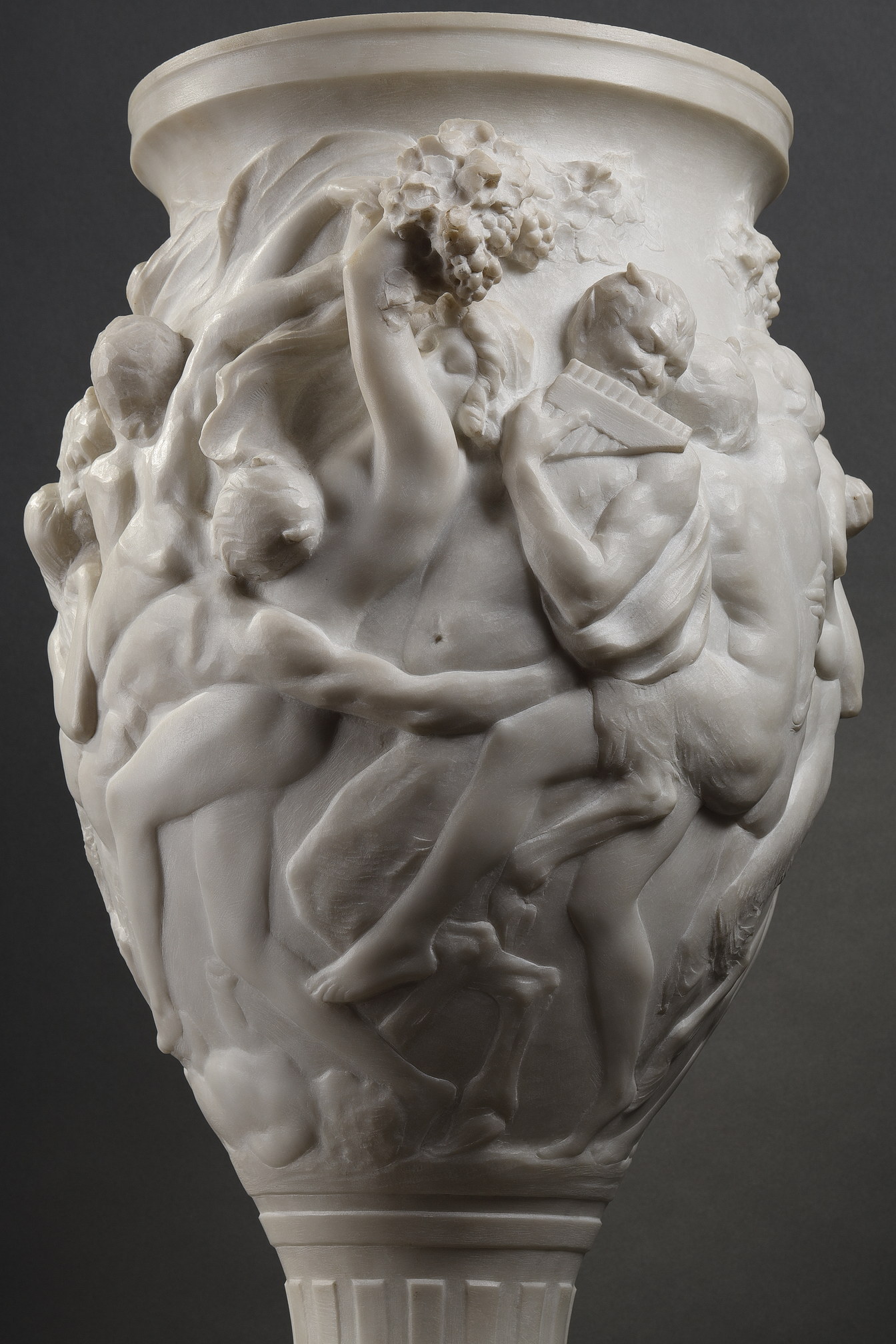
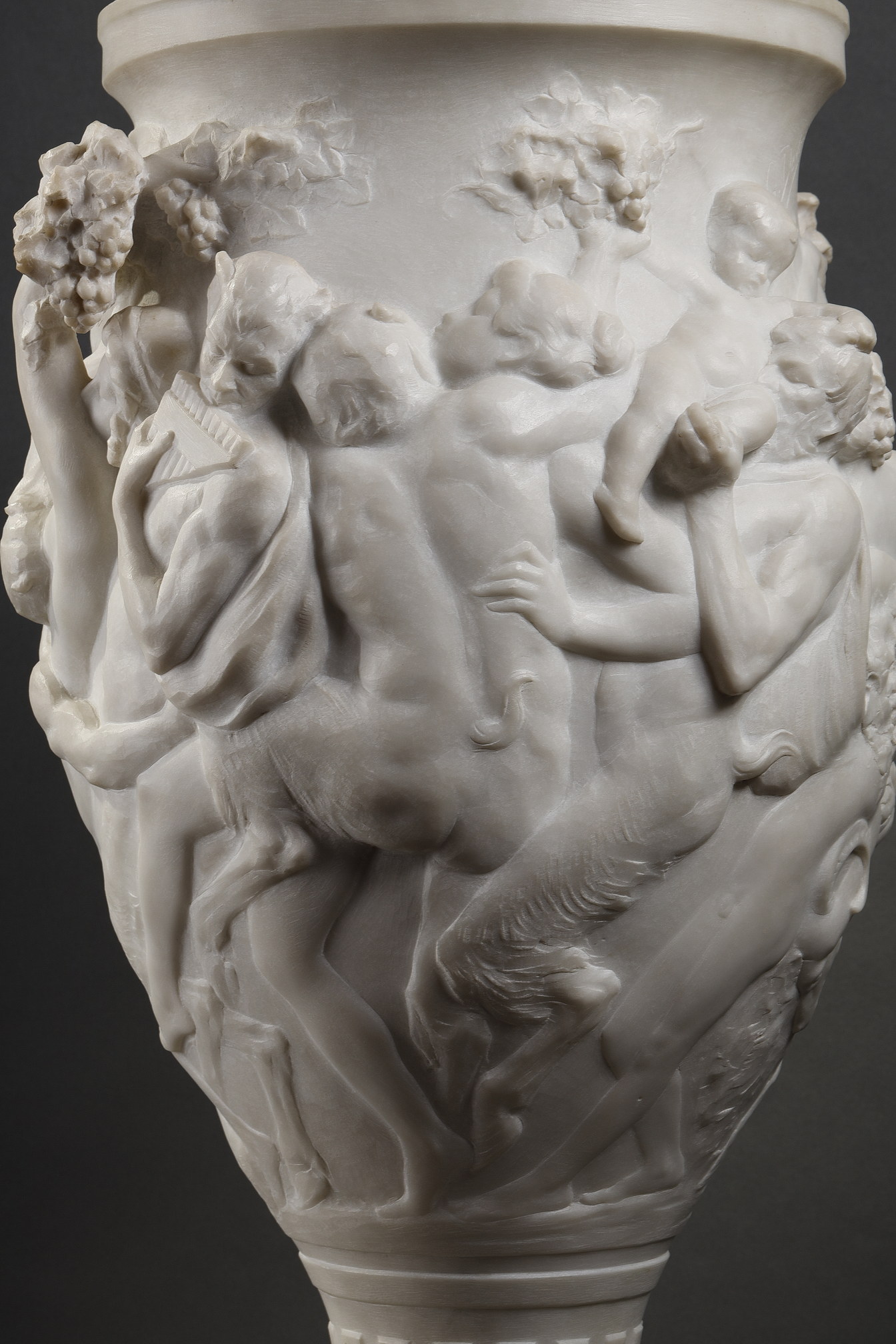
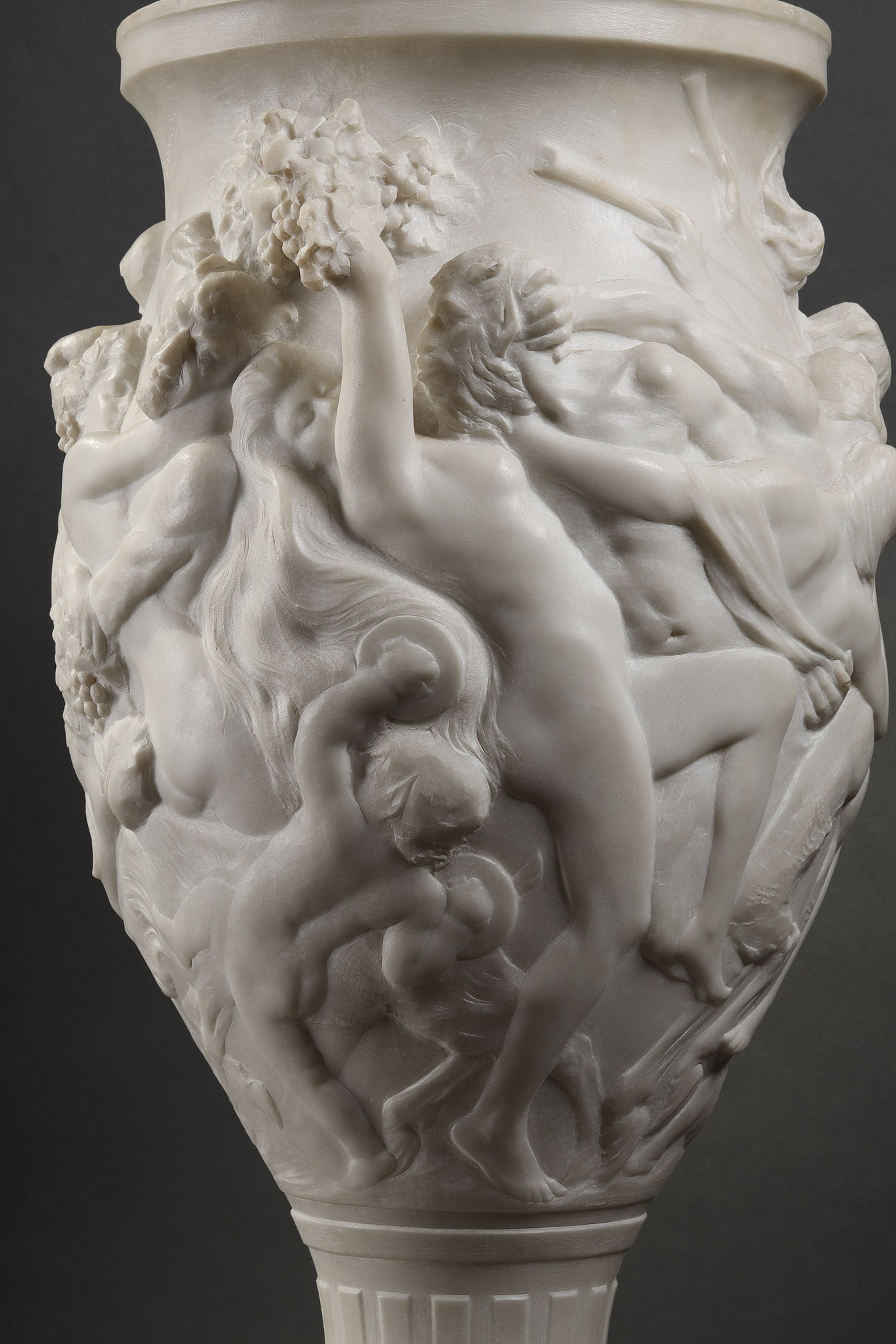
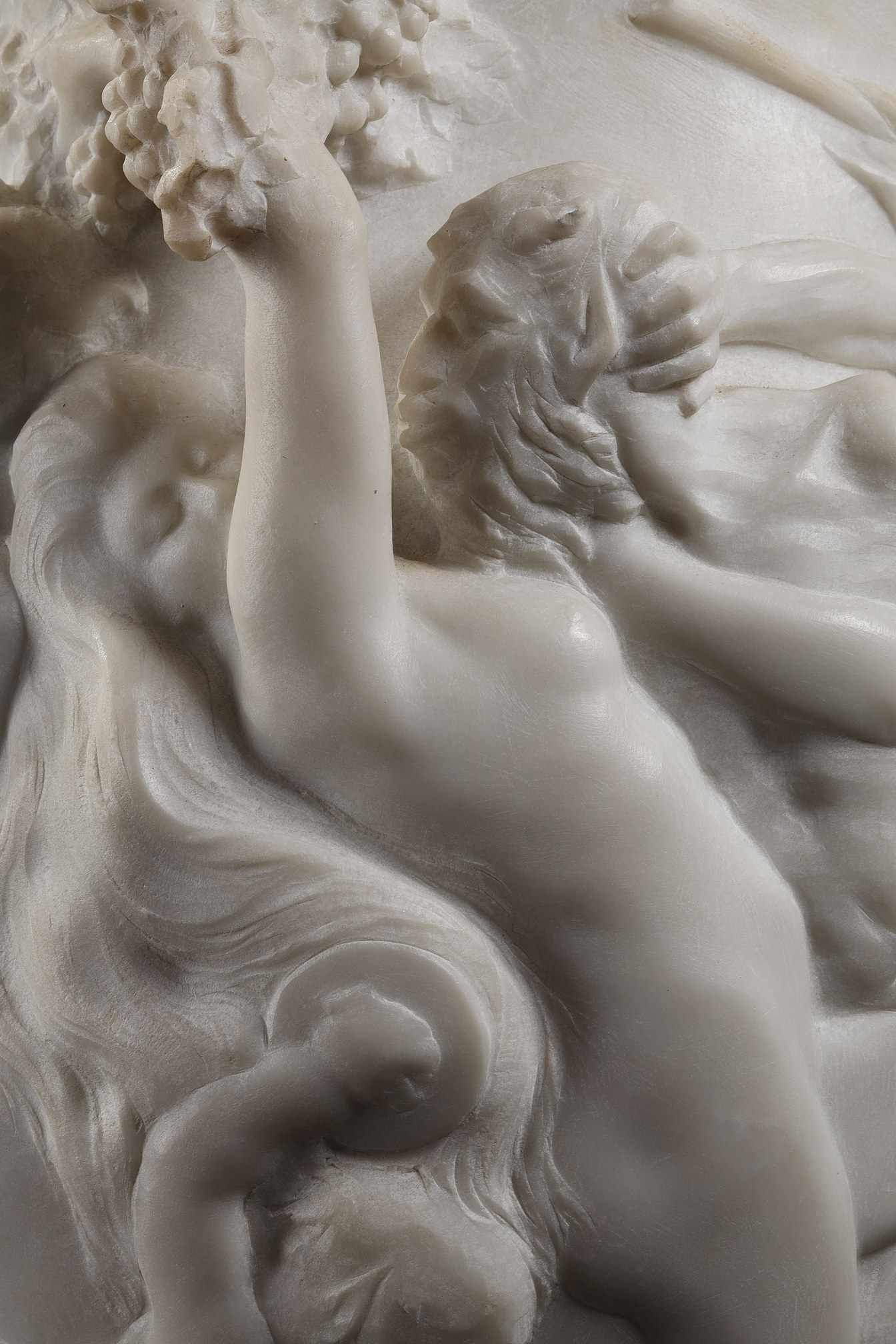
Godefroid Devreese’s Bacchanal Vase, standing 88 cm high, presents itself as a work in which form and ornament merge in a continuous movement. The boldly swelling body is entirely enveloped by a lively Dionysian procession: fauns with goat’s feet, bacchantes with flowing hair, playful children, a restless goat, and luxuriant vine branches form an uninterrupted frieze that unfolds in a spiral around the vase.
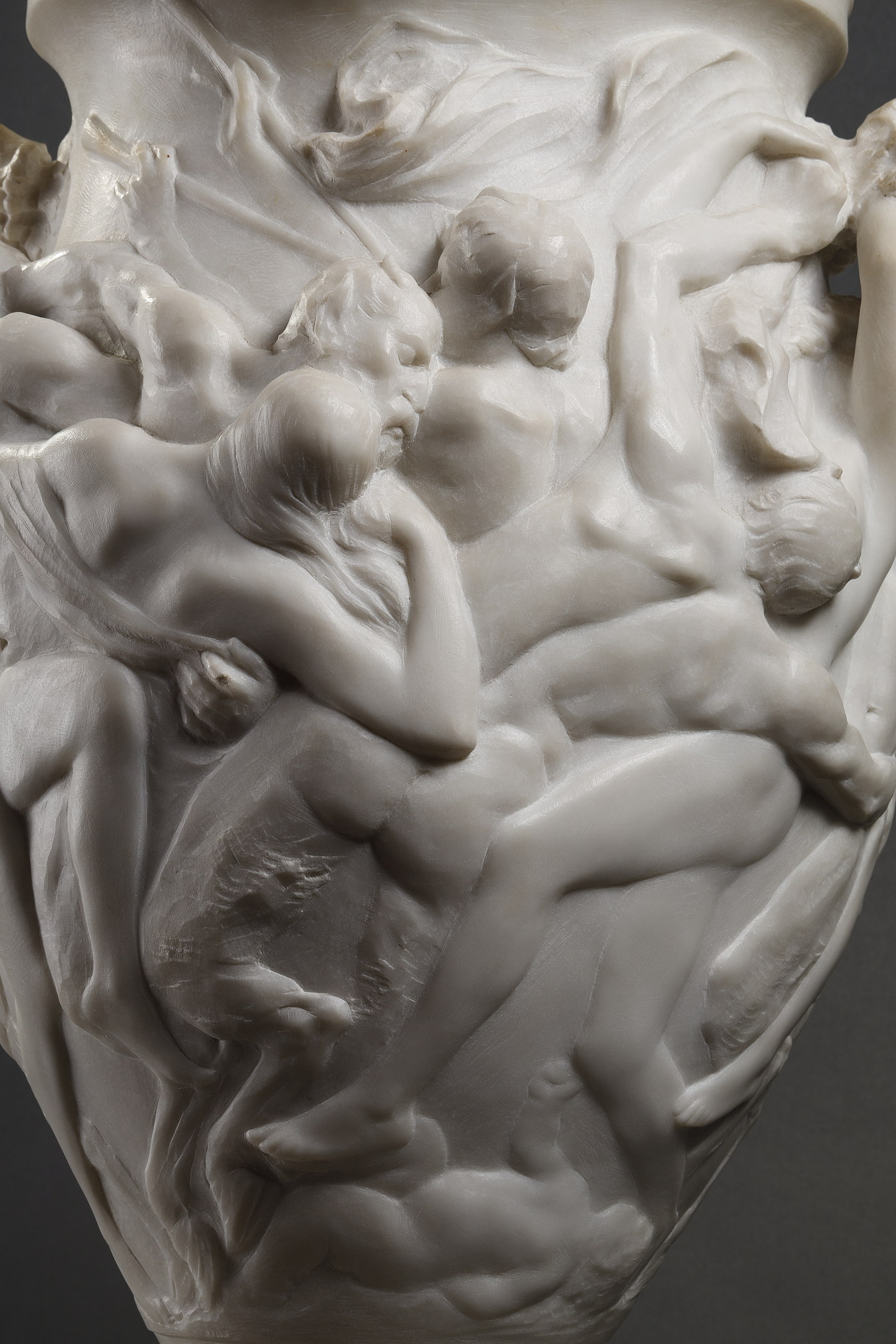
Bodies intertwine, pursue one another, lean, and embrace. One bacchante, thrown back in a gesture of abandon, arches her torso while a satyr bends toward her with restrained ardour. Elsewhere, a player of the syrinx accompanies the dance, and a young child clings to the goat’s horns, introducing a lively and archaic note. No break interrupts the scene; the eye is drawn into a continuous round in which tension and grace coexist.
Unlike ancient models in which figures stand clearly detached against a neutral ground, Devreese layers the planes and densifies the surface. Flowing draperies, garlands of vine leaves, and animated locks of hair fill the intervals, leaving almost no smooth surface. The relief, subtly modulated, favours a controlled undulation across which light glides over the marble, revealing the finesse of the modelling. This mastery of surface reflects the experience of the medallist: every transition is carefully considered, each hollow softened, every volume integrated into the whole.
The handles, far from serving merely as functional elements, fully participate in the composition. They arise organically from the decoration, formed by raised arms brandishing vine branches or by vegetal extensions that detach themselves from the frieze to join the neck of the vase. Their supple design prolongs the movement of the figures and accentuates the verticality of the whole, while maintaining a balance between the density of the relief and the purity of the silhouette. In this way they provide an elegant transition between the animated body and the upper rim, reinforcing the sculptural unity of the work.
The material itself plays an essential role. Marble unifies the scene, tempers the energy of the figures, and lends this Bacchic revelry a formal elegance that avoids any sense of brutality. The animal nature of the fauns is stylised, while the sensuality of the bacchantes remains noble and never excessive. The movement is rhythmic, almost choreographic, as though suspended in an eternal dance.
Through its formal coherence, the vase transcends mere decorative function. The frieze perfectly follows the curvature of the body, amplifying the sense of rotation and giving the whole a remarkable internal dynamism. The decoration is not applied to the form; it grows from it. At the intersection of the neoclassical tradition and the sensibility of the fin de siècle, the Bacchanal Vase stands as a refined synthesis of sculpture and decorative art, where technical virtuosity serves a deeply coherent vision of movement, rhythm, and material.
Literature
- ENGELEN, C., MARX, M. La Sculpture en Belgique à partir de 1830. Louvain : Engelen-Marx, 2006. Tome III, p.1222-1231.
- DULIÈRE, Cécile. Le vase Bacchanale de Godefroid Devreese dans le parc de Mariemont. Les Cahiers de Mariemont, vol. 24–25, 1993, p.148-173.
the ARTIST
Godefroid Devreese
Kortrijk, 1861 – Brussels, 1941
Born in Kortrijk in 1861, Godefroid Devreese studied at the Royal Academy of Fine Arts in Brussels under Eugène Simonis and Charles Van der Stappen. A leading Belgian sculptor and medallist, he was an innovator in the art of the medal.
similar works