AFFORTUNATO GORY · (act. 1895–1925)
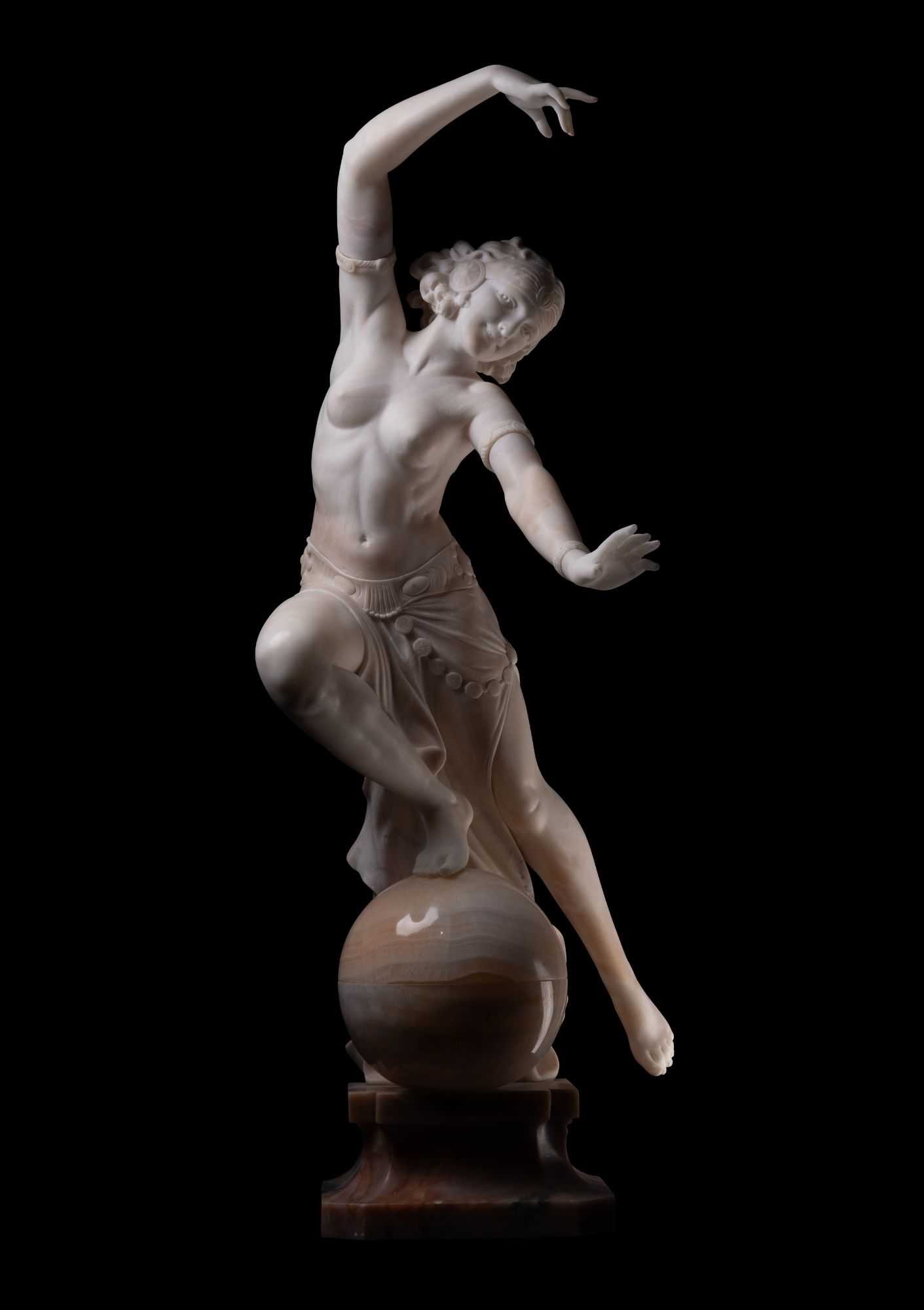
Oriental Dancer
technical sheet
| ARTIST | Affortunato Gory |
| DATE | ca. 1915–1920 |
| DIMENSIONS | 97 × 31 × 31 cm |
| MATERIAL | White Carrara marble and gilded bronze |
| SIGNED | “A. Gory” |
about the work
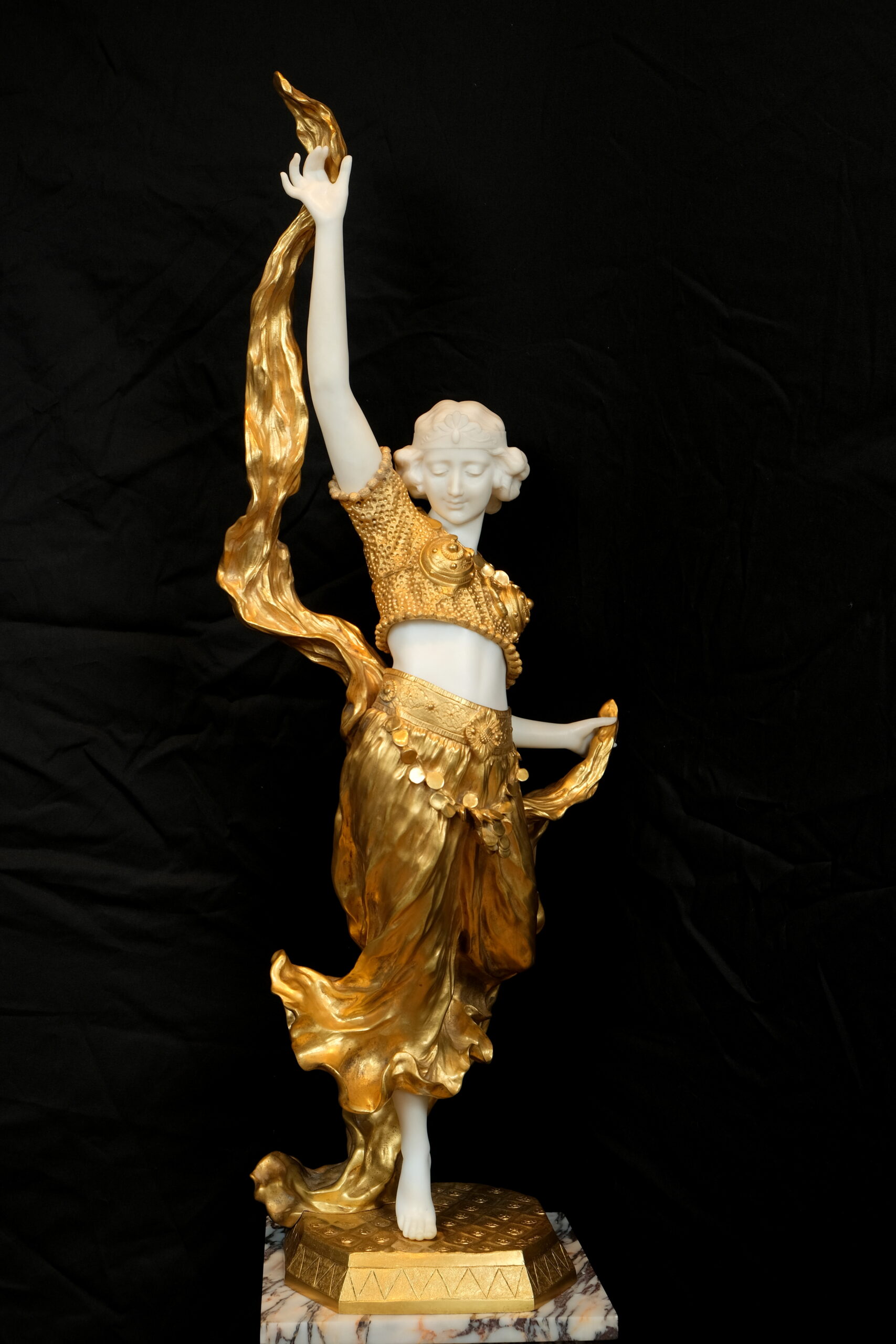
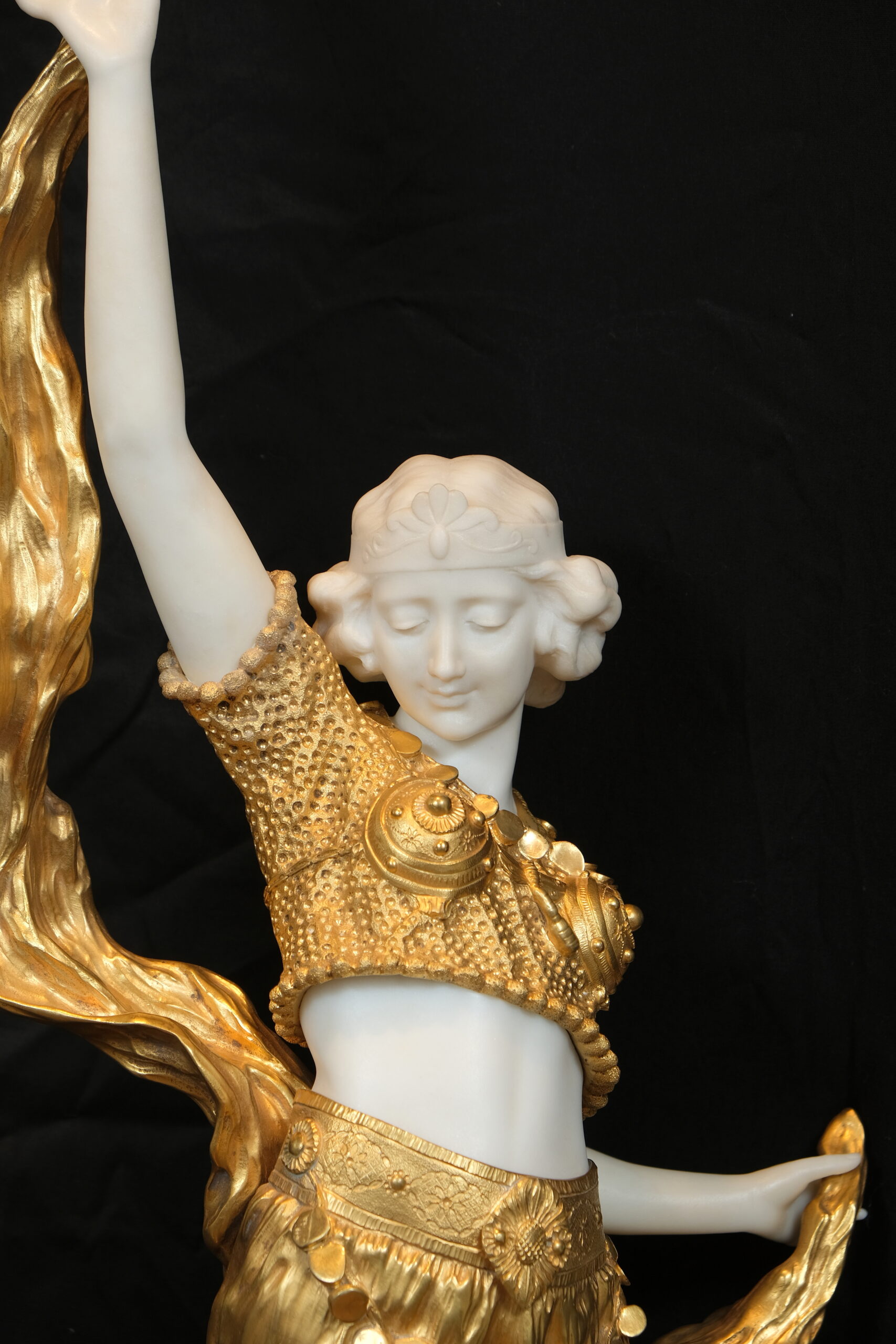
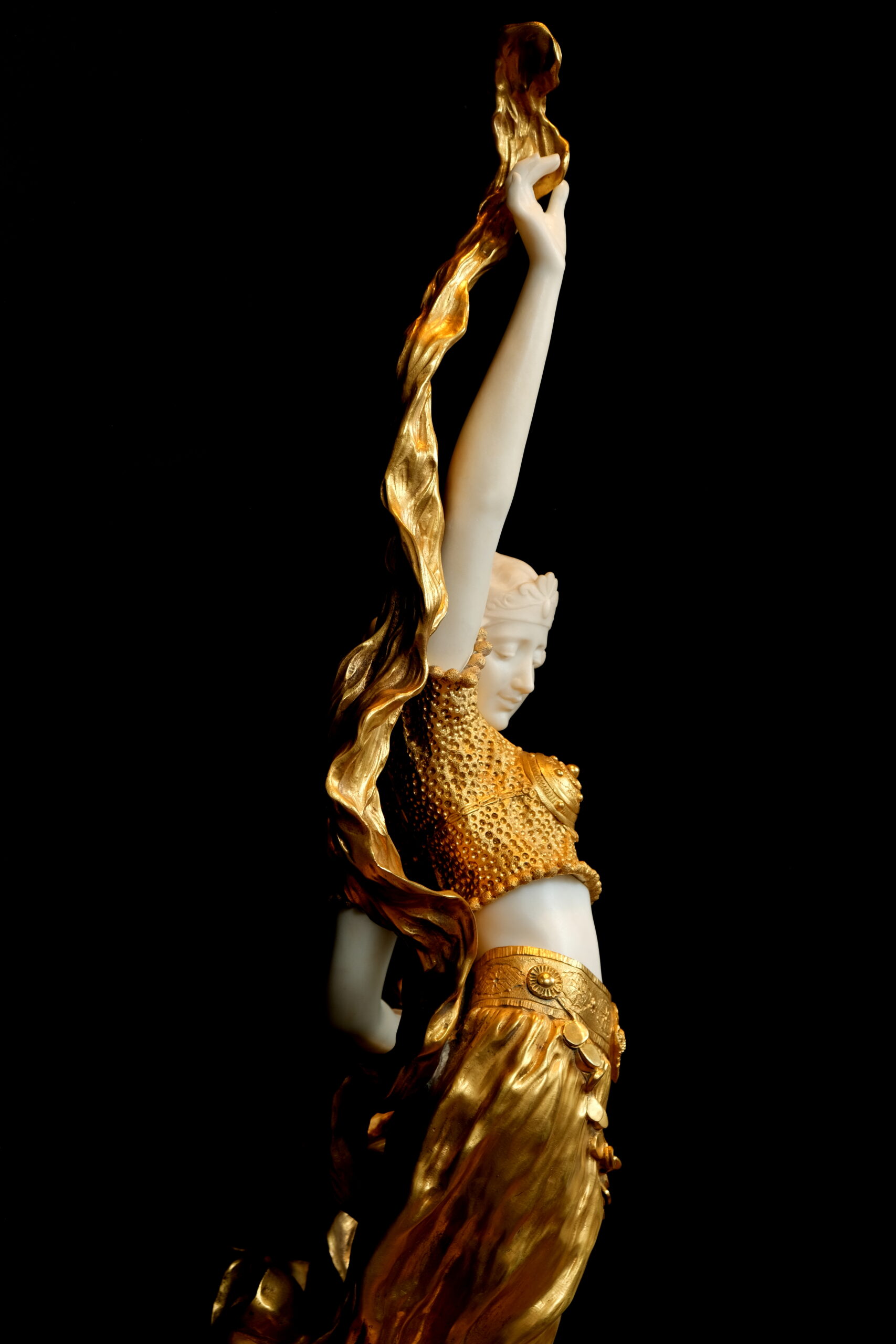
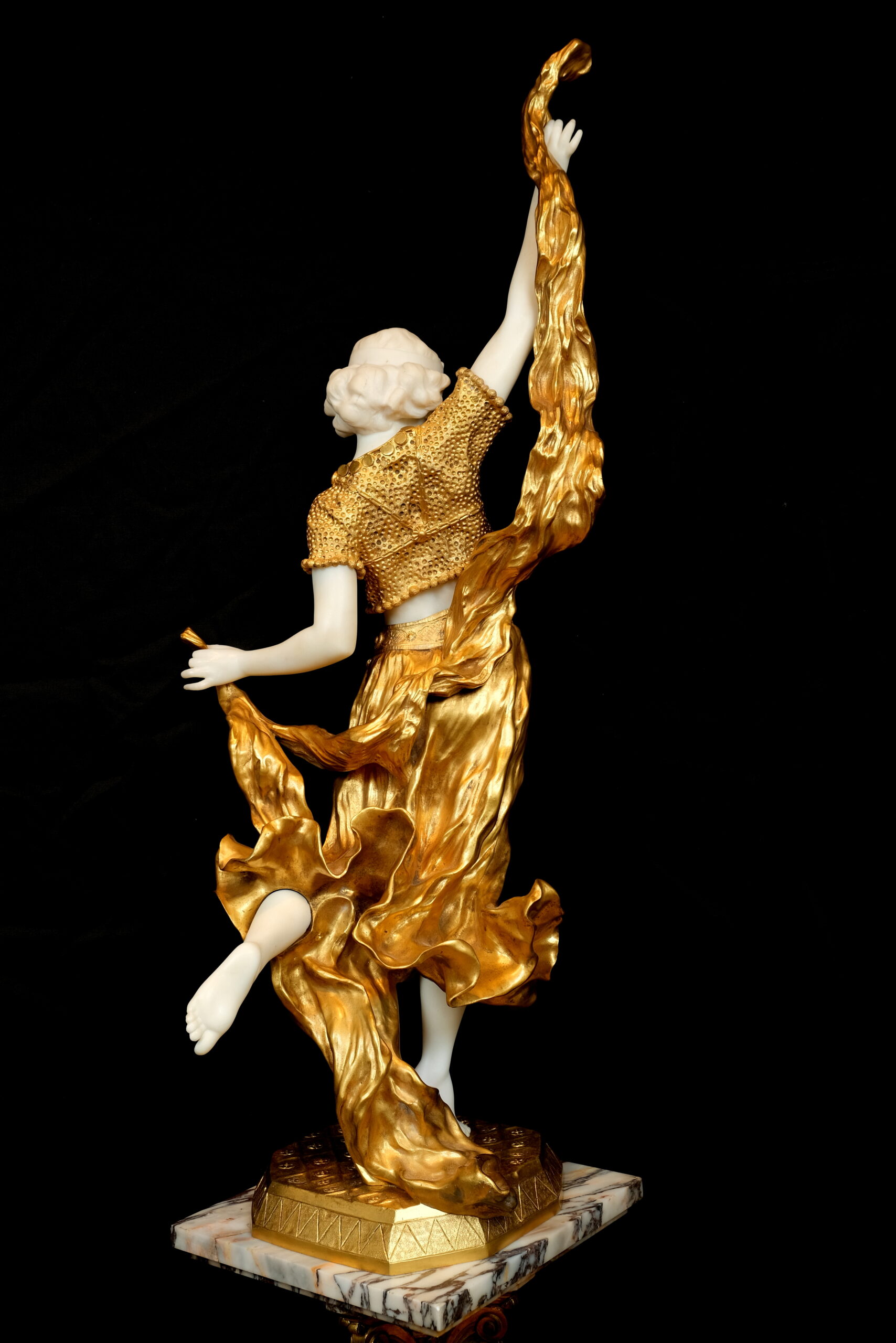
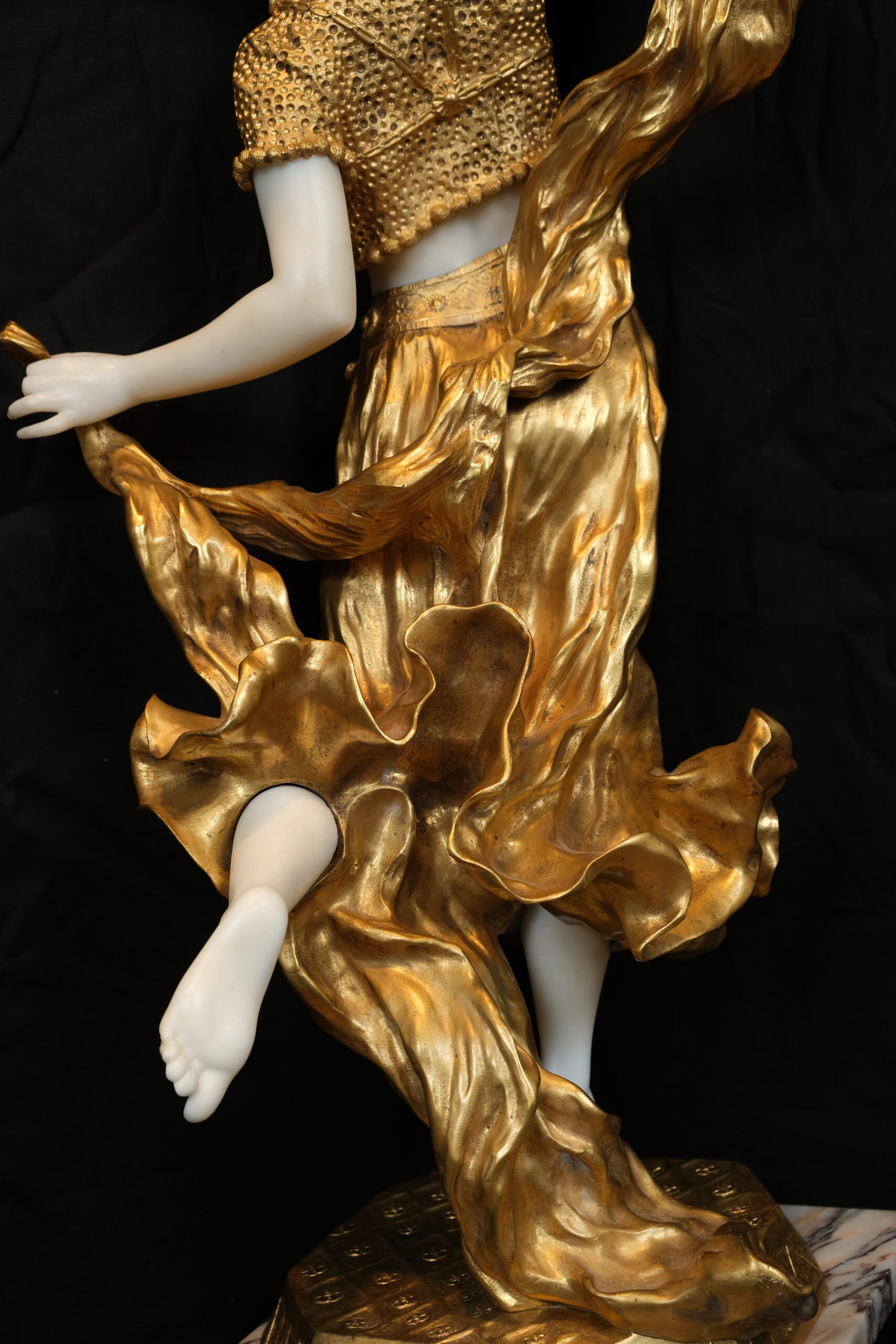
This sculpture by Affortunato Gory depicts an Oriental dancer adorned in a richly embellished costume decorated with jewels and intricate embroidery. A finely sculpted diadem crowns her head. Poised gracefully on tiptoe, her flowing skirt and billowing stole appear to move in harmony with the dance, conveying both elegance and vitality.
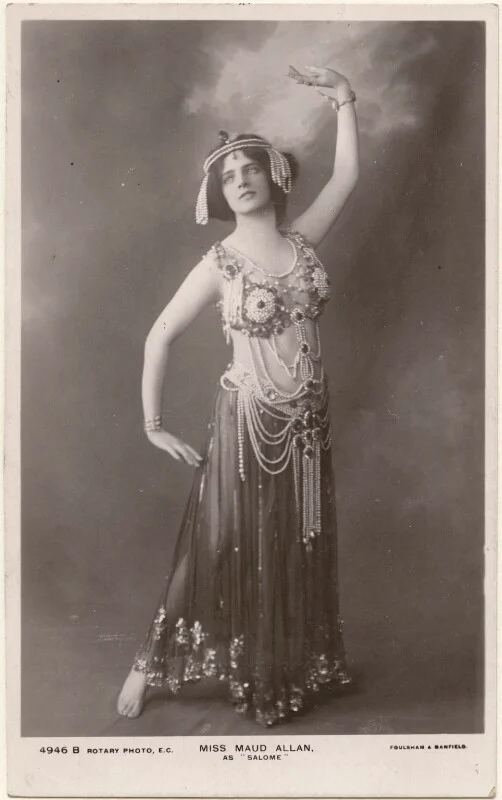
The Oriental dancer was an immensely popular subject in all forms of art during this period, and this work stands as a particularly captivating example by an artist at the height of his creative powers. Gory is believed to have drawn inspiration from Oscar Wilde’s Salomé, first staged in 1906. Maud Allan, the celebrated dancer who portrayed Salomé, designed a costume that bears striking similarities to the one represented in this sculpture. The figure rests on an octagonal bronze base and is signed “A. Gory”.
Affortunato Gory (also known as Gori) was an Italian sculptor active from 1895 until his death in 1925. A native of Florence, this highly talented artist studied at the Accademia di Belle Arti under the renowned sculptor Augusto Rivalta. Like many Italian artists of his generation, he settled in Paris at the beginning of the twentieth century in order to pursue his artistic career.
After changing his name from Fortunato Gory to Affortunato Gory, he began exhibiting at the Salon des Artistes Français around the turn of the century and continued to do so into the 1920s.
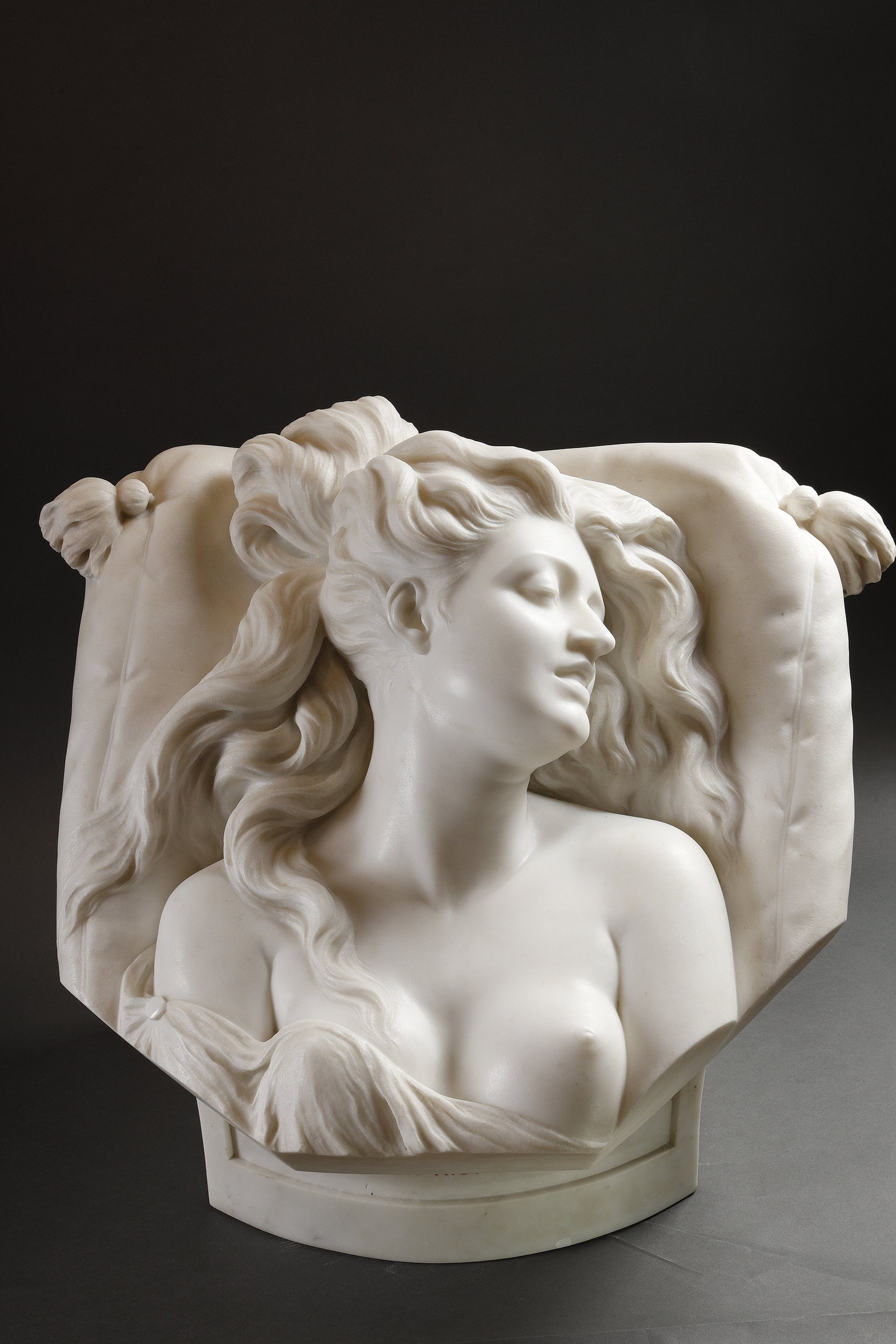
In 1904, he exhibited a bronze and marble bust of a woman entitled Iris. His graceful female figures, often imbued with Orientalist influences, combine bronze, either gilded or patinated, with materials such as marble, alabaster, and ivory. He continued exhibiting at the Salon until 1923.
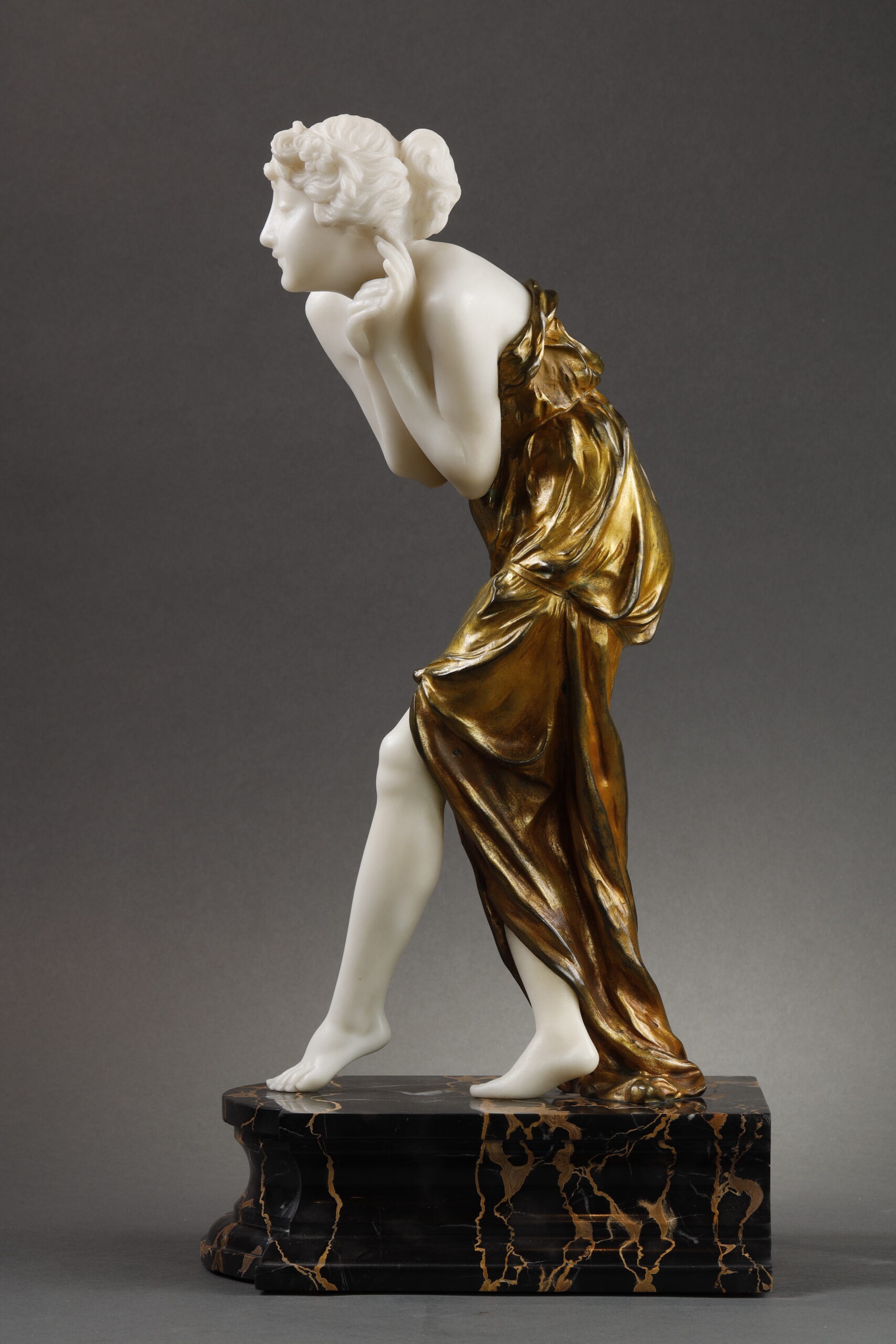
Some of his models, including Curious, were cast by the Parisian foundry Les Neveux de J. Lehmann, renowned for its bronze and ivory figures. The foundry also collaborated with Edmond Etling and other prominent artists such as Le Faguays, Gennarelli, Kéléty, and Pina.
Among his other notable works are The Arab Warrior (P. Kjellberg), the more classical Arab Dancer, Ritual Fire Dance (H. Berman), and Dancer with Balls (Bryan Catley).
Literature
- KJELLBERG, P. Bronzes of the 19th Century. Atglen: Schiffer Publishing, 1994, p. 364.
- PANZETTA, A. Nuovo Dizionario degli Scultori Italiani dell’Ottocento e del primo Novecento, 3rd ed. Italy: Umberto Allemandi & C., 2003, Vol. 1, pp. 441 and 488.
the ARTIST
Affortunato Gory
Italian-French, act. 1895 – 1925
Italian Belle Époque sculptor, master of refined marble. Affortunato Gory was a refined Italian sculptor active between 1895 and 1925. Born in Florence, he trained at the Accademia di Belle Arti under the renowned sculptor Augusto Rivalta. Gory quickly developed a distinctive style that married strong classical foundations with the elegant sensitivity of modern decorative art. Like many of his contemporaries, he moved to Paris at the turn of the 20th century to further his career and broaden his reputation.
similar works