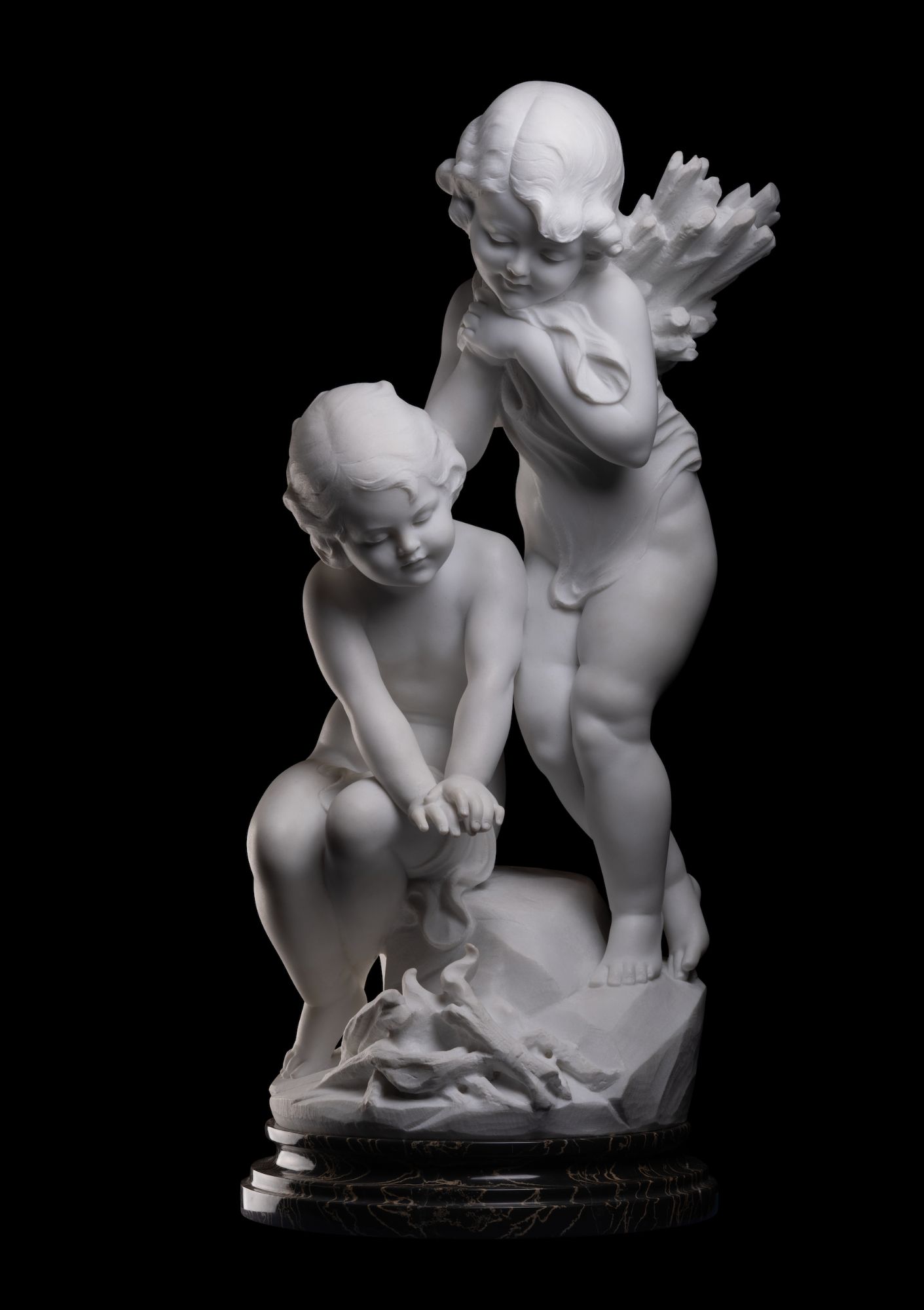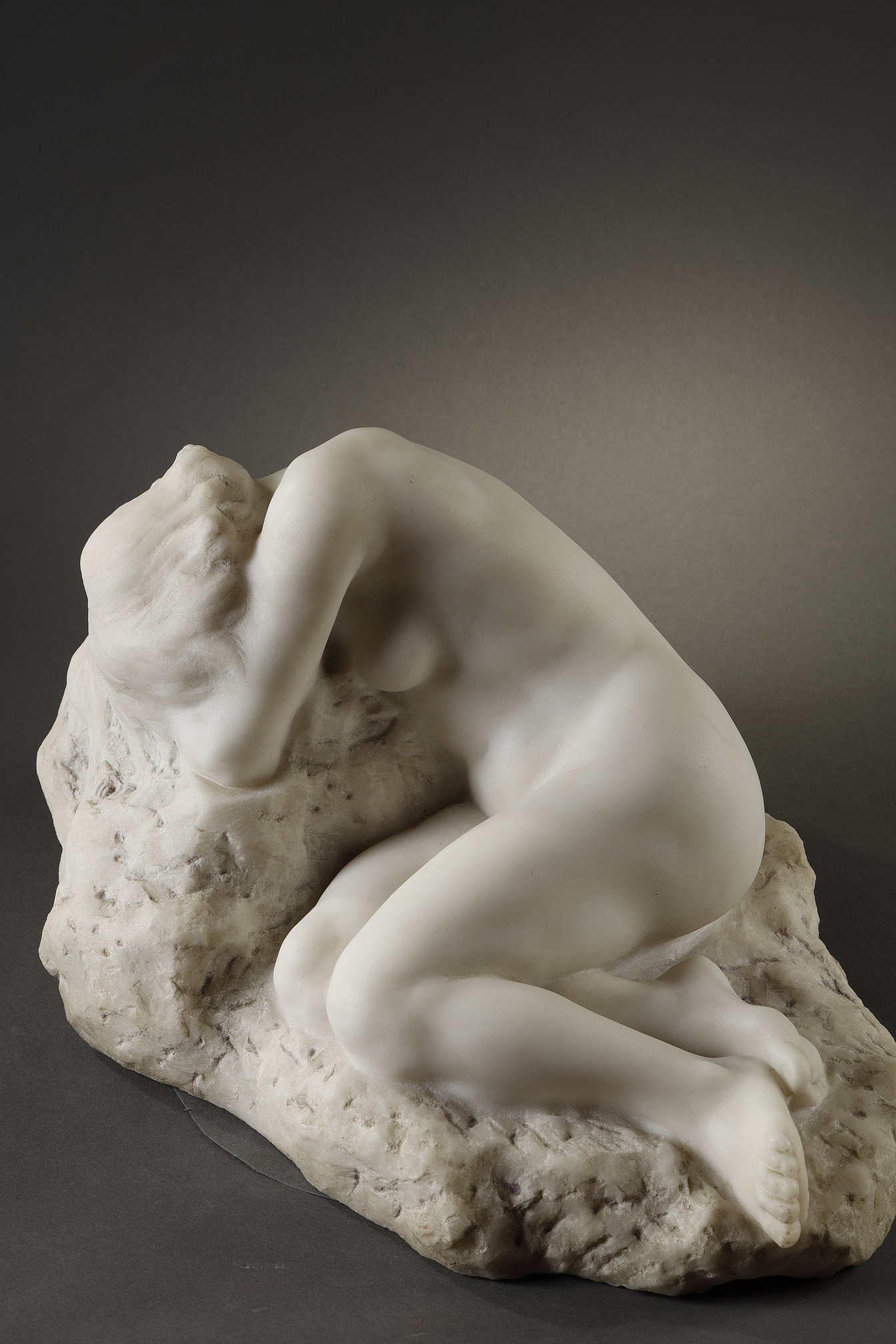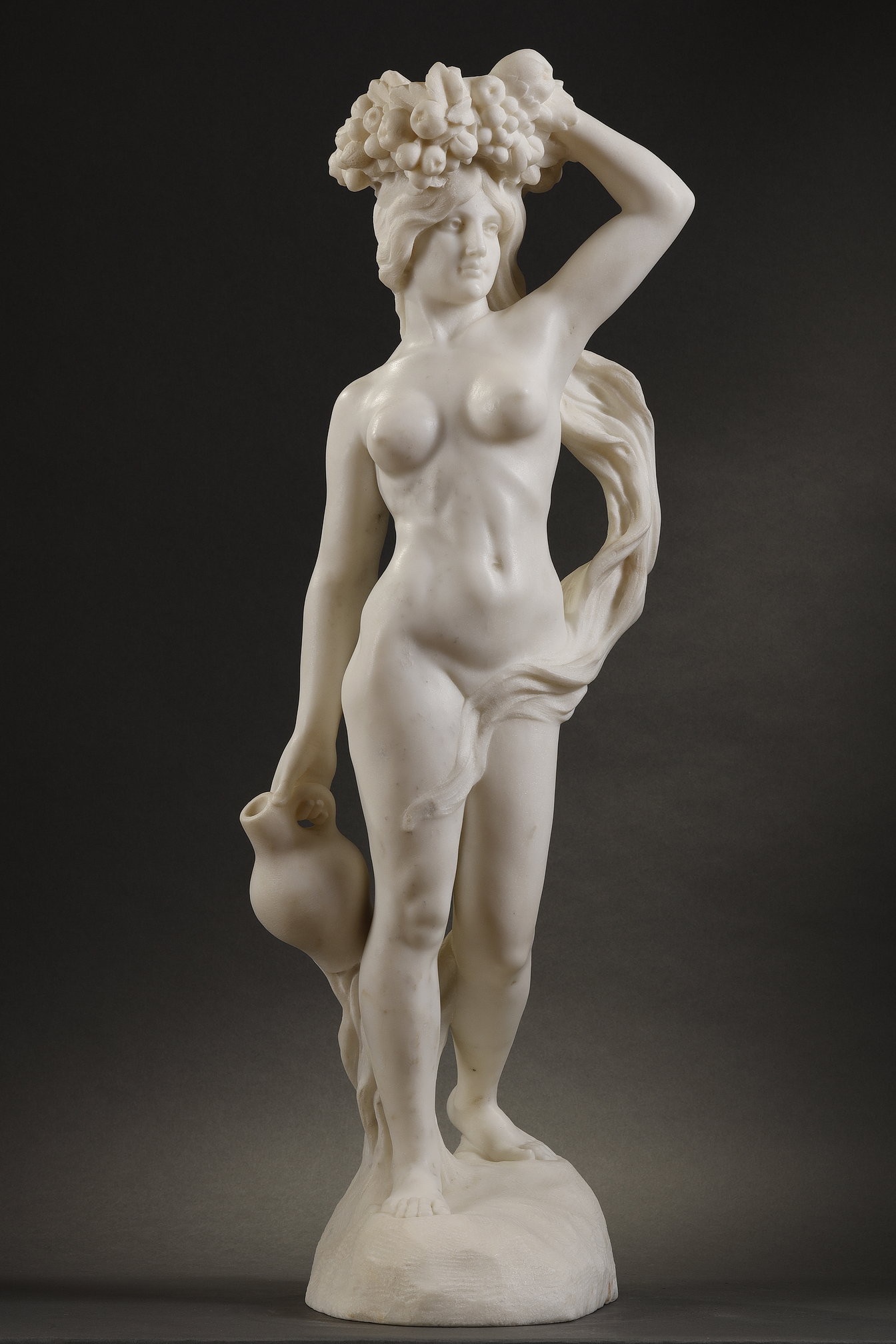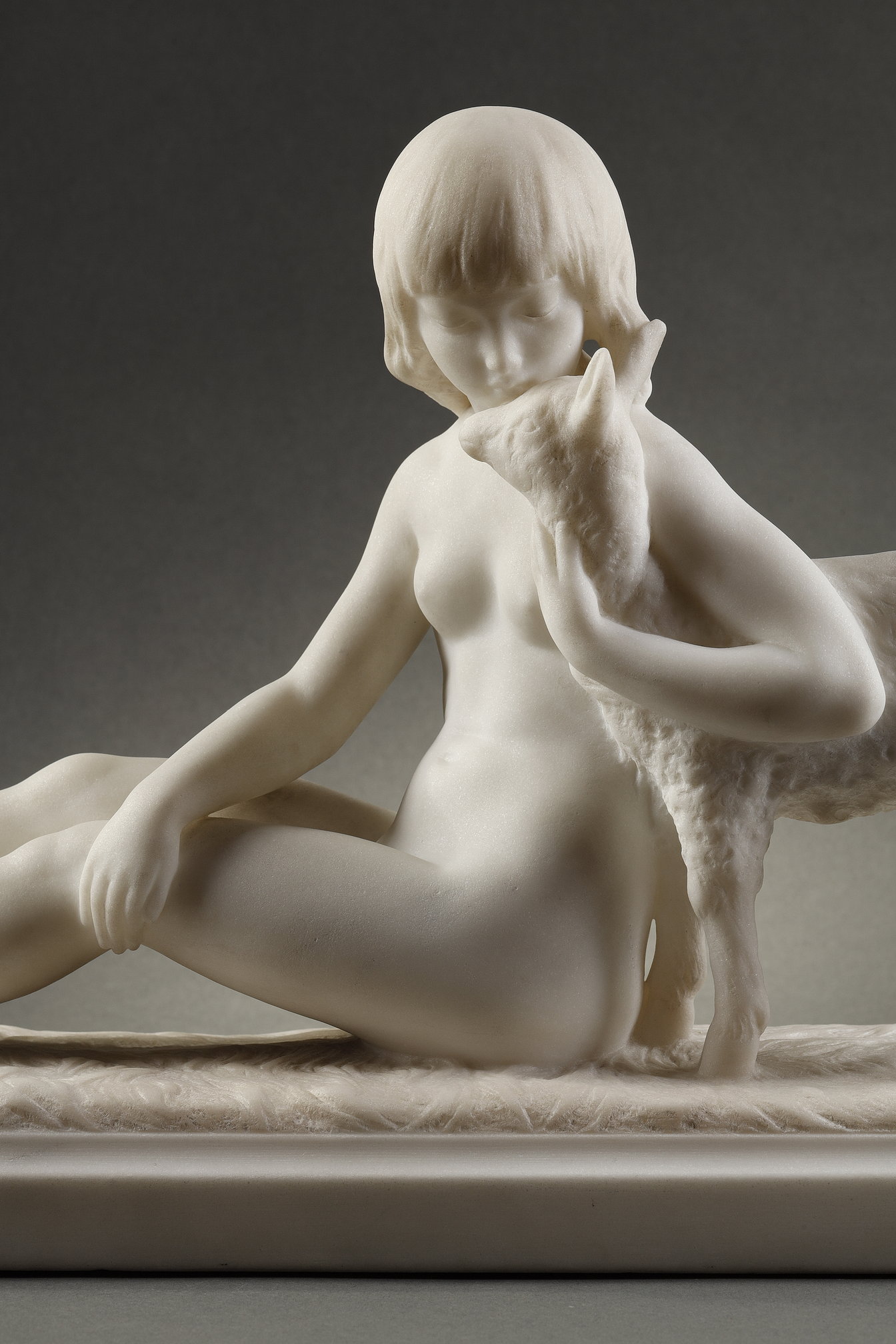
GIOVANNI SCANZI · (1840–1915)
Babbo Mi Ama!
technical sheet
| ARTIST | Giovanni Scanzi |
| DATE | 1884 |
| DIMENSIONS | 187 cm (total Height) |
| MATERIAL | White Carrara marble |
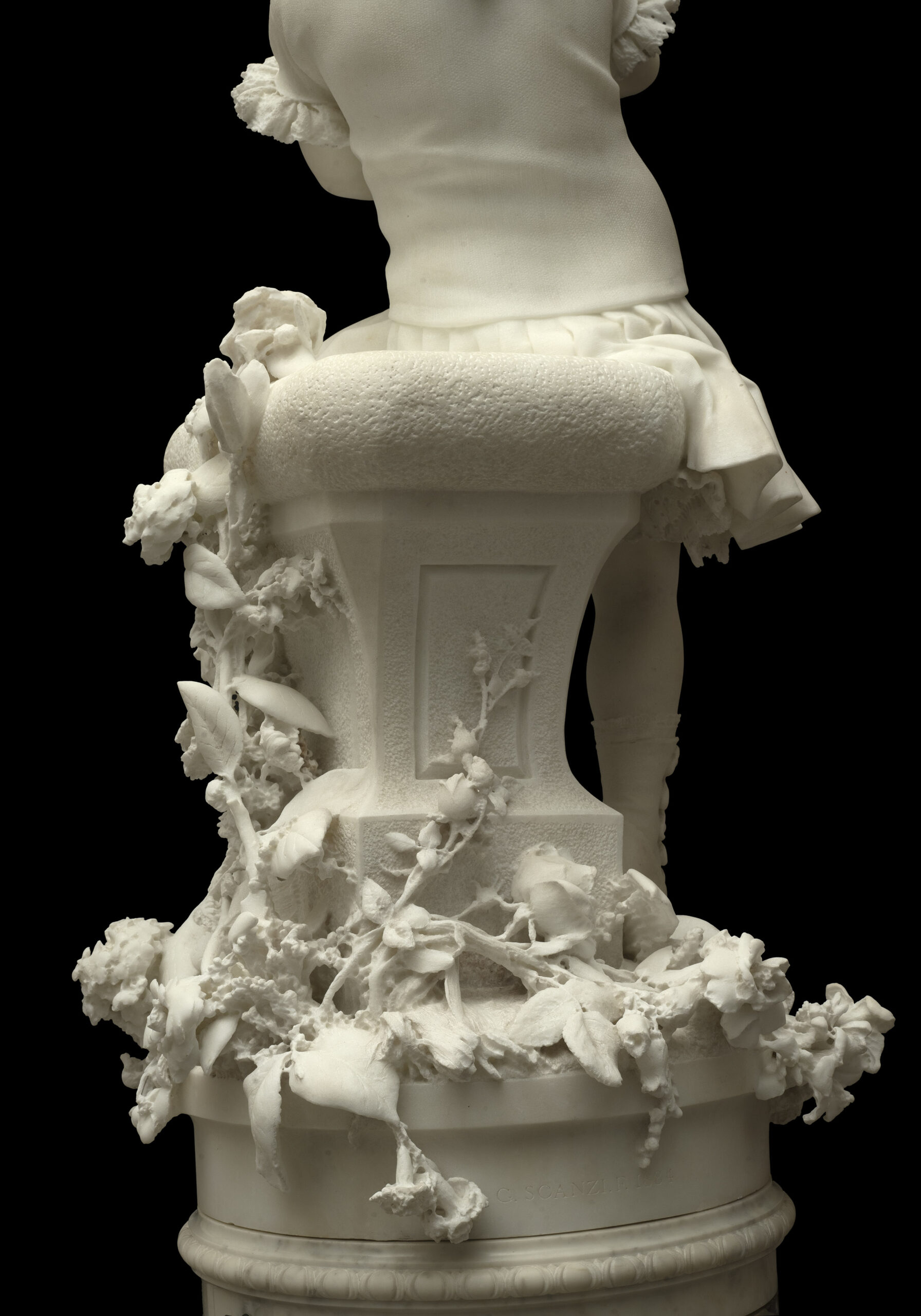
| SIGNED | « G. SCANZI. F. 1884 » |
| TITLED | « BABBO MI AMA! BABBO MI AMA! » |
| PROVENANCE | Private collection, France |
about the work
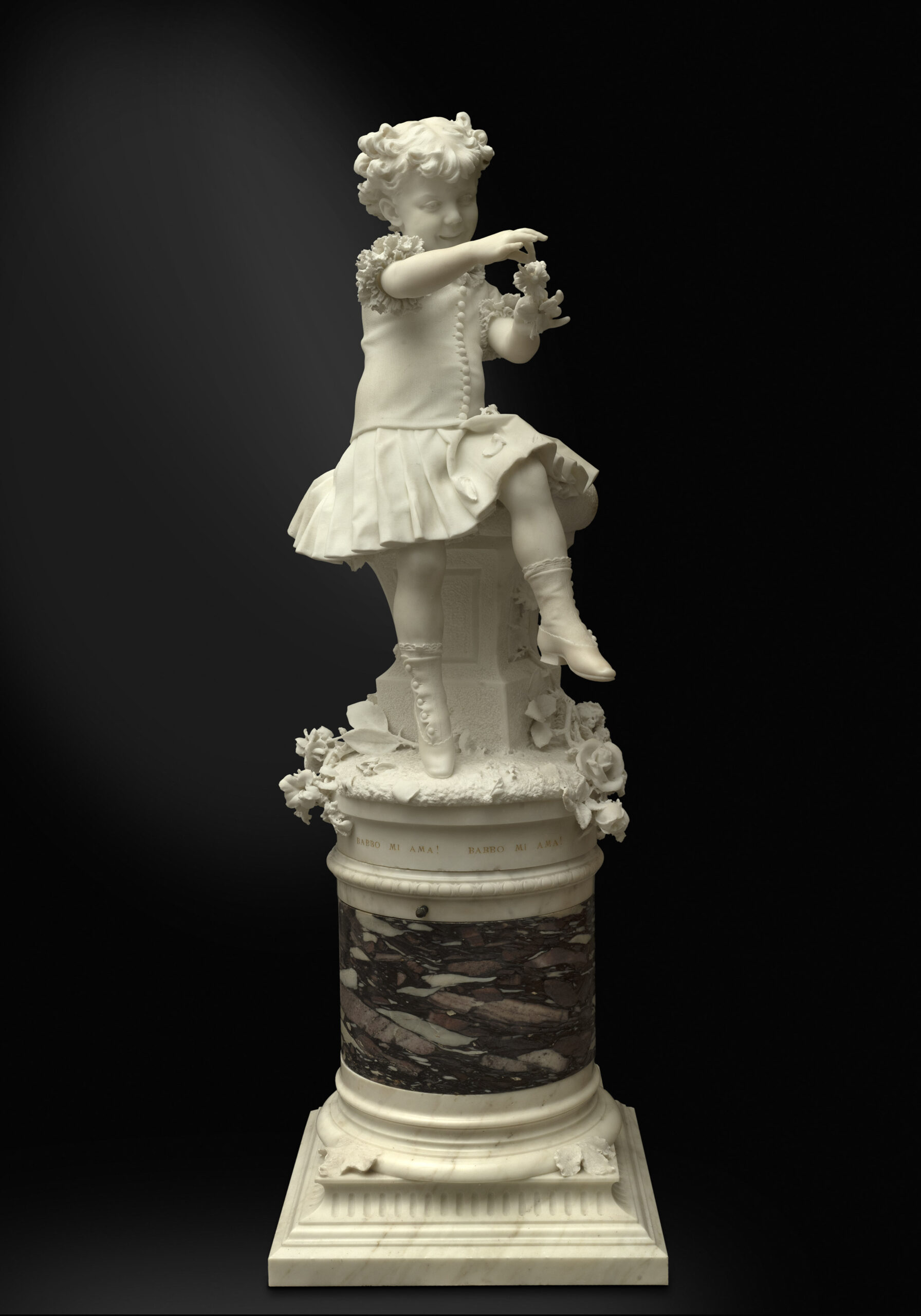
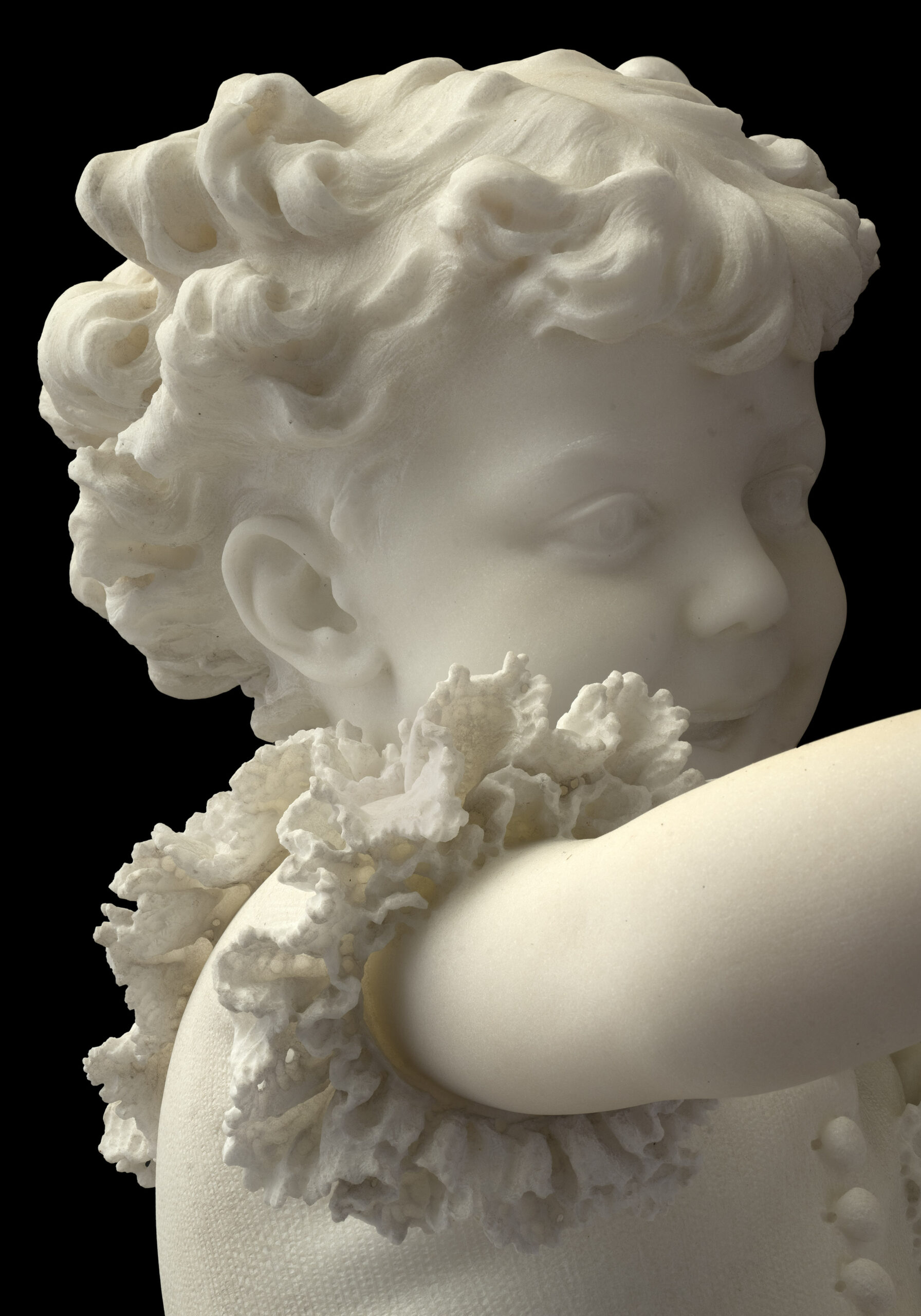
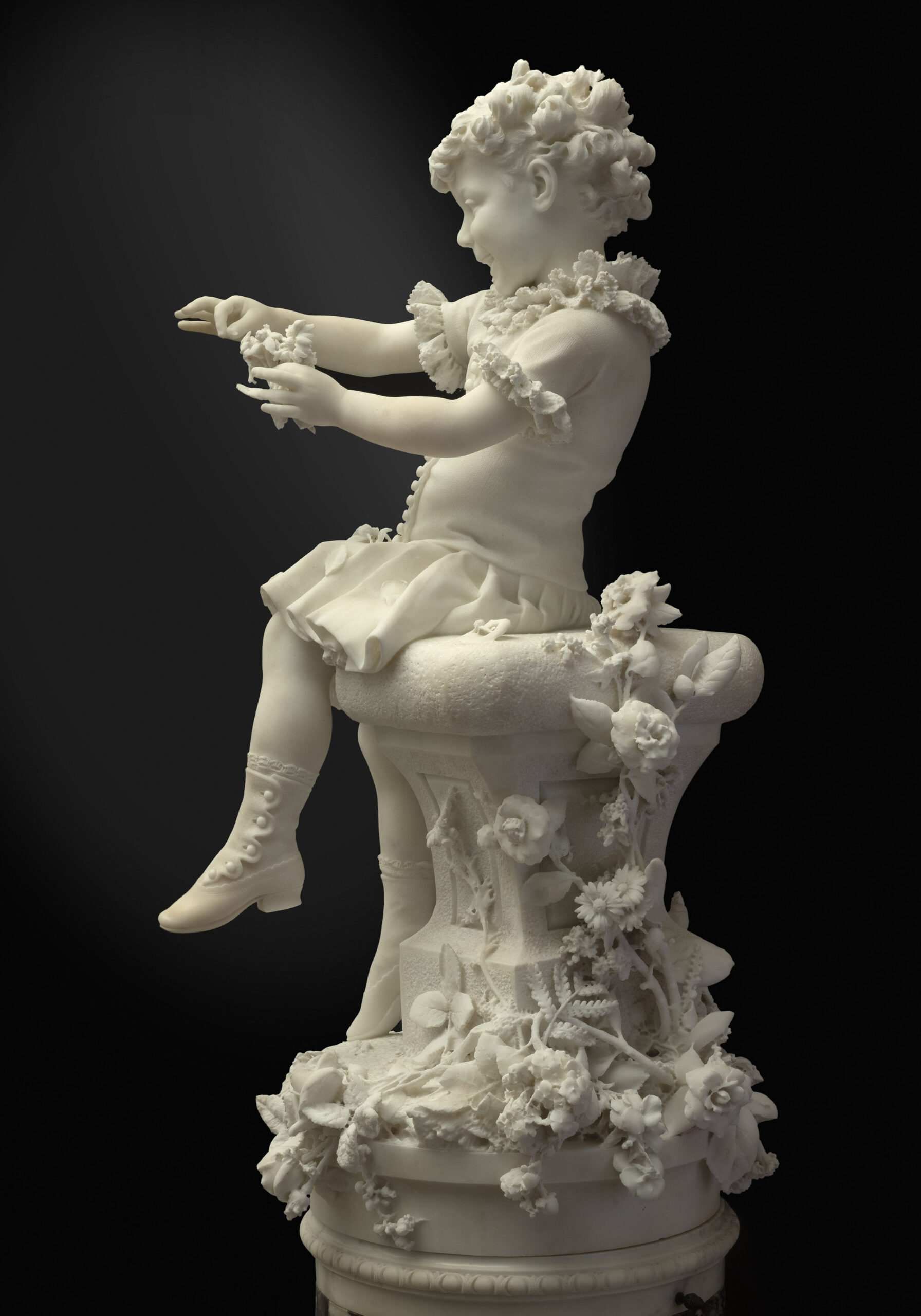
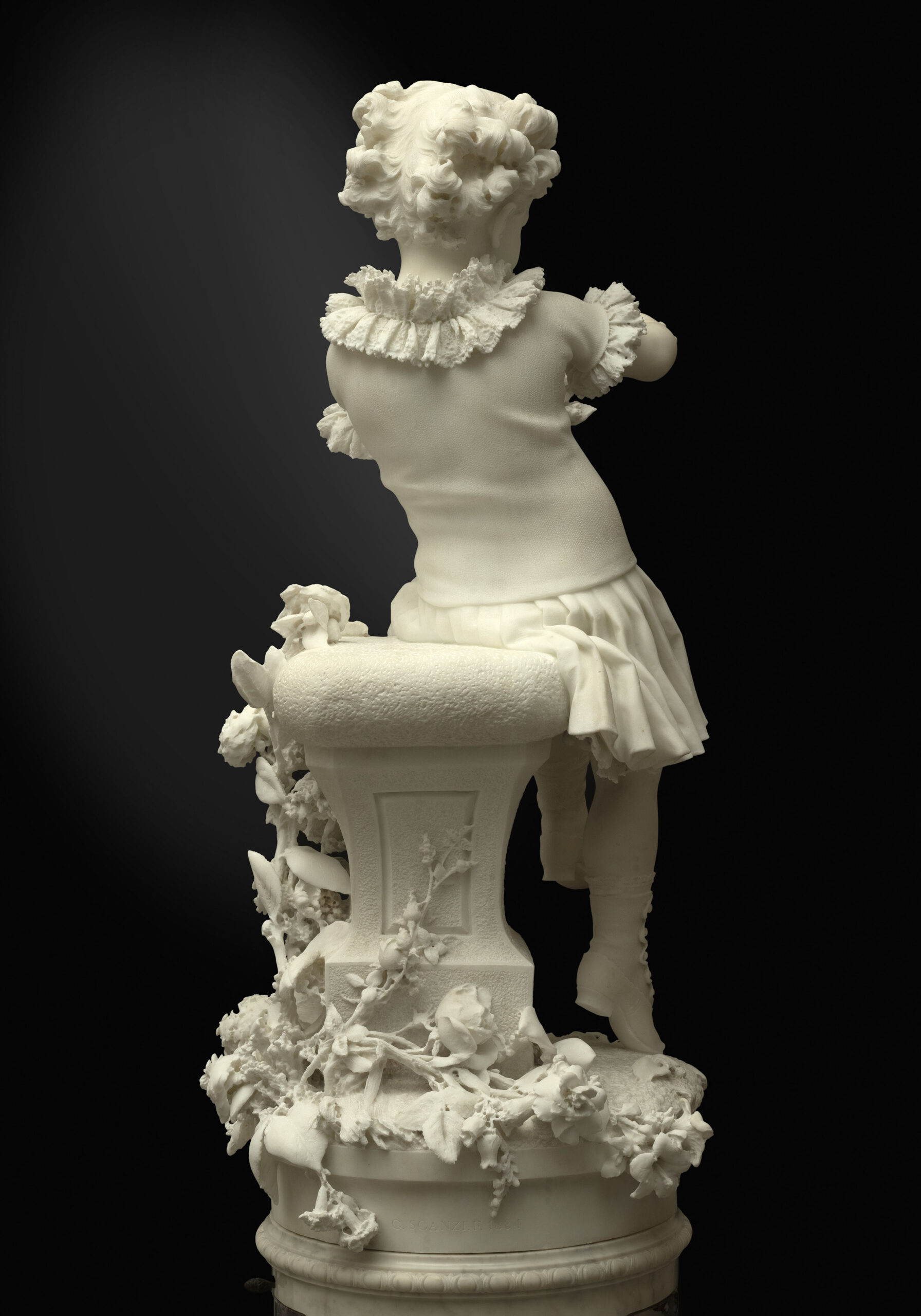
In Babbo mi ama! (Daddy Loves Me!), Giovanni Scanzi displays exceptional technical mastery in the service of a childhood scene imbued with tenderness and intimacy. Executed in white Carrara marble in 1884, the sculpture depicts a young girl seated, absorbed in playing with a flower, in a posture that is both focused and spontaneously joyful.
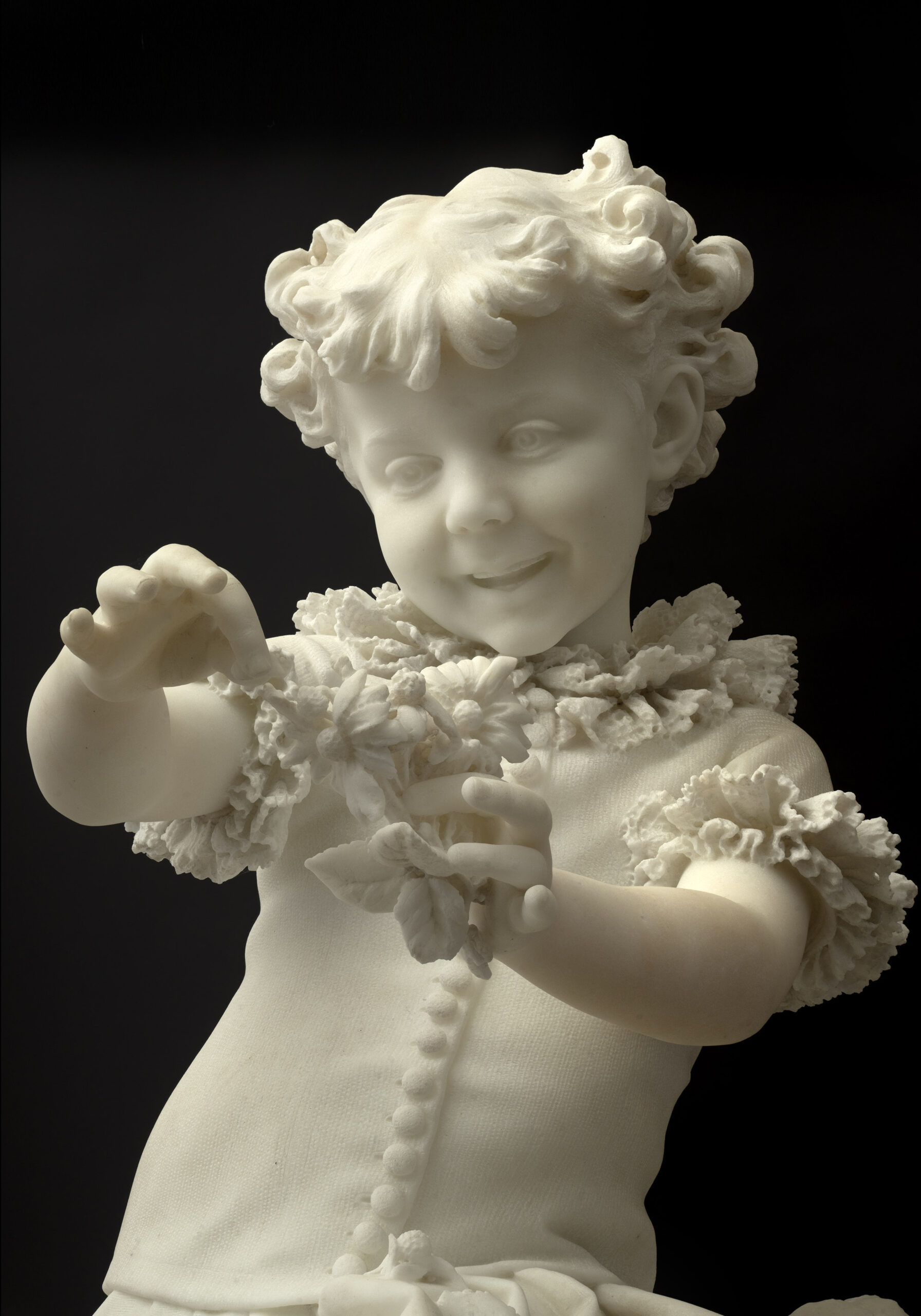
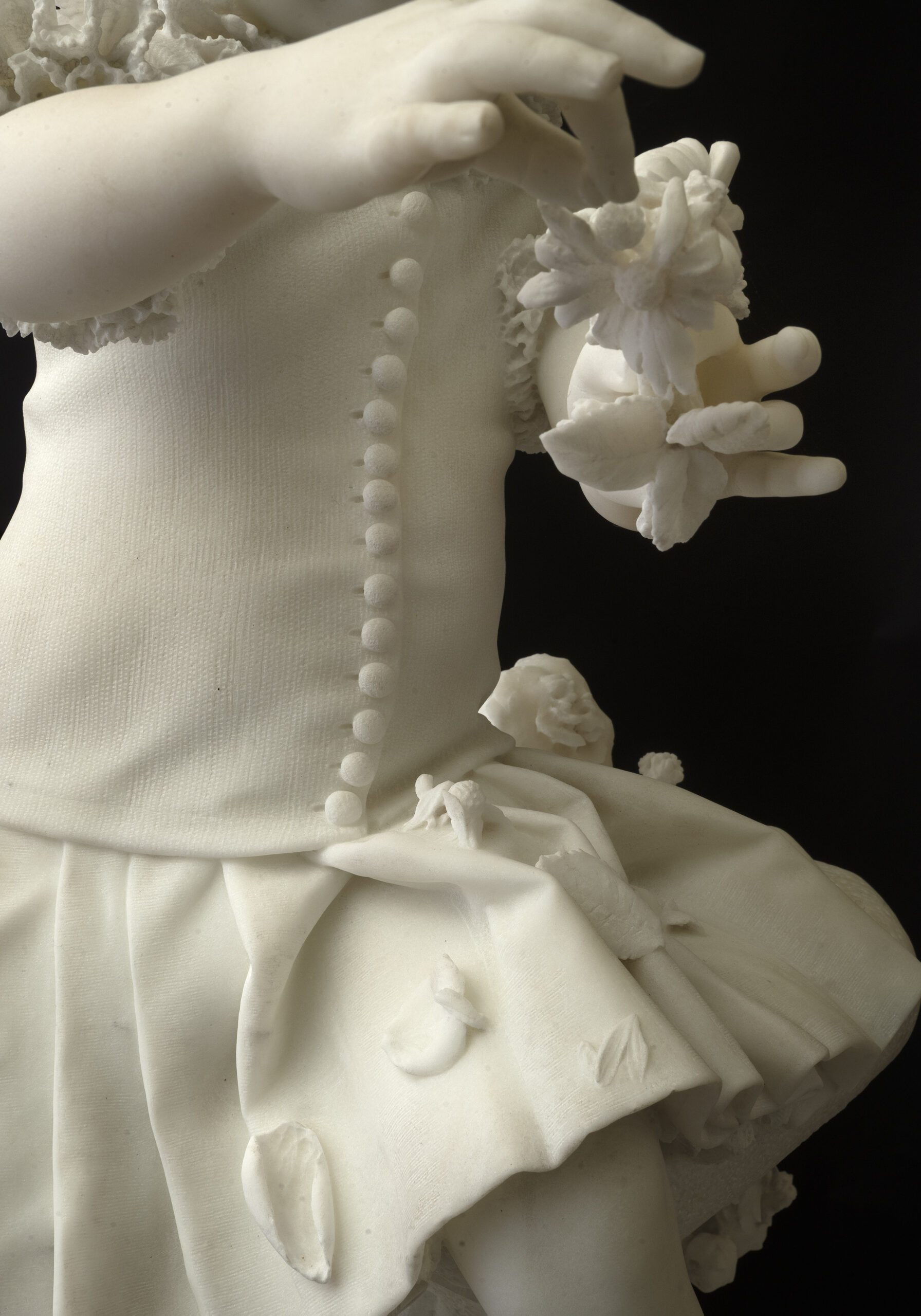
The inscription engraved on the base, Babbo mi ama! (“Daddy loves me!”), guides the interpretation toward a scene of filial affection. The child’s delicate gesture, holding a flower and seemingly plucking its petals, evokes the well-known game of “He loves me, he loves me not.” The sculpture appears to capture the very moment in which the child reaches the long-hoped-for conclusion. This instant of affectionate carefreeness, rendered with near-photographic realism, bears witness to Scanzi’s interest in capturing human emotion in its simplest expressions.
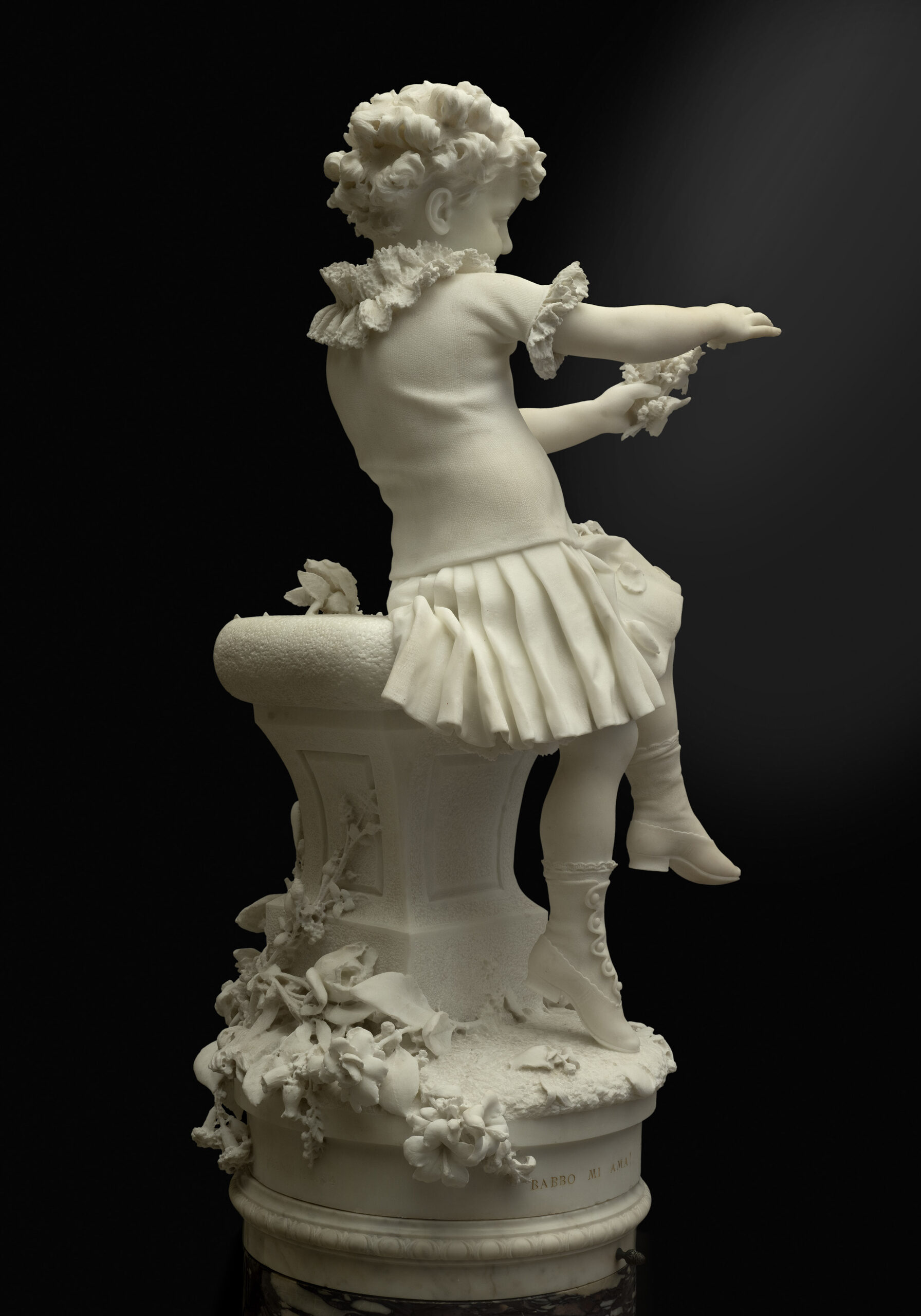
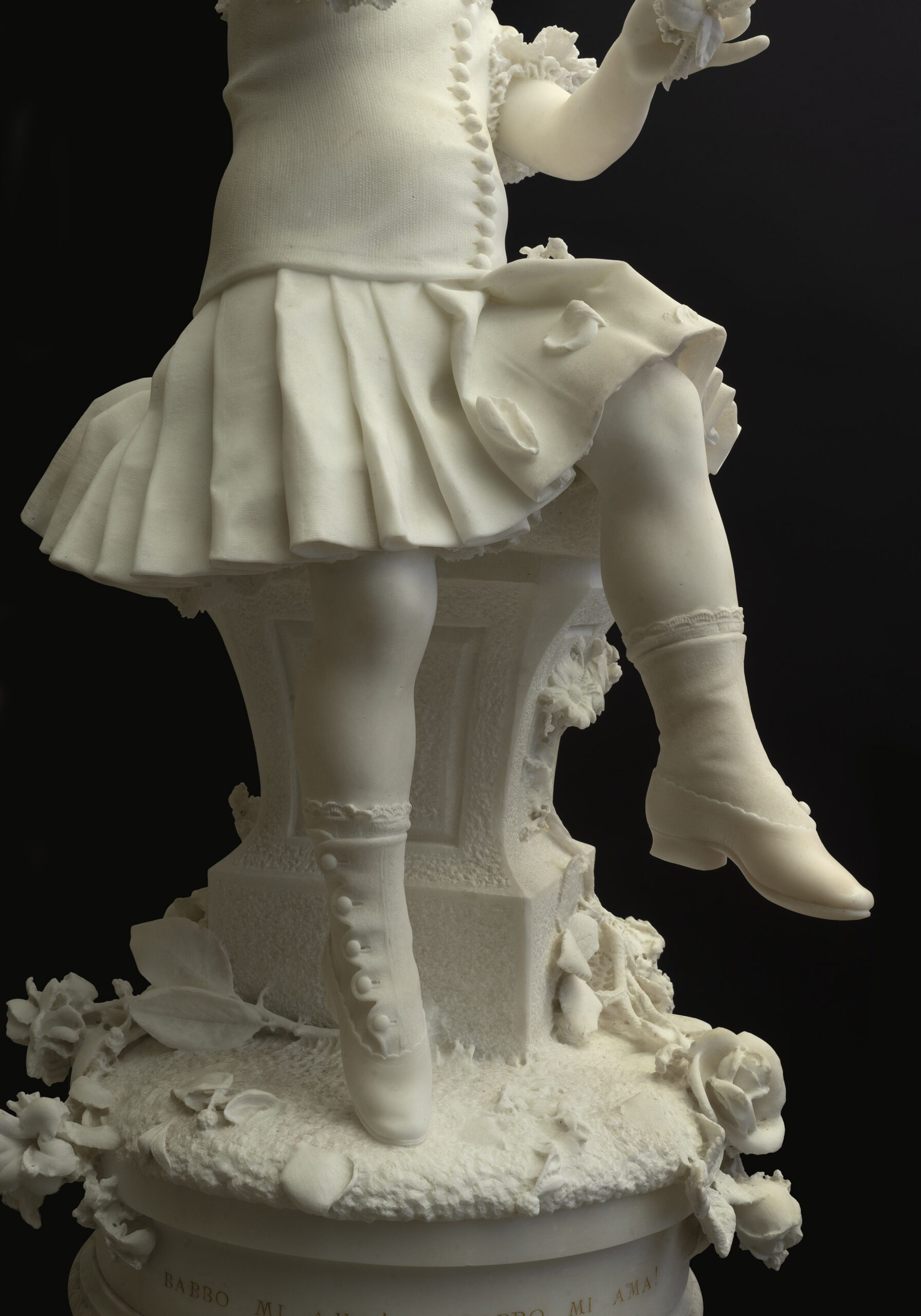
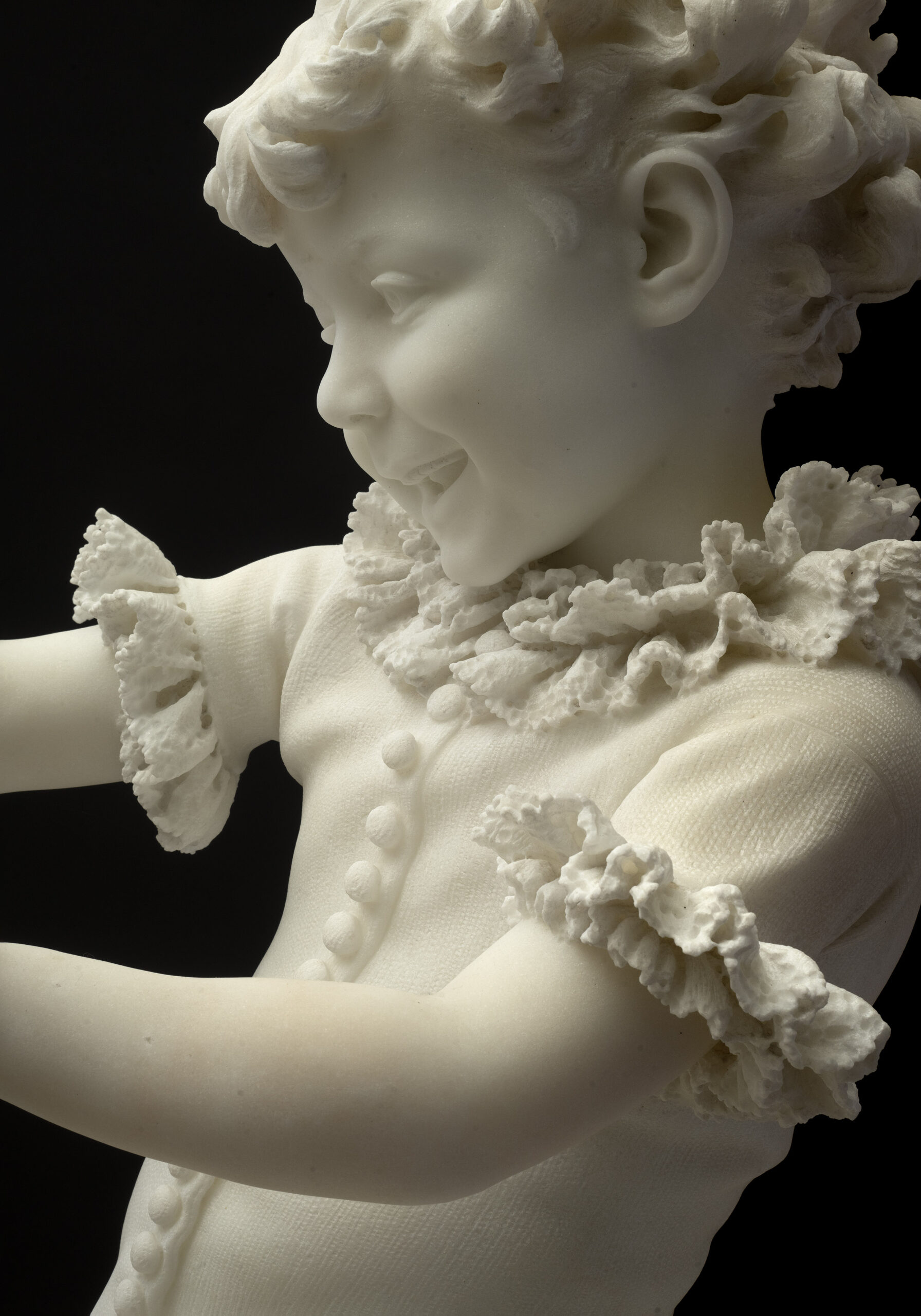
But it is in the treatment of the material that this work reaches a rare level of excellence. Marble, cold and rigid by nature, is here animated with an almost tactile sensitivity. The girl’s fitted vest, likely made of knitted or fine woolen fabric, is sculpted with extreme precision: one can distinguish the knitting threads, the stitching, and the beaded edges of the garment. The skirt, for its part, displays a succession of soft, ample folds, each ridge subtly softened to evoke a light fabric naturally falling over the child’s legs.
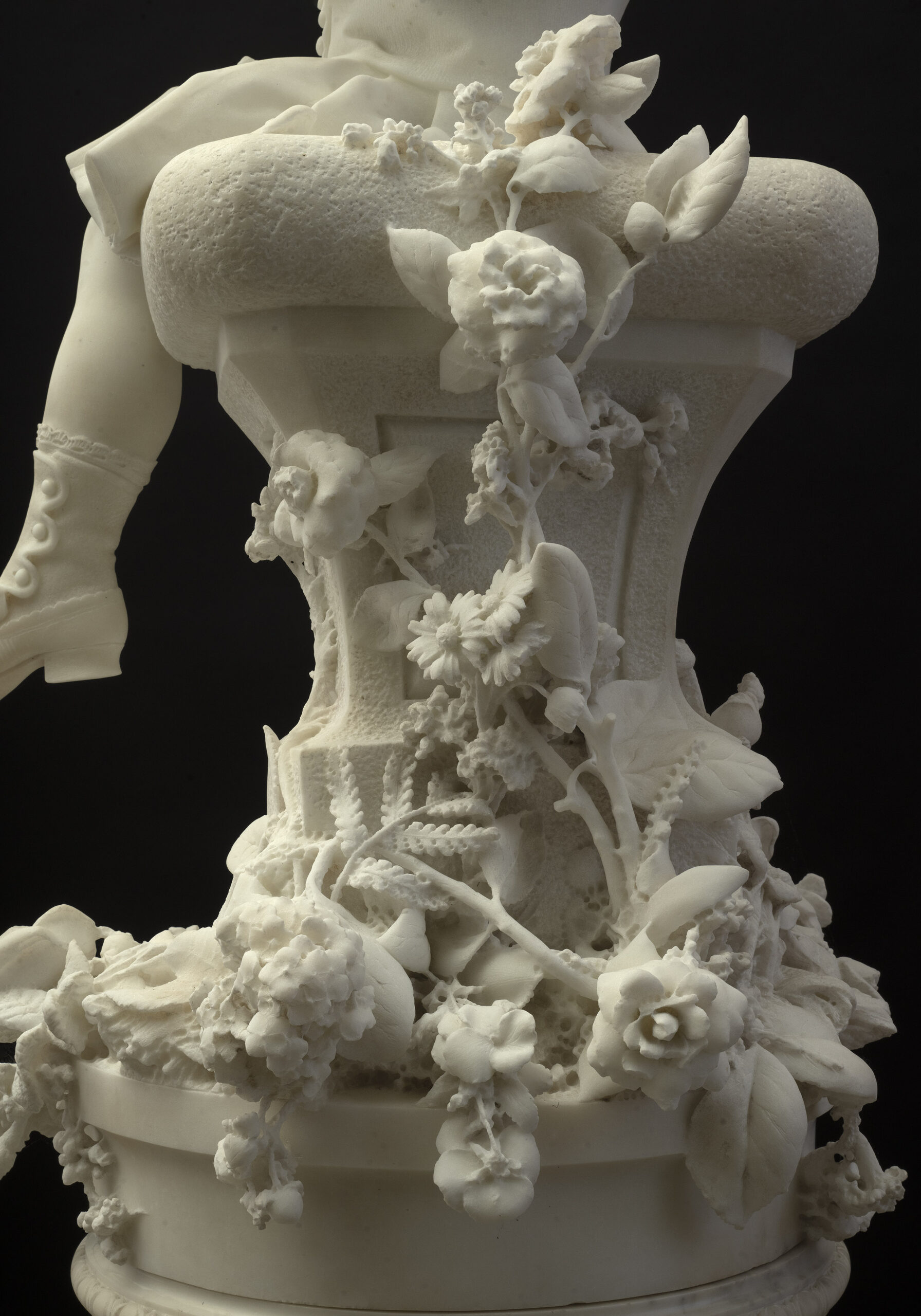
The ruffled collar of the dress, the tiny raised buttons, and the puffed sleeves are rendered with meticulous realism. The marble perfectly imitates contrasting textures: soft skin, the weave of the garment, the supple stems of the flowers. These, arranged abundantly around the seat, feature petals of extreme delicacy, sometimes almost detached from the mass of the block, creating a vibrant interplay of light and shadow.
The base itself, in polychrome marble, serves not merely as a support but as an integrated decorative element, consistent with a logic of domestic or intimate staging. The whole evokes a small, enclosed, precious world, almost theatrical, where everything is oriented toward the expression of a sincere familial sentiment.
Another version of this work, titled Come son contenta (How Happy I Am), is held at the Galleria d’Arte Moderna in Genoa (GAM Nervi), donated in 1936 by Maria Rambaldi Anselmi, presumed grandmother of the child depicted.
Giovanni Scanzi, known for his numerous funerary monuments and sculpted portraits in Genoa, here delivers a work of full artistic maturity. Babbo mi ama! alone encapsulates his ability to reconcile academic rigor, virtuosity in marble work, and a poetics of the intimate, in a piece that is both deeply moving and technically masterful.
Literature
- PANZETTA, Antonio. Nuovo Dizionario degli Scultori Italiani dell’Ottocento e del primo Novecento. Turin : Adarte, 2003.
- « La morte dello scultore Scanzi. » La Tribuna, 1915, n° 113. Consulted on Internet Archive.
- ALZERI, Federigo. Notizie dei professori del disegno in Liguria dalla fondazione dell’Accademia. Vol. III. Genoa : Tipografia di Luigi Sambolino, 1869.
- « Giovanni Scanzi. » L’Illustrazione Italiana, 1898, n° 25, p. 426–427. Consulted on Internet Archive.
- OLCESE SPINGARDI, Caterina. « Santo Varni e il mercato artistico a Genova nel XIX secolo. » La Berio : rivista semestrale di storia locale e di informazioni bibliografiche, vol. XXXV, n° 1 (janvier–juin 1995).
the ARTIST
Giovanni Scanzi
Genoa, 1840 – Genoa, 1915
Tutelary figure of Genoese sculpture, master of marble between academicism and tenderness of gaze, whose work rests in the cemetery he himself sculpted. Giovanni Scanzi was born in Genoa on 23 February 1840 into a modest family. He entered at the age of twelve the studio of Santo Varni, an influential sculptor and professor at the Accademia Ligustica di Belle Arti, where he developed a rigorous technique inherited from neoclassicism.
similar works