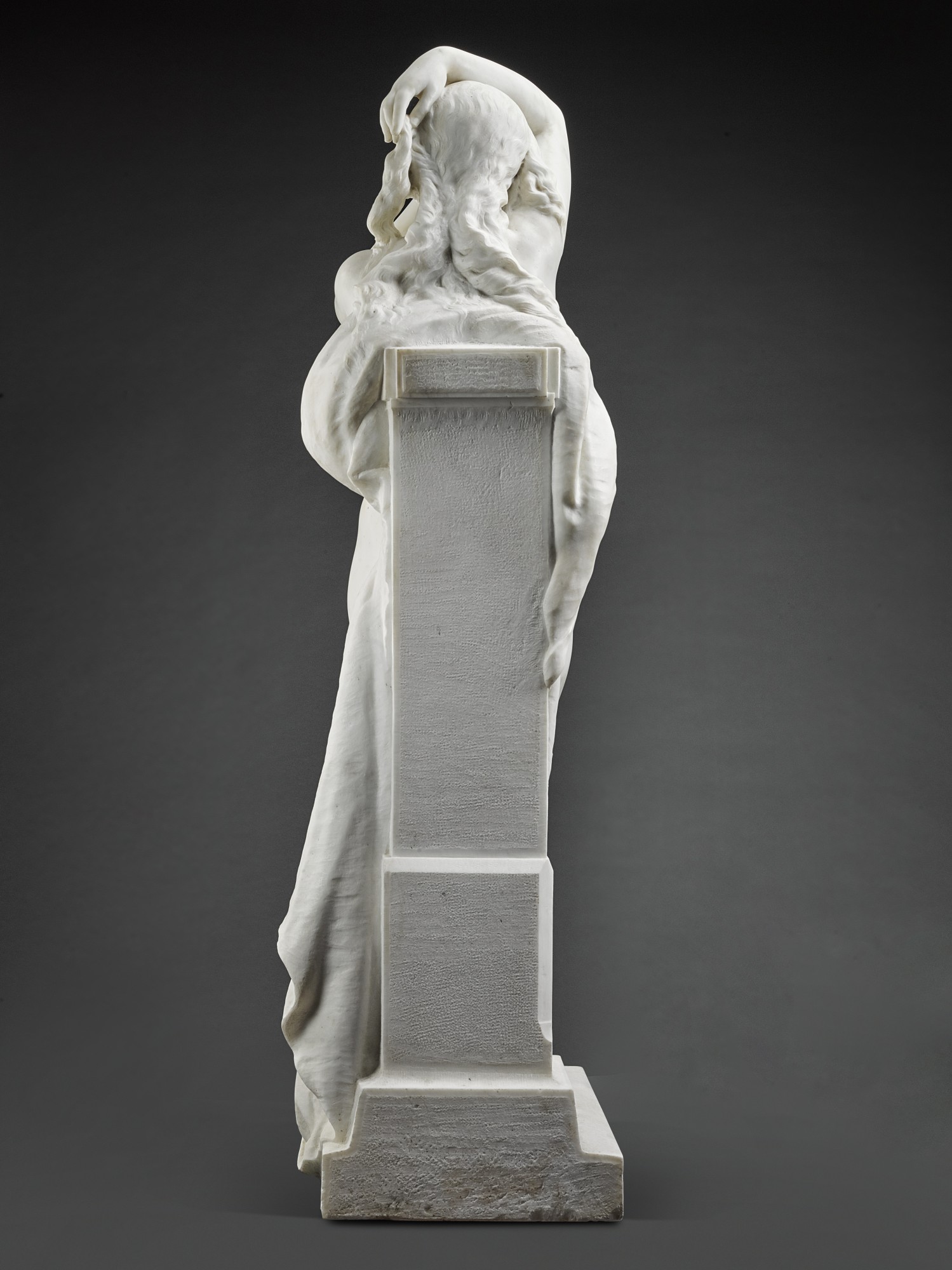
gabriel faraill · (1838–1892)
Young Girl
technical sheet
| ARTIST | Gabriel-Auguste-Emmanuel Faraill |
| DATE | 1886 • exhibited at the Paris Salon |
| material | White Carrara marble |
| DIMENSIONS | H. 190 cm |
| Signature | G. Faraill |
| PROVENANCE | Purchased at the 1886 Paris Salon by Prince Bibesco de Brancovan who placed it in his villa at Amphion near Lake Geneva. |
| CONSERVATION | Private collection |
about the work
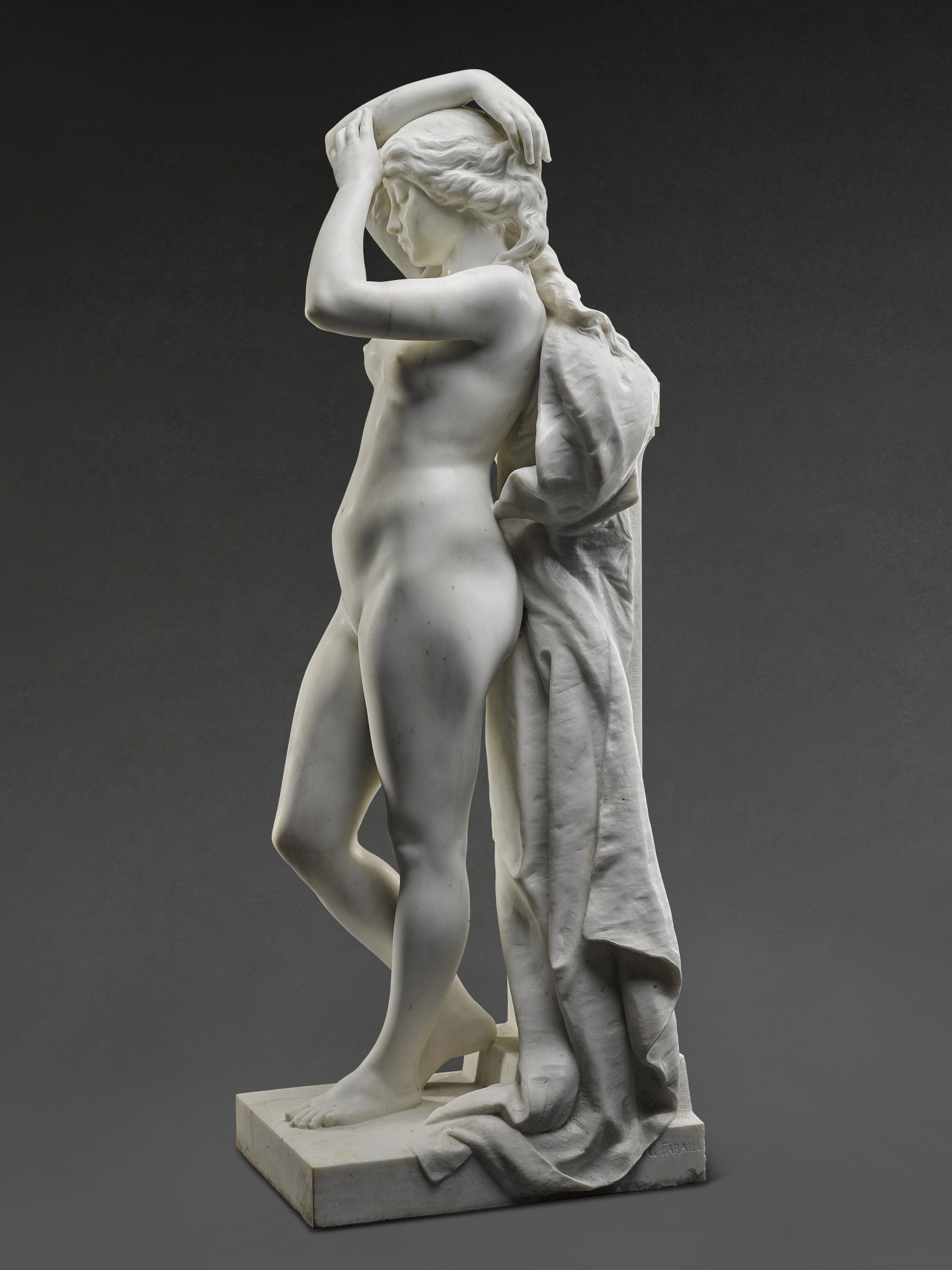
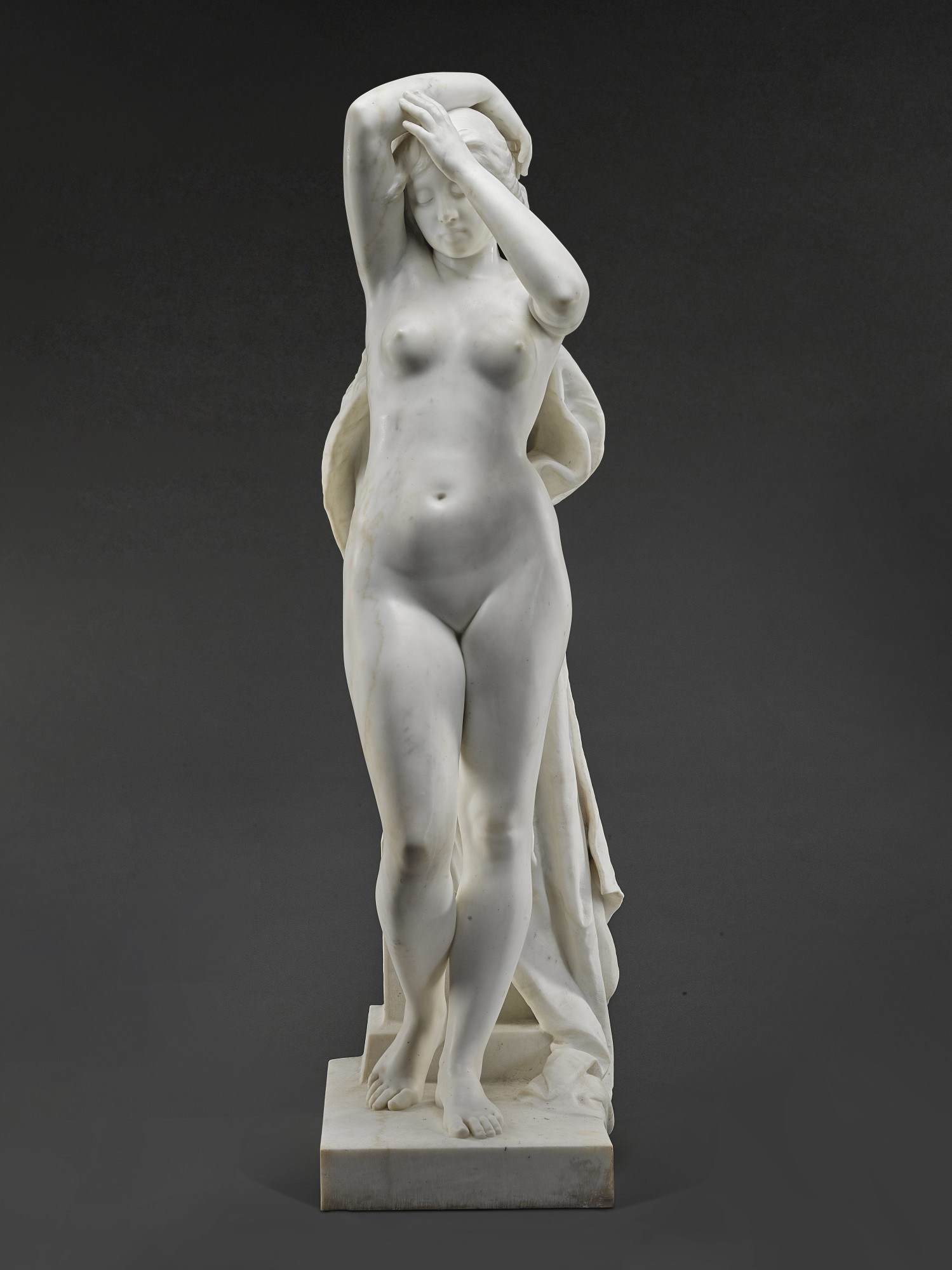
This imposing sculpture by the artist Gabriel-Auguste-Emmanuel Faraill was shown at the Paris Salon of 1886, where it was listed as lot 3870. It met with considerable success: the Parisian salonniers christened it “La Pudeur,” and the work was displayed before the left portico of the salon, in the central courtyard of the Hôtel de Ville de Paris.
As custom dictated when an artist was honoured, Faraill was given a prominent mention in the Golden Book of the 1886 Salon. The jury awarded him, by twenty-four votes out of thirty, a third-class medal. In September 1886, Prince Bibesco de Brancovan acquired the work for nine thousand francs and installed it in his villa at Amphion, on the shore of Lake Geneva.
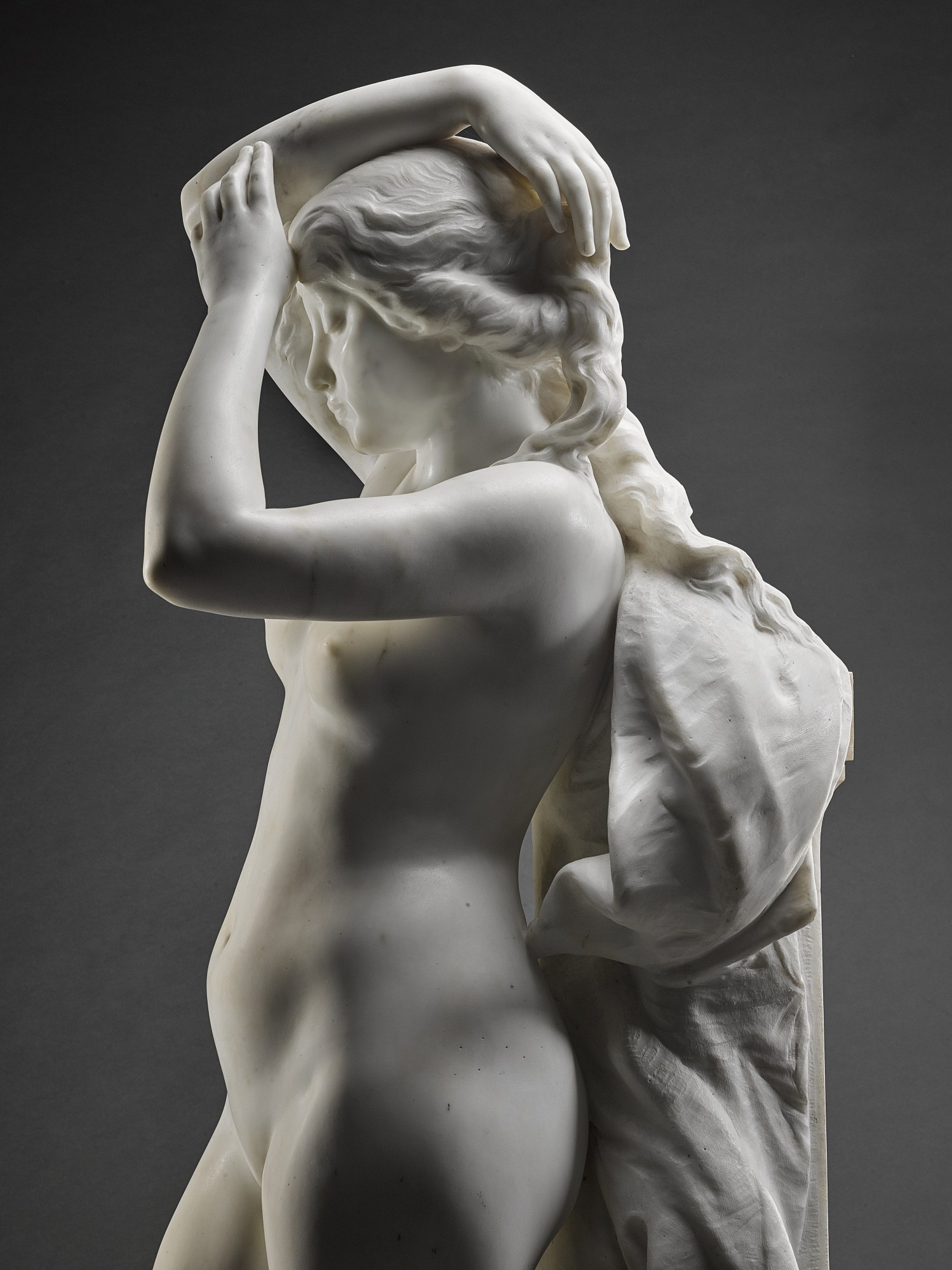
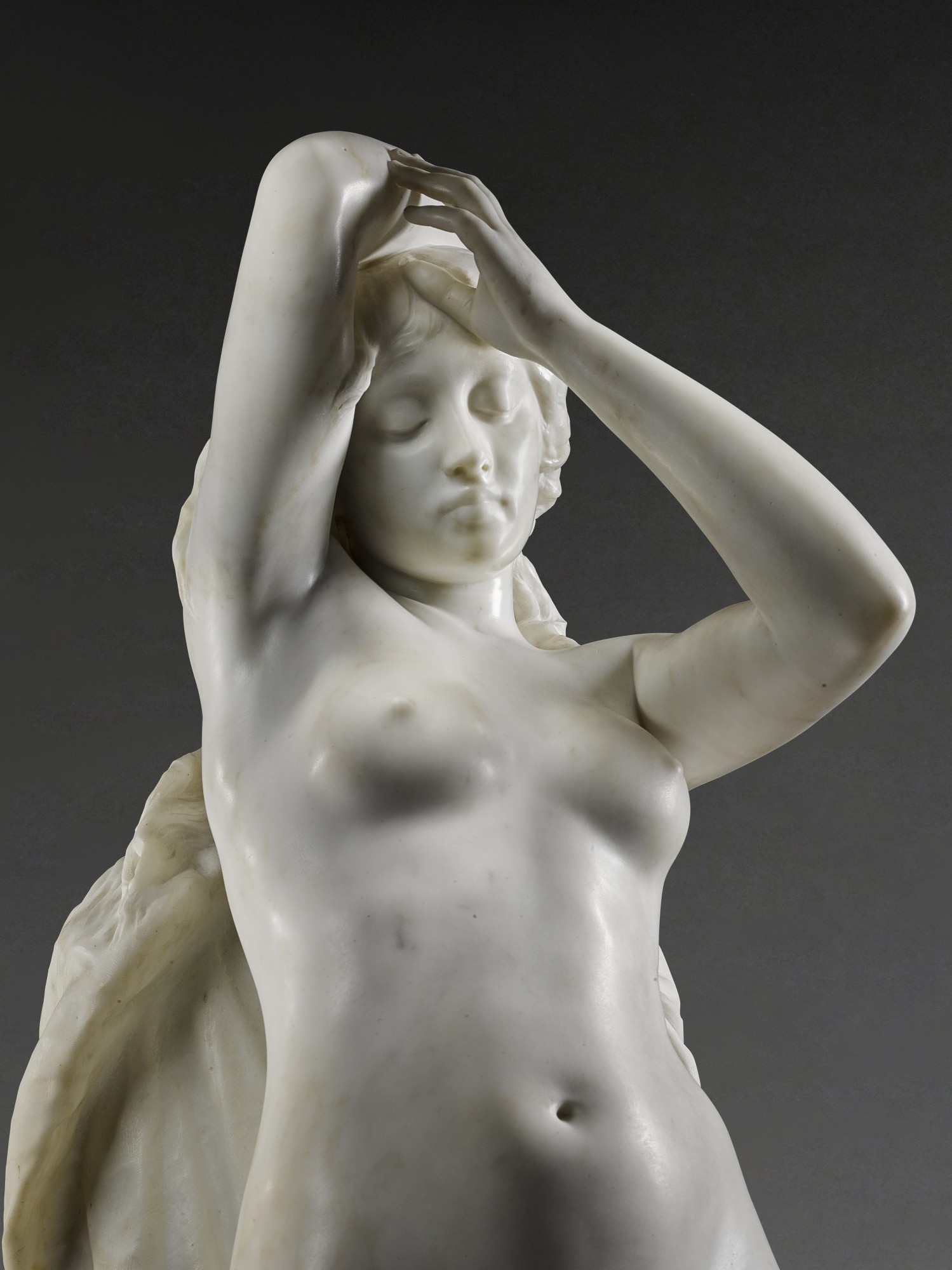
Regarded even then as the major work of this artist from the Roussillon, the piece is remarkable both for its scale and for the maturity of its modelling, and survives in perfect condition. As most of his works are now held in public collections, it is rare to encounter one on the market.
the artist
Gabriel faraill
Saint-Marsal, 1838 — 1892, Paris