égide rombaux · (1865–1942)
Vases · The Fables of Jean de la Fontaine
technical sheet
| ARTIST | Égide Rombaux |
| DATE | ca. 1900 |
| MATerial | Marble and gilt bronze |
| DIMENSIONS | Vase n°1 : 85,5 x 26 x 22 cm • Vase n°2 : 82 x 25 x 22 cm |
| Signature | E. Rombaux |
| PROVENANCE | |
| CONSERVATION | Private Collection |
About the work
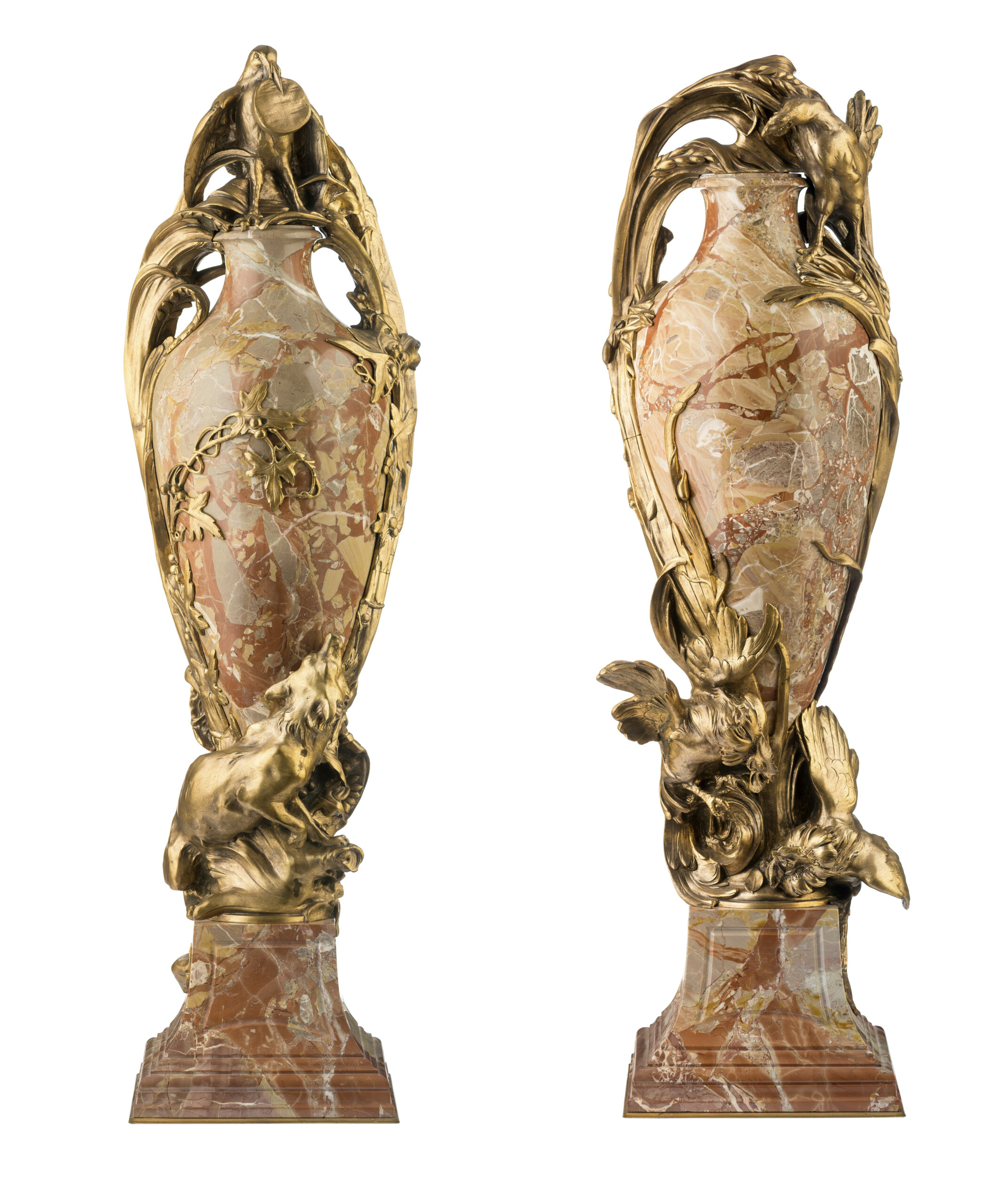
This pair of vases ranks without reservation among the highlights of Égide Rombaux’s oeuvre and stands as one of the icons of Belgian Art Nouveau. Everything about them is infused with spirit and offers an ode to what those aiming for the purest refinement can only dream of. Here considerations of style seem wholly secondary to the artist, and the very abilities on which Rombaux’s work rests bring the pieces to a beguiling degree of life.
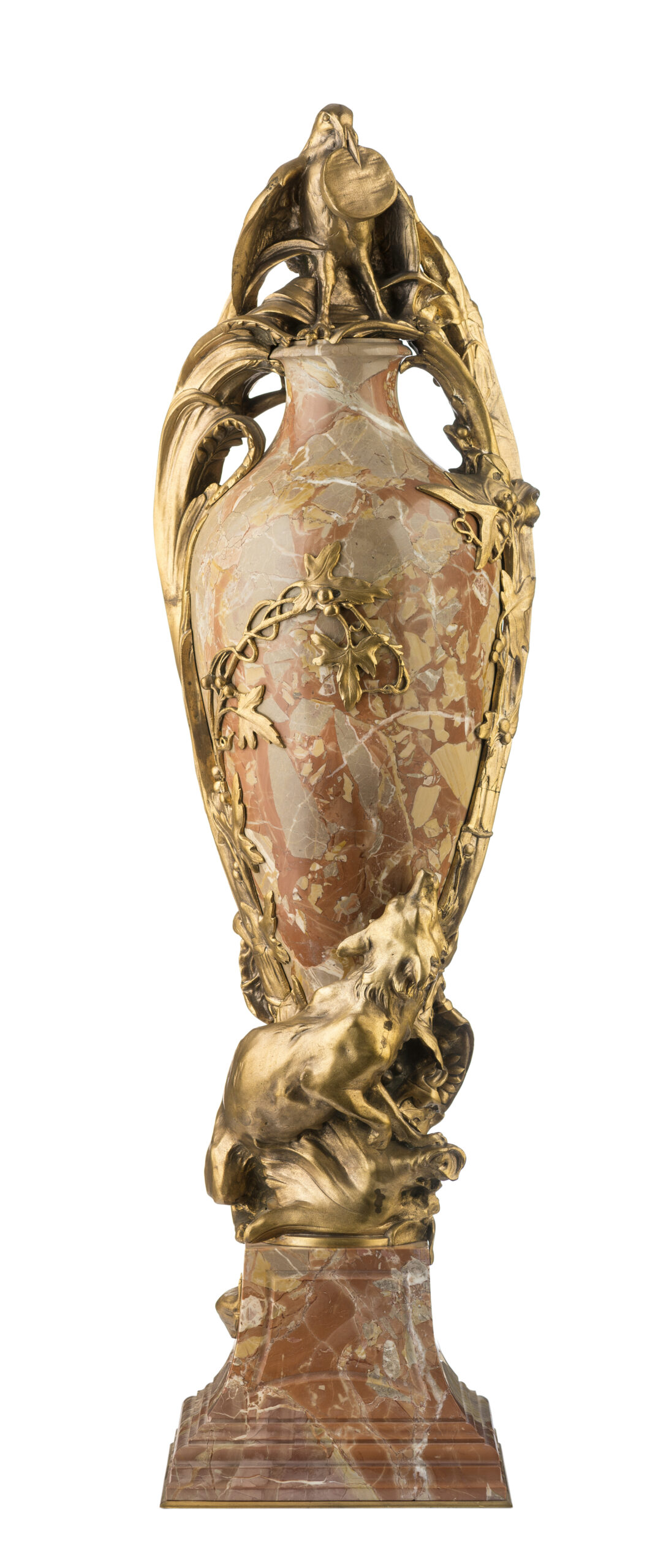
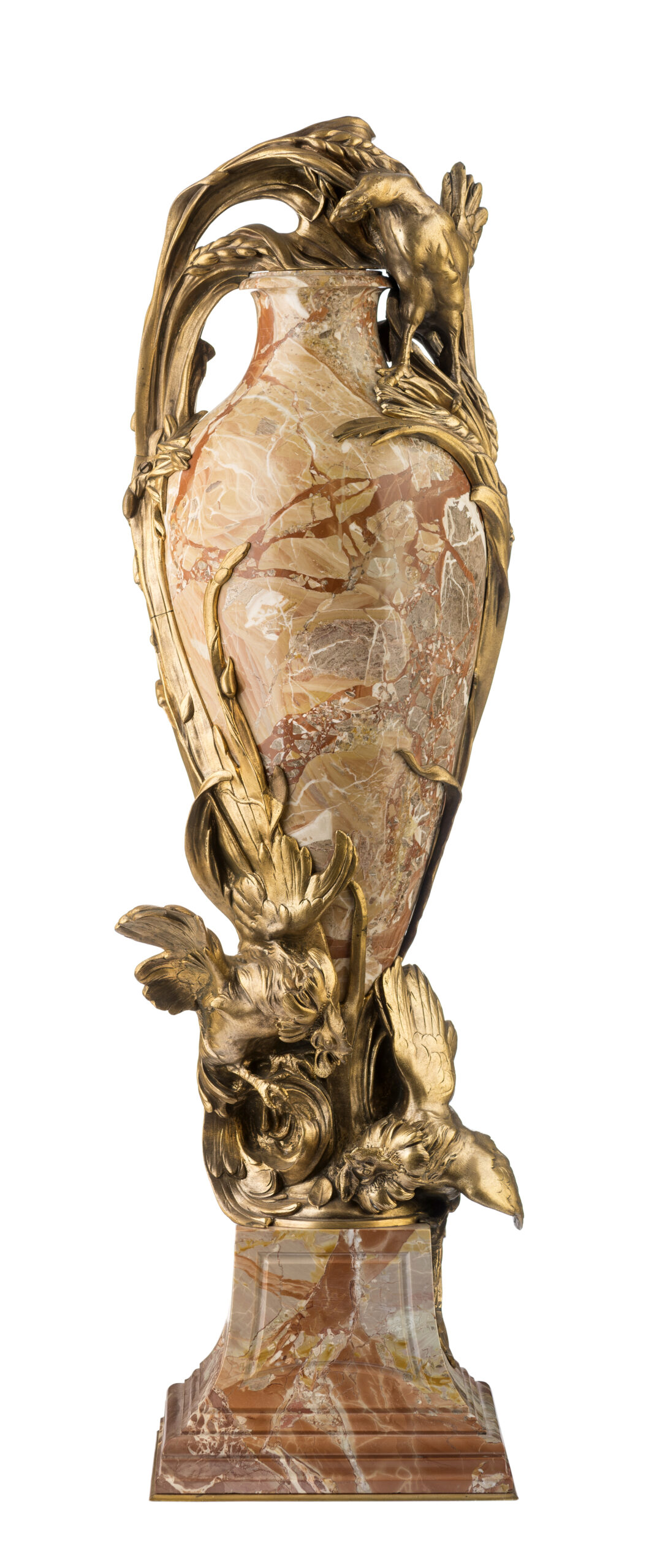
Each vase depicts a celebrated fable by the seventeenth-century French poet Jean de La Fontaine. The first illustrates The Raven and the Fox: holding a cheese in his beak, the raven is flattered into answering the fox and lets the morsel slip away. The second renders The Two Roosters, in which two birds fight over a hen; the victor boasts so loudly of his triumph that, to his ruin, he draws the attention of a vulture.
Uniting marble and gilt bronze, the vases display the sculptor’s virtuosity, placing narrative and allegory in the service of a sovereign decorative elegance.
the ARTIST
Égide rombaux
Schaerbeek, 1865 — 1942, Uccle