Meussel & fils · (geneva)
The Magician Book
technical sheet
| ARTIST | Meussel & Fils (Genève) |
| DATE | March, 1823 |
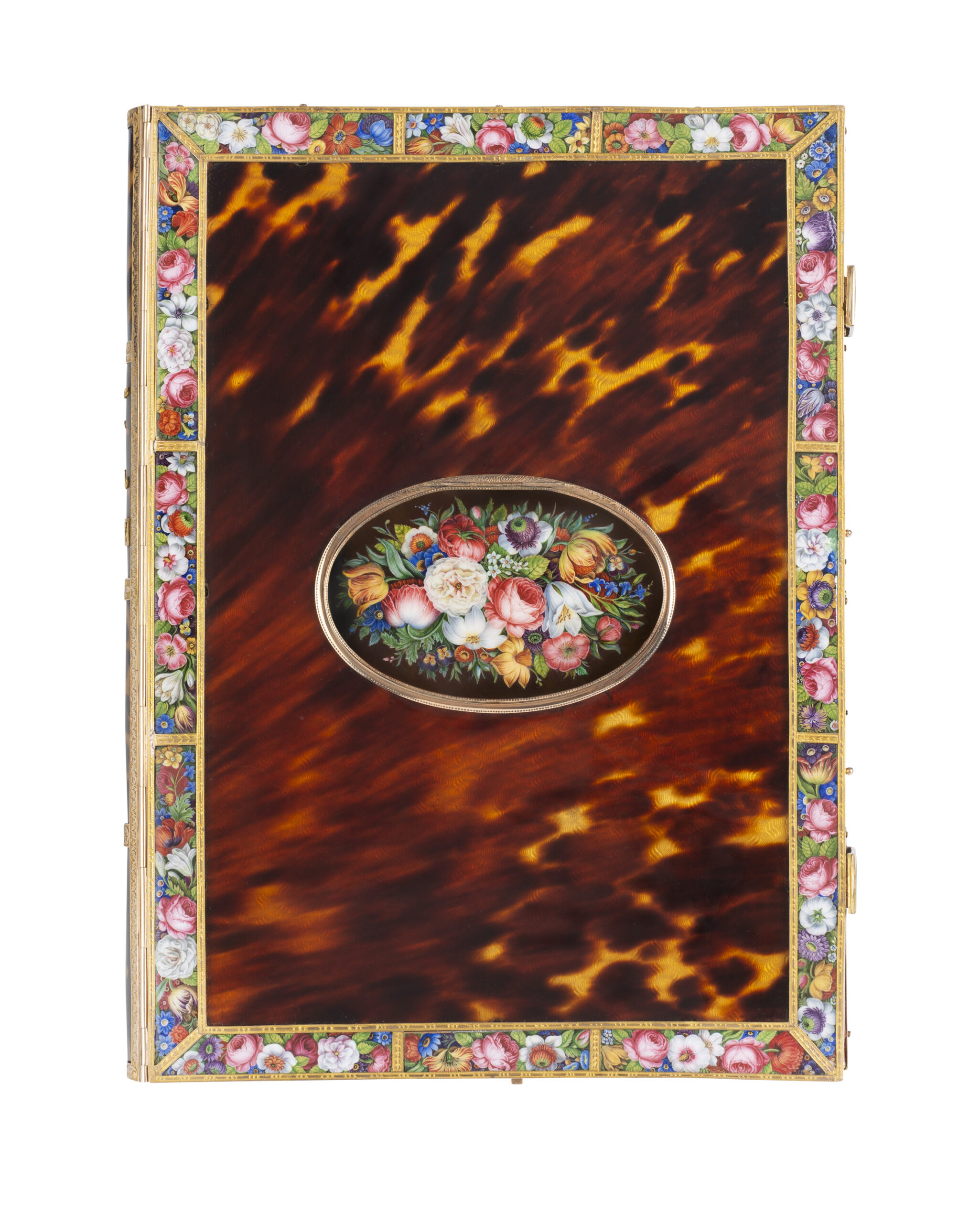
| MATerial | Gold, enamel, tortoiseshell |
| DIMENSIONS | 20 x 15 x 3 cm |
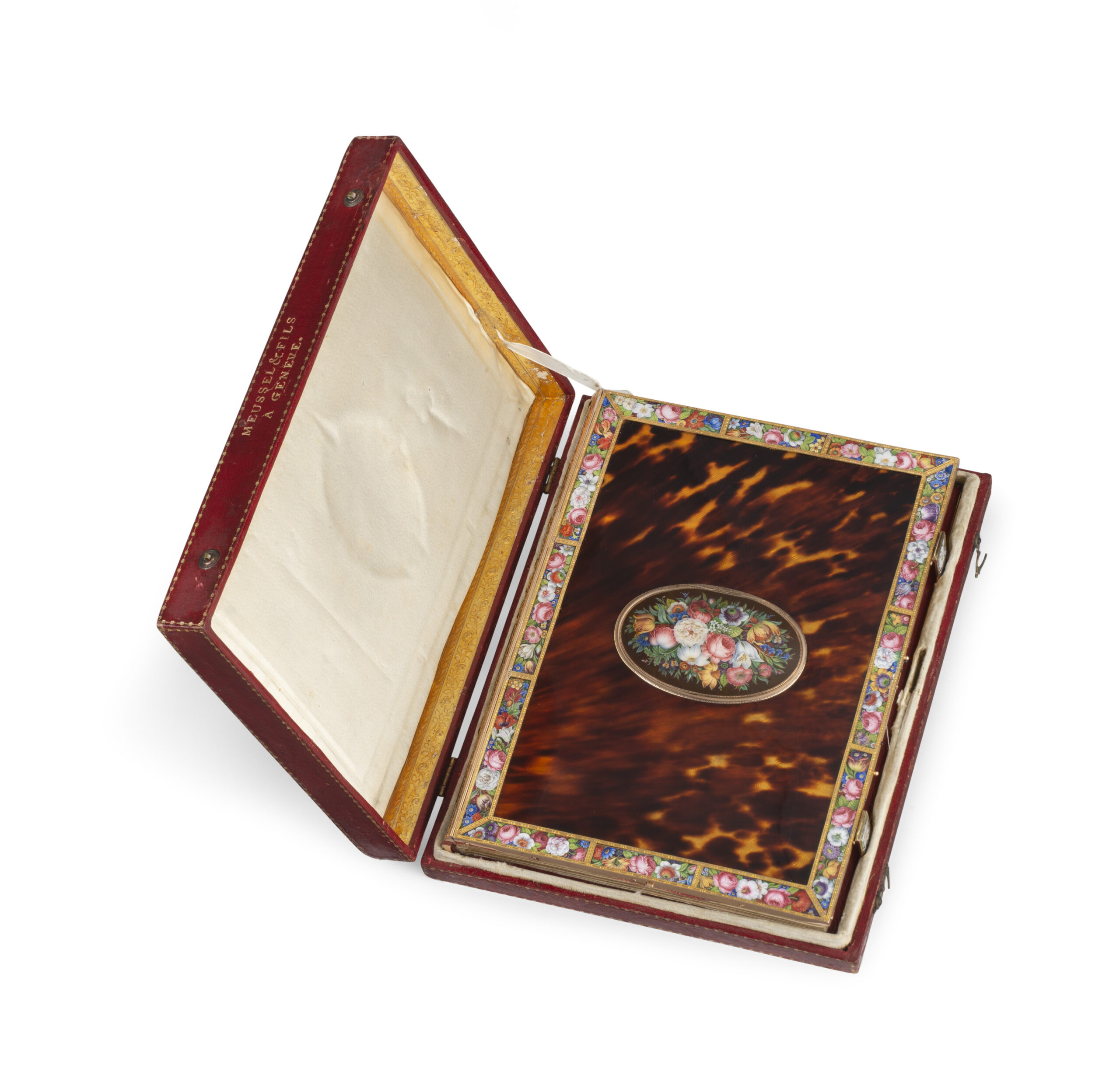
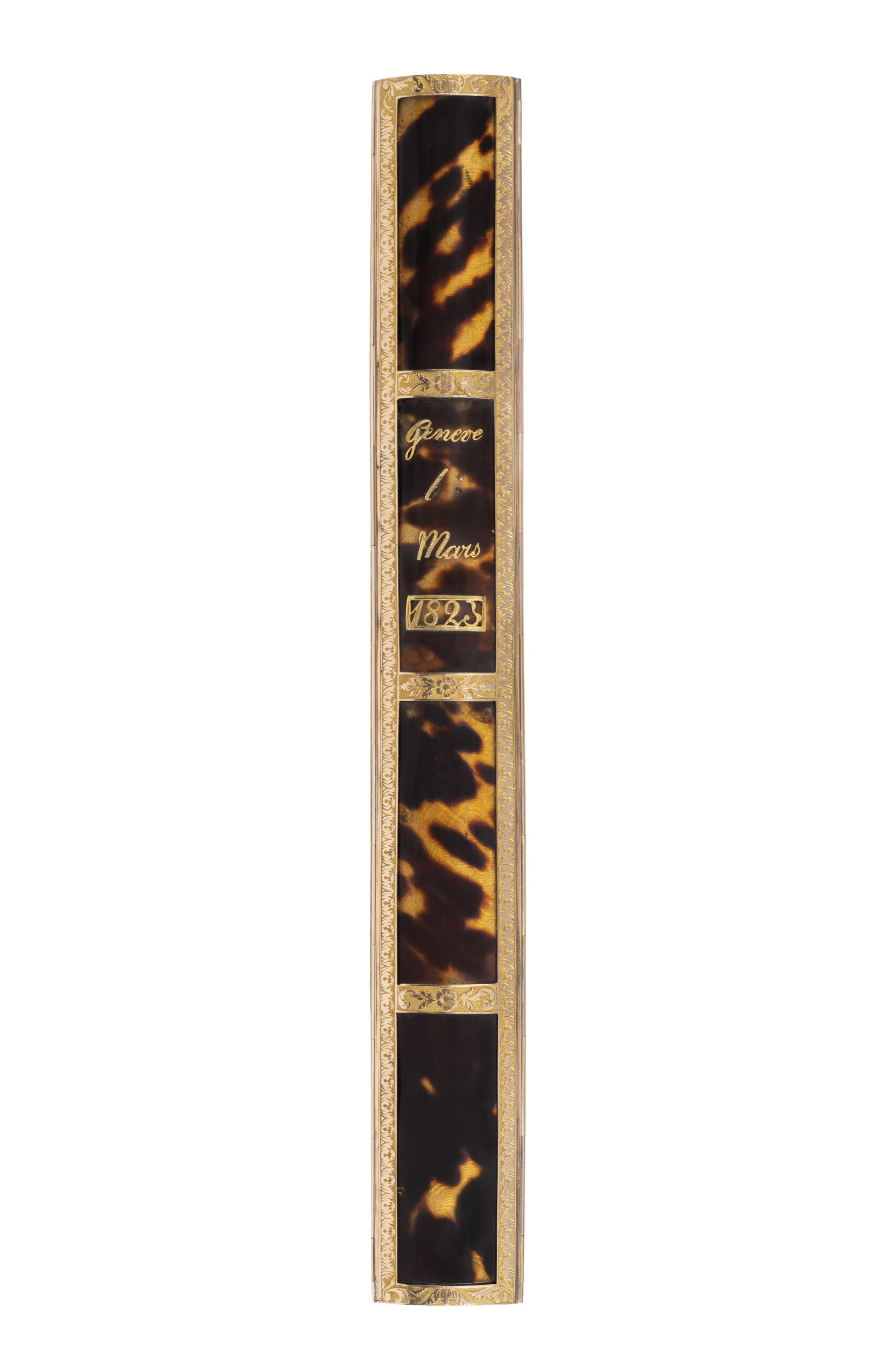
| SIGNature | MEUSSELS & FILS A GENEVE, Genève Mars 1823 |
|
PROVENANCE |
J.-G. & J.-C. Meüsel, Geneva, Jewellers, rue des Orfèvres, 184, Geneva (1823) • Lydia Huber Strutt (1759-1832), Geneva, acquired ca. 1823 • Bernard Franck (1848-1924), 21 rue du Château d’Eau, Paris. Exact date of acquisition unconfirmed, probably before 1900 • Henry & Sidney Hill, Berry-Hill Galleries, New York et Londres, ca. 1938 • Maurice Sandoz (1892-1958), Swiss nationality, ca. 1938 • Private European collection. |
| CONSERVATION | Patek Philippe Museum • Geneva • Switzerland |
About the work
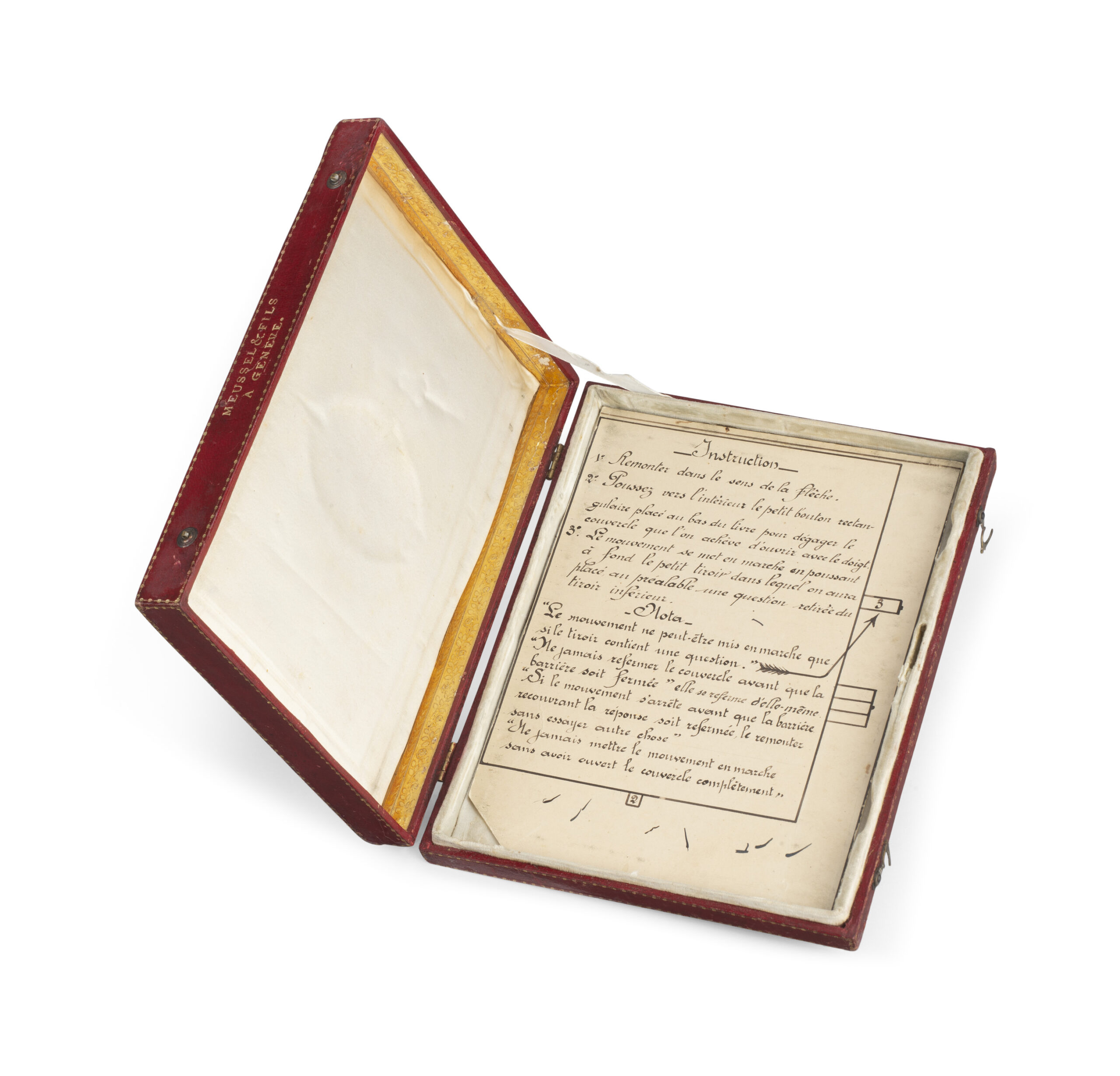
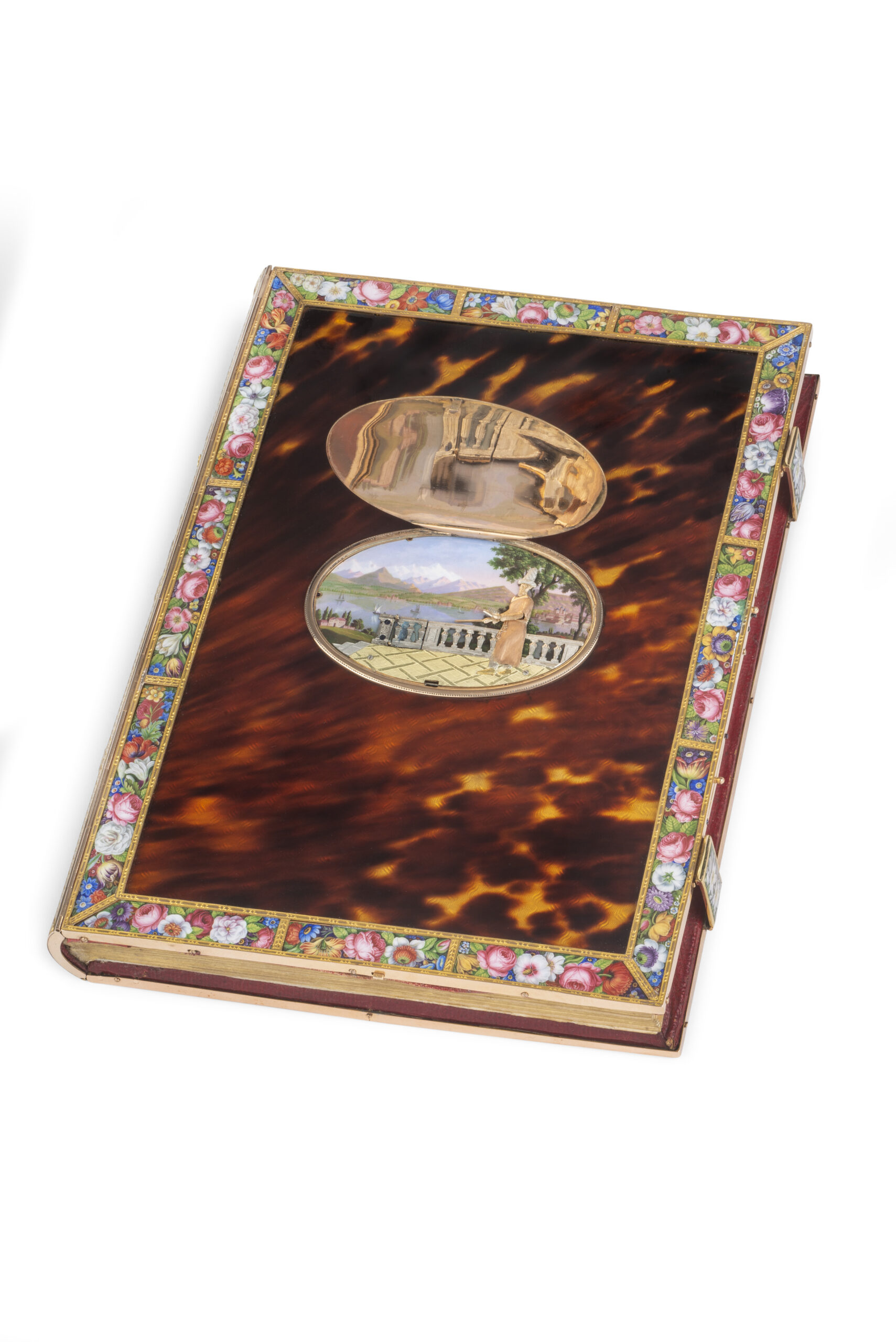
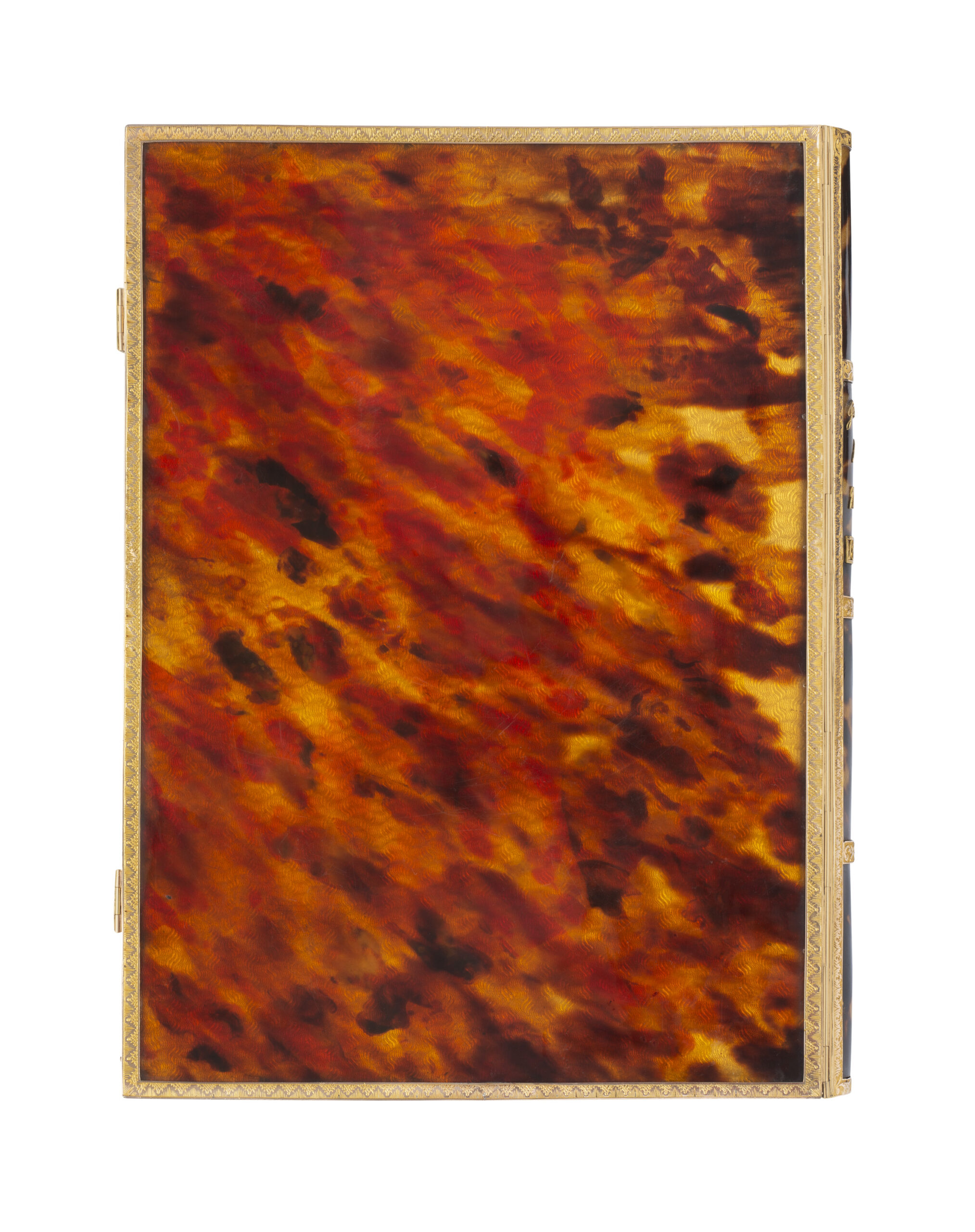
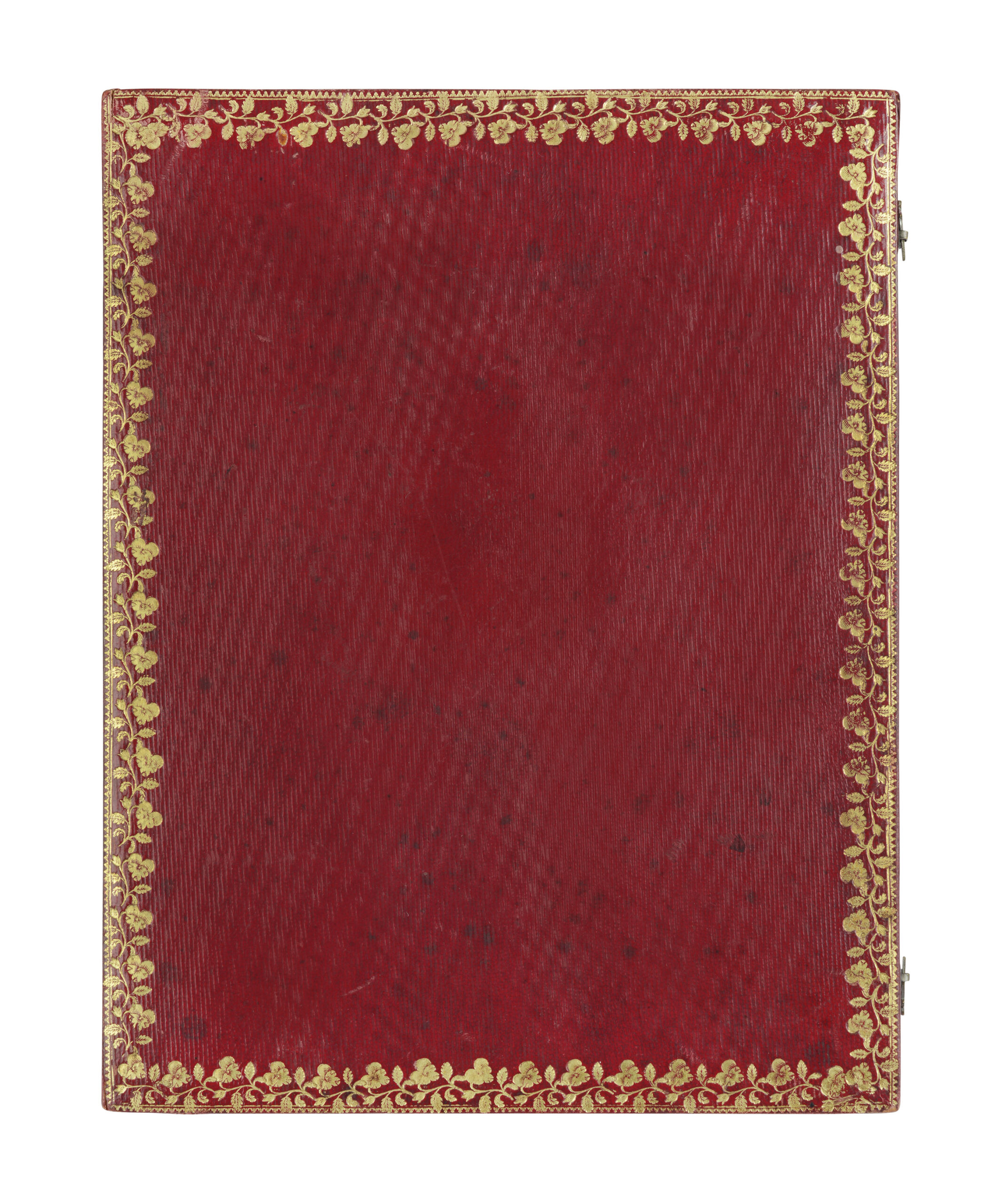
This exceptional automaton, capable of answering six distinct questions, is crafted from gold, enamel, and tortoiseshell, complete with its original case and instructions. Signed and dated “MEUSSEL & FILS À GENÈVE,” March 1823.
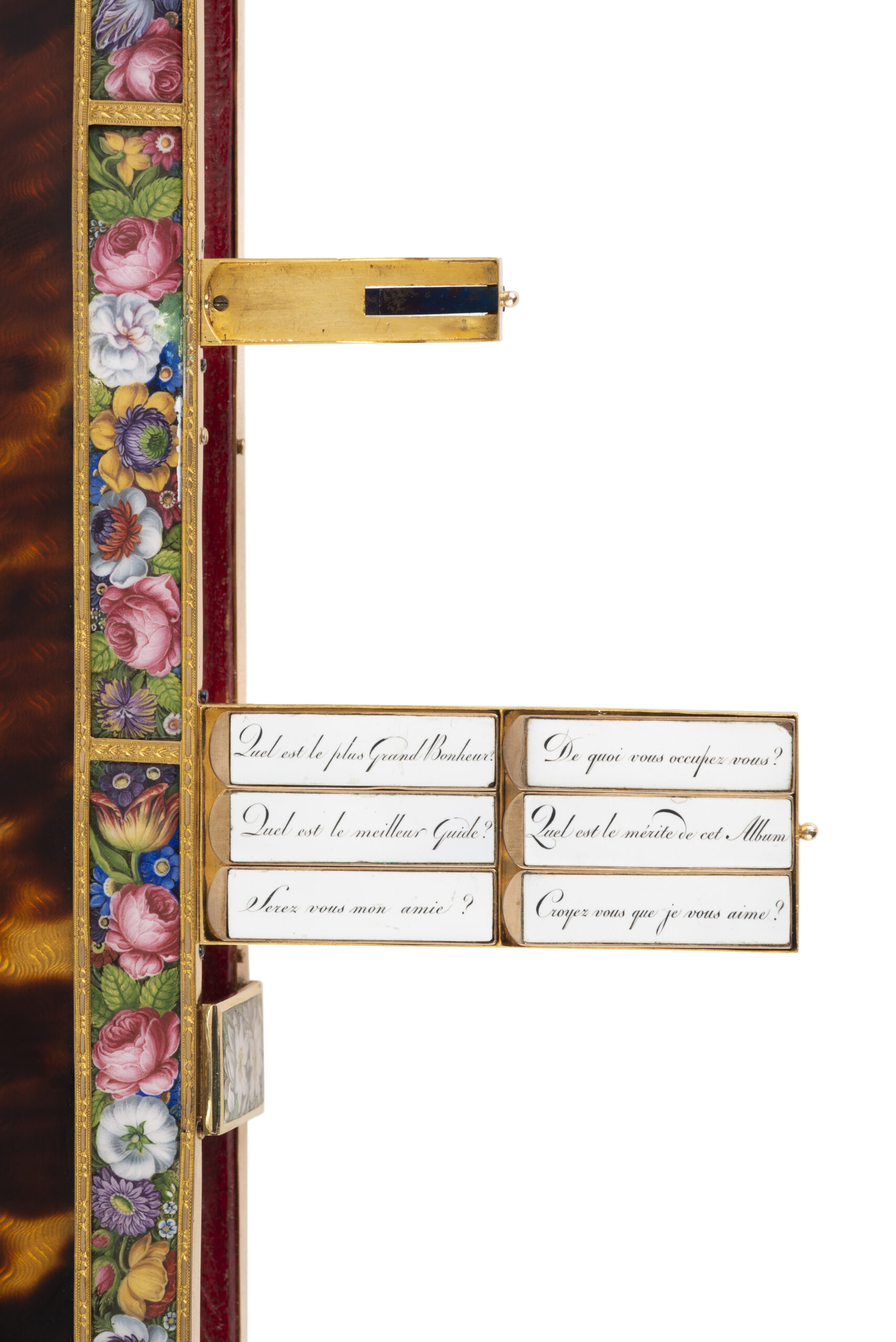
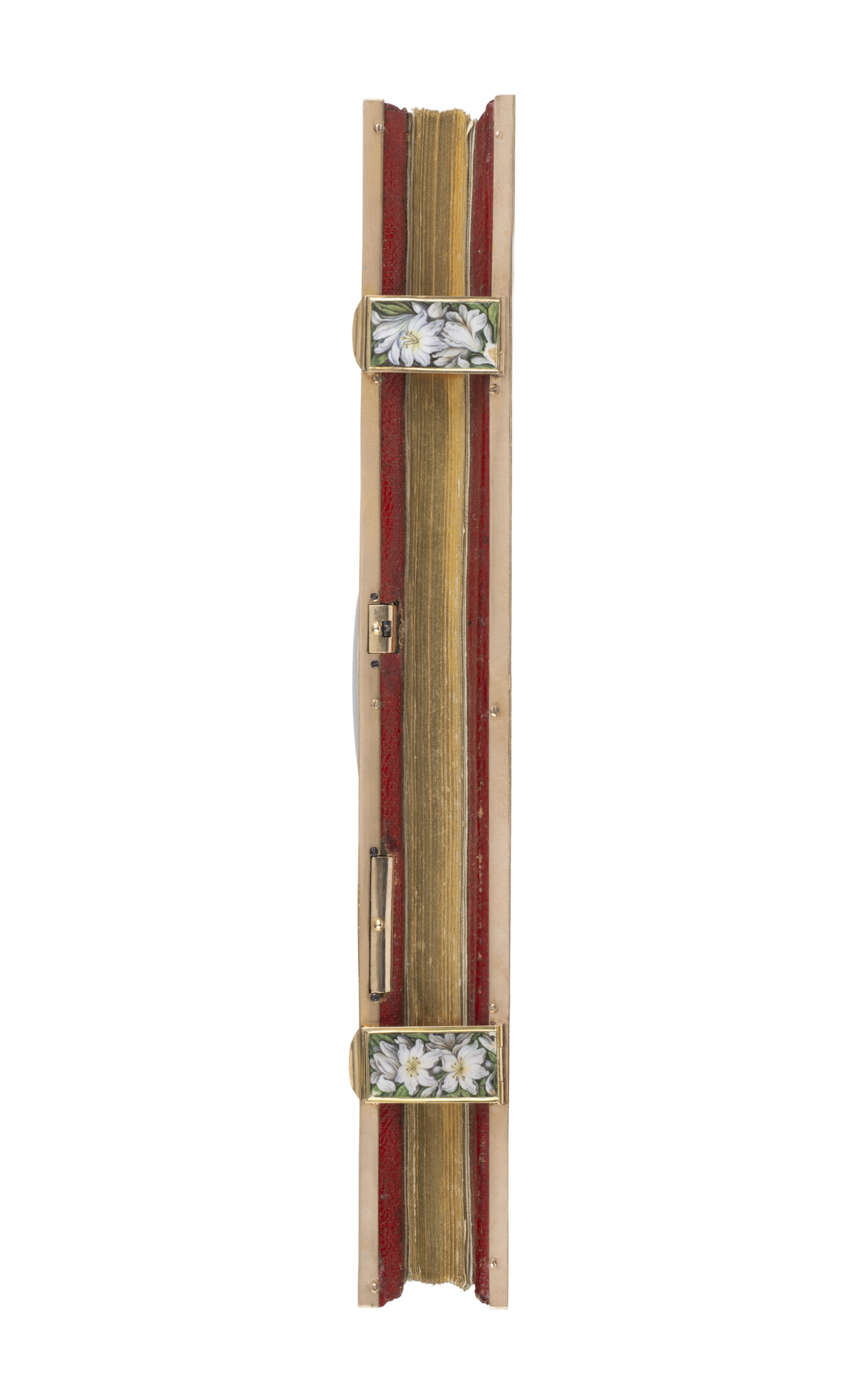
The mechanism operates via two gold sliders on the side: the lower slider presents six questions (for example, “What is the greatest happiness?”), one of which is selected and placed in the upper slider. Closing the upper slider activates the mechanism, opening an oval gold panel that reveals a scene in multicolored enamel: a magician on a terrace overlooking Lake Geneva and Mont Blanc moves his head, consults a book, taps his wand four times on the balustrade, and the balustrade then opens to reveal the answer (“TO BE LOVED”), before closing again.
The piece is attributed to Henri Maillardet (1745–1830), the renowned Swiss mechanician whose family collaborated with Jacques Droz on the Writer and Draughtsman automata. It is considered the most complex mechanism among known magician automatons; only six other examples are known, in snuffbox form, held in collections such as the Sandoz Foundation, the L.A. Mayer Institute in Jerusalem, and the Landesmuseum in Seewen.
The object was the favorite piece of Dr. Maurice Sandoz (1892–1958), who used it as a guest book for visitors, including Charlie Chaplin and various European princely families, to his automaton collection at Burier.