enrico astorri · (1859–1921)
Saltimbanca
technical sheet
| ARTIST | Enrico Astorri |
| DATE | ca. 1900 |
| material | White Carrara marble |
| DIMENSIONS | Height : 122,5 cm • Total Height with column : 212 cm |
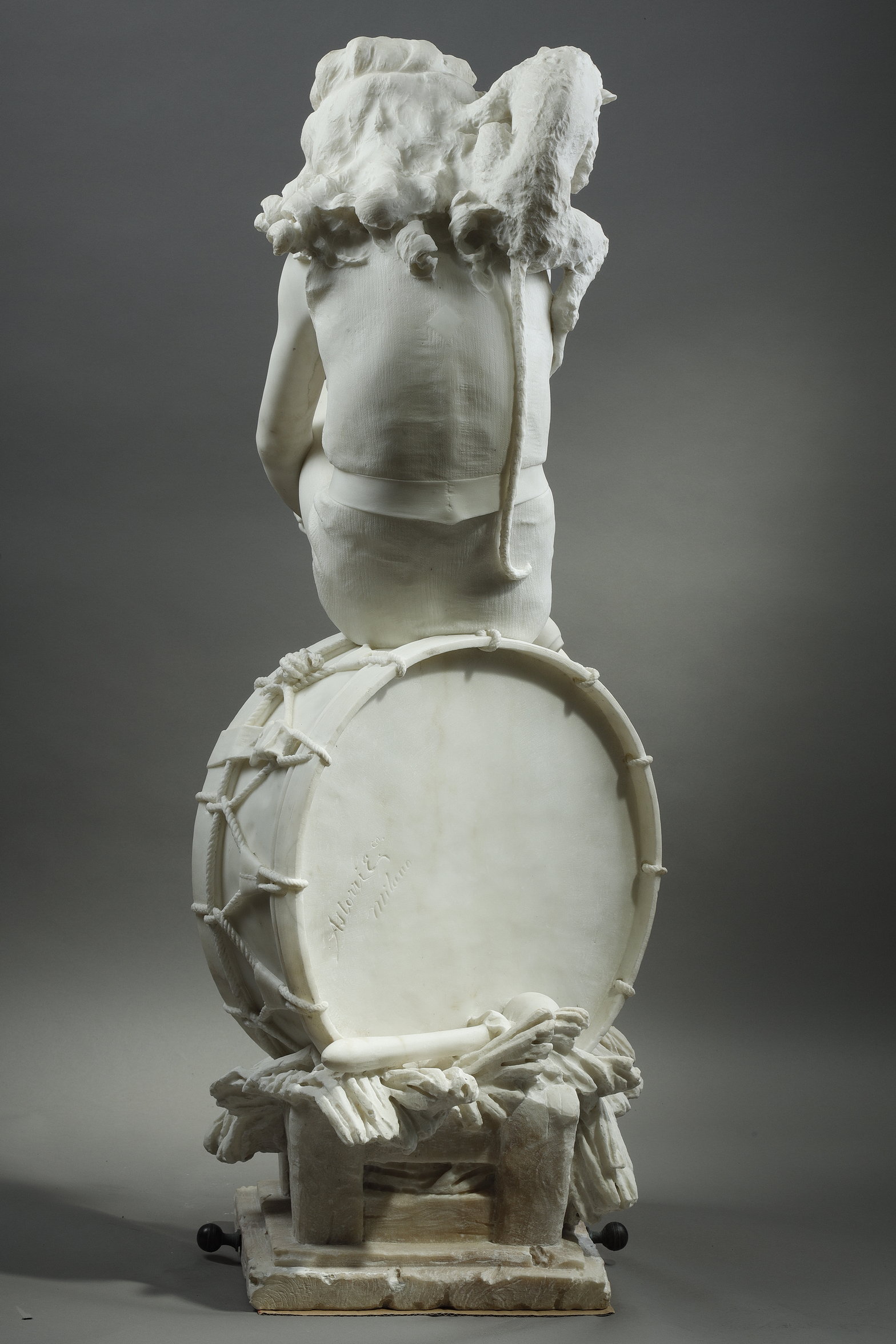
| Signature | Astorri E. co./Milano |
| PROVENANCE | |
| CONSERVATION | Private Collection • Italy |
about the work
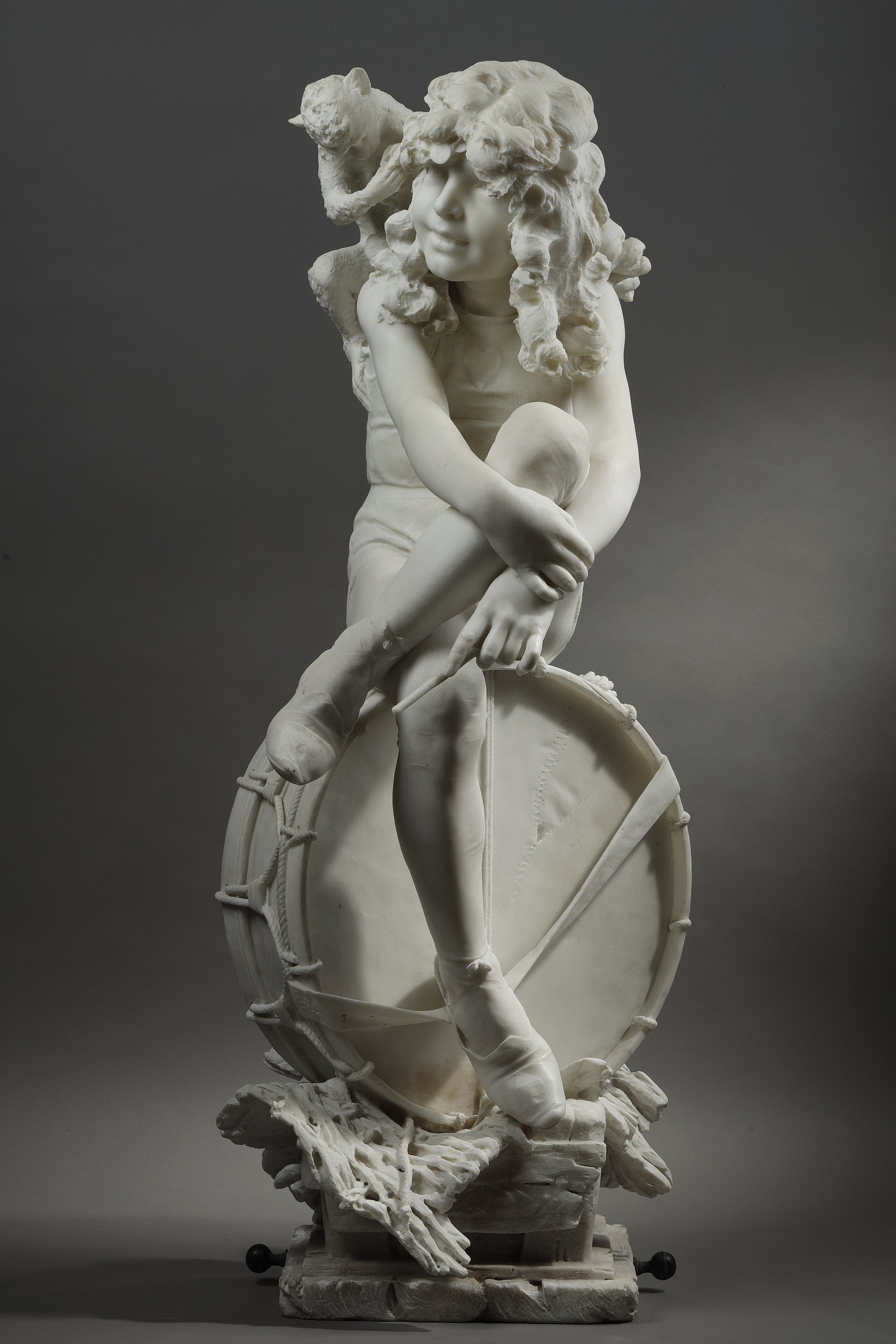
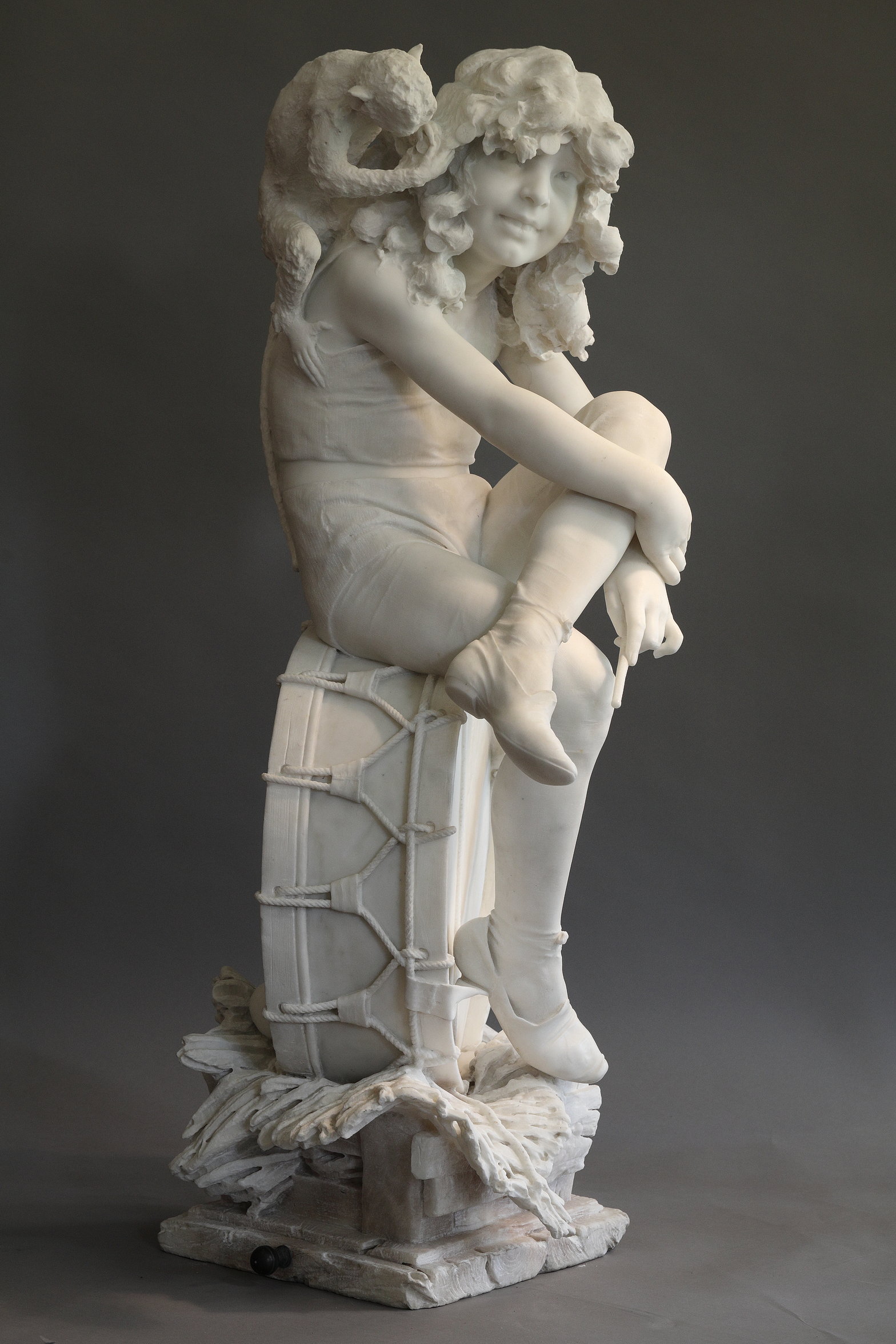
This exquisite marble sculpture presents a youth of beguiling grace and poise. Perched atop an ornately carved drum, the figure exudes an air of serene contemplation tinged with playful charm. His relaxed posture, one arm resting nonchalantly on a knee, conveys a natural ease, while the other hand delicately holds a drumstick, perhaps in a pause between performances.
Astorri’s mastery is evident in the lifelike rendering of cascading curls, the soft fabric of the attire, and the tactile reality of the drum, adorned with finely chiselled escutcheons. One is particularly drawn to the drumhead, complete with the minutiae of a wear-induced tear, a testament to the sculptor’s attention to authenticity. A mischievous monkey, curled around the youth, adds a note of whimsical innocence, while the classic card symbols, deftly woven into the drum’s design, invite a closer inspection.
The whole rests upon a base meticulously sculpted to resemble a wooden crate, complete with a finely wrought net, grounding the piece in a semblance of day-to-day realism that deepens its narrative resonance.
the ARTIST
Enrico astorri
San Lazzaro Alberoni, 1859 — 1921, Milan
An Italian sculptor of considerable repute, Enrico Astorri began his artistic journey in Parma, progressing through Genoa before establishing himself at a prodigiously young age in Milan. His work, characterised by its finesse and expressive detail, made significant inroads in the art world early on, with the monument to Vittorio Emanuele II in Parma (1879) marking one of his earliest acclaimed pieces.
His talent was showcased in numerous exhibitions, notably in Turin (1884) with the marble statues La sérénade and Attraction. He contributed substantially to the artistic life of Milan, Venice and Bologna throughout the 1880s. Recognised internationally, he exhibited in London and earned commendations in Uruguay, Argentina and Russia. His works are held in the public collections of Piacenza and Trieste.