JEAN-BAPTISTE SLOODTS · (1843–?)
Pair of Vases
technical sheet
| ARTIST | Jean-Baptiste Sloodts |
| DATE | circa 1900 |
| DIMENSIONS | Vase Fleur-de-Lys: 83.5 × 18.5 × 18.5 cm | Vase Reeds: 83 × 18 × 18 cm |
| MATERIAL | Bronze with double patina (light and dark brown) |
| TECHNIQUE | Lost-wax casting |
| FOUNDRY | La Compagnie des Bronzes de Bruxelles |
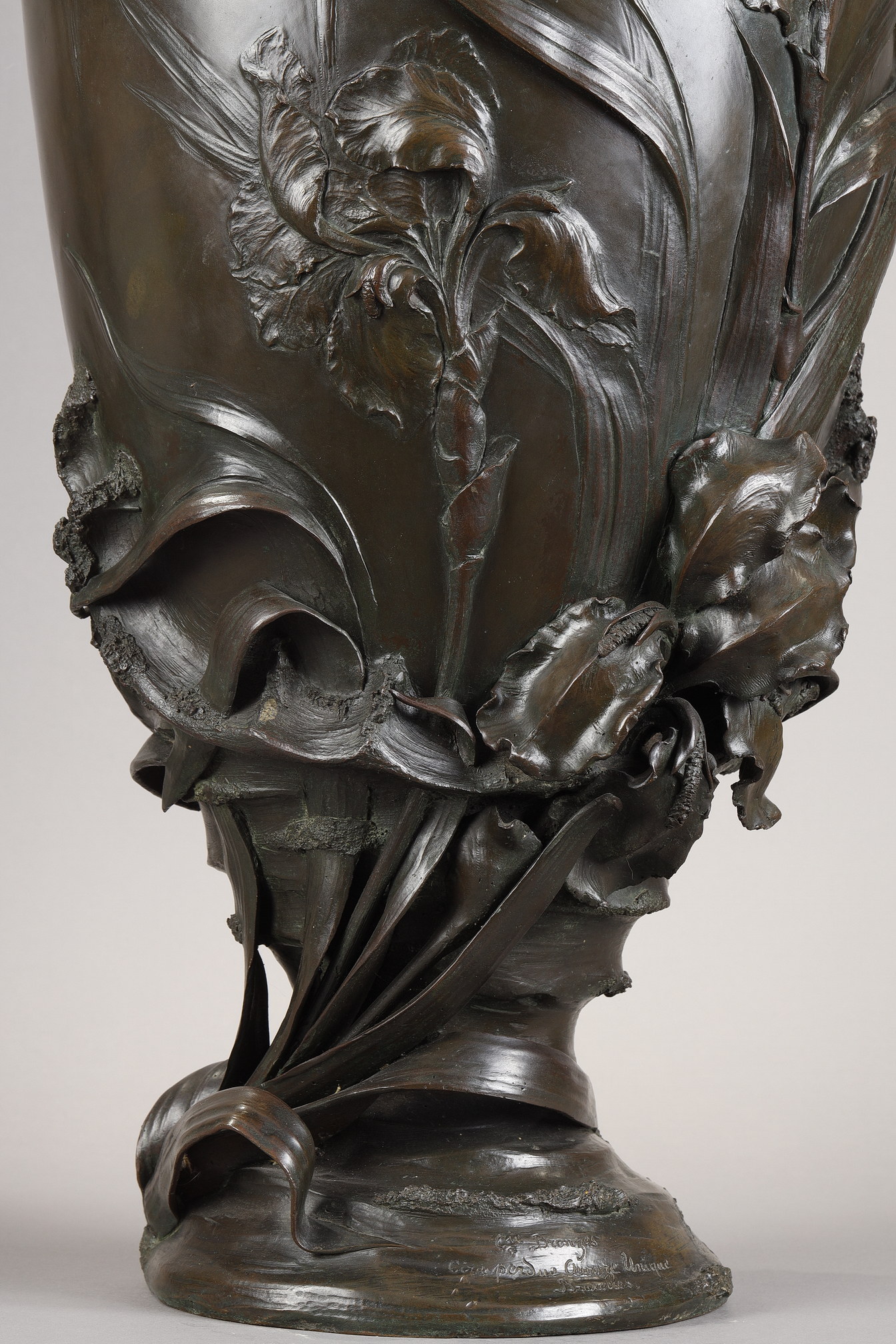
| SIGNED | “JBte Sloodts” |
about the work
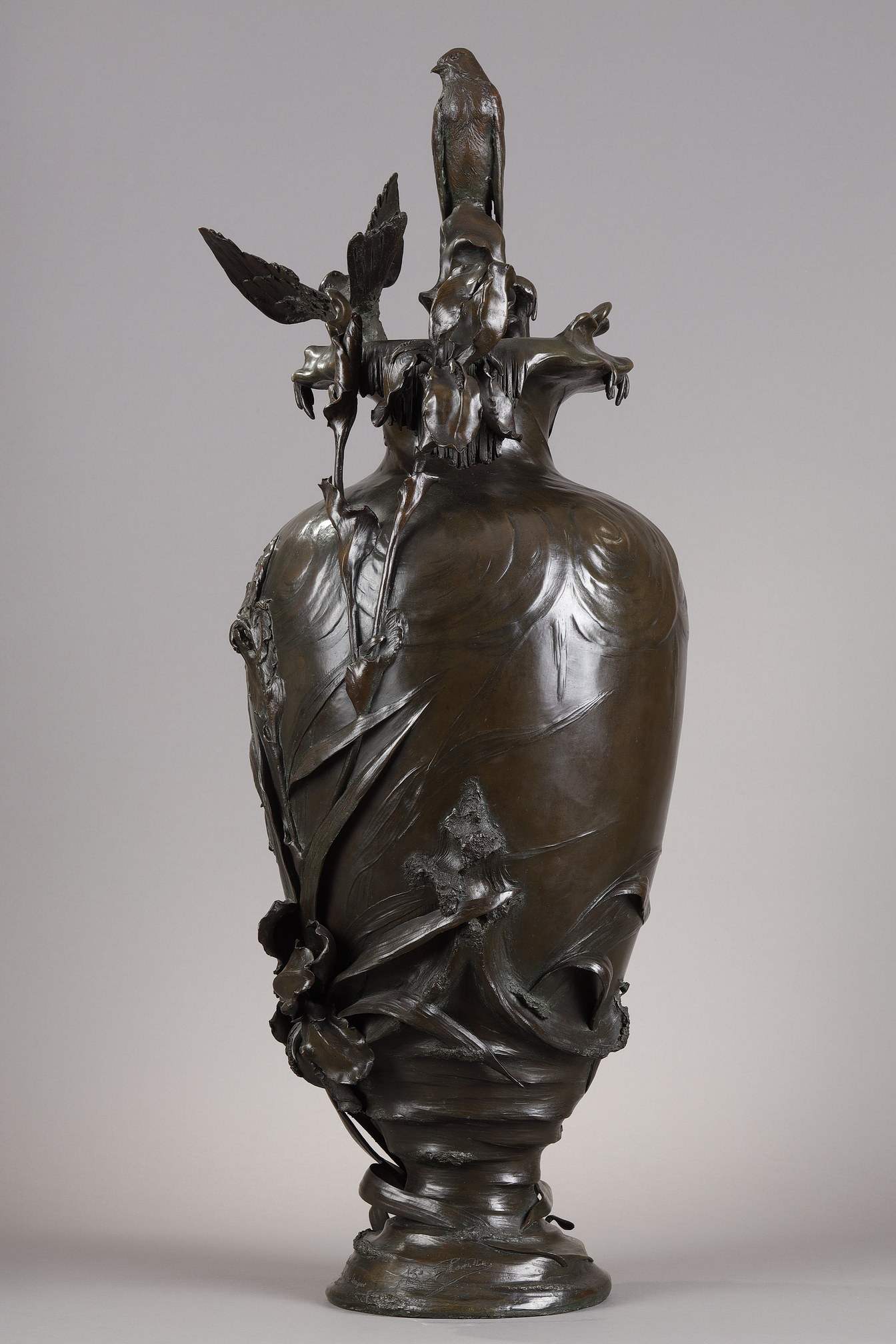
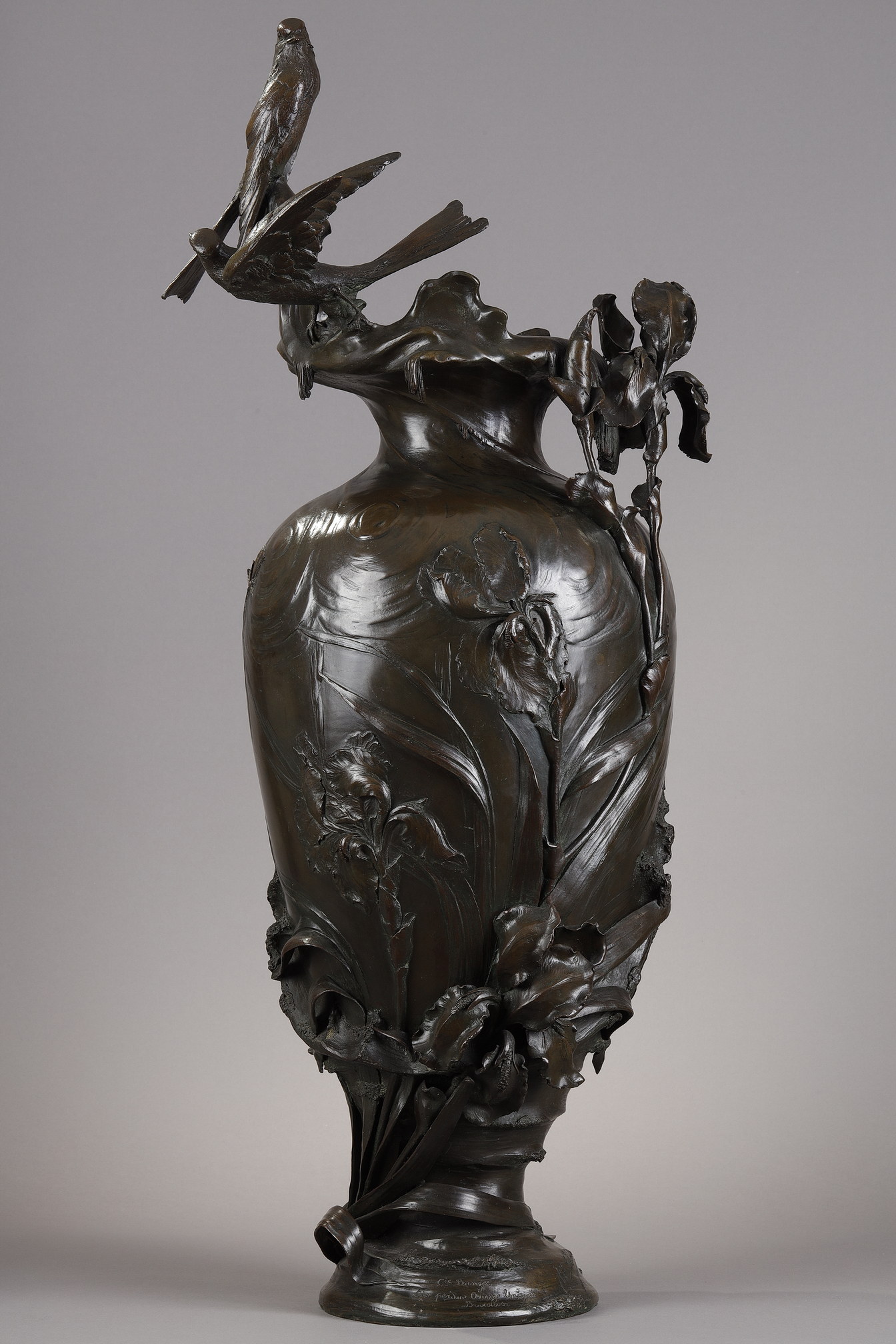
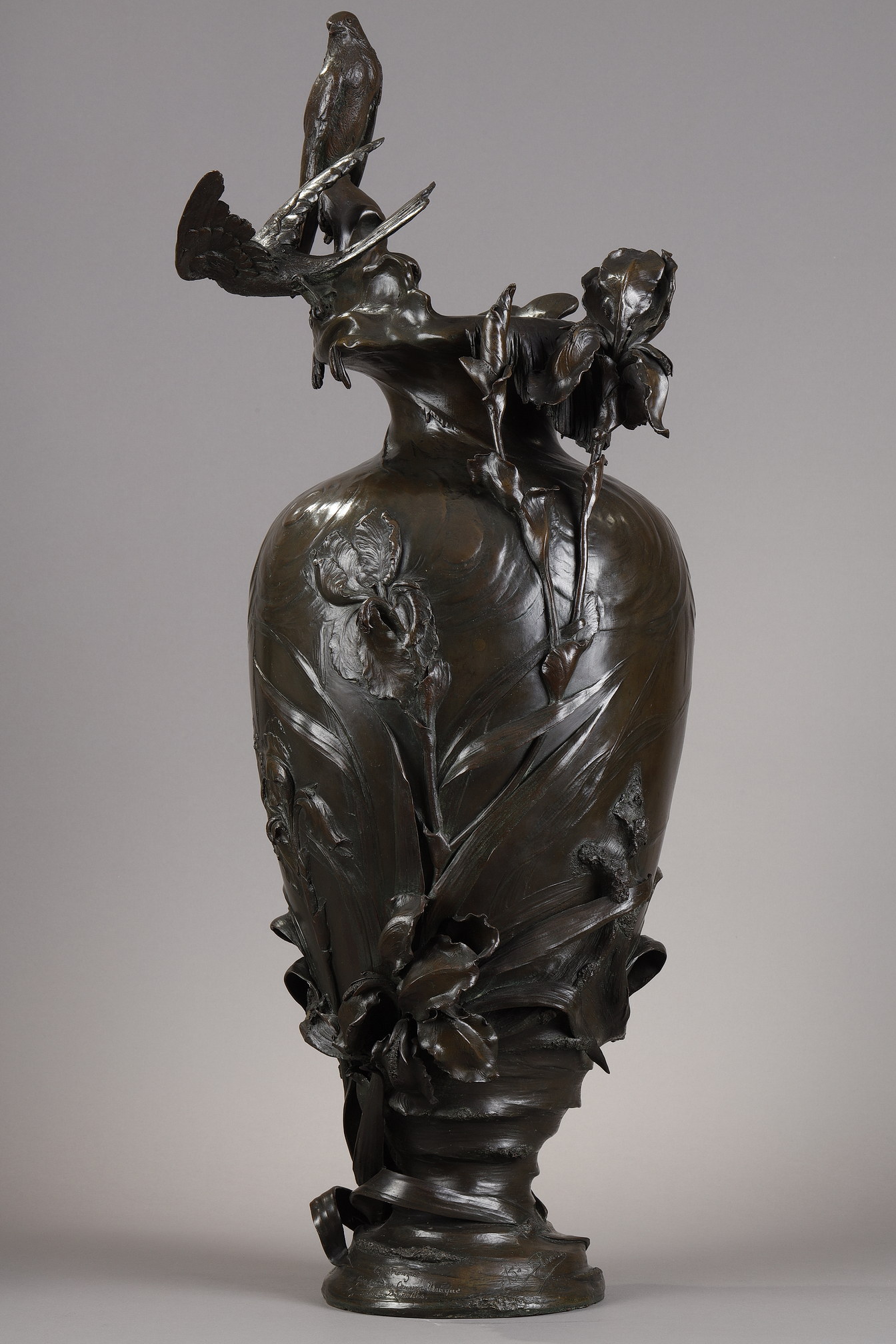
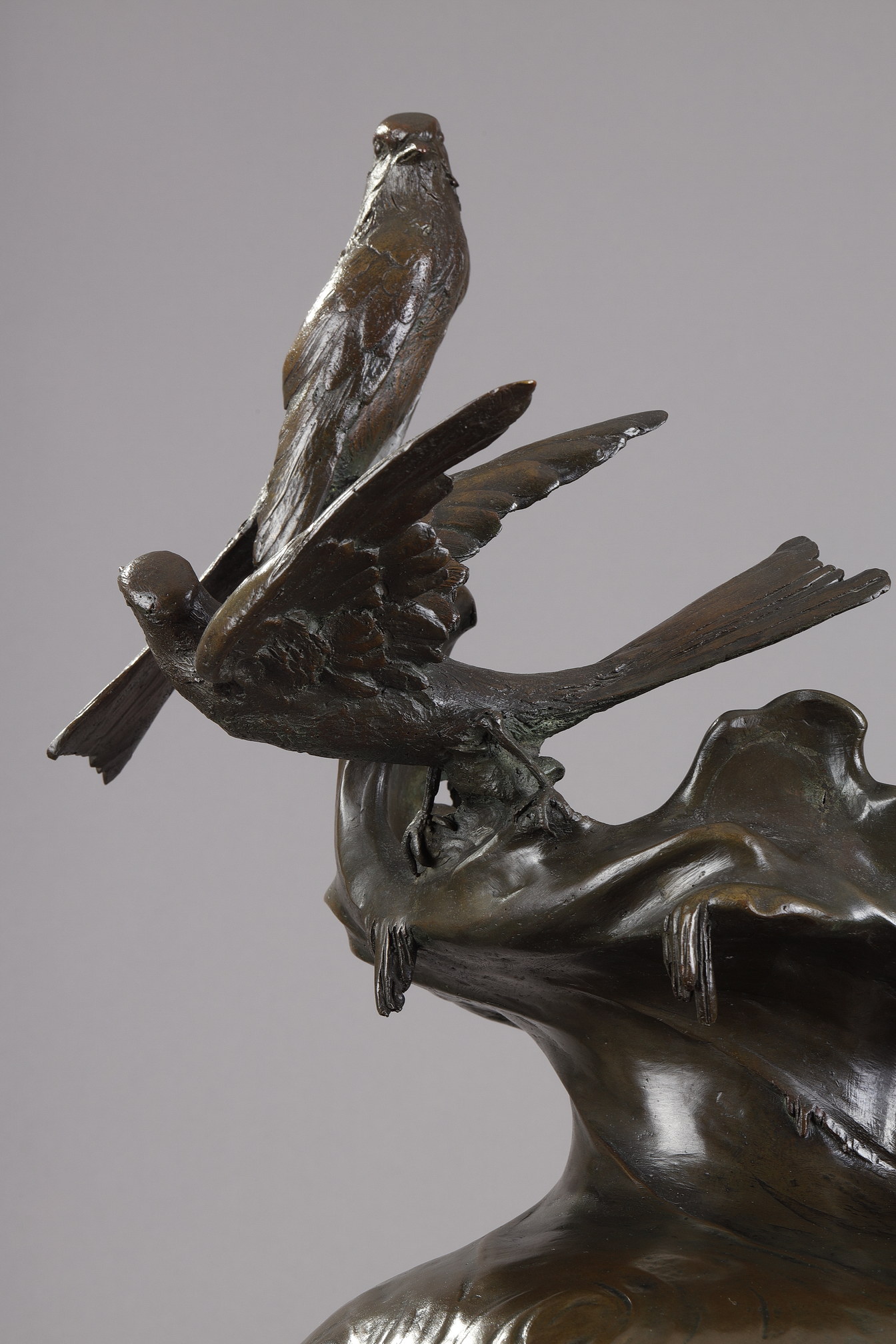
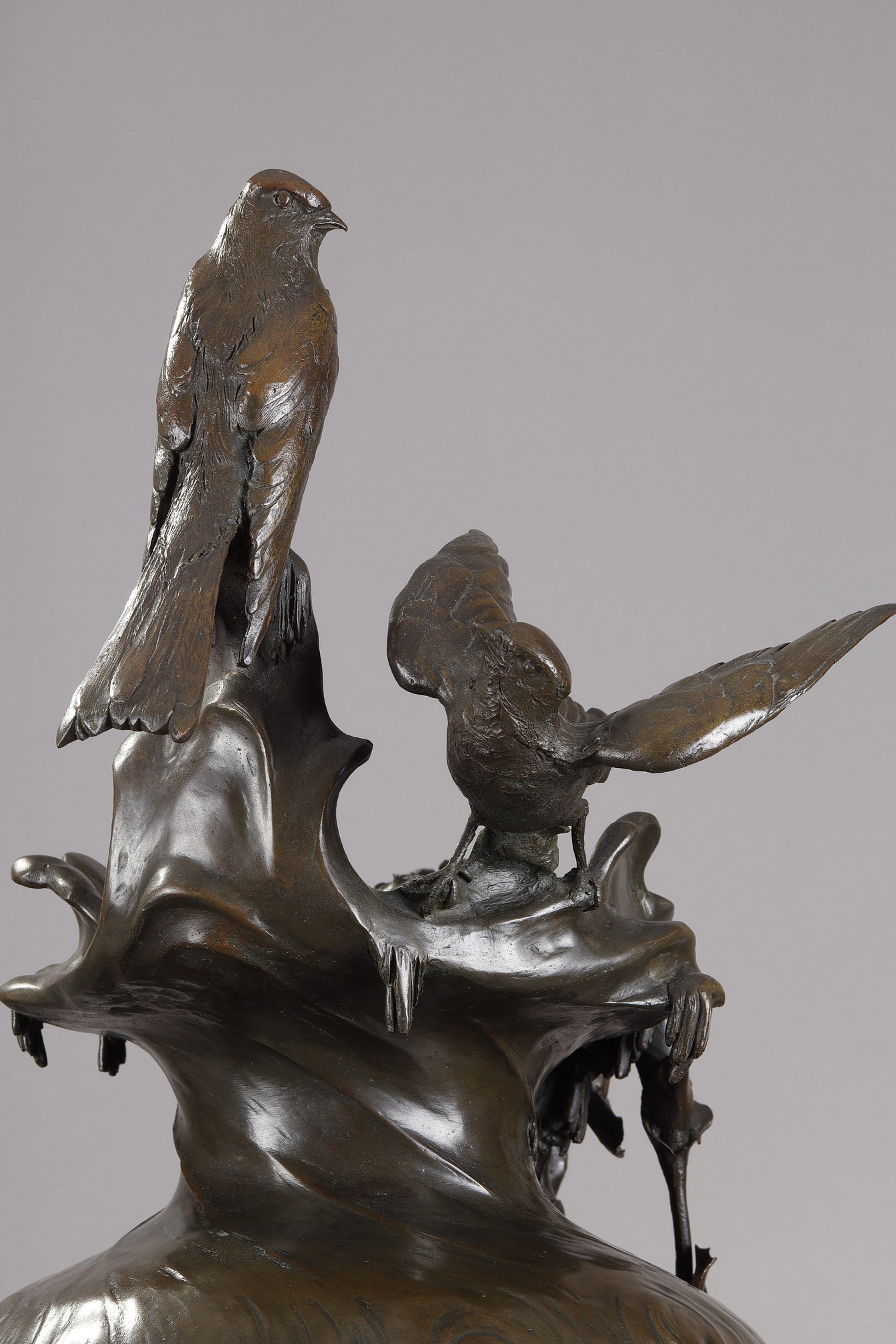
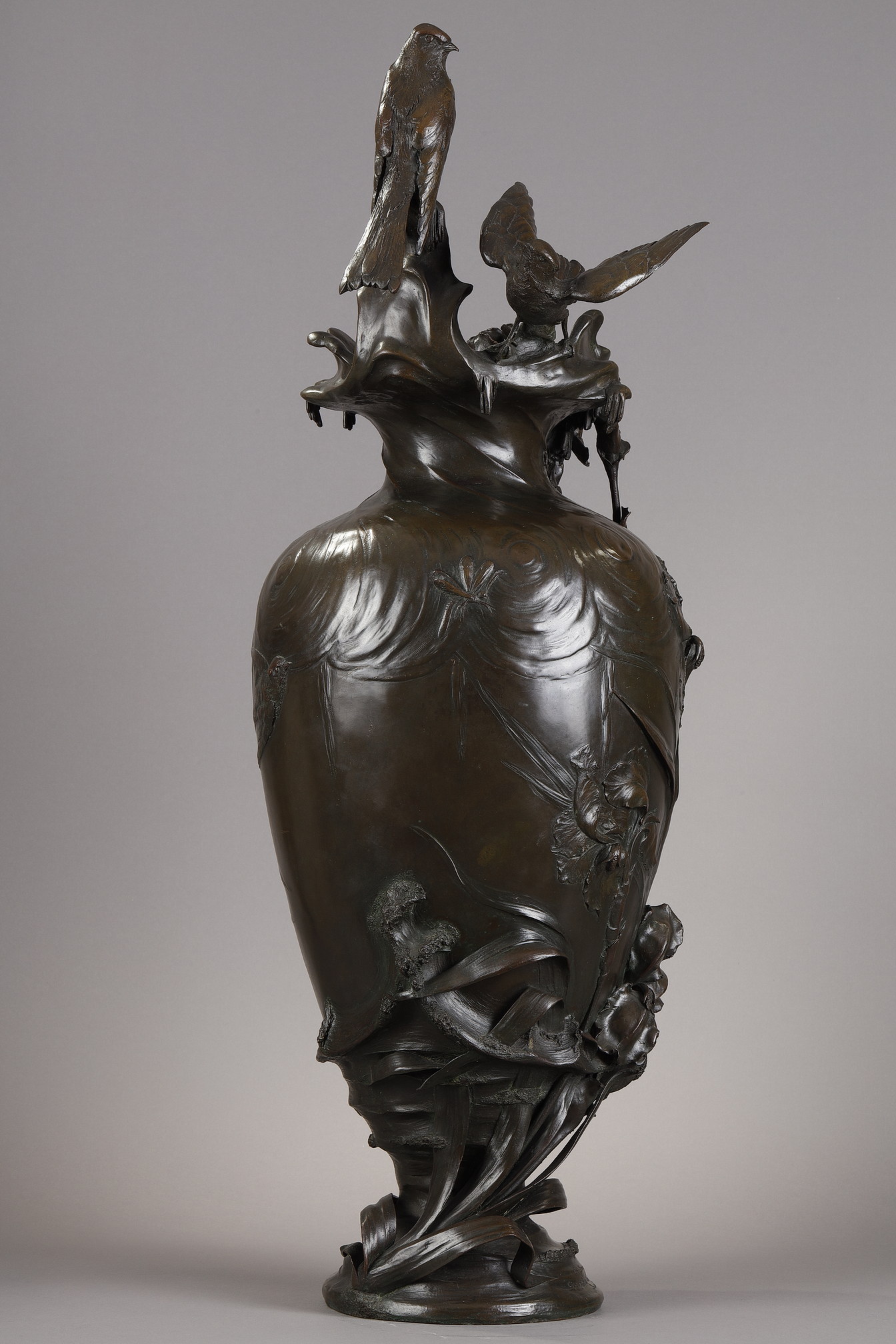
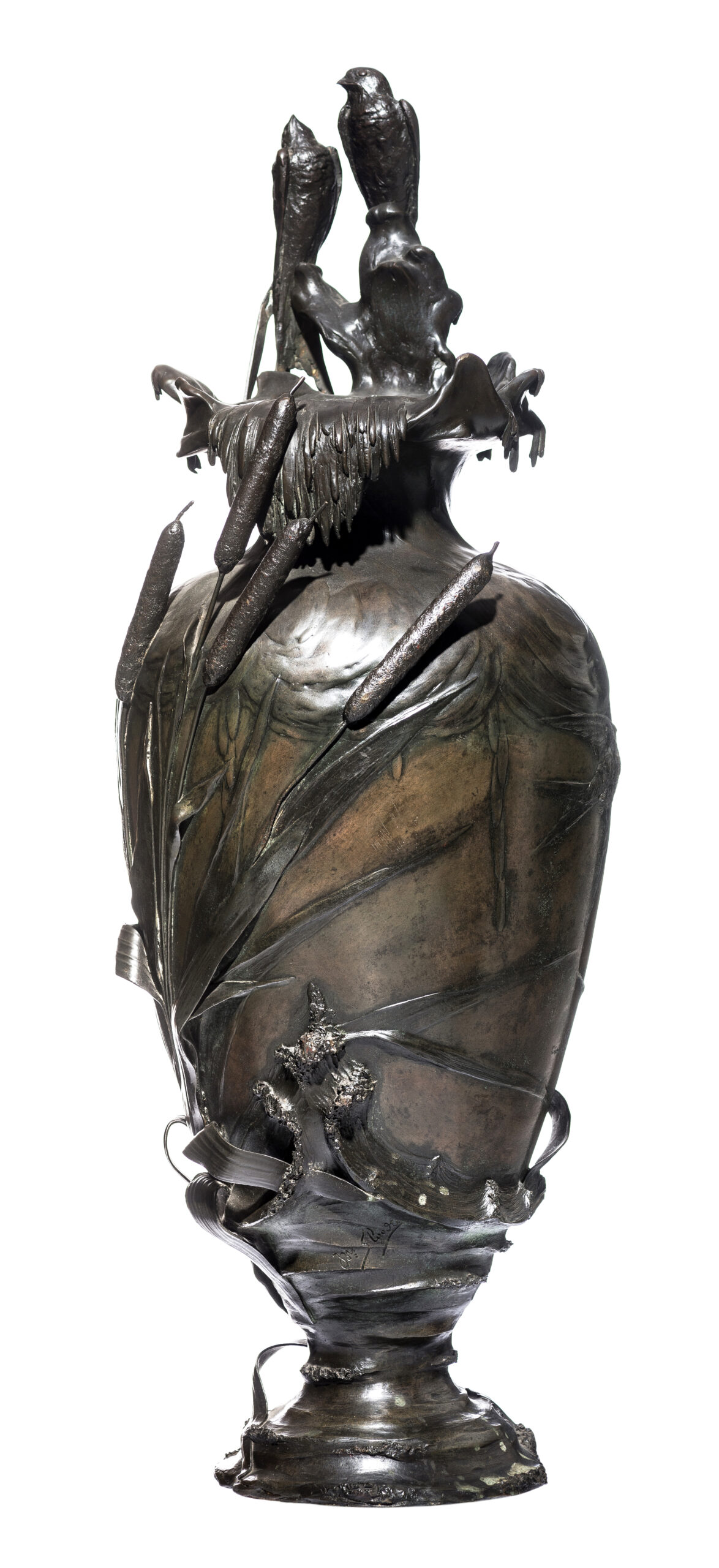
This pair of unique Art Nouveau vases, created circa 1900, are the work of the Belgian artist Jean-Baptiste Sloodts (1843–?). Each vase is a stunning lost-wax casting in bronze, featuring a double patina in light and dark brown. The first vase showcases the finesse of reeds overhung by two Chimney Swallows, while the second vase is adorned with Fleur de Lys and two Window Swallows.
Both Swallows and Fleur de Lys are recurring motifs in Belgian art, embodying a sense of freedom, grace, and nobility, while the reeds represent resilience and adaptability.
These vases are signed “JBte Sloodts”, representing the artist’s lifelong work at the foundry “La Compagnie des Bronzes” in Brussels. Starting as a second-class craftsman in 1893, Sloodts’ talents and dedication propelled him to the position of first-class foundryman by 1907. His distinction was the ability to cast and sign his own works, a rarity among foundrymen of his time.
Almost all of Jean-Baptiste Sloodts’ works are unique and in lost-wax casting. The precision, quality of casting, and the artistry of the patina make Sloodts one of the most sought-after foundrymen of the early twentieth century. Works signed by his hand are incredibly rare to find, especially in good condition.
Sloodts was renowned for his “nouvelle esthétique” style, which later evolved into the “Art Nouveau” style, making him a precursor of this trend.
Literature
- ENGELEN, C. MARX, M. Compagnie des Bronzes. Brussel: Algemeen Rijksarchief en Rijksarchief in de Provincien, 2002. p. 352–357. (The first vase is represented on page 354.)
the ARTIST
Jean-Baptiste Sloodts
Brussels, 1843
Master founder devoted to the beauty of detail. Jean-Baptiste Sloodts was a Belgian sculptor and modeller, born in Brussels in 1843. He spent his entire career at La Compagnie des Bronzes de Bruxelles, one of the most prestigious art foundries in Europe. Starting as a second-class craftsman in 1893, he was promoted in 1896 after receiving the décoration ouvrière for the excellence of his work, and in 1907 he attained the rare distinction of first-class founder.
similar works