jef lambeaux · (1852–1908)
The Night
technical sheet
| ARTIST | Jef Lambeaux |
| DATE | ca. 1900 |
| MATerial | White Carrara marble |
| DIMENSIONS | 128,5 x 47,5 x 36,5 cm |
| Signature | |
| PROVENANCE | |
| CONSERVATION | Private Collection |
about the work
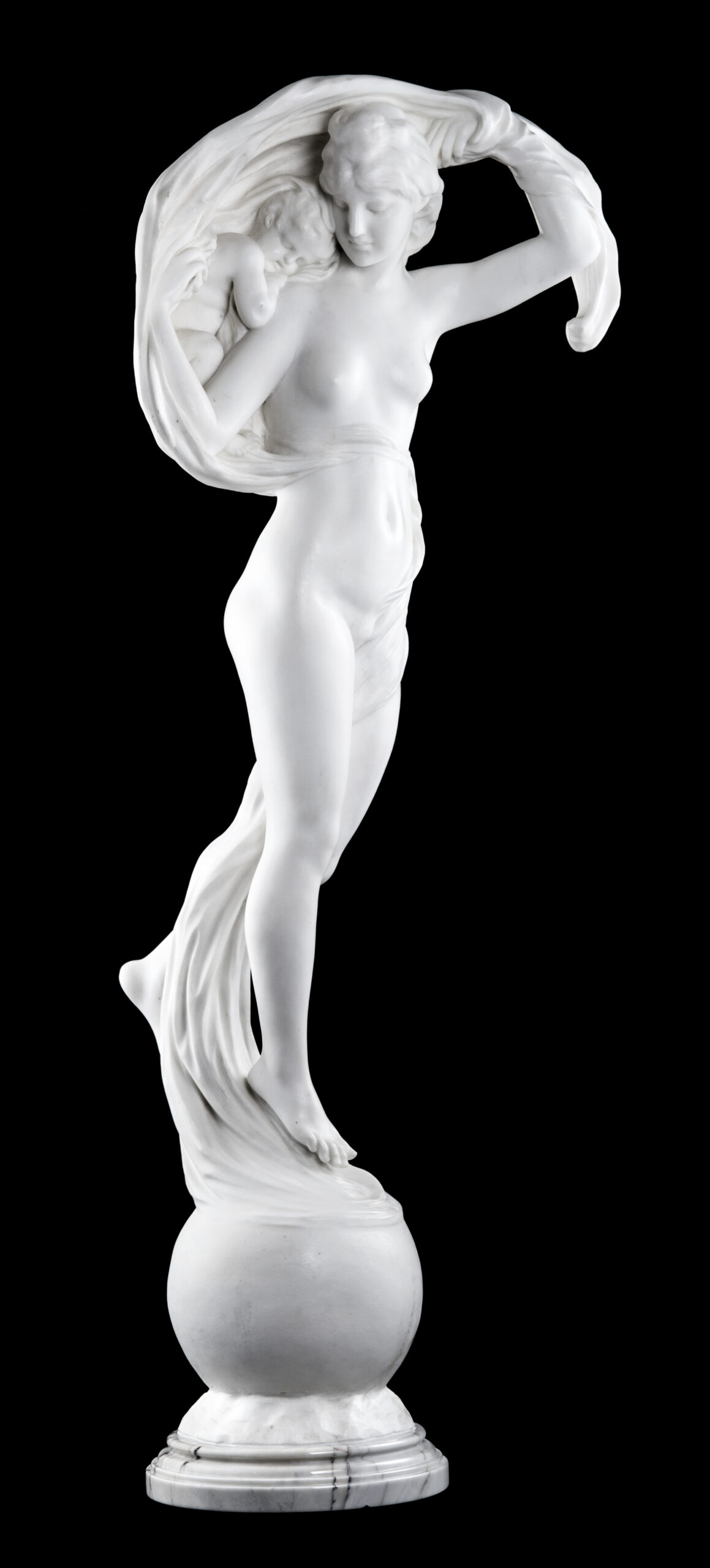
Of this ever-inventive master, several versions of works are known that bear the title L’Aurore (Dawn). It has not been determined what exactly is depicted in this large and complicated sculpture, but a fitting name could be Night. The sphere that serves as a base to the all but hovering figure could be the earth, partly covered by the same sheet in which the child too feels harboured.
This elegant lady of the night takes possession of the space around her and seems to identify with the task she fulfils with eagerness. The composition, as dynamic as it is refined, unites the sensuality of the forms with a meditative gravity characteristic of the turn of the century.
Carved in white Carrara marble, the work exemplifies the technical bravura for which Lambeaux is renowned: the suggestion of volume and weight, the fluid drapery, the supple anatomy. In it we recognise the daring originality that was the artist’s hallmark and earned him, in his own lifetime, an altogether exceptional reputation.