ALFREDO MORELLI
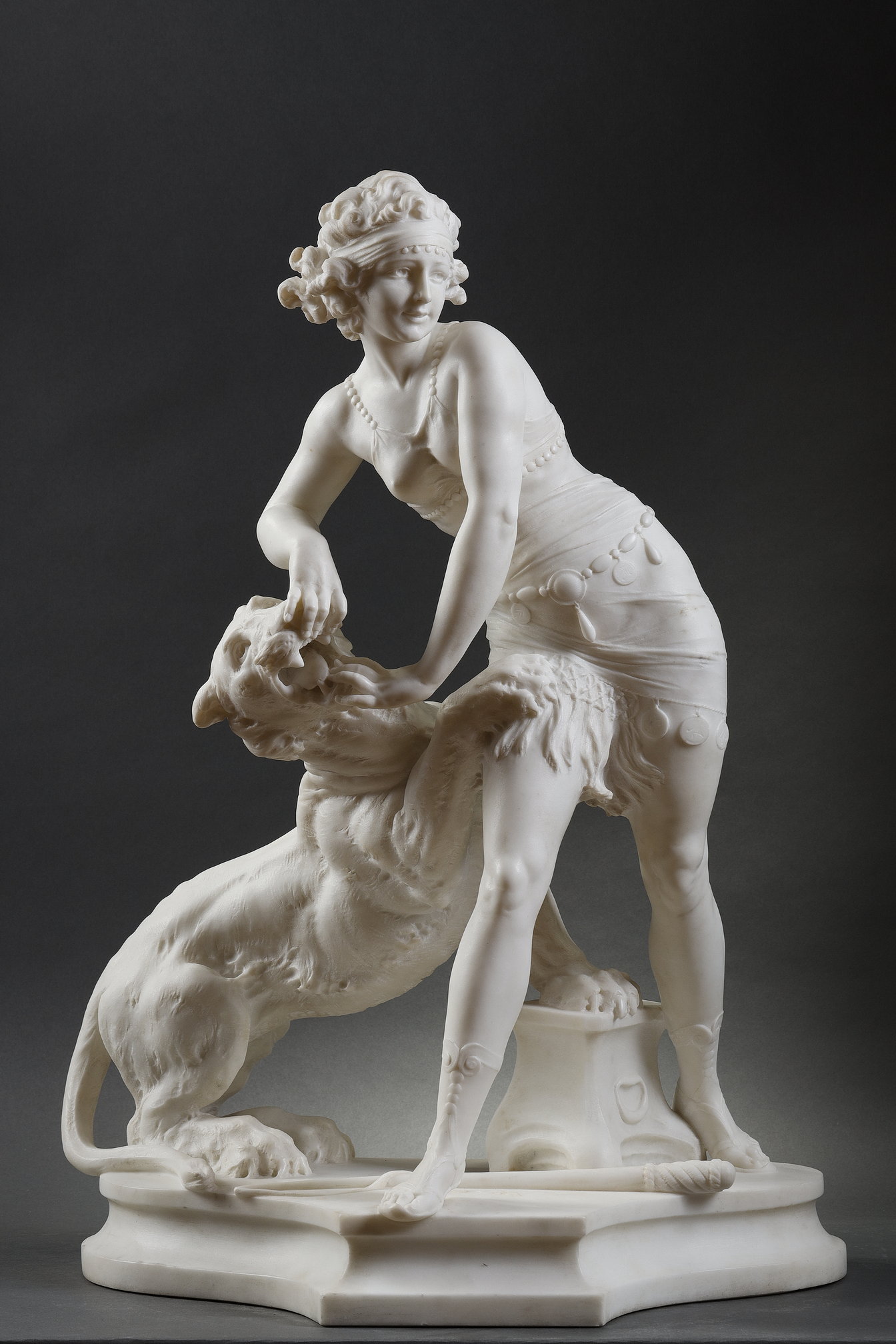
The Tiger Tamer
technical sheet
| ARTIST | Alfredo Morelli |
| DATE | ca. 1925 |
| DIMENSIONS | 74 x 53 x 32 cm |
| MATERIAL | White Carrara marble |
| SIGNED | “a. Morelli Florence” |
about the work
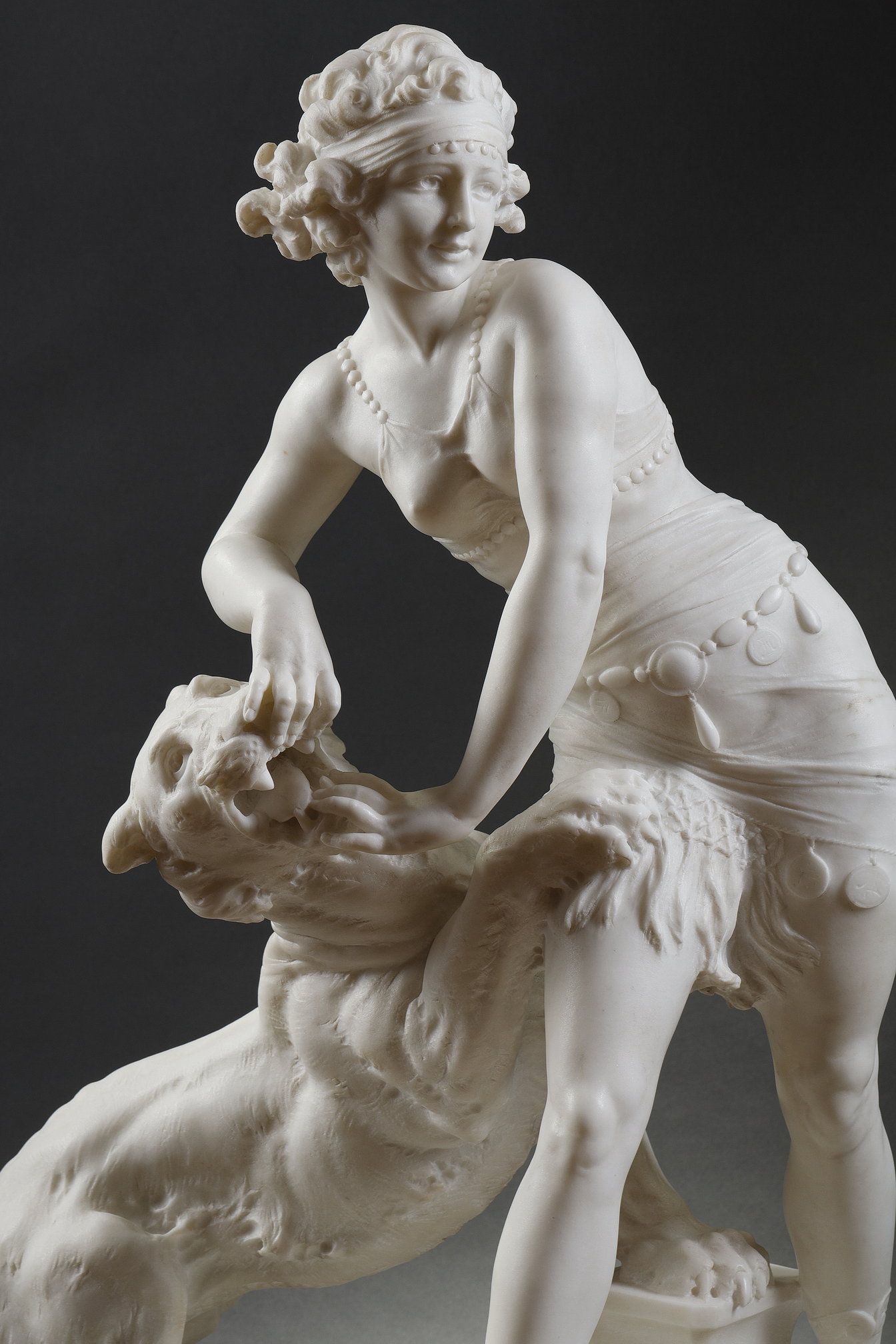
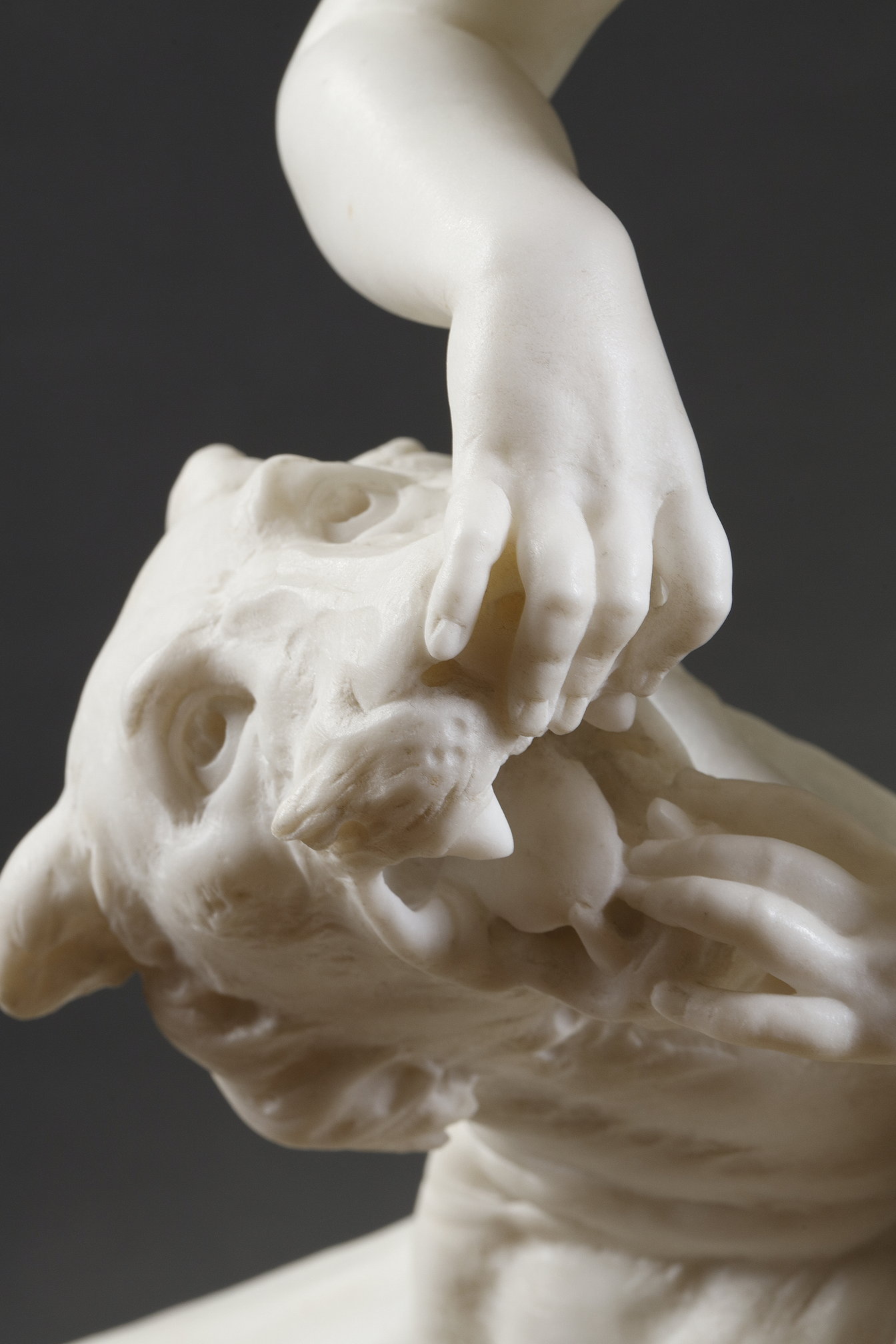
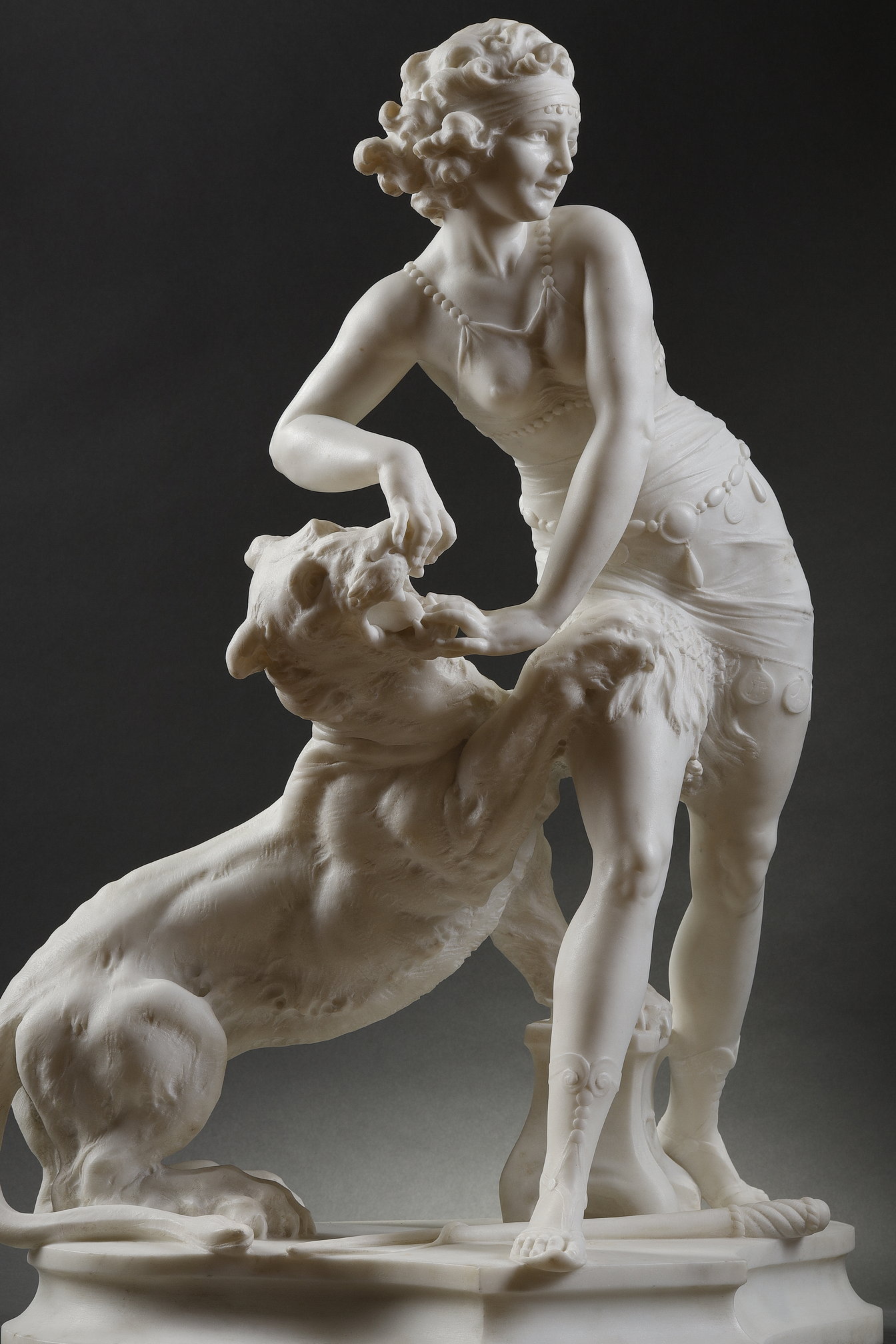
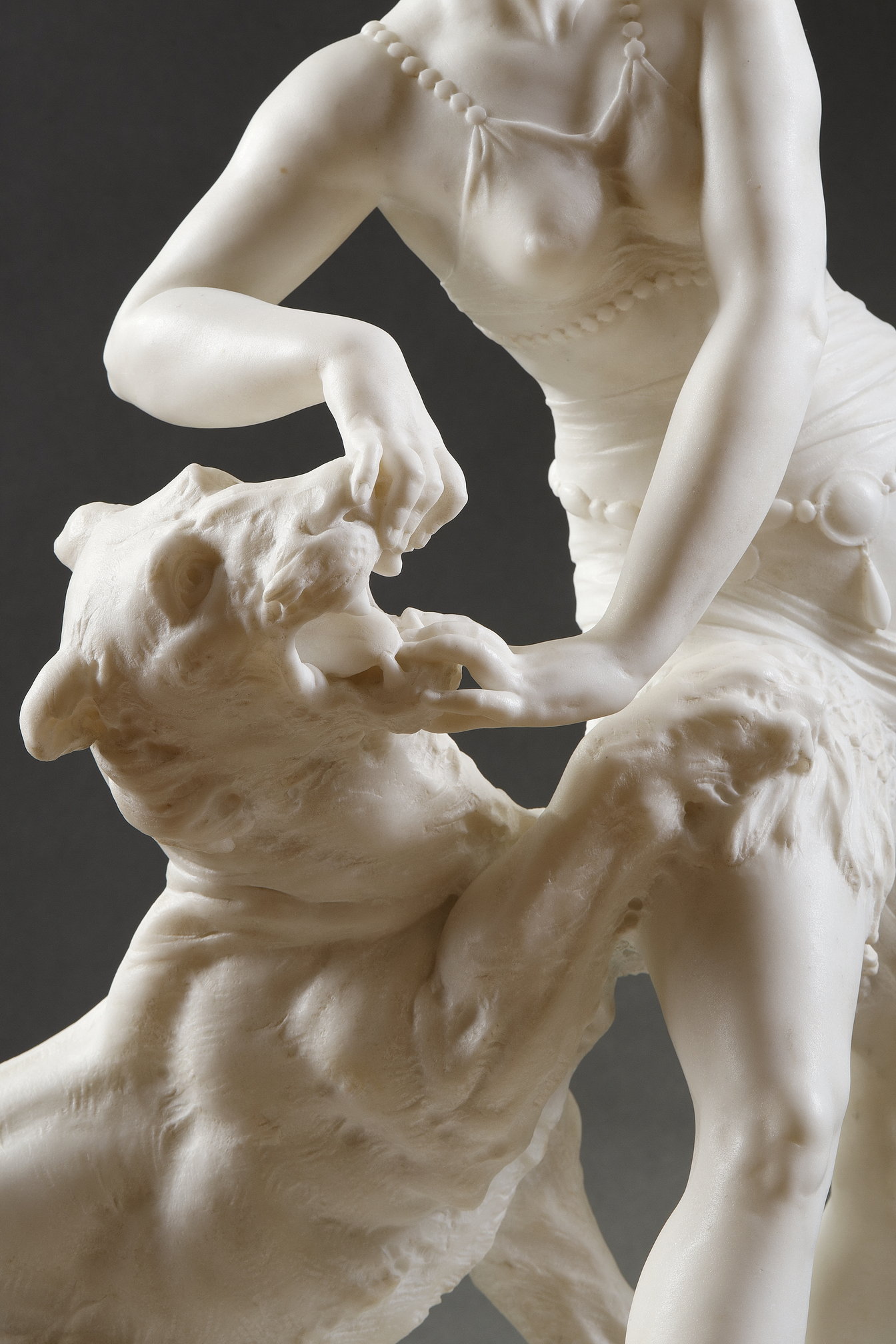
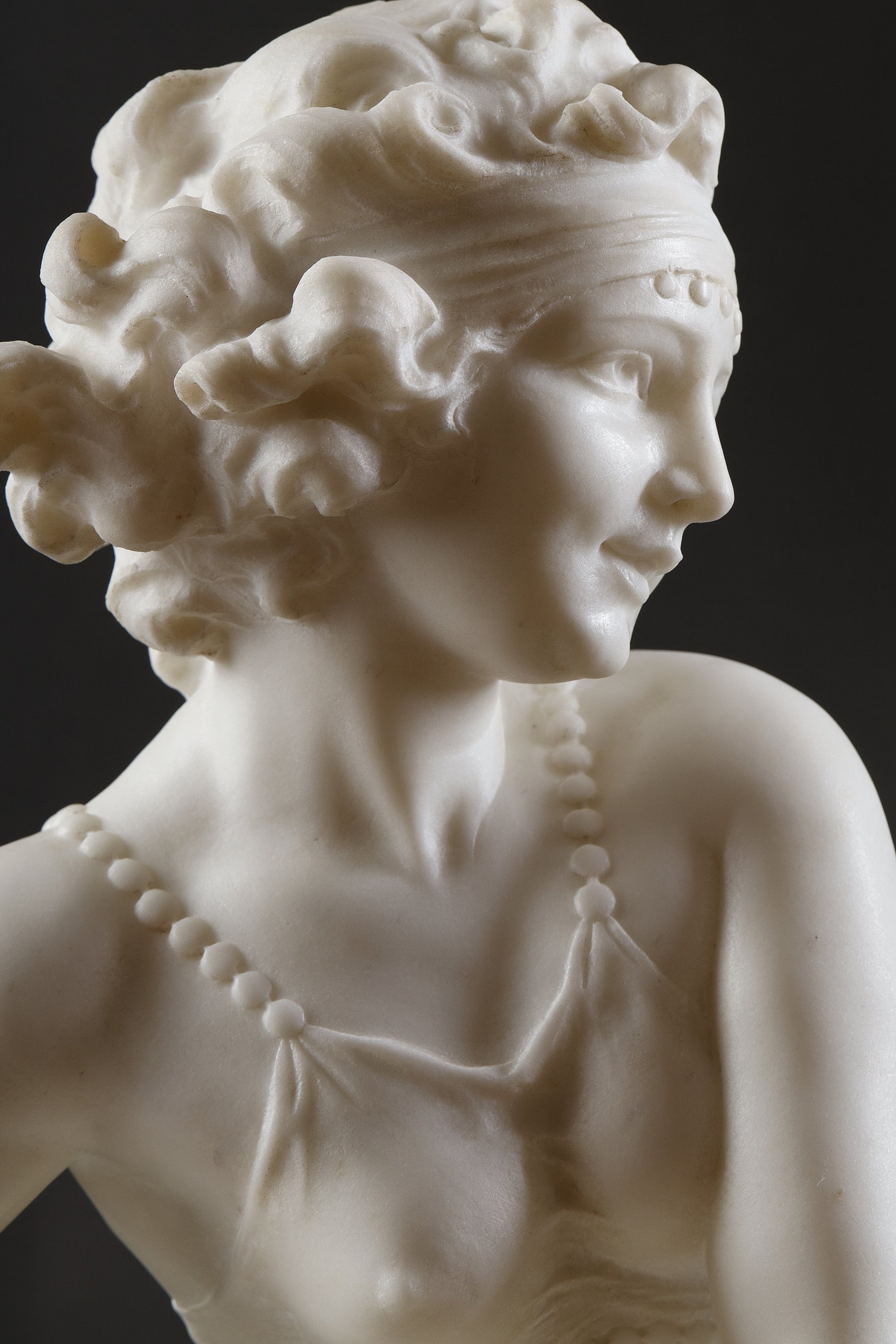
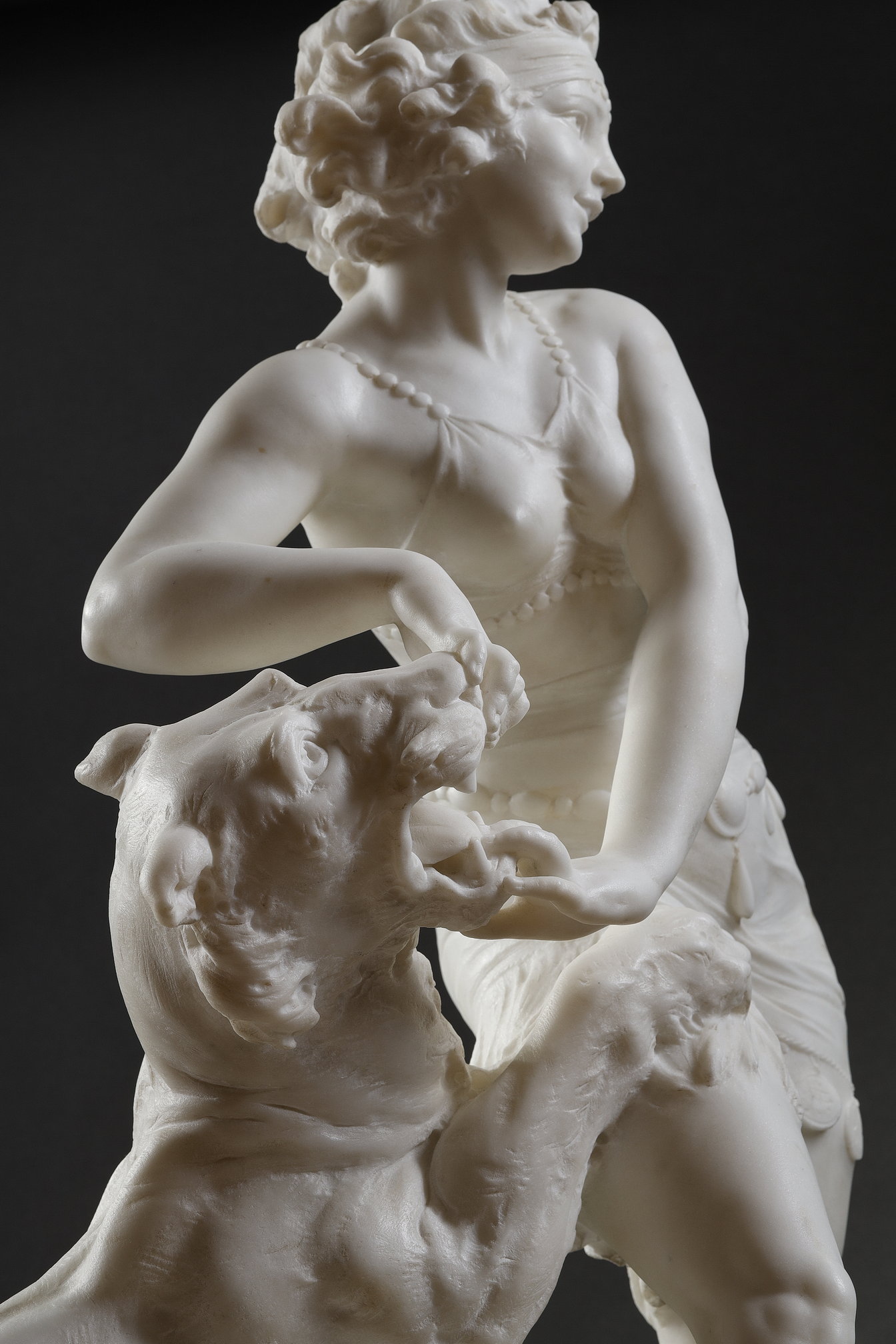
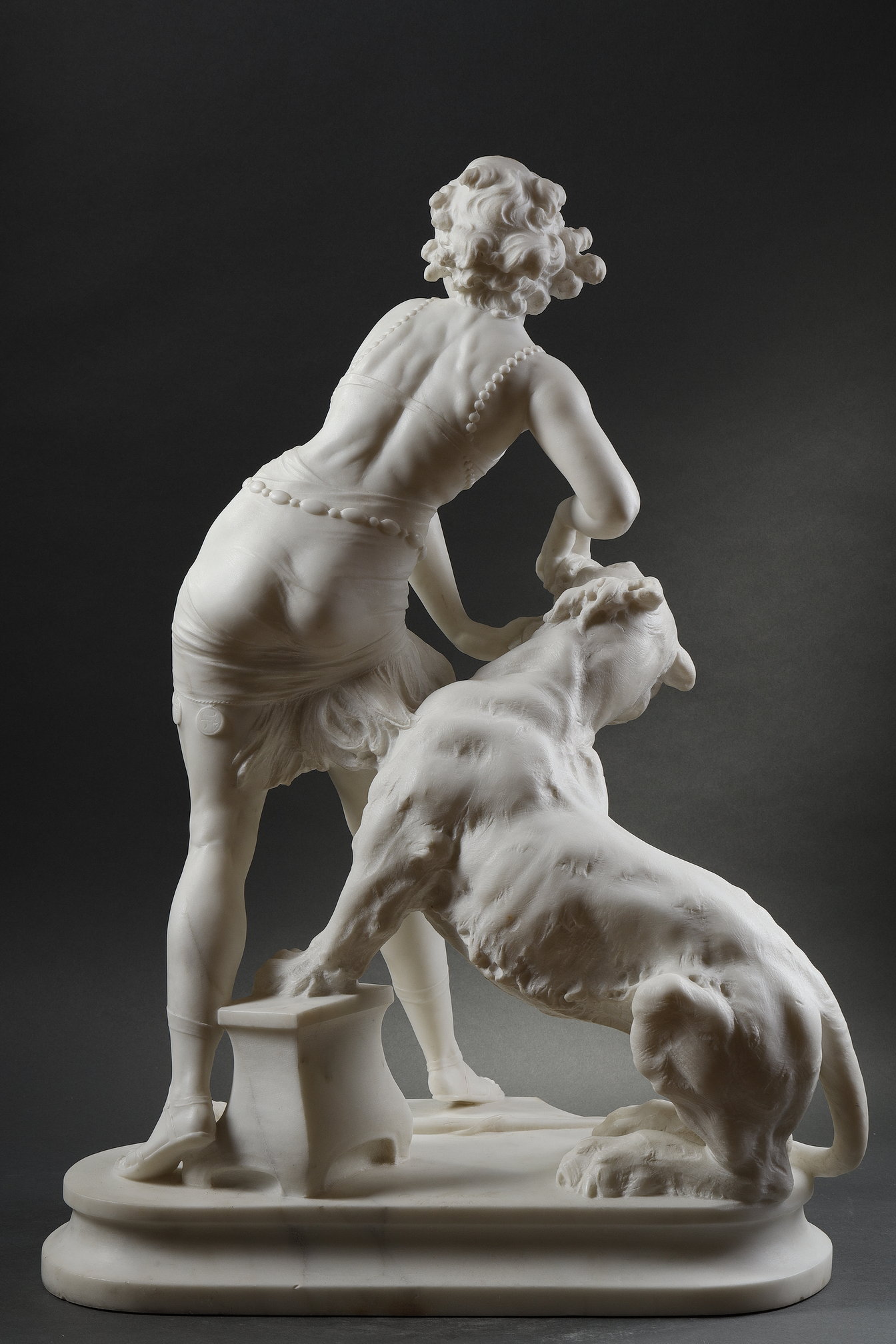
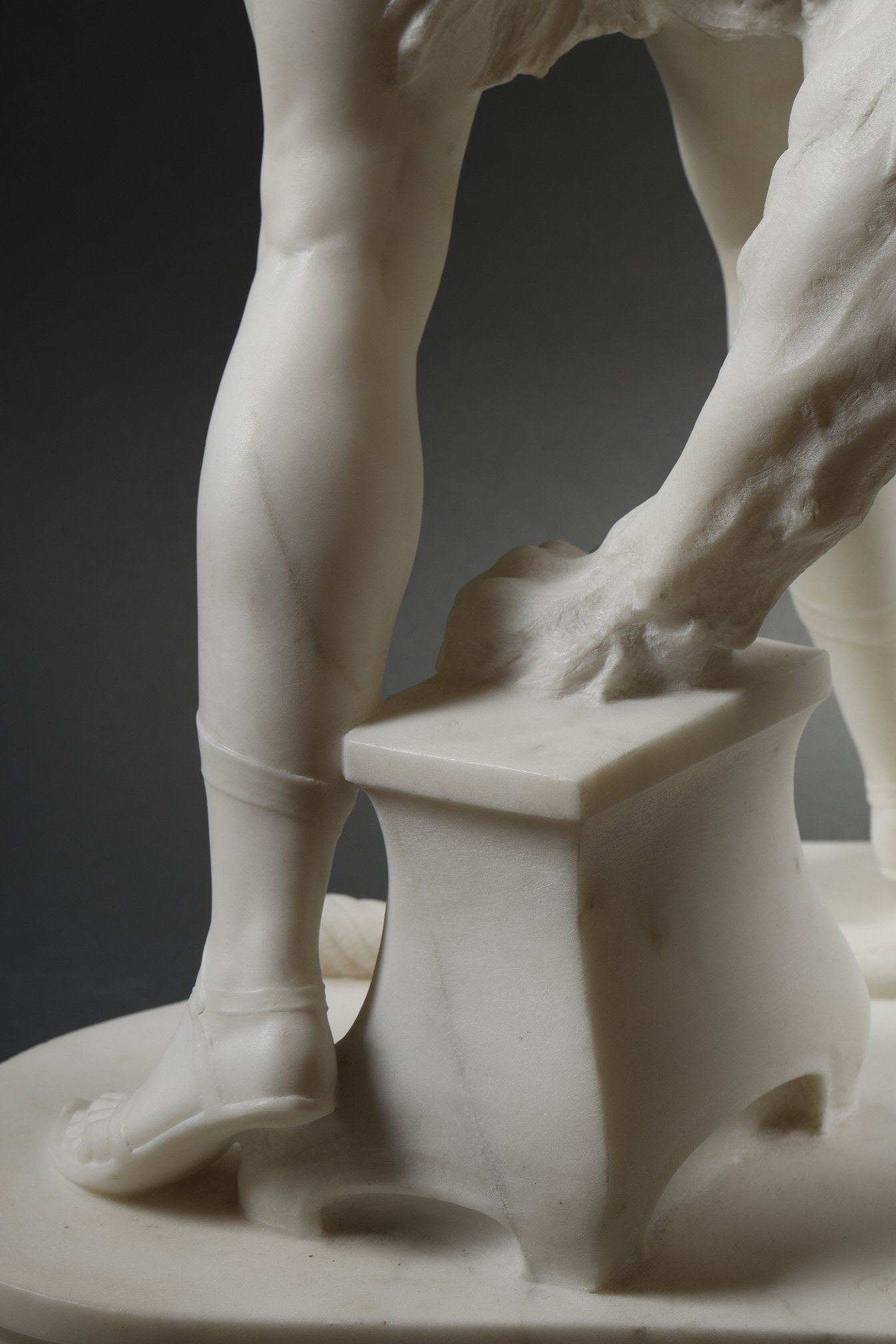
This captivating sculpture in white Carrara marble depicts a woman in a dynamic pose, firmly holding the jaw of a subdued tiger. The composition radiates both contained strength and confident sensuality — a hallmark of many orientalist works from the early 20th century.
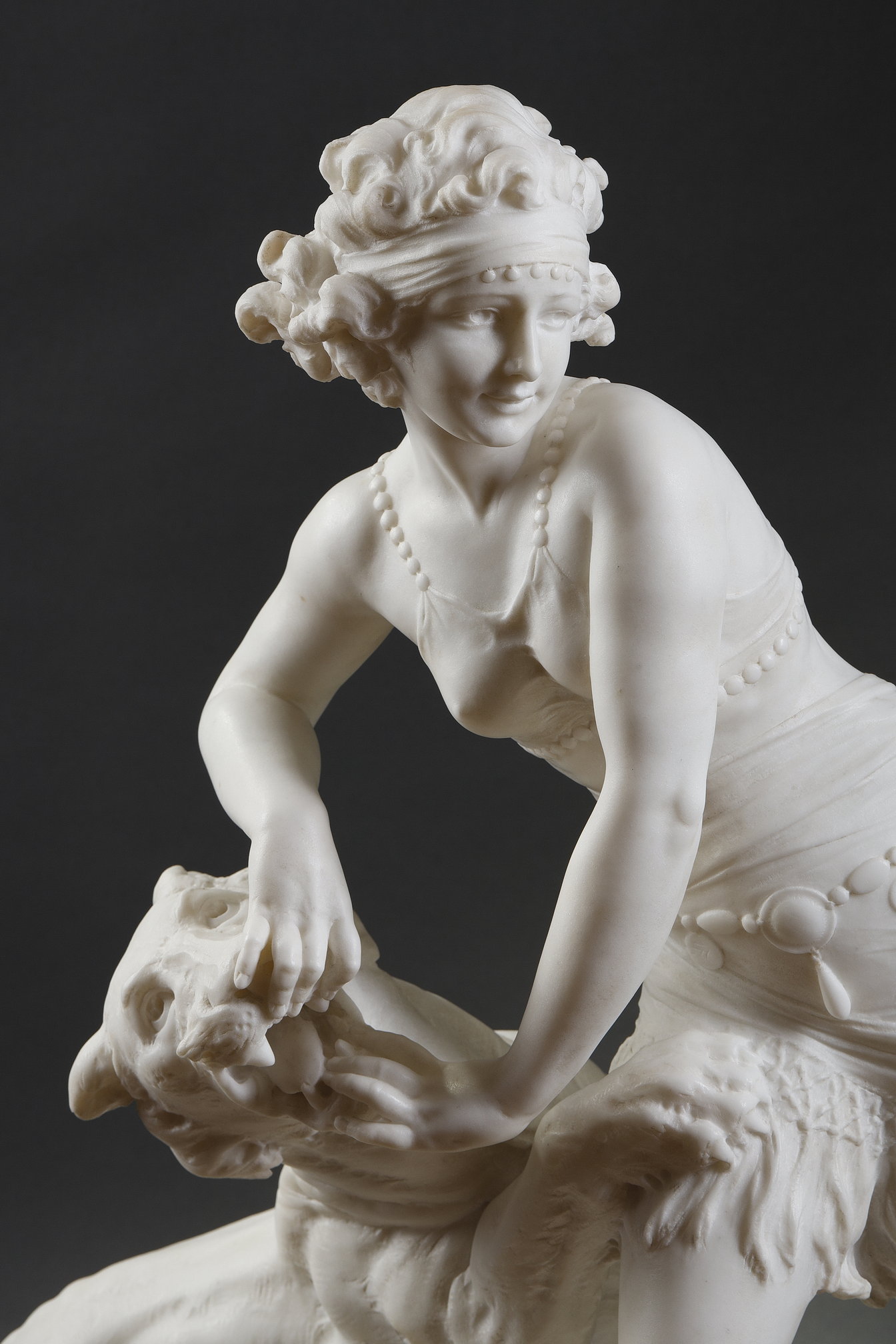
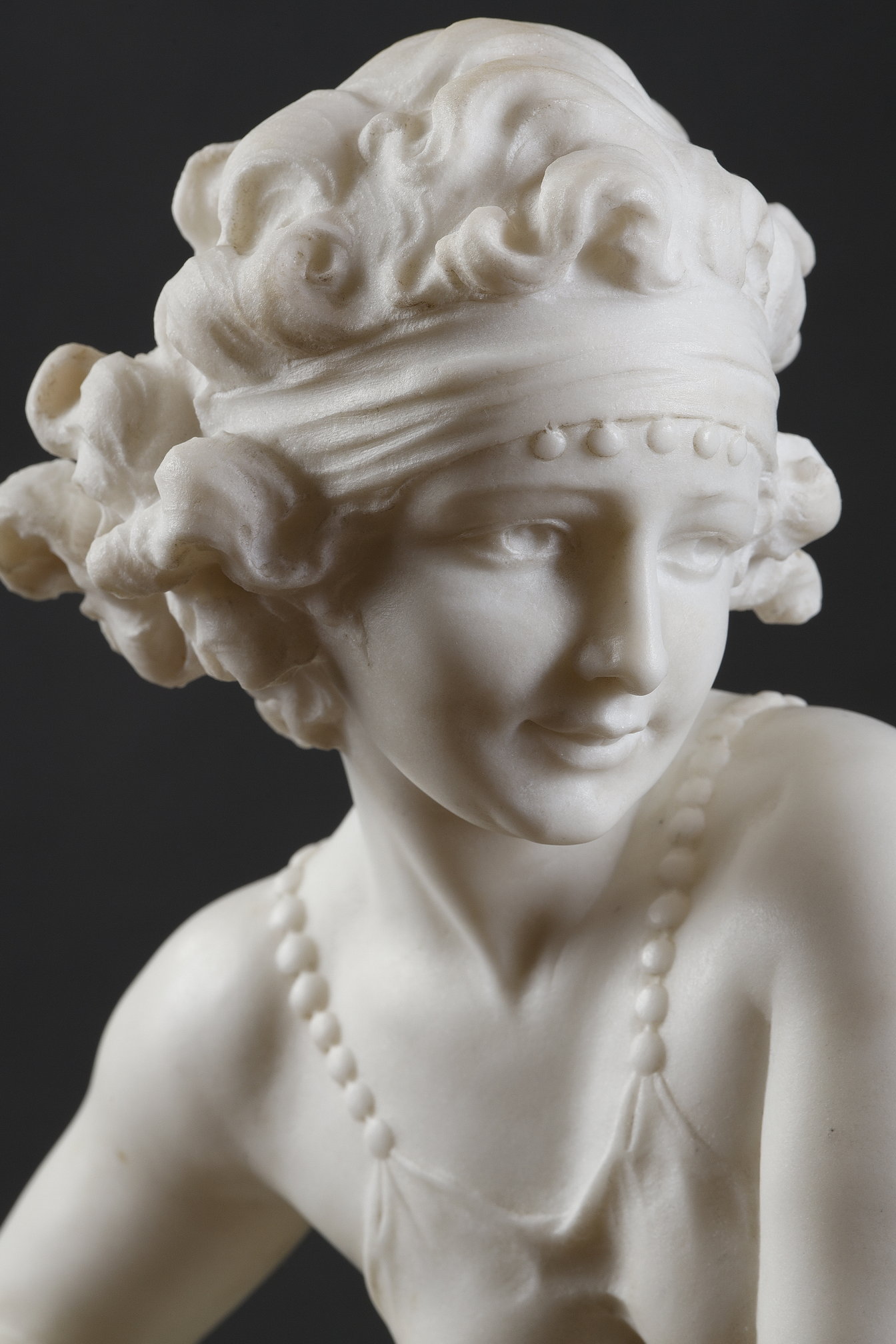
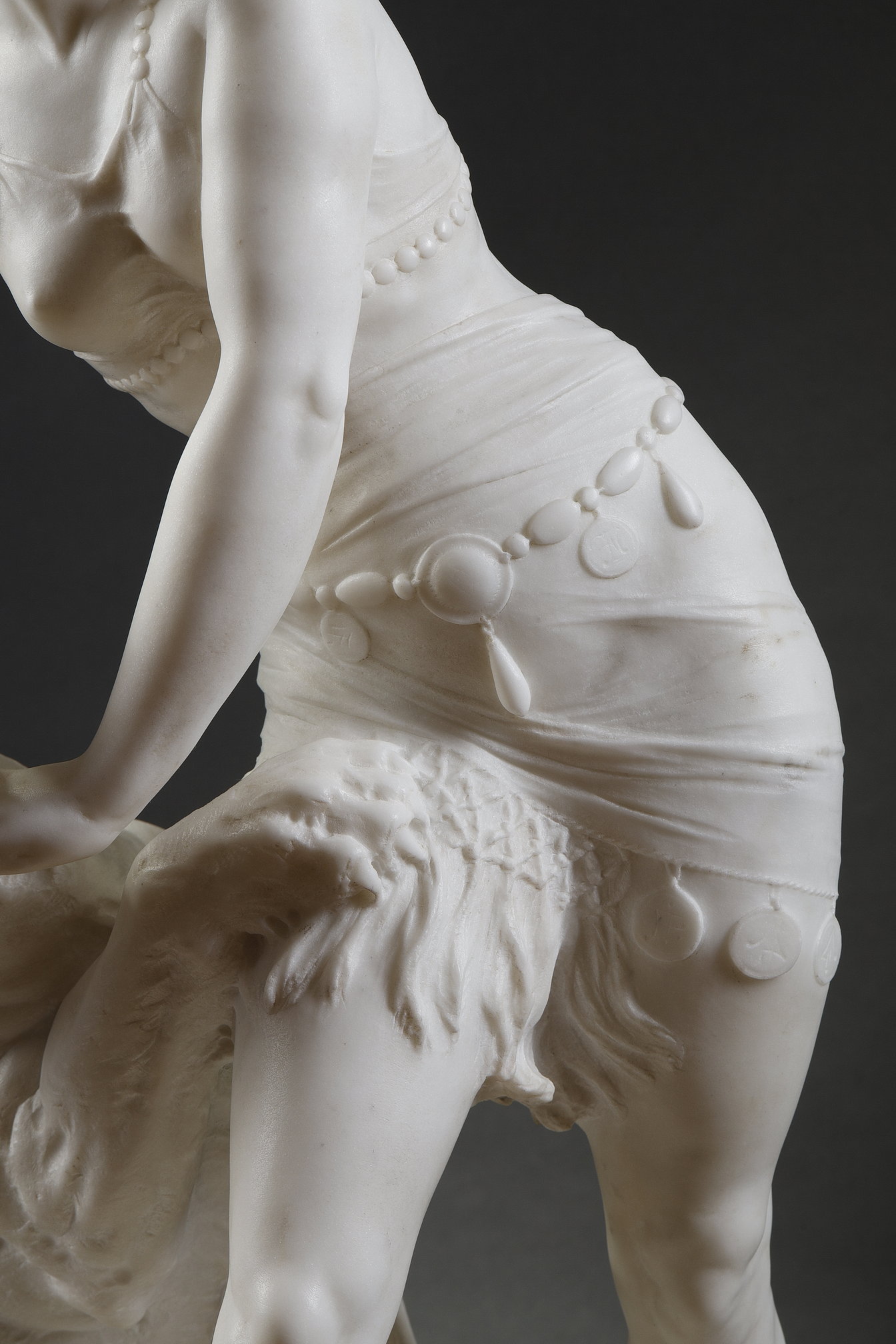
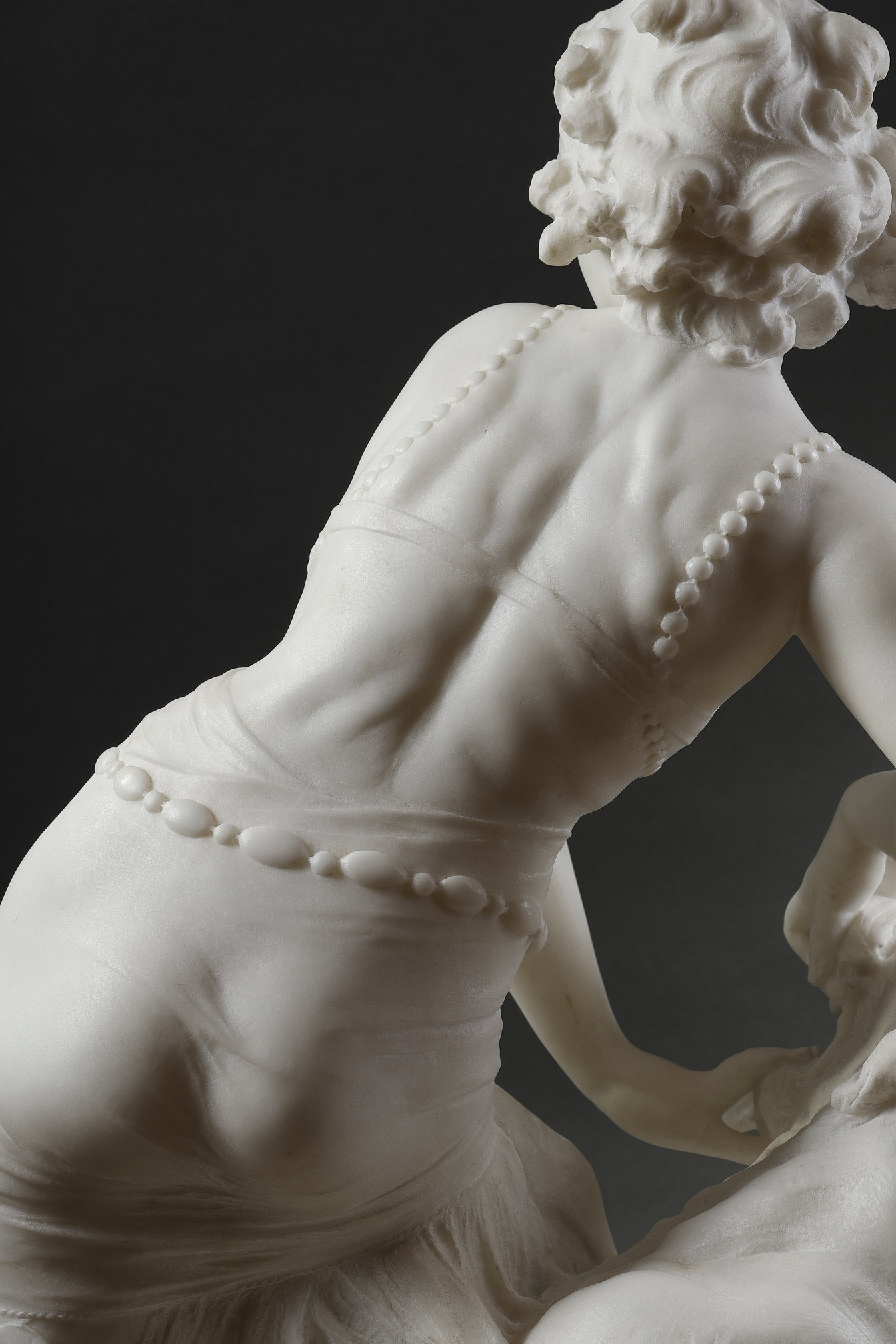
The tamer is shown standing, her torso gently leaning forward, forming a graceful and expressive serpentine line. She grips the tiger’s jaw with assurance, asserting composed dominance over the animal. She wears a stage costume inspired by the circus world, adorned with a medallion belt, finely sculpted beaded details, and a headband that holds back her curled hair. Her gentle expression contrasts with the tension of the scene, heightening the duality between power and beauty. The tiger, with massive paws and a muscular back, is portrayed in a docile posture, yet still exudes latent power. It does not roar — it obeys — further underscoring the tamer’s control. At their feet lies a whip or command staff, a subtle but essential reminder of the woman’s role and authority.
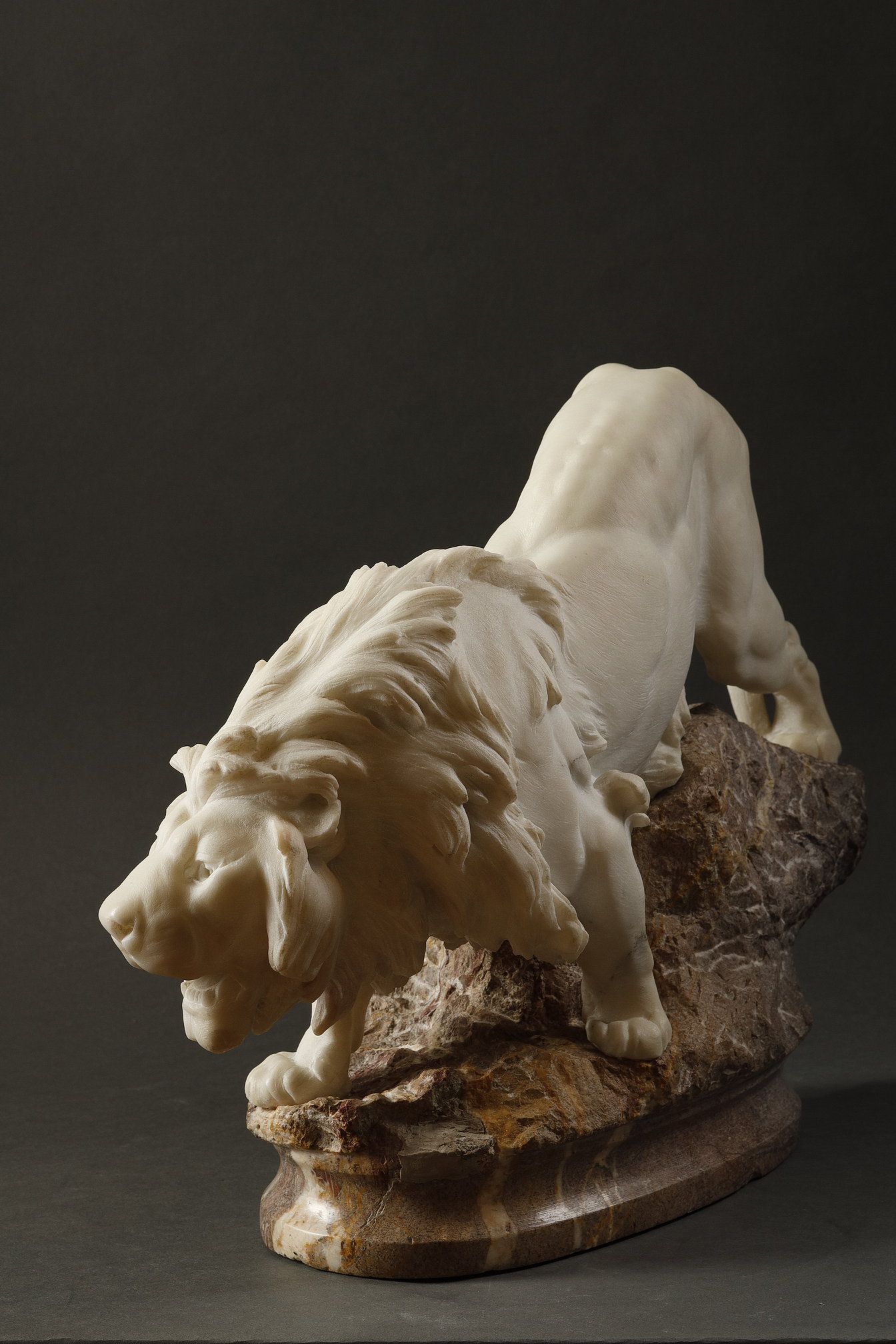
The sculpture clearly aligns with the aesthetic of the late 19th century and early 20th century : a taste for exotic or theatrical scenes; the celebration of empowered femininity in the vein of tamers, amazons, or mythological heroines; and a virtuosic treatment of marble, especially in the rendering of textures — from garments and hair to the tiger’s pelt and musculature.
This is a unique example of Art Deco sculpture, preserved in a remarkable state of conservation.
Literature
- PANZETTA, A. Nuovo Dizionario degli Scultori Italiani dell’Ottocento e del primo Novecento. 3e éd. Italy : Umberto Allemandi & C., 2003. Vol.2. p. 589.
the ARTIST
Alfredo Morelli
Italian
Florentine artist renowned for his refined Art Deco marble works. Alfredo Morelli was an Italian sculptor active in Florence, where he received his artistic training at the Istituto d’Arte. A diligent student, he began exhibiting internationally at an early stage. In 1885, he presented his works in Antwerp and Haarlem, where he received an honorable mention — an early sign of the recognition his talent would garner.
similar works