The Nymph
Mathurin Moreau (1822-1912)
Nationality : French
Date : Late 19th century
Dimensions : 81 x 29,5 x 29,5 cm
Material : White Carrara marble
Signature : “moreau.math.”
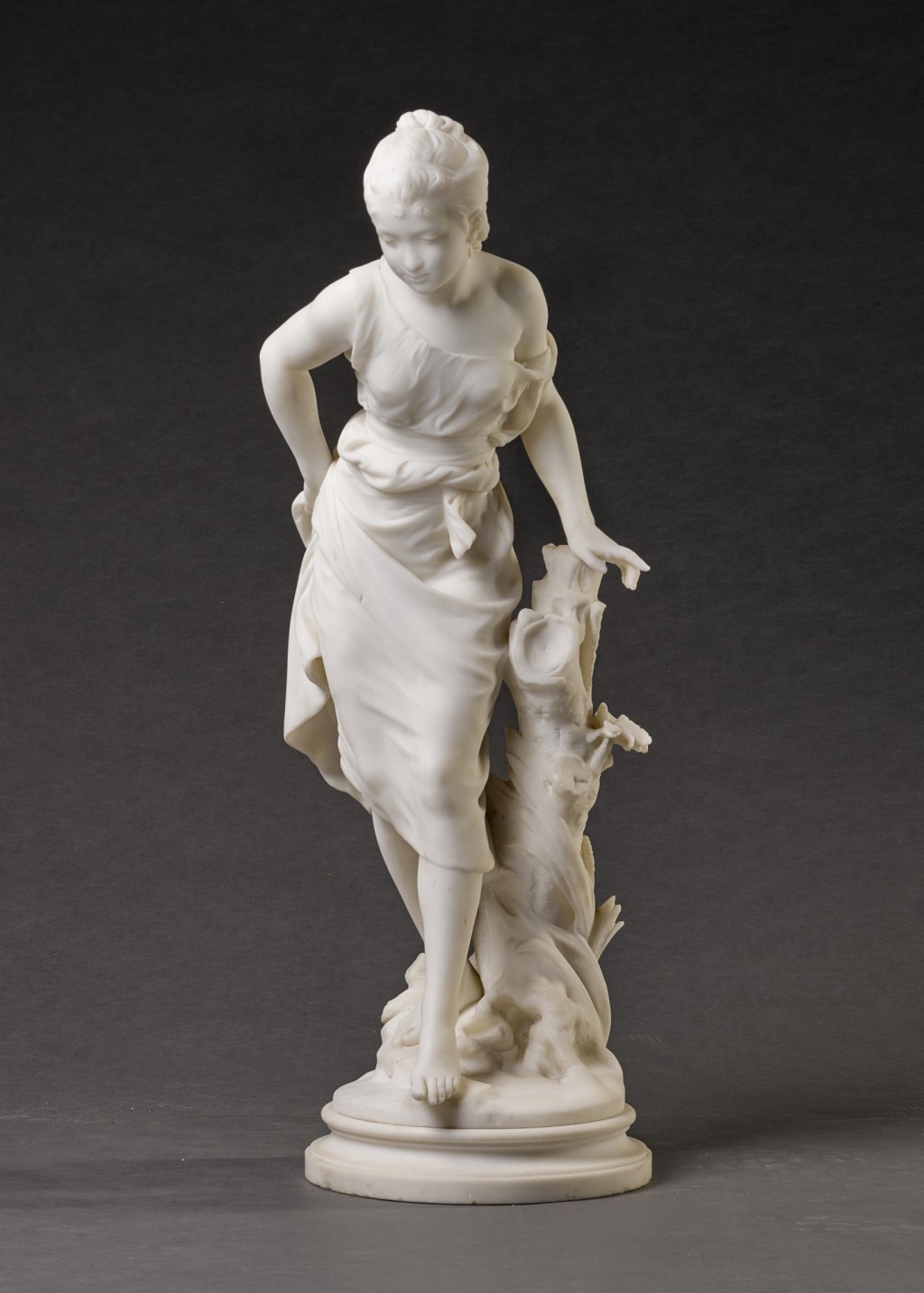
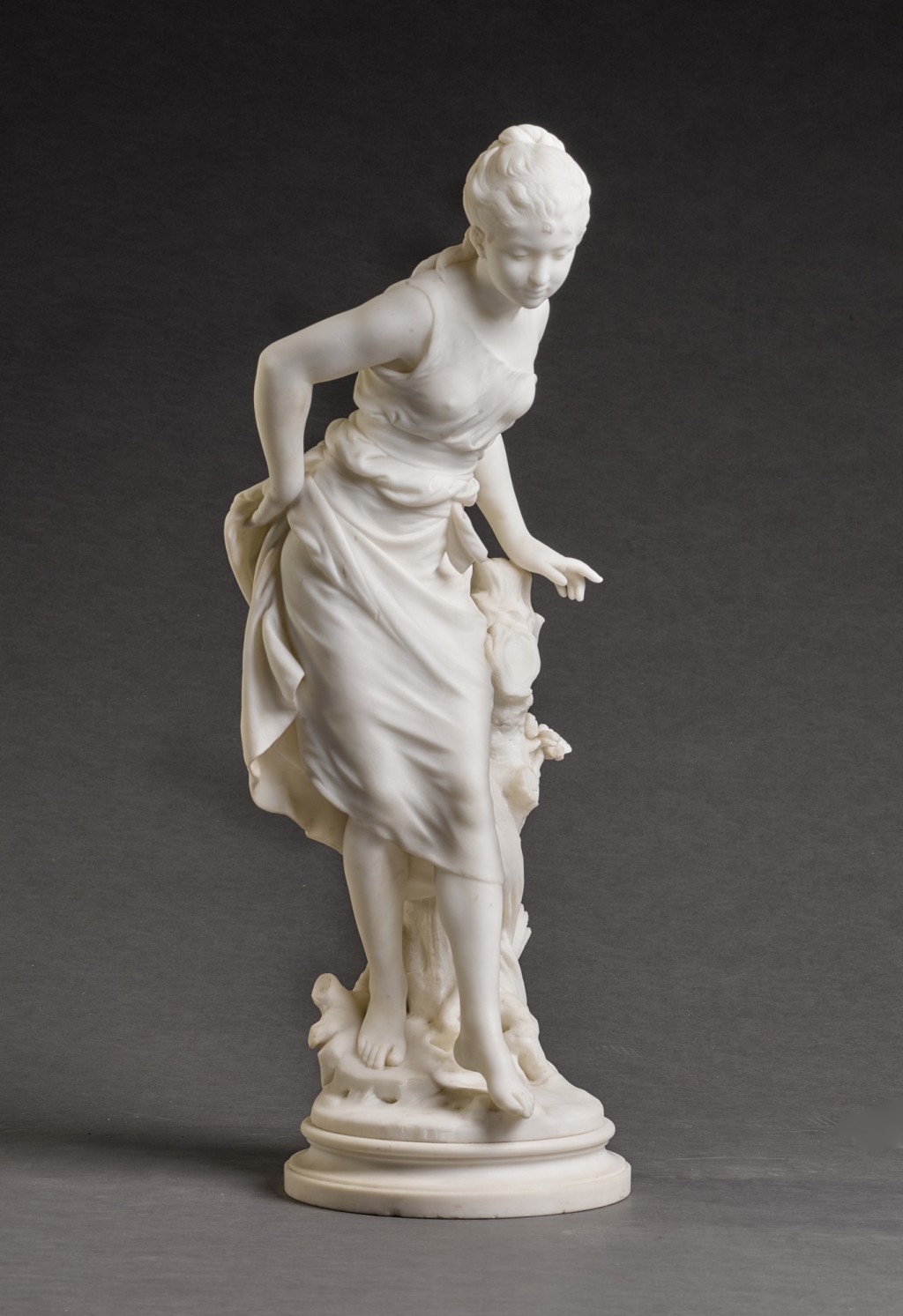
This luminous marble sculpture by Mathurin Moreau, among the most prolific French sculptors of the 19th century, depicts a youthful nymph poised in a moment of graceful anticipation. Radiant and serene, she appears on the verge of dipping her foot into a flowing stream, embodying both innocence and elegant composure. Her gentle smile and downcast gaze further enhance the sense of tranquil beauty that emanates from the work.
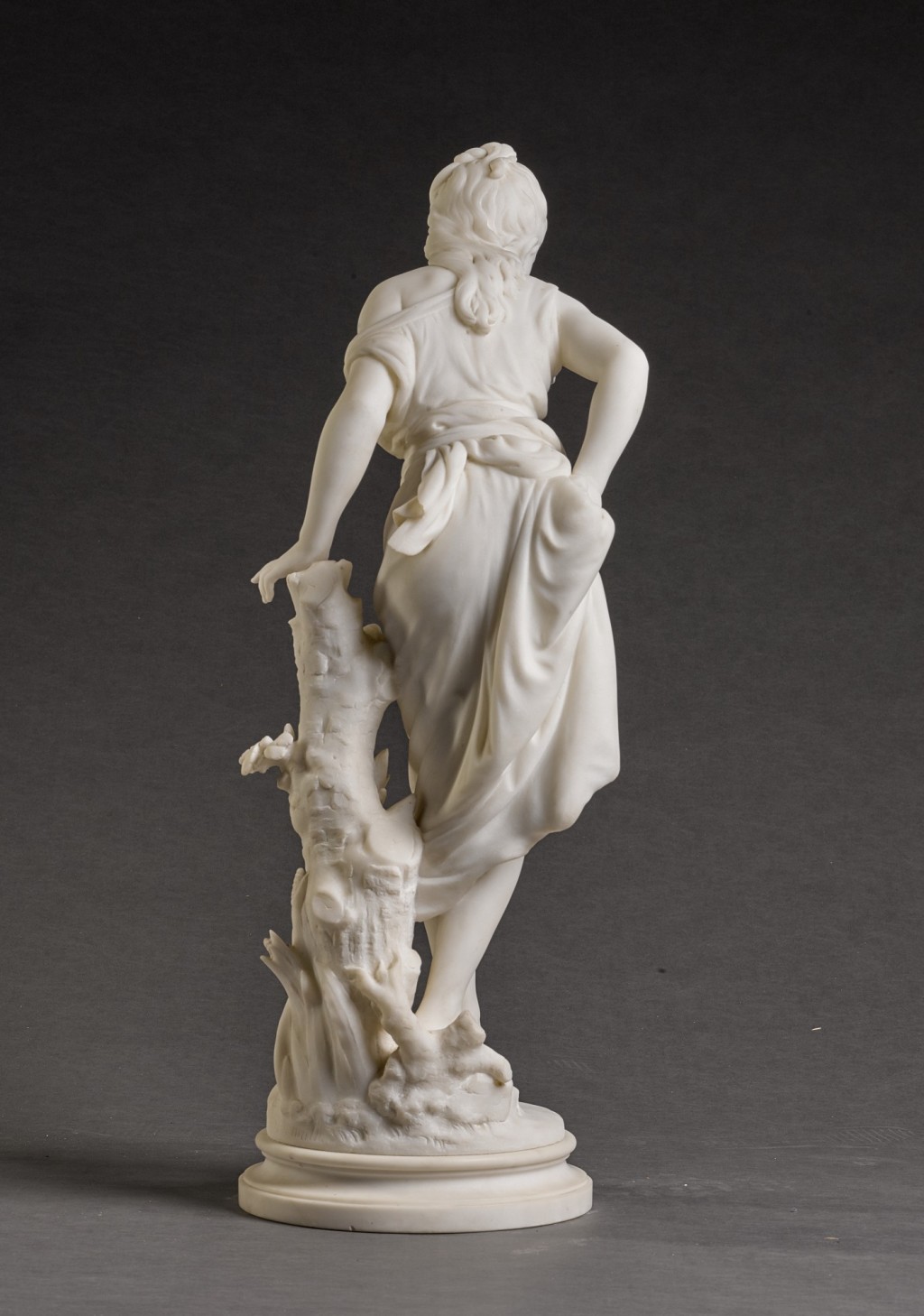
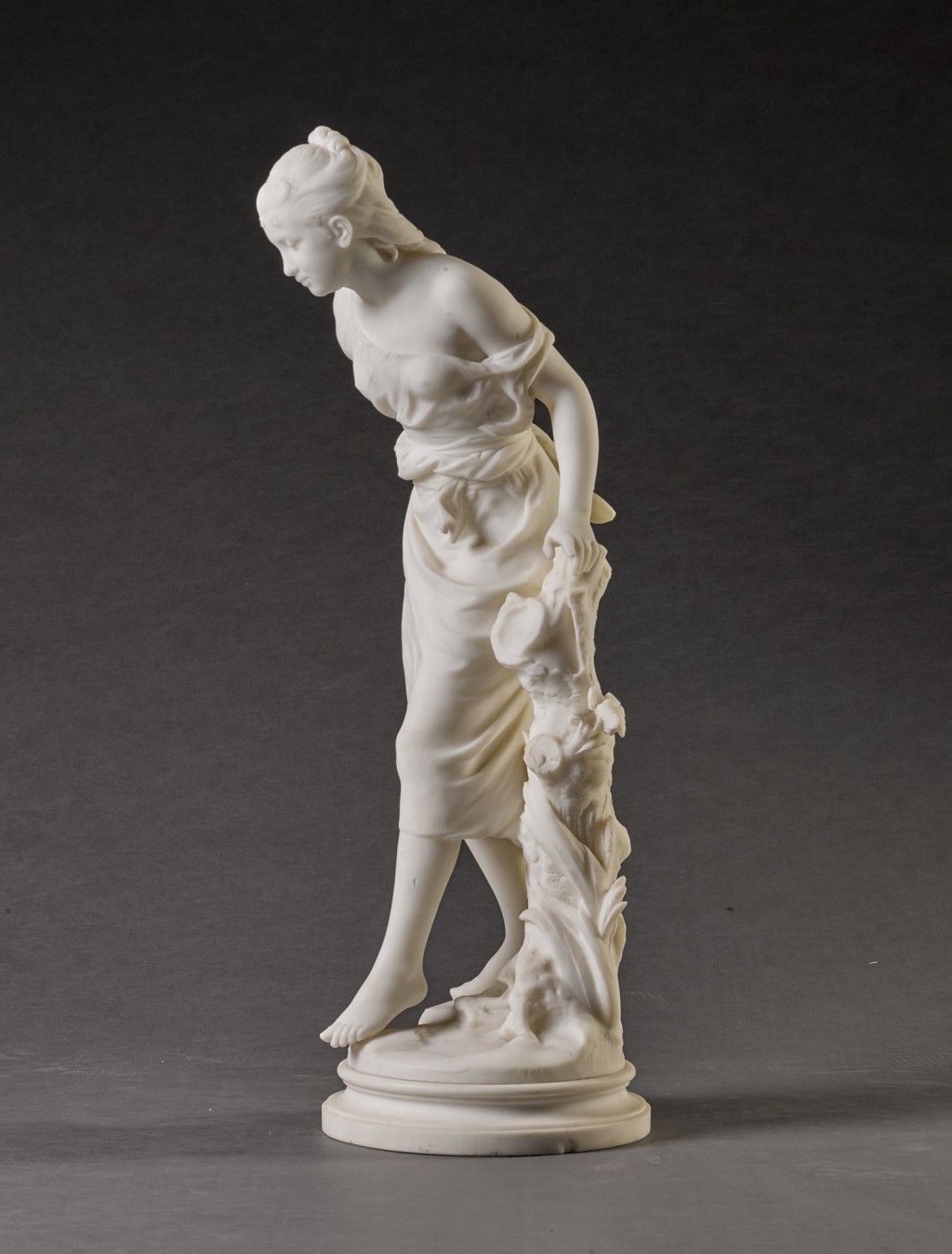
Draped in a delicate, gossamer-like garment, the figure’s attire is masterfully carved to convey both the lightness of fabric and the subtle contours of her form. The folds cascade naturally, guiding the viewer’s eye along the curvature of her leg toward the imagined water below. One foot hovers just above the ground, suggesting a poised hesitance, while her hand rests on the rough bark of a tree trunk—offering both visual and symbolic support.
This harmonious interplay of movement and stillness is characteristic of Moreau’s academic style, which seamlessly blends idealized beauty with theatrical grace. The sculpture is replete with naturalistic detail—from the realistic texture of the bark to the soft modelling of her limbs and the gentle twist of her torso—each element demonstrating the artist’s technical virtuosity. Moreau’s gift for imbuing marble with a sense of life and light remains one of his most enduring attributes.
Crafted in pristine white Carrara marble, this piece takes full advantage of the material’s purity and translucency. Its polished surface captures and reflects light, enlivening the figure and enhancing the emotional depth of her expression. Although drawn from myth, the nymph transcends narrative to become a universal emblem of femininity, youthful harmony, and communion with nature.
Signed “moreau.math.,” the sculpture not only confirms its authorship but also encapsulates the 19th-century fascination with classical ideals interpreted through the lens of romantic naturalism.