The Ostrich Hunter
Alfred Dubucand (1828-1894)
French
Date : mid-19th century
Dimensions : 63 x 77 x 33 cm
Material : Bronze with gilded patina
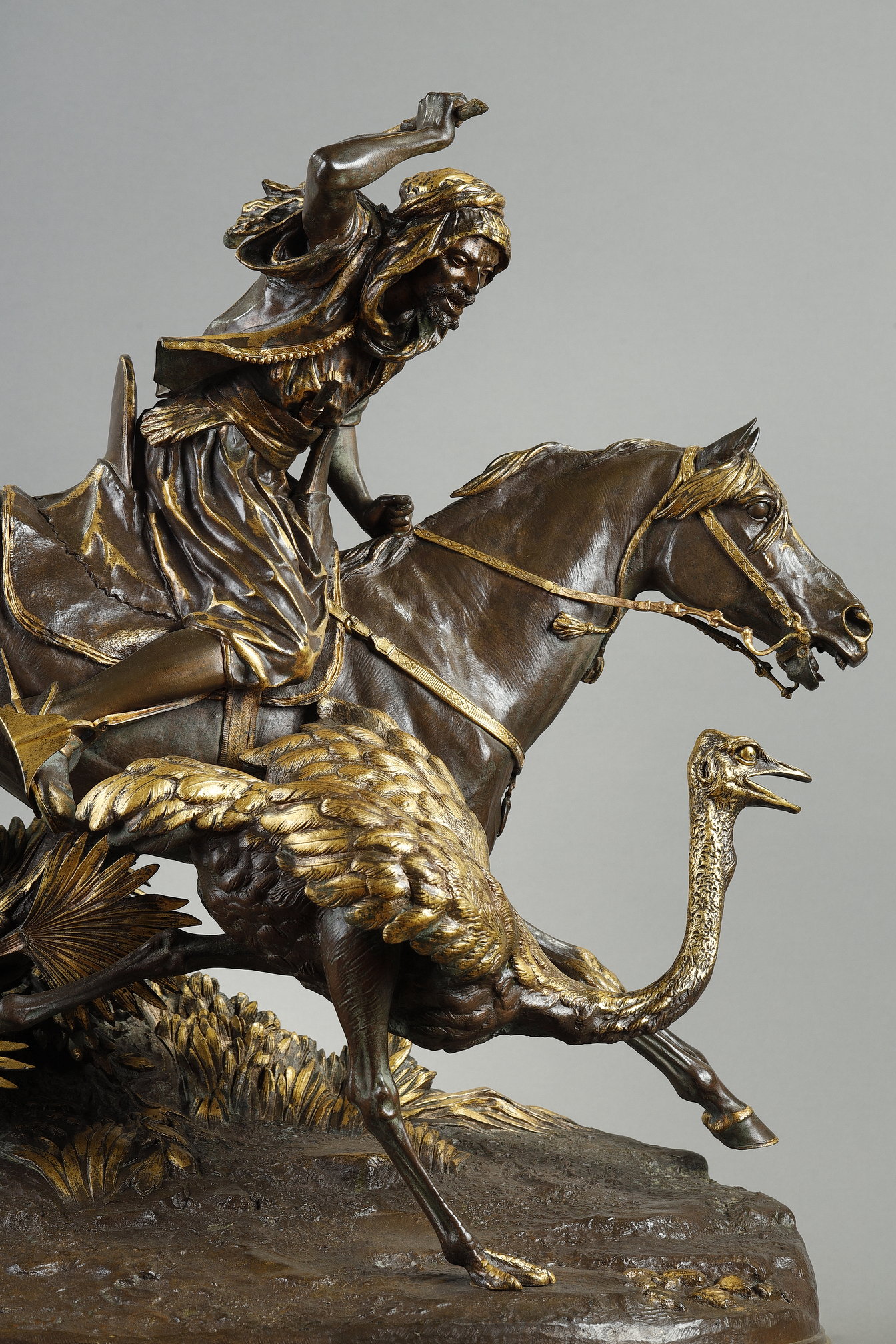
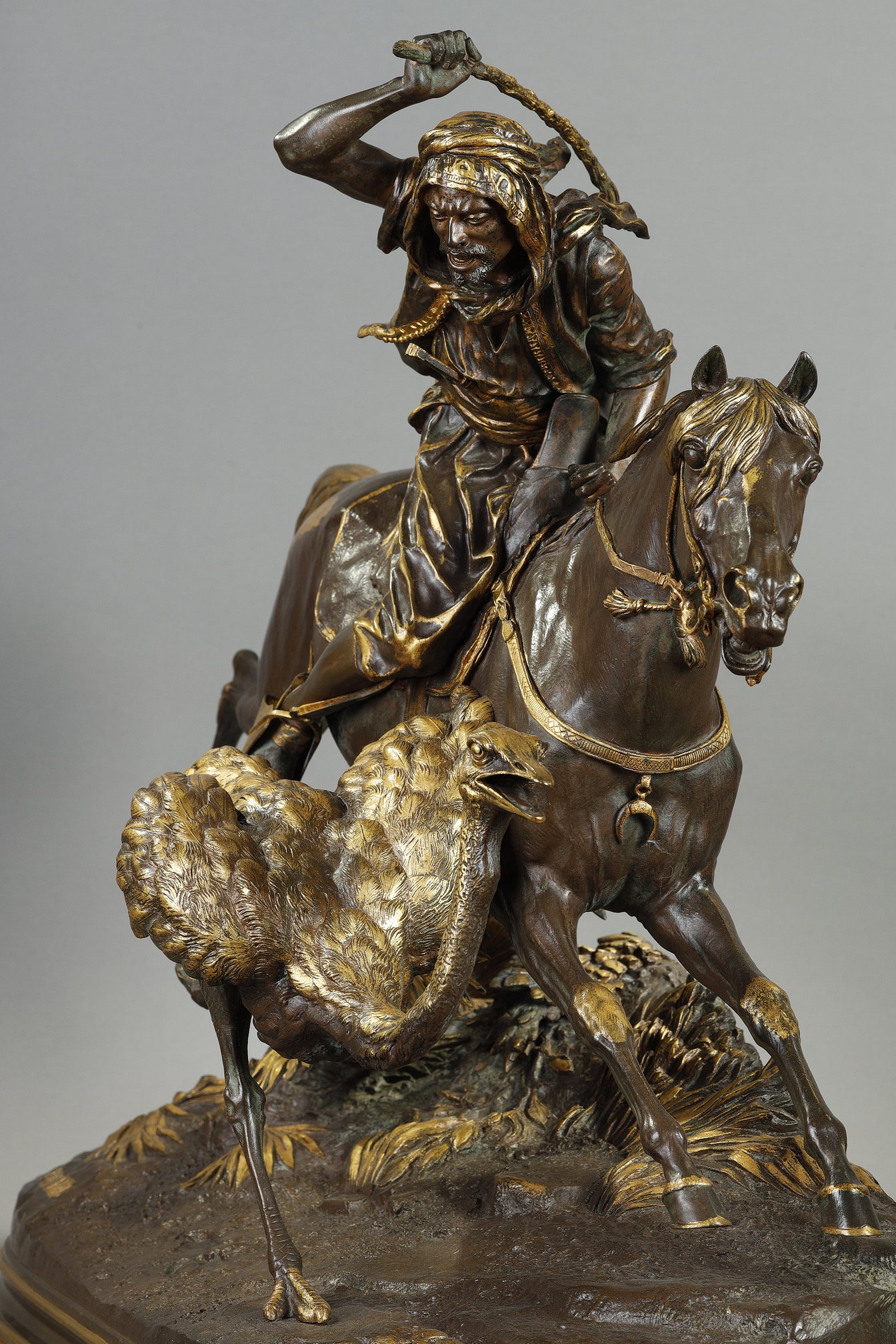
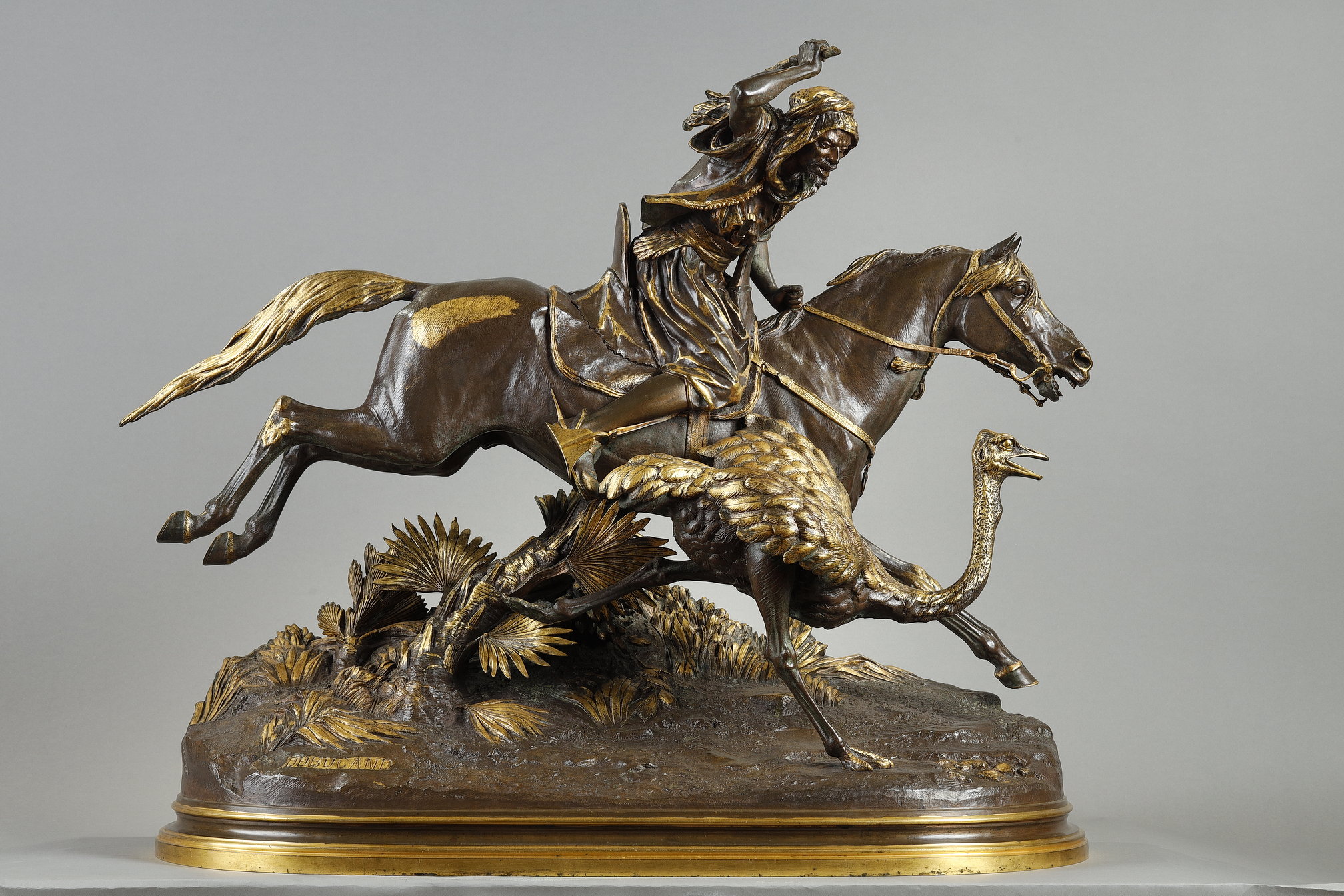
Alfred Dubucand’s The Ostrich Hunter stands as a striking example of Orientalist sculpture at its finest. With a remarkable sense of movement and technical finesse, the artist captures a precise and dramatic moment in a traditional North African ostrich hunt.
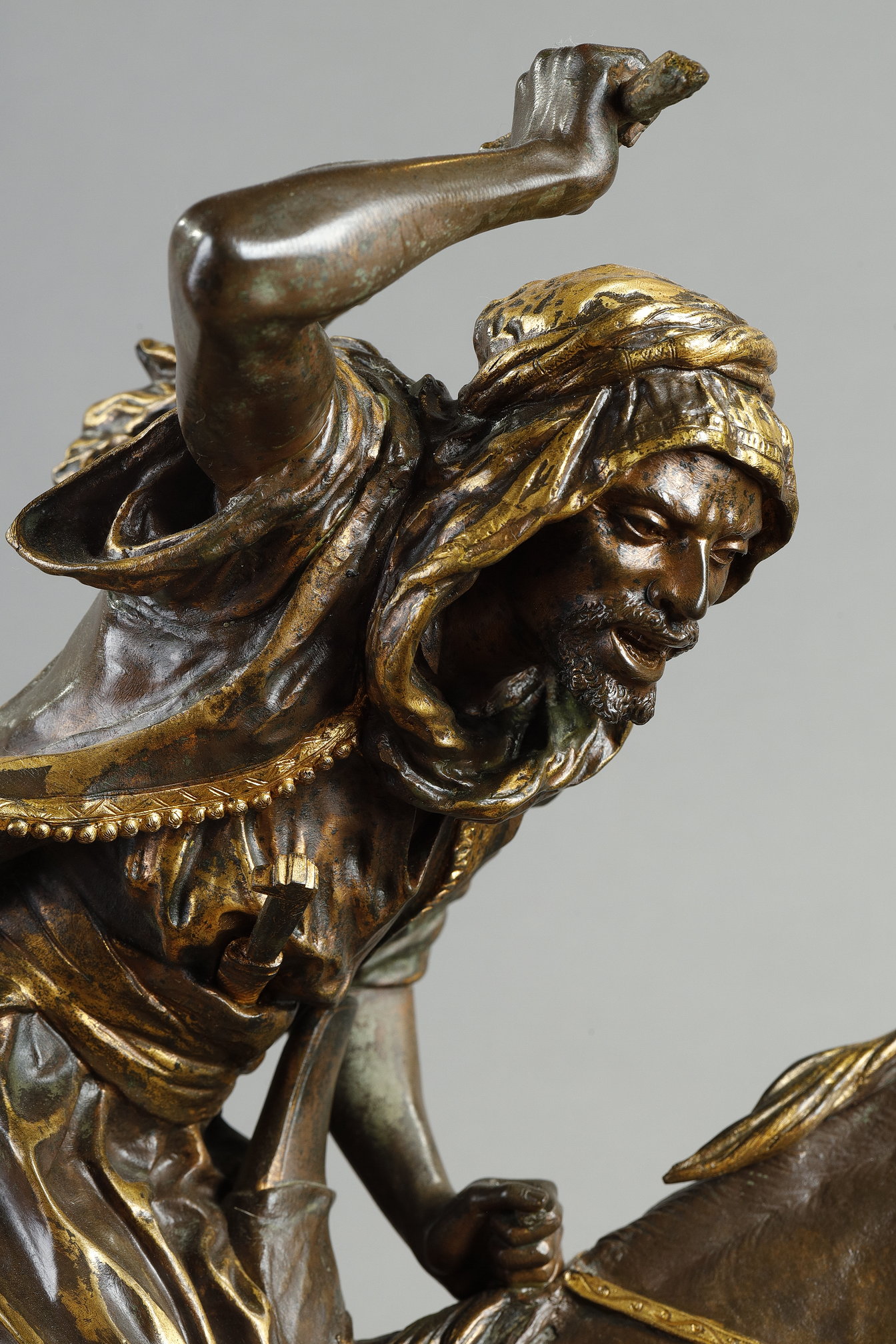
The composition presents an Arab hunter in full pursuit, galloping at full speed across a lush desert landscape. One hand holds the reins, while the other brandishes a hunting stick, poised to strike the ostrich ahead of him. The horse’s windblown tail, the rider’s forward-leaning posture, and the ostrich’s long, straining legs all contribute to an intense impression of speed and urgency.
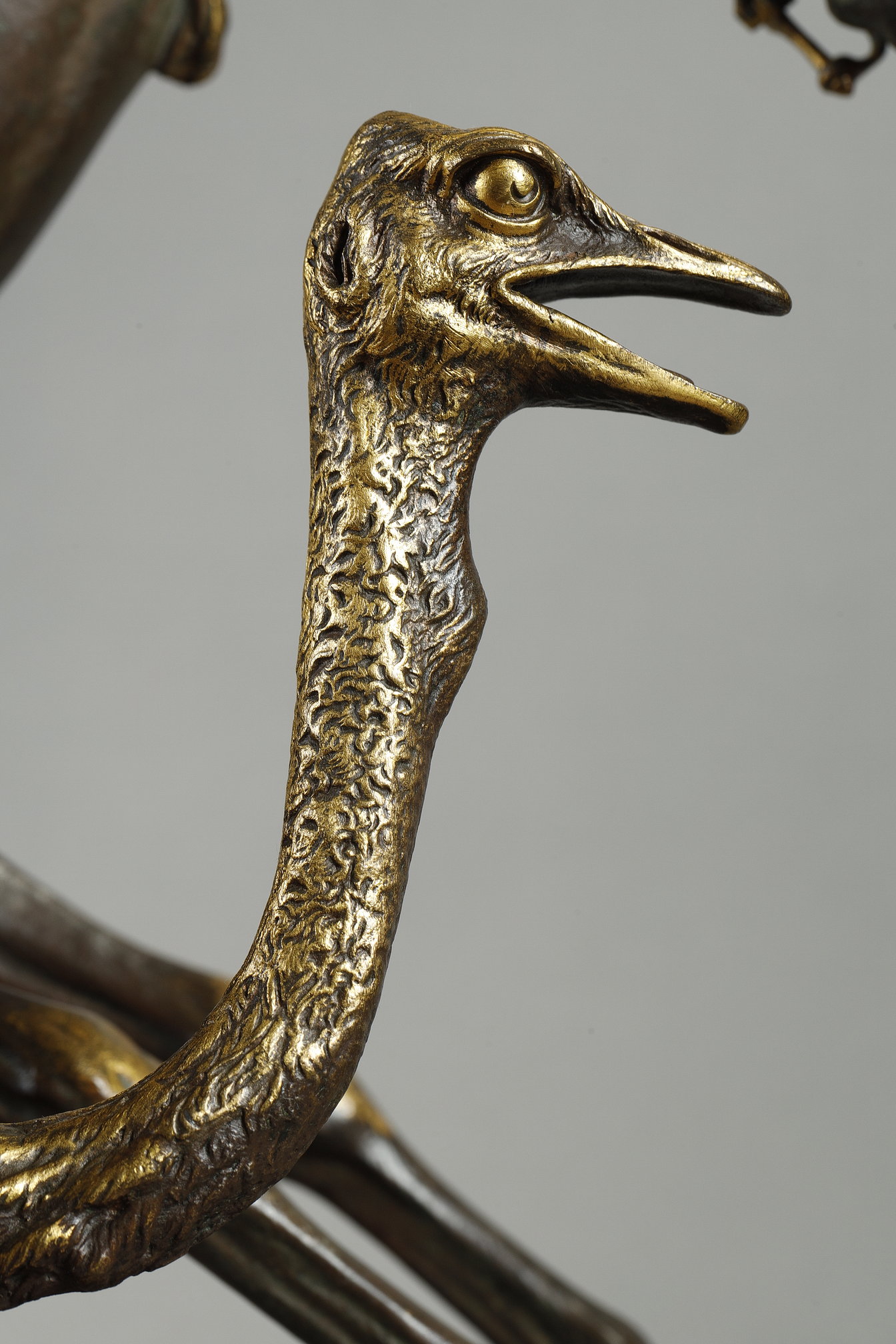
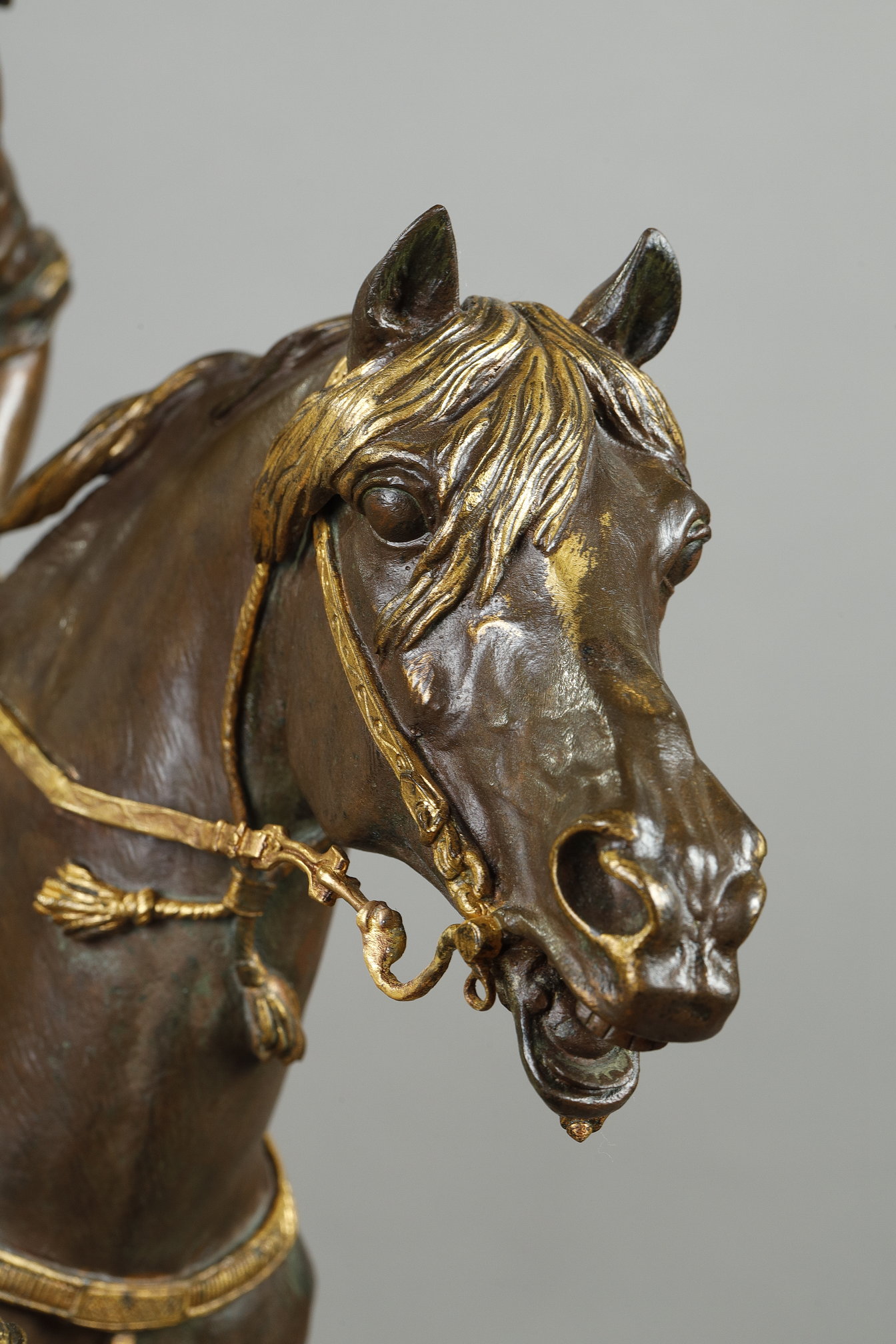
Dubucand’s mastery lies in his attention to detail and texture: the intricate rendering of the ostrich’s feathers, the delicate folds of the hunter’s tunic, and the expressive musculature of the horse all testify to his deep understanding of anatomy and form. The patina work is equally refined—warm golden highlights illuminate key areas, guiding the viewer’s gaze and enhancing the scene’s depth and contrast.
This sculpture goes beyond mere action; it also reflects historical authenticity. Based on traditional North African hunting practices, ostriches were often chased until exhaustion, at which point the hunter would stun the bird with a wooden club. The open beak and half-spread wings of the ostrich in Dubucand’s work vividly capture this critical instant—when the bird, fatigued and vulnerable, is just moments away from being struck.
The Ostrich Hunter is a testament to Dubucand’s skill and narrative sensibility. It combines anthropological insight, naturalistic precision, and dramatic composition into a single breathtaking bronze—a jewel of 19th-century Orientalist sculpture.