Naked Couple
Jef Lambeaux (1852-1908)
Belgian
Date : Late-19th century
Dimensions : 58 x 62 x 52 cm
Material : Bronze
Foundry : Fonderie Nationale des Bronzes – Ancienne Firme J. Petermann, Saint-Gilles, Bruxelles
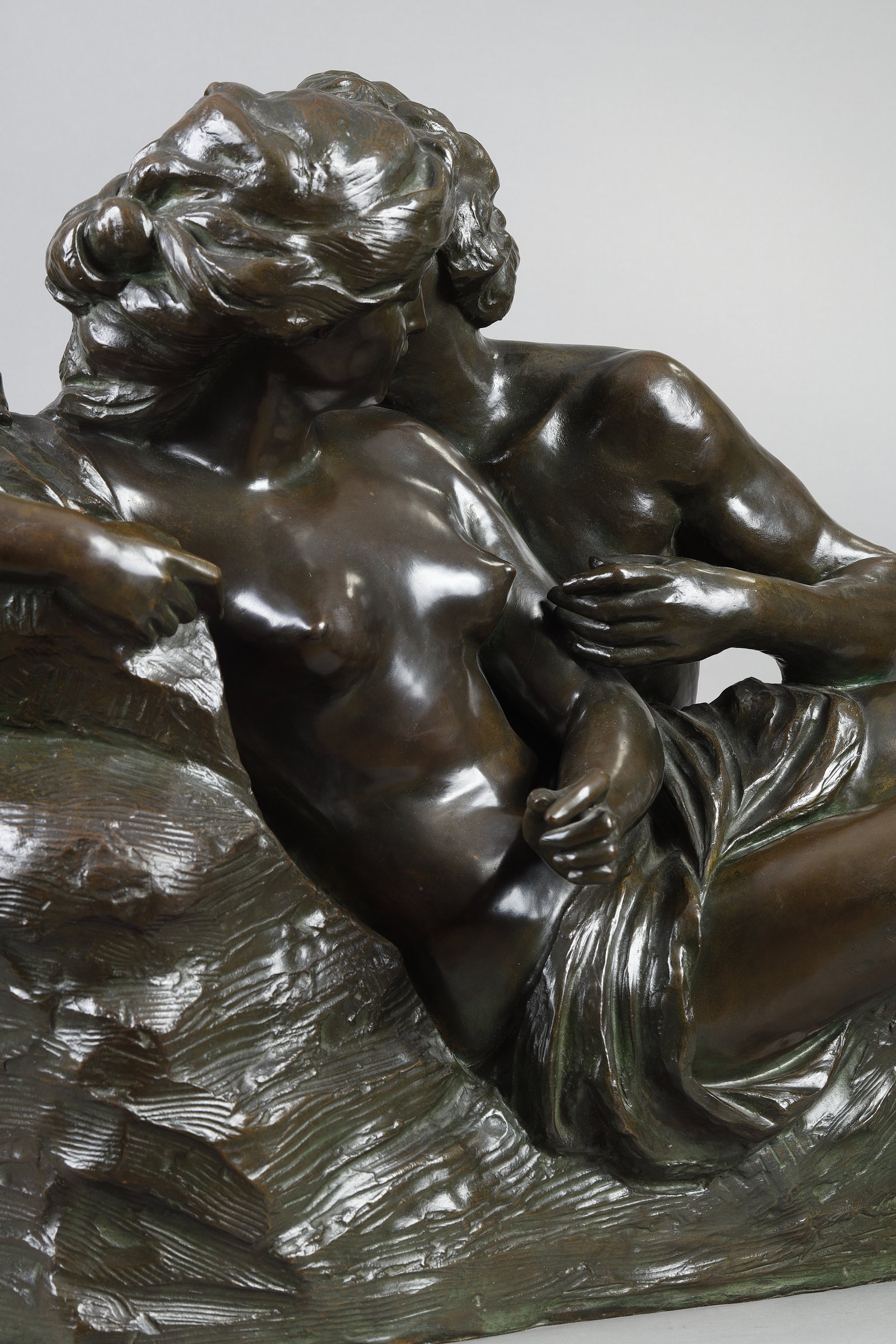
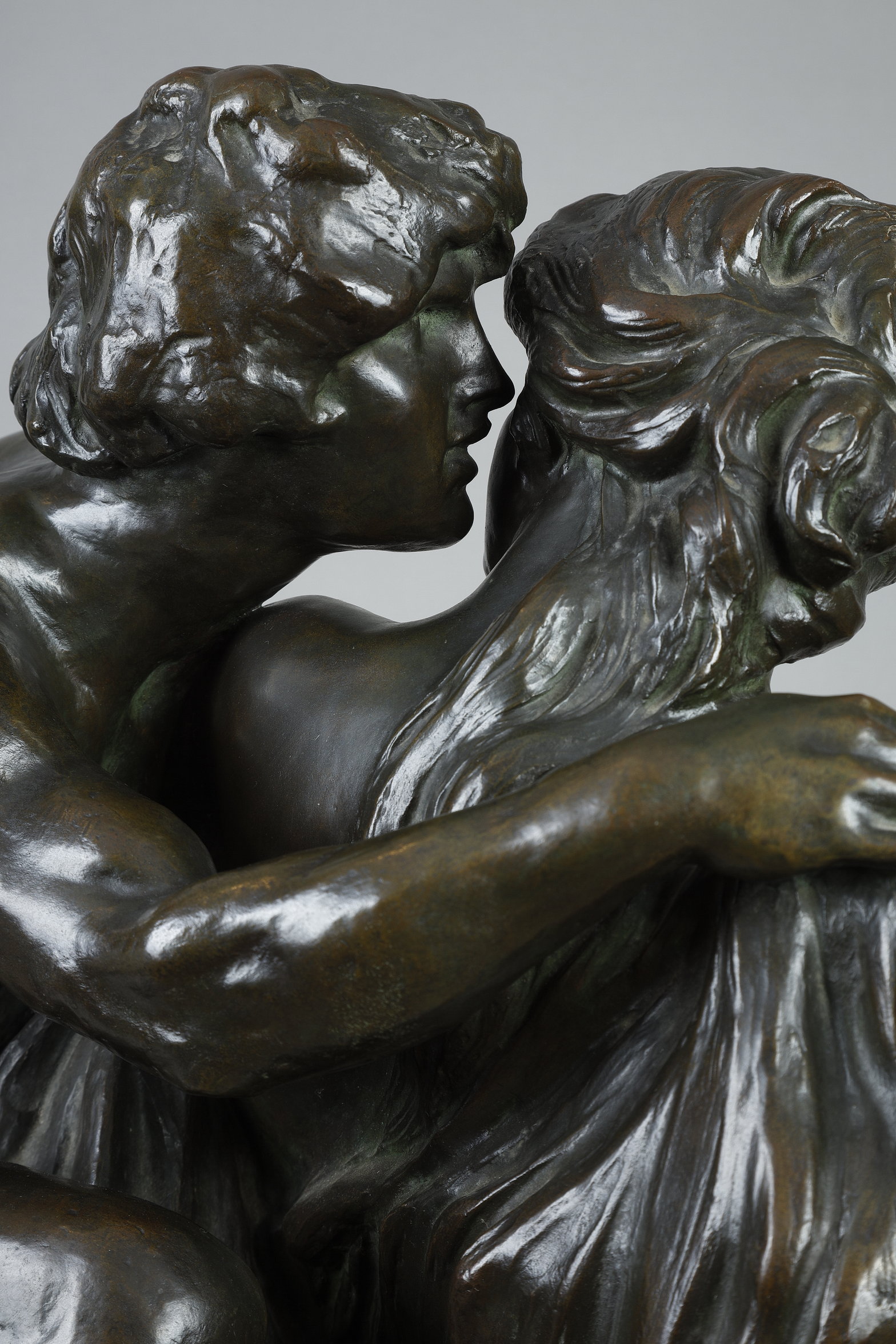
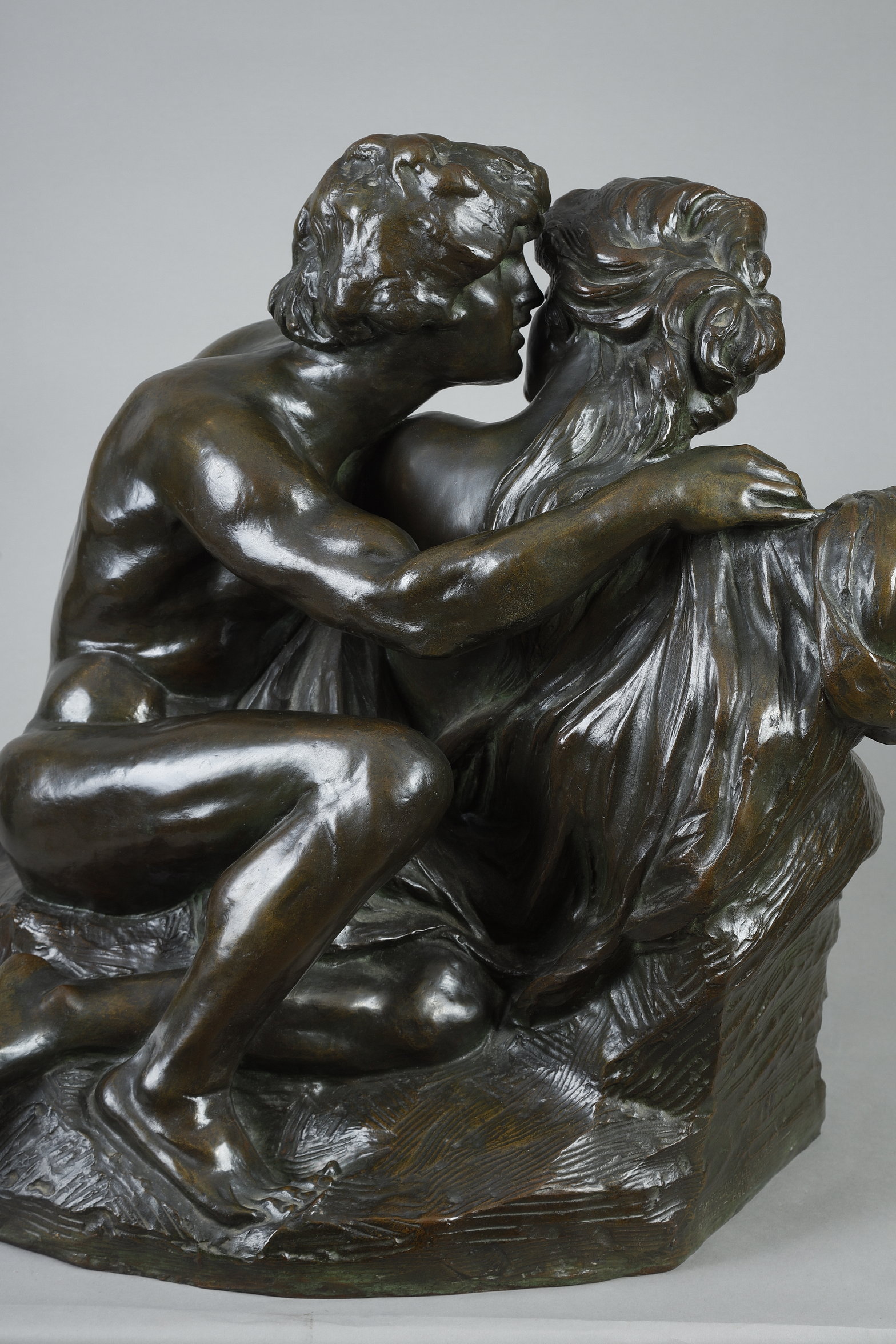
This evocative bronze sculpture by Belgian master Jef Lambeaux (1852–1908), titled Naked Couple, presents an intimate tableau of emotional and physical closeness between a man and a woman. Set upon a textured, organic base reminiscent of a natural landscape, the two figures are seated in a sensual pose, their bodies gently leaning into one another. The composition exudes both serenity and desire, capturing a moment delicately poised between tenderness and passion.
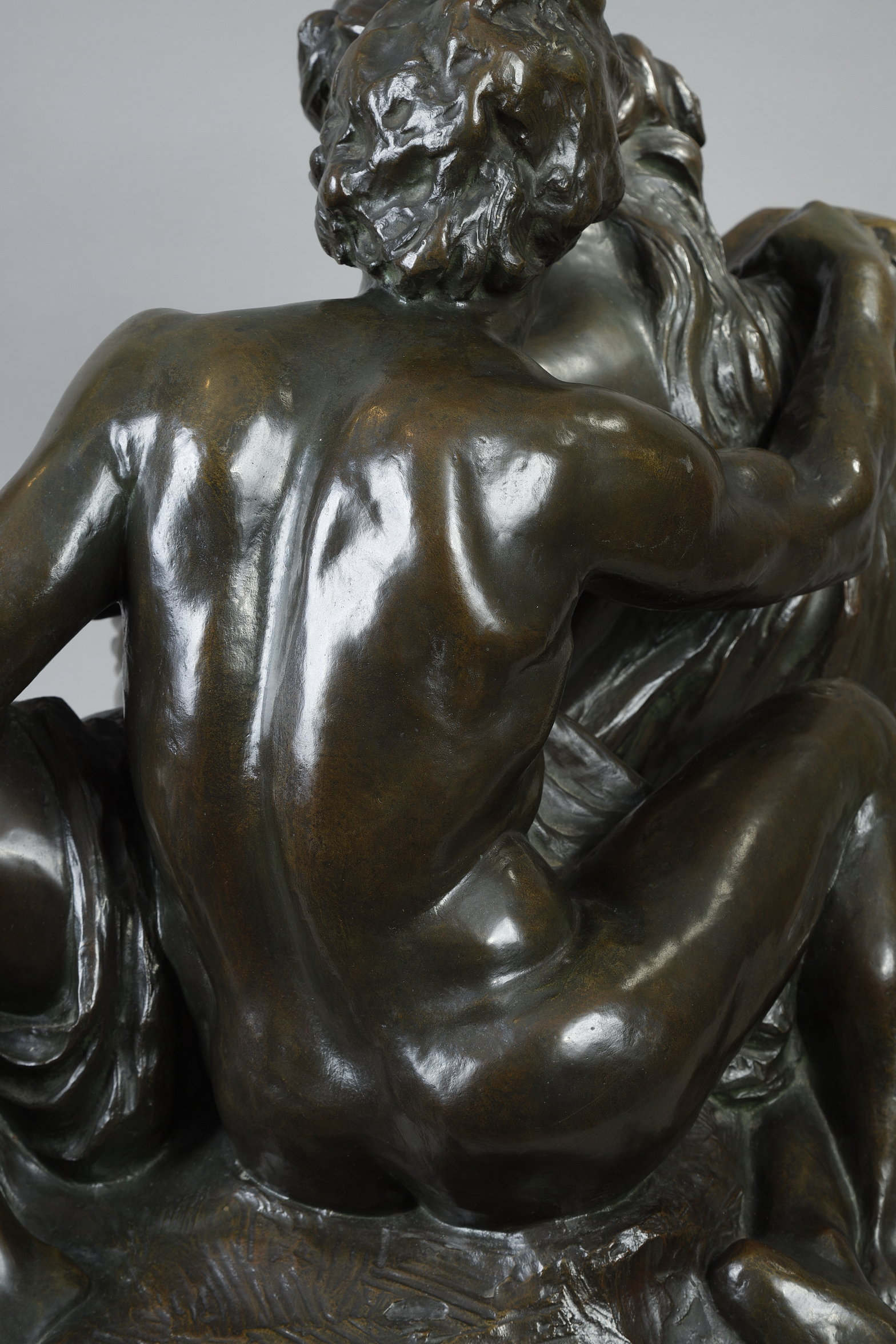
The male figure, leaning from behind, brings his face near the woman’s ear, as if whispering words meant only for her. His left hand rests softly just below her chest in a gesture of quiet intimacy, while his right hand tenderly touches her shoulder—an act of protection as much as affection. His posture conveys a balance of strength and gentleness, enhancing the sculpture’s emotional depth and subtle eroticism.
The female figure, partially draped, reveals the upper part of her torso, contributing to the sculpture’s sensual atmosphere. Her facial expression is serene, attentive, and affectionate. Both legs are gracefully extended and gently pressed together, adding to the fluidity of the composition. Her right hand rests on the rock beside her, anchoring her within the scene and reinforcing a sense of balance and harmony.
Lambeaux’s technical mastery is evident in the naturalistic rendering of anatomy, the interplay between smooth flesh and rugged terrain, and the subtle, emotive modelling of each figure. The carefully applied patina lends depth and warmth, enhancing the lifelike presence and emotional resonance of the piece.
Naked Couple is far more than a study of the nude; it is a profound meditation on love, vulnerability, and shared intimacy. Through this private and tender work, Lambeaux explores emotional themes with the same sculptural force that defines his monumental public commissions. It remains a rare expression of personal tenderness in his oeuvre—and a compelling example of 19th-century figurative art at its most human.