Judith
Emmanuel Villanis (1858-1914)
Nationality : French (Italian origin)
Date : Late 19th century
Dimensions : 72 x 22 x 20 cm
Materials : Alabaster (sculpture) & Ivory (sword)
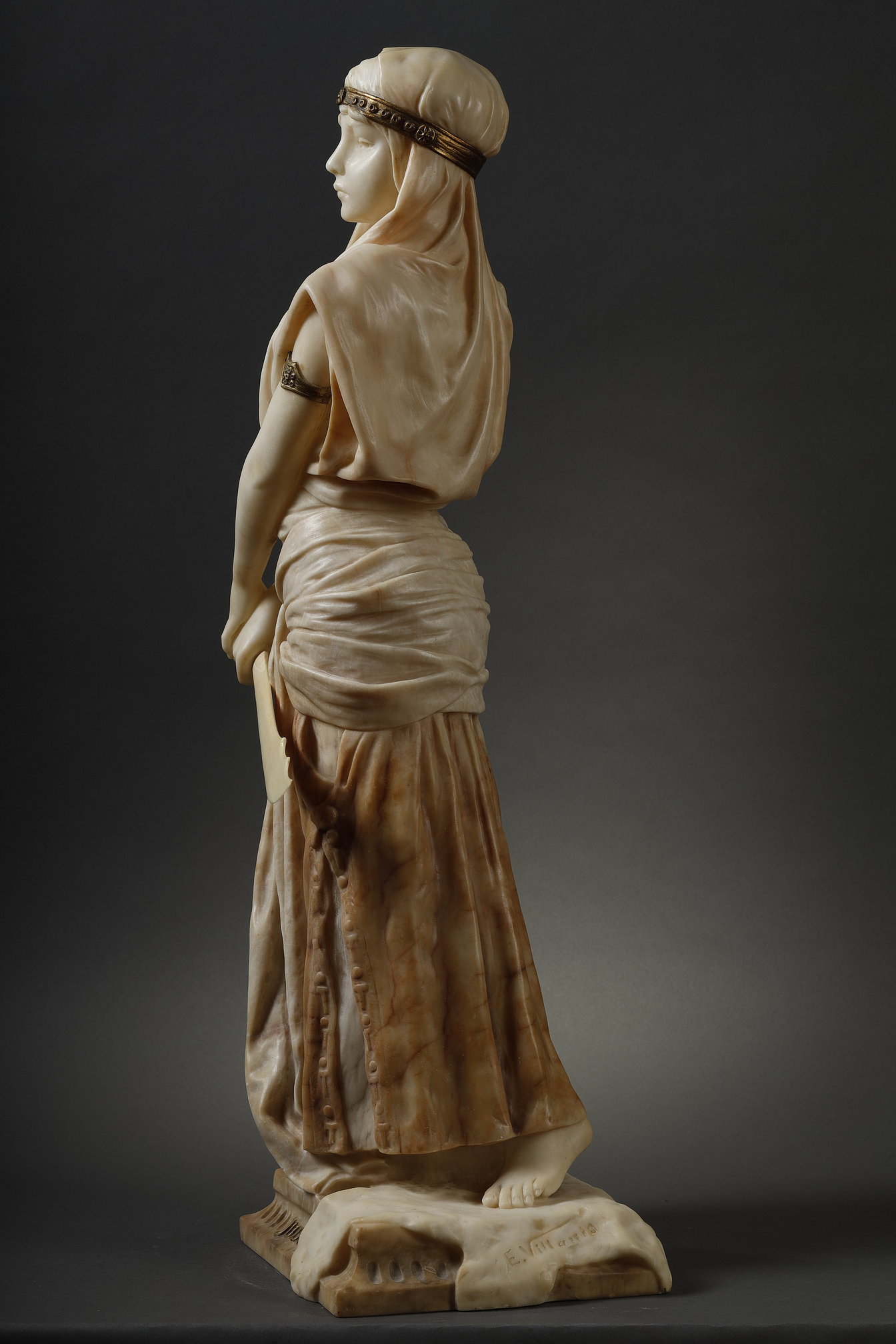
Signature : “E. Villanis”
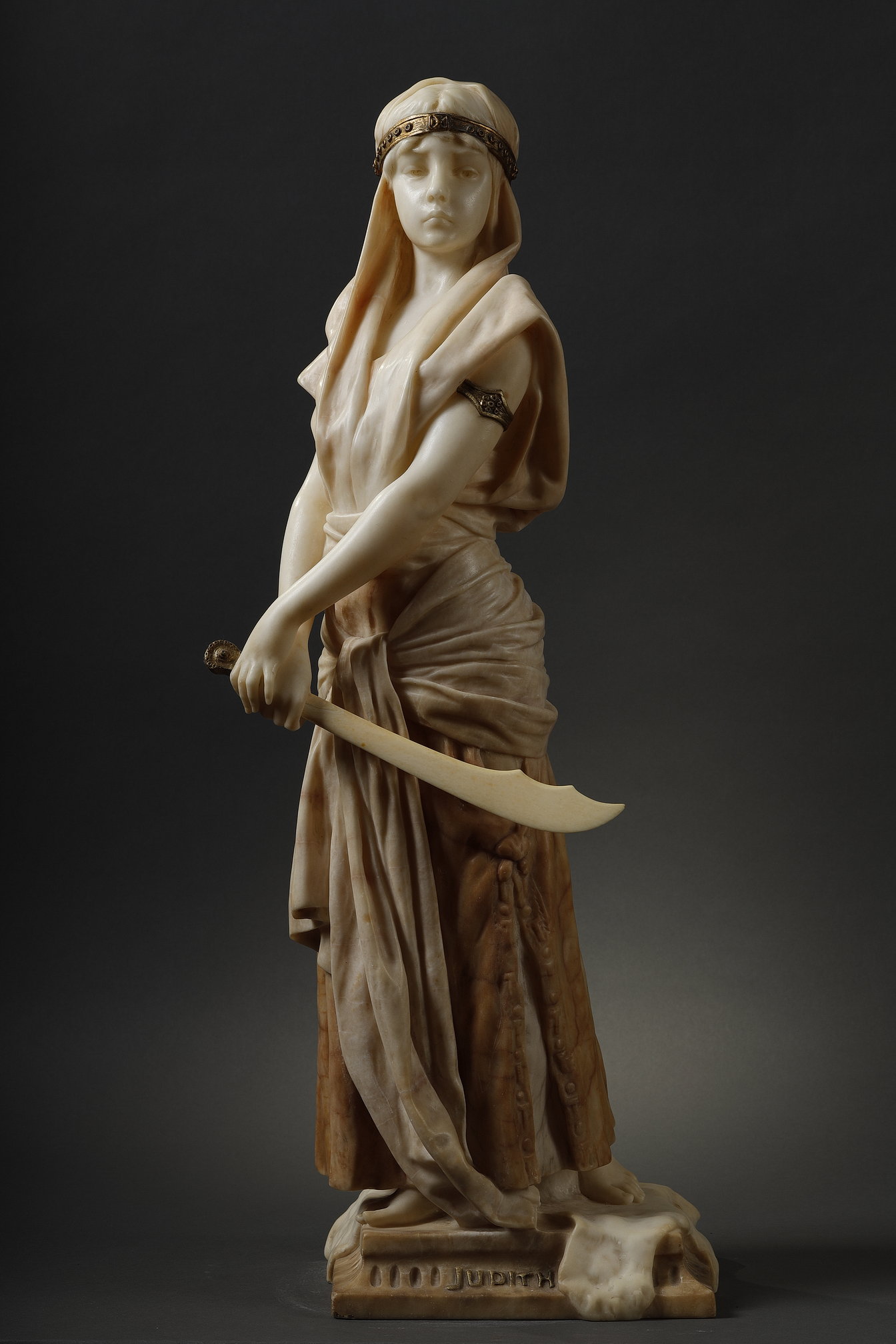
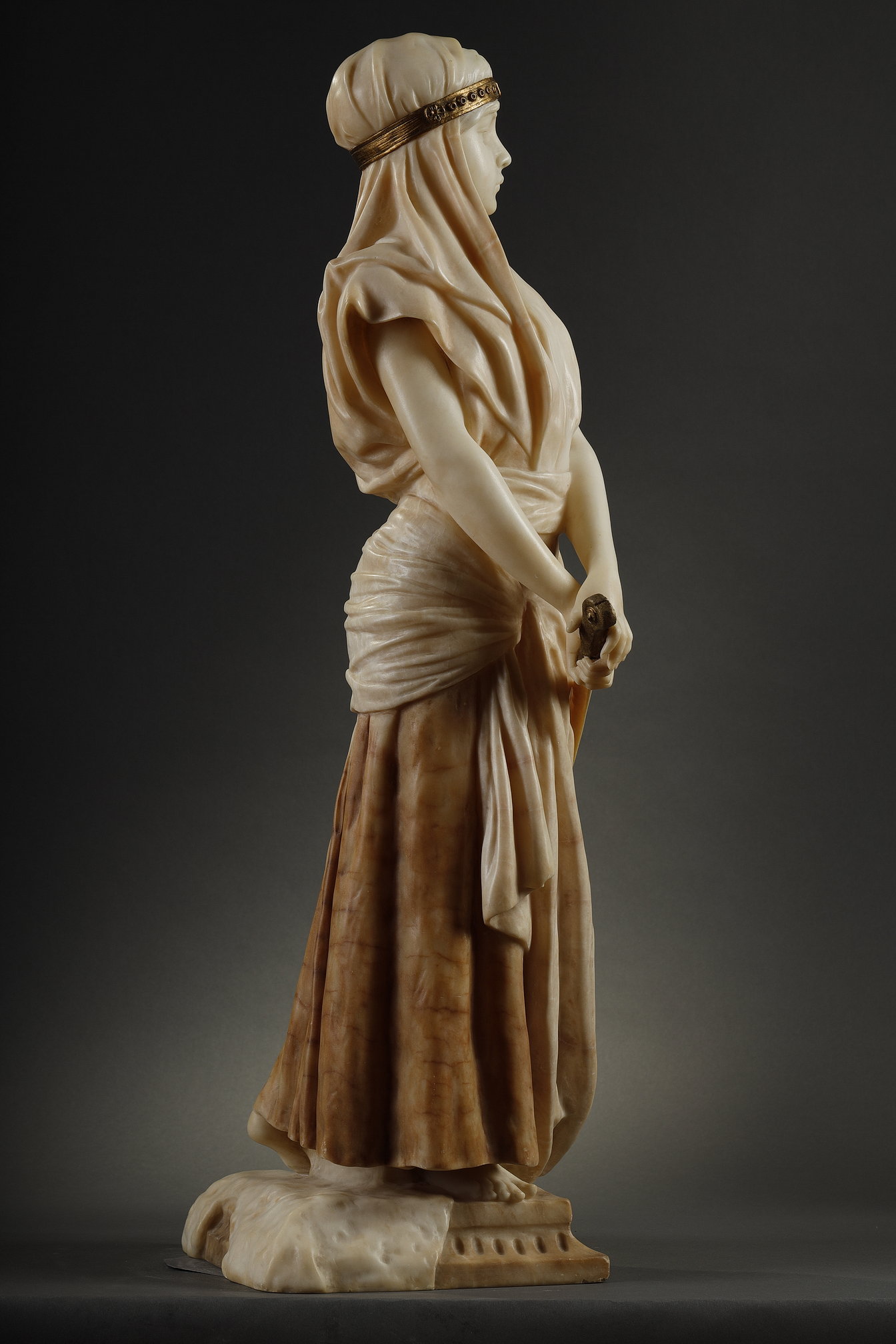
This captivating alabaster sculpture by Emmanuel Villanis (1858–1914) depicts Judith, the legendary biblical heroine famed for beheading Holofernes to save her people. A potent symbol of courage, sacrifice, and female empowerment, Judith has long inspired artists—yet Villanis’s interpretation stands out for its expressive nuance, technical refinement, and mastery of polychrome surfaces.
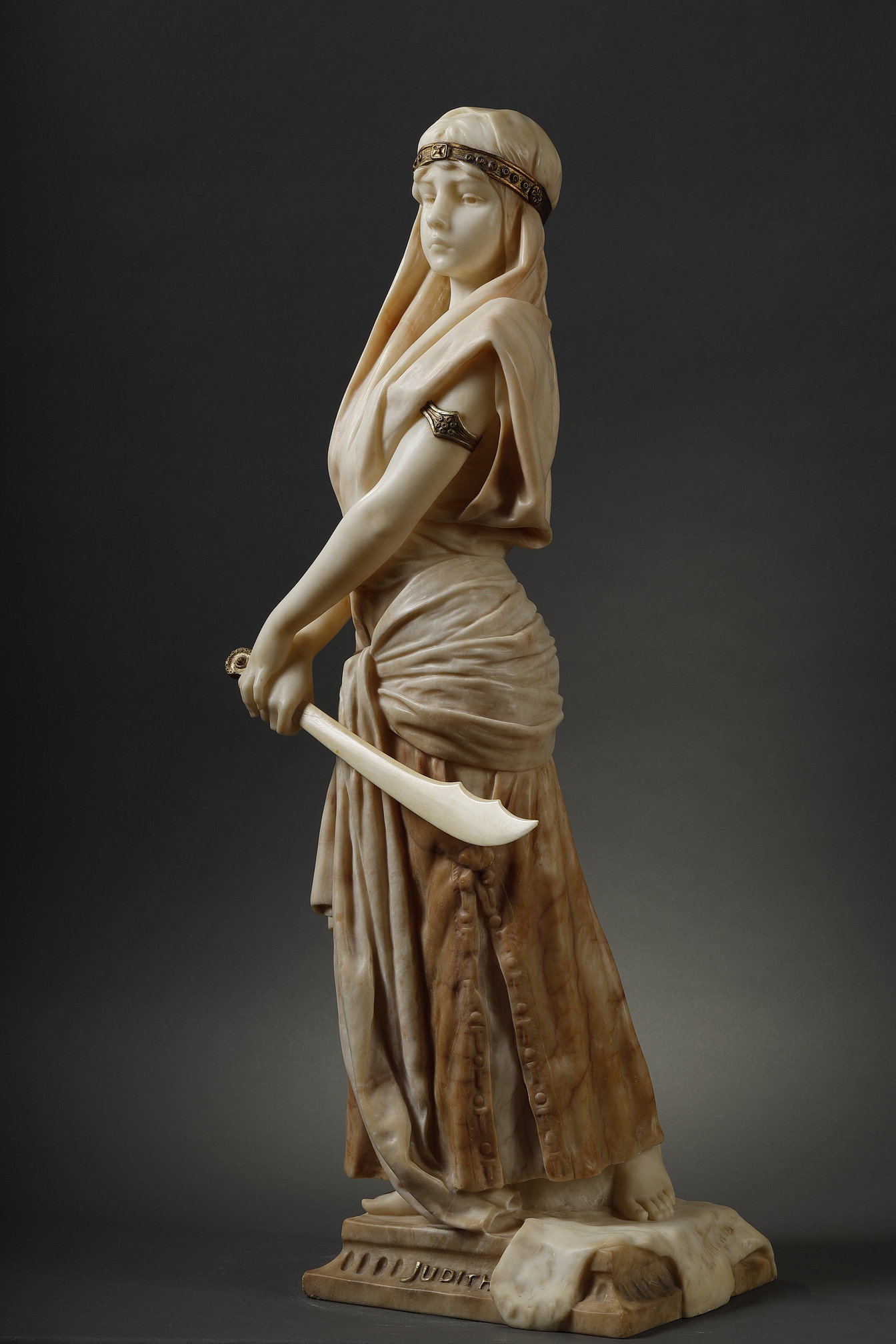
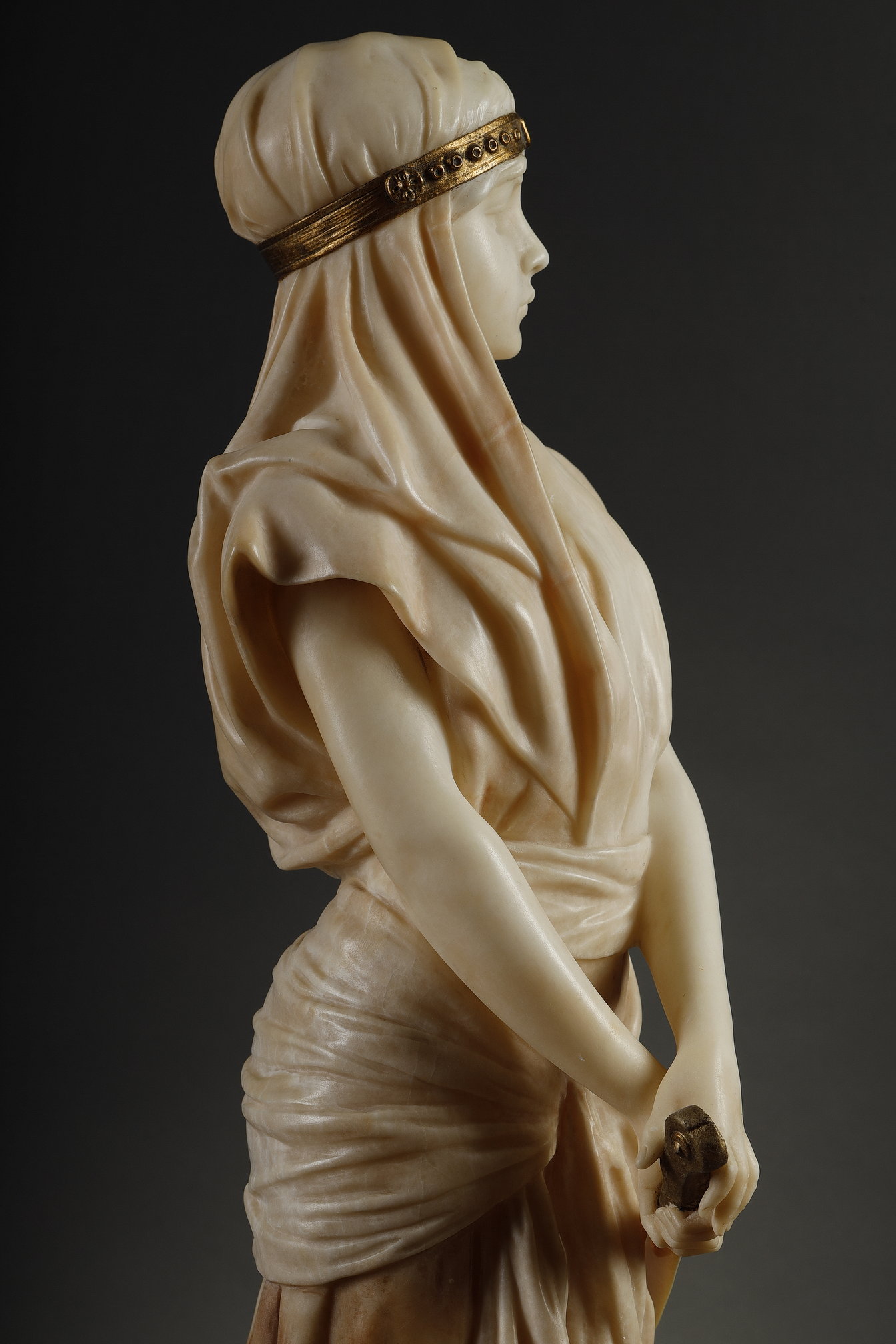
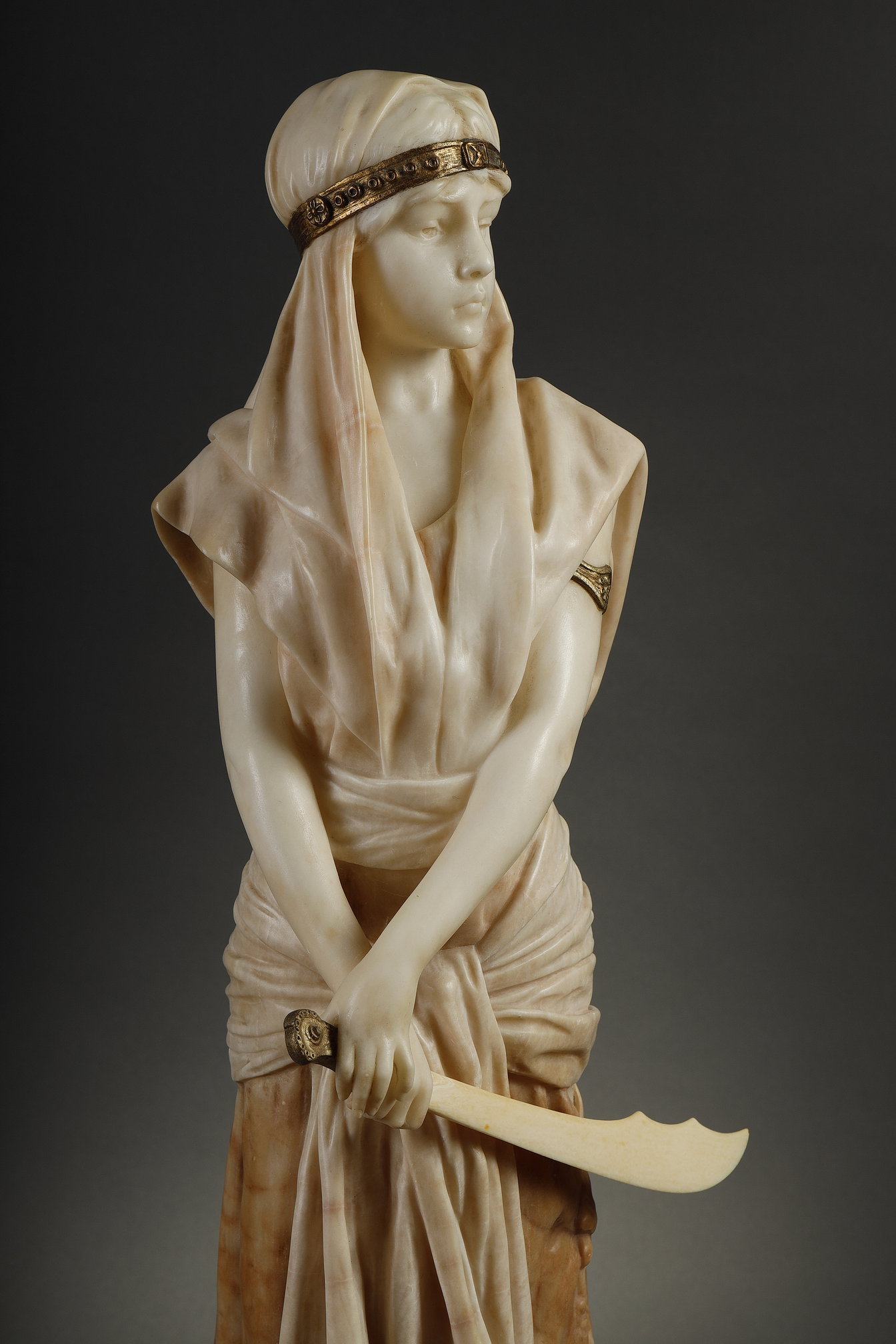
The translucent alabaster imbues Judith’s visage with a soft glow, enhancing the subtle modeling of her facial features and the fluid fall of her draping garment. Her pose conveys poised tension: head gracefully turned to the side, eyes lowered in reflection, while her hands firmly yet delicately grasp the curved sword. This visual duality encapsulates both serene contemplation and resolute determination.
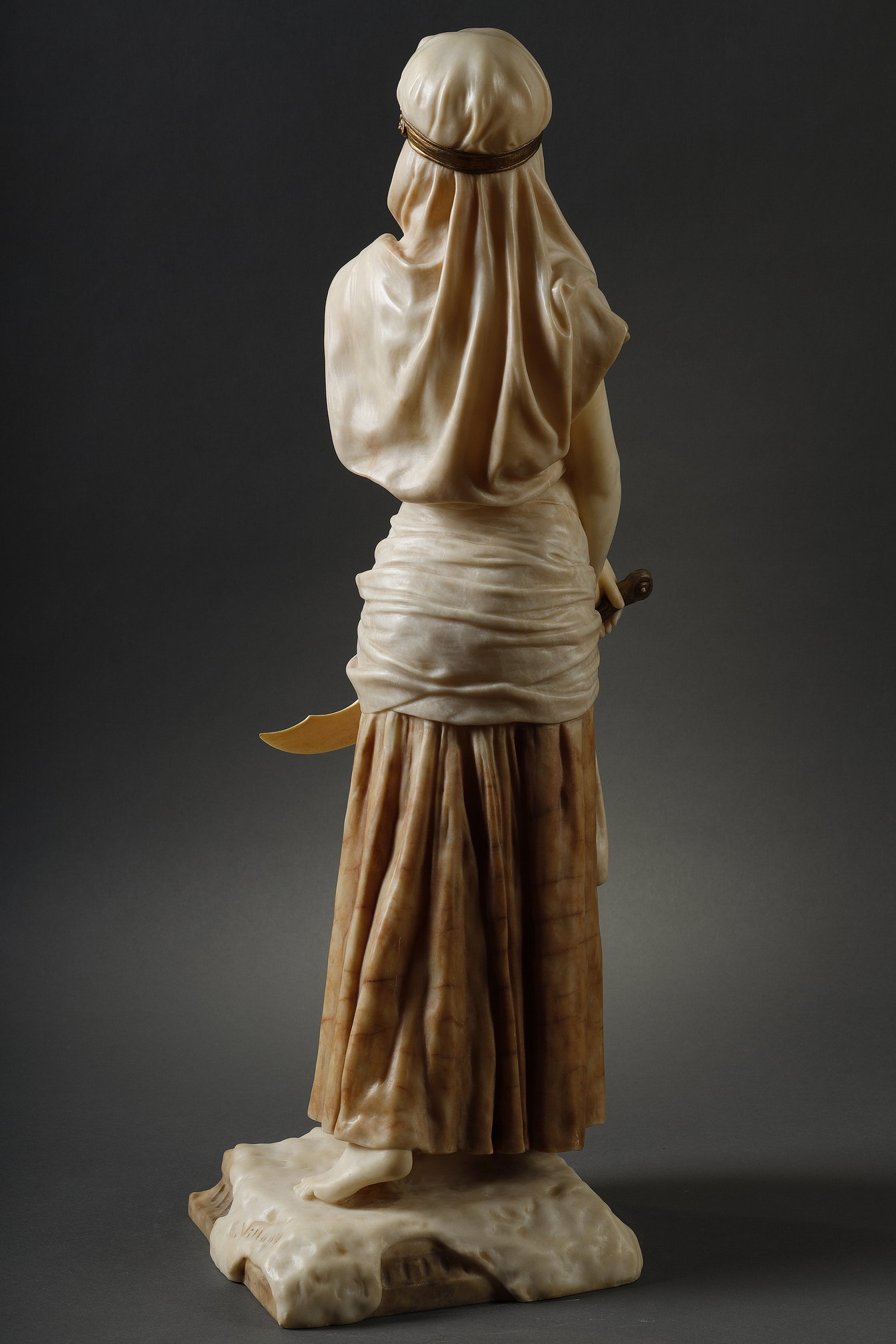
Meticulous attention to details—the naturalistic folds of her attire, the lifelike rendering of anatomy, the ornate tiara, arm bracelet, and articulated sword hilt—underscores Villanis’s virtuosity and his flair for dramatic storytelling in sculpture. The work synthesizes realism with romantic symbolism, embodying the 19th-century fascination with powerful women rooted in history or mythology, especially those who enacted pivotal gestures of resistance or justice.
Executed in alabaster—a material prized for its delicate translucency—Judith highlights Villanis’s mastery of medium and homage to feminine strength. The interplay of light and shadow across the smooth and serrated surfaces enriches the sculpture’s dramatic presence and emotional depth.
Judith is a masterful example of late academic sculpture, where technical skill harmonizes with expressive intent. Villanis bridges classical refinement and narrative force, rendering this piece not just a depiction of a biblical heroine, but a timeless emblem of inner strength and beauty. Its elegance, emotional resonance, and historical symbolism make it a distinguished highlight for any quality fine art collection.